


CASE STUDY · IRELAND · COFFEE PACKAGING
How an Irish Coffee Roaster Moved from BOPP/VMPET/PE to a PE-Based EVOH Barrier Pouch
An established Irish specialty coffee roaster wanted to move away from a conventional BOPP/VMPET/PE laminate. Runlong Pack proposed a PE-based structure with an EVOH barrier layer, taking the project from a recycling-oriented requirement to an 80,000-piece first production order and later repeat purchases.
Discuss Your Packaging StructureExplore Coffee Packaging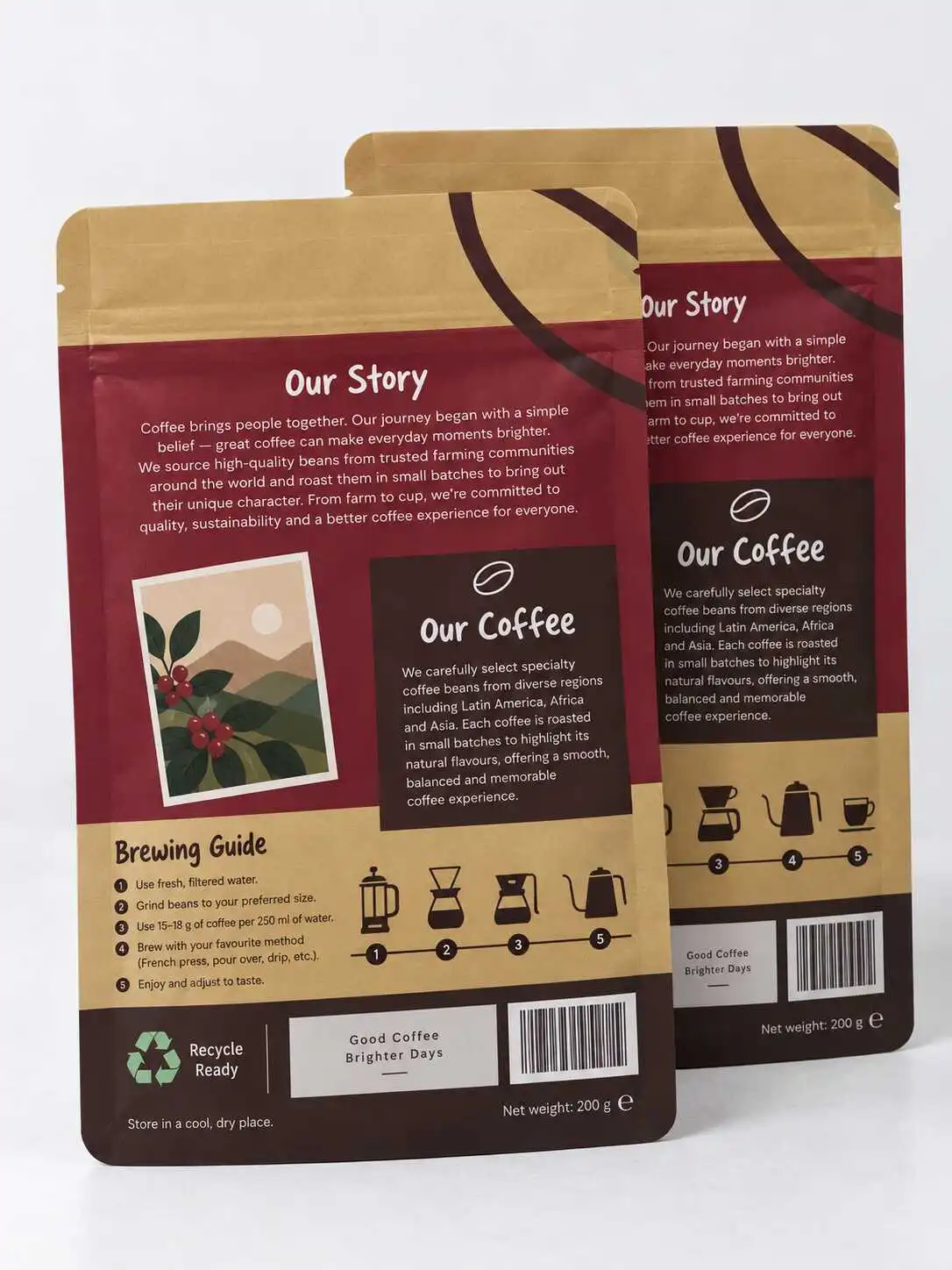
Project at a Glance
The material direction changed, while coffee protection, sealing and custom retail presentation remained central to the brief. The commercial result is an order outcome—not a recyclability certification or a barrier-test result.
- Market
- Ireland
- Product
- Roasted Coffee
- Previous Structure
- BOPP / VMPET / PE
- New Direction
- PE-Based with EVOH Barrier
- First Production Order
- 80,000 pcs
- Commercial Result
- Repeat Orders
About the Customer
The customer is an established specialty coffee roaster in Ireland with years of experience supplying roasted coffee to cafés and retail customers. The business began on a small scale and expanded its roasting capacity as demand grew.
Freshness, flavour consistency and reliable packaging were important as the business developed. The project therefore concerned more than replacing one film abbreviation with another: a new material direction still had to serve a working coffee business.
Customer identity is withheld. The project visual is anonymized and redesigned rather than presented as an unmodified customer photograph.
The Starting Point: Conventional BOPP / VMPET / PE Coffee Packaging
The customer’s previous packaging used BOPP / VMPET / PE. In this type of laminate, the layers perform complementary functions. Their exact grades and gauges were not supplied for this public case.
Functional schematic of the supplied previous structure—not a thickness drawing or a photograph of the customer’s original pouch.
This type of laminate is used for coffee because it can provide oxygen, moisture and light protection. However, combining different polymer families and a metallized PET layer is not the same design direction as a PE-based recyclable-oriented pack. Its suitability depends on the full application and end-of-life brief.
Why the Customer Wanted to Change the Packaging Structure
As sustainability expectations and interest in packaging recycling design evolved across Europe, the customer sought an alternative to the existing laminate. The aim was to reduce reliance on a conventional multi-material structure while retaining suitable protection for roasted coffee.
- Move toward a PE-based, recycling-oriented material approach
- Maintain suitable oxygen and moisture protection for the coffee
- Retain reliable sealing and bag-making performance
- Keep custom printed retail presentation
- Assess the complete pack rather than make a claim from a material name alone
This was the customer’s packaging-development objective. It is not described as a legal obligation to replace the original laminate, and no specific European regulatory threshold is claimed.
The Challenge: Sustainability Without Giving Up Coffee Protection
Moving away from VMPET meant that the new structure still needed an effective oxygen-barrier solution. Coffee packaging also requires attention to moisture, aroma retention, seals, storage, shelf-life expectations, printing and conversion.
EVOH provides an oxygen-barrier function; it does not inherently provide the opaque light shield associated with a metallized construction. Light protection therefore needed to remain a separate design consideration alongside the finished structure and artwork.
The appropriate question was not whether one material was simply “greener” or “better.” It was how to develop a complete pack around the customer’s coffee and market requirements. No claim is made that the new pouch matched the previous laminate’s measured barrier performance: comparative OTR, WVTR and shelf-life test results are not provided here.
Our Solution: A PE-Based Structure with EVOH Barrier
Runlong Pack proposed a PE-based multilayer packaging structure using EVOH as the functional oxygen-barrier layer. PE forms the main polymer family; its layers contribute structural and sealing functions according to the final design. EVOH supplies the oxygen-barrier function within that broader system.
Functional overview, not an exact layer sequence, gauge specification or disclosure of the customer’s production recipe.
This solution addressed the project’s material direction without treating EVOH/PE as automatic evidence of recyclability. The complete packaging specification remained the basis for customer confirmation.
BOPP/VMPET/PE vs PE-Based EVOH Structure
| Factor | Previous Structure | New Solution |
|---|---|---|
| Structure | BOPP / VMPET / PE | PE-based structure with EVOH barrier |
| Main barrier layer | VMPET | EVOH |
| Appearance | Typically opaque or metallized, depending on the finished design | Supports a non-metallized PE-based design; actual appearance depends on construction and printing |
| Light protection | Provided by the metallized layer, subject to coverage and construction | Depends on the final PE/EVOH structure and printing design |
| Oxygen protection | Barrier function supplied by the metallized laminate | EVOH supplies a functional oxygen-barrier layer |
| Recycling-design direction | Conventional multi-material laminate | PE-based recyclable-oriented design; not an unconditional recycling claim |
| Final performance | Depends on the complete laminate and finished pack | Depends on the complete PE/EVOH structure and finished pack |
These are construction and design differences, not a numerical performance ranking. No unsupported barrier value, percentage improvement or environmental-benefit figure is assigned to either option.
From Material Discussion to Production
The project can be understood through the following packaging-development logic. It is not a dated test log: machine names, sample-round counts and laboratory values are not disclosed.
- Understand the customer’s sustainability and recycling-design goal
- Review the original BOPP / VMPET / PE construction
- Confirm the coffee-packaging performance brief
- Evaluate a PE-based high-barrier direction
- Propose EVOH as the functional barrier layer
- Confirm the custom artwork and pouch format
- Move to production after customer approval
The important distinction is between a material discussion and an approved production specification. A recycling-oriented intention must be translated into the complete structure and the buyer’s actual application requirements.
The Result: 80,000 Pouches in the First Production Order
After the material direction and packaging solution were confirmed, the customer placed an initial production order of 80,000 custom coffee pouches. The proposed structure moved beyond discussion into commercial-volume production.
IRELAND
Customer Market
An Irish specialty coffee roaster
80,000 PCS
Initial Production Order
Custom coffee pouches
REPEAT ORDERS
Ongoing Customer Relationship
Further purchases after the initial run
From First Order to Repeat Business
The customer later placed repeat orders after the first 80,000-piece production run. Continued purchasing is a useful commercial signal that the packaging solution served the customer’s ongoing business needs.
No specific repeat quantity, purchase frequency or annual volume is stated. Repeat business should not be interpreted as a substitute for technical test reports or a verified customer quotation.
What This Coffee Packaging Project Shows
Material Transition
A conventional BOPP/VMPET/PE laminate may be reconsidered when a project targets a PE-based, recyclable-oriented direction.
Barrier Still Matters
Material goals must be balanced with oxygen protection, light exposure, sealing and the actual coffee-packaging brief.
Commercial Scalability
This project progressed to 80,000 pouches in the first production order and later repeat purchases.
Explore the Material Trade-Offs Behind This Project
Choosing a barrier route means considering transparency, oxygen, moisture, light and the complete construction. Our companion guide compares EVOH, AlOx, VMPET, aluminum foil and KPET as procurement options.
Read the High-Barrier Flexible Packaging Materials Guide
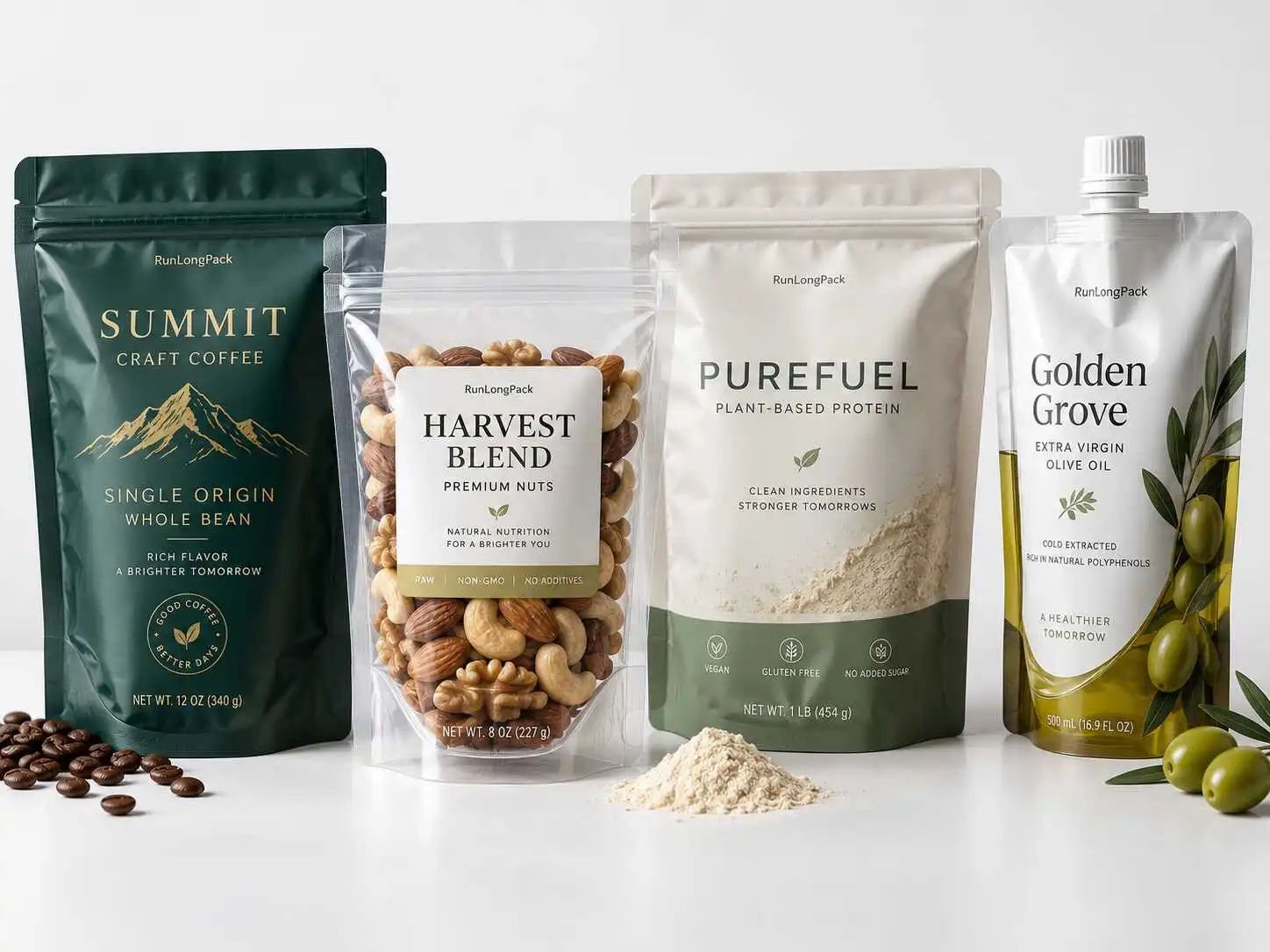
For application options, explore custom coffee packaging. For project-specific documentation, see packaging compliance. When comparing sourcing options, use the flexible packaging manufacturer comparison guide.
We have not assumed a flat-bottom pouch, valve specification or particular printing process for this customer. Those details are not supplied in the case brief.
Frequently Asked Questions
Can coffee packaging use EVOH instead of VMPET?
EVOH can be considered as an oxygen-barrier layer in selected PE-based coffee packaging structures, but the complete structure must be evaluated according to shelf life, light protection, sealing and other performance requirements.
Is PE/EVOH coffee packaging recyclable?
PE-based EVOH structures can be designed toward recyclability, but recyclability depends on the complete packaging structure, material proportions and the recycling rules of the target market.
Why would a coffee brand move away from BOPP/VMPET/PE?
Brands may consider alternative structures when they want to reduce complex multi-material laminates and move toward packaging designs that better support recycling goals.
Can PE/EVOH packaging be produced at commercial scale?
In this project, the customer moved to an initial commercial order of 80,000 pouches and later placed repeat orders.
Looking for a More Recyclable High-Barrier Coffee Packaging Structure?
If you are using a conventional PET, metallized or aluminum-based laminate and want to explore a PE-based barrier solution, share your current structure, product, shelf-life requirements and target market with Runlong Pack.
Discuss Your Packaging StructureExplore Coffee Packaging