


Printed rollstock · Pillow bags · Premade pouch options
Custom Potato Chip Packaging
Custom printed potato chip bags and VFFS rollstock for snack brands, food manufacturers and automatic packaging lines.
Packaging structures are reviewed against bag size, nitrogen flushing, barrier needs, filling speed and sealing conditions. Send your chip weight, finished bag size, roll width, repeat length, machine model and estimated quantity to start a project-specific review.
What Packaging Is Commonly Used for Potato Chips?
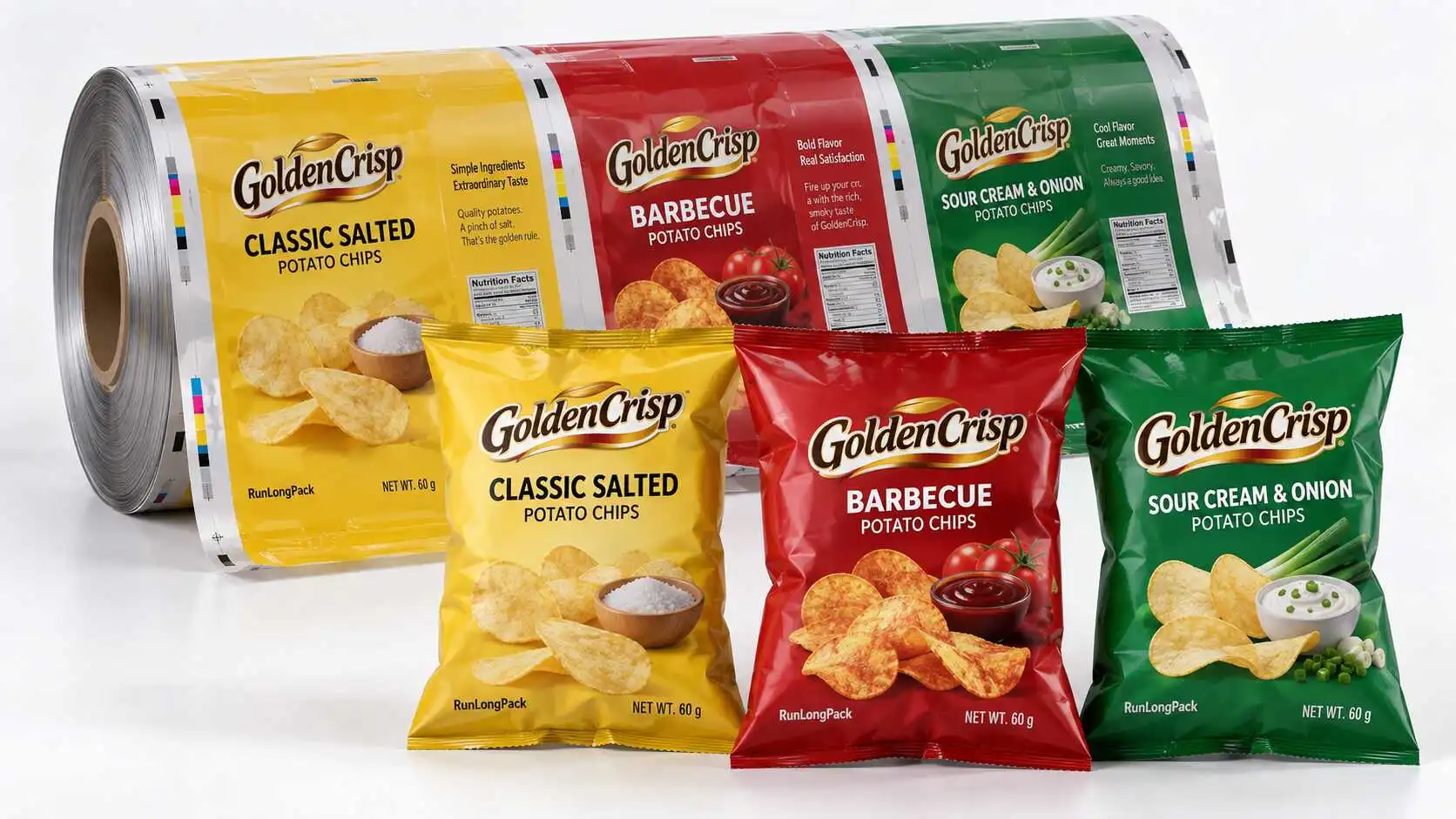
Conventional potato chips are commonly packed in flexible pillow bags formed from printed rollstock on vertical form-fill-seal (VFFS) machines. The film needs suitable moisture and oxygen protection, reliable heat sealing and compatibility with the actual line. Nitrogen flushing and correctly sized headspace can help reduce oxygen exposure and cushion fragile chips; neither replaces good seals or careful product handling.
Premade pouches are another route for suitable specialty snacks and smaller packing operations. Choose the supply format before comparing prices: a finished chip bag shown in a photo may have been formed on the customer’s machine, rather than supplied as an empty premade bag.
Quick Facts for Buyers
| Decision | What to confirm |
|---|---|
| Main automatic-packing route | Printed rollstock formed into pillow bags on compatible VFFS equipment |
| Key protection needs | Moisture, oxygen and where relevant light protection; intact seals and appropriate headspace |
| Machine information | Roll width, repeat, unwind, registration mark, thickness, core and roll limits |
| Size references | 30 g: 14 × 21 cm example; 60–75 g: 18 × 25 cm example. Validate with actual chips before approval. |
| MOQ | Confirmed by structure, dimensions, printing method, required film quantity and quantity per SKU |
| Digital production reference | Approximately 8–10 working days for suitable confirmed projects |
| Gravure timing reference | Cylinders approximately 7–9 working days; production approximately 15–20 days after cylinders |
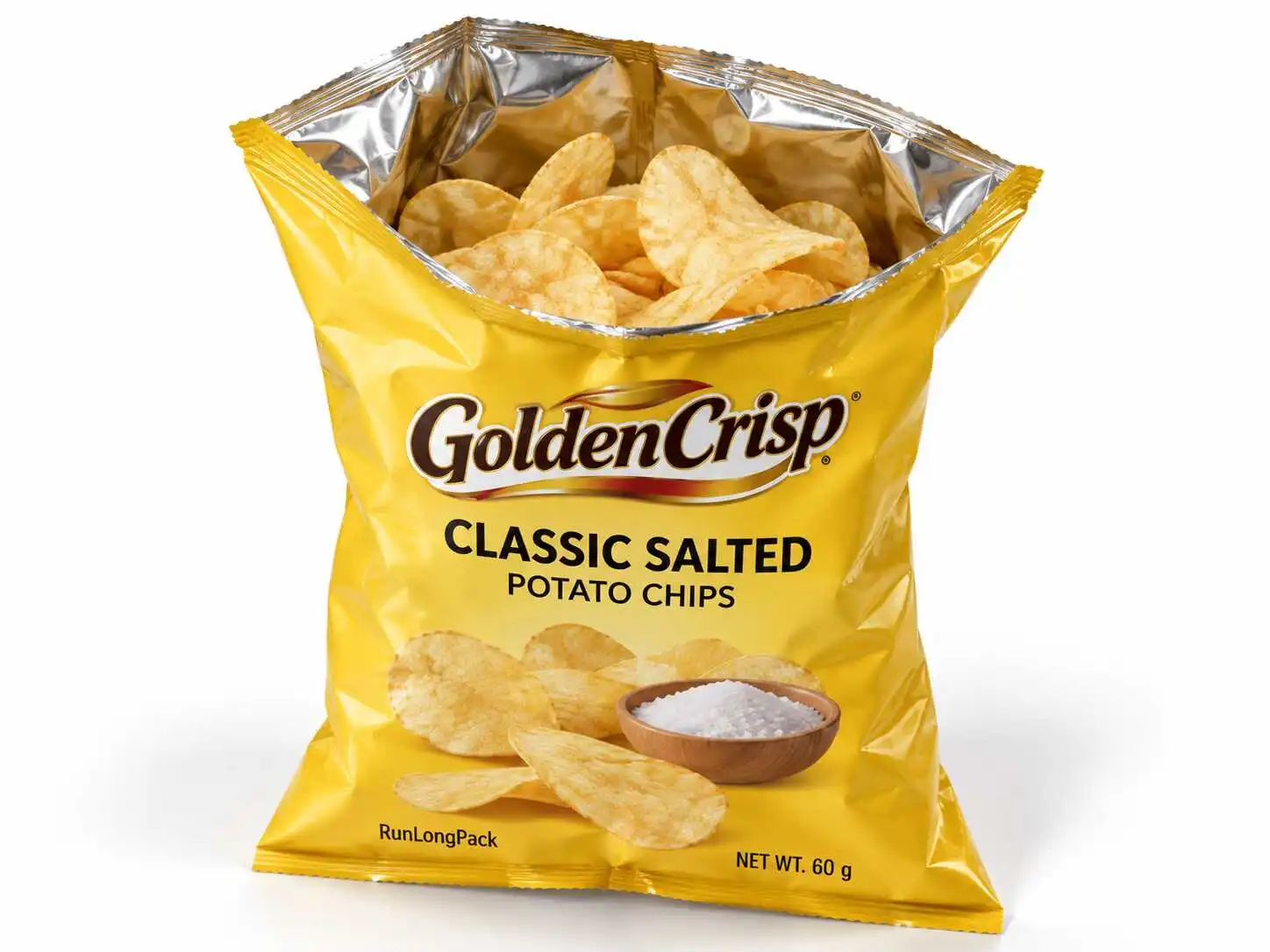
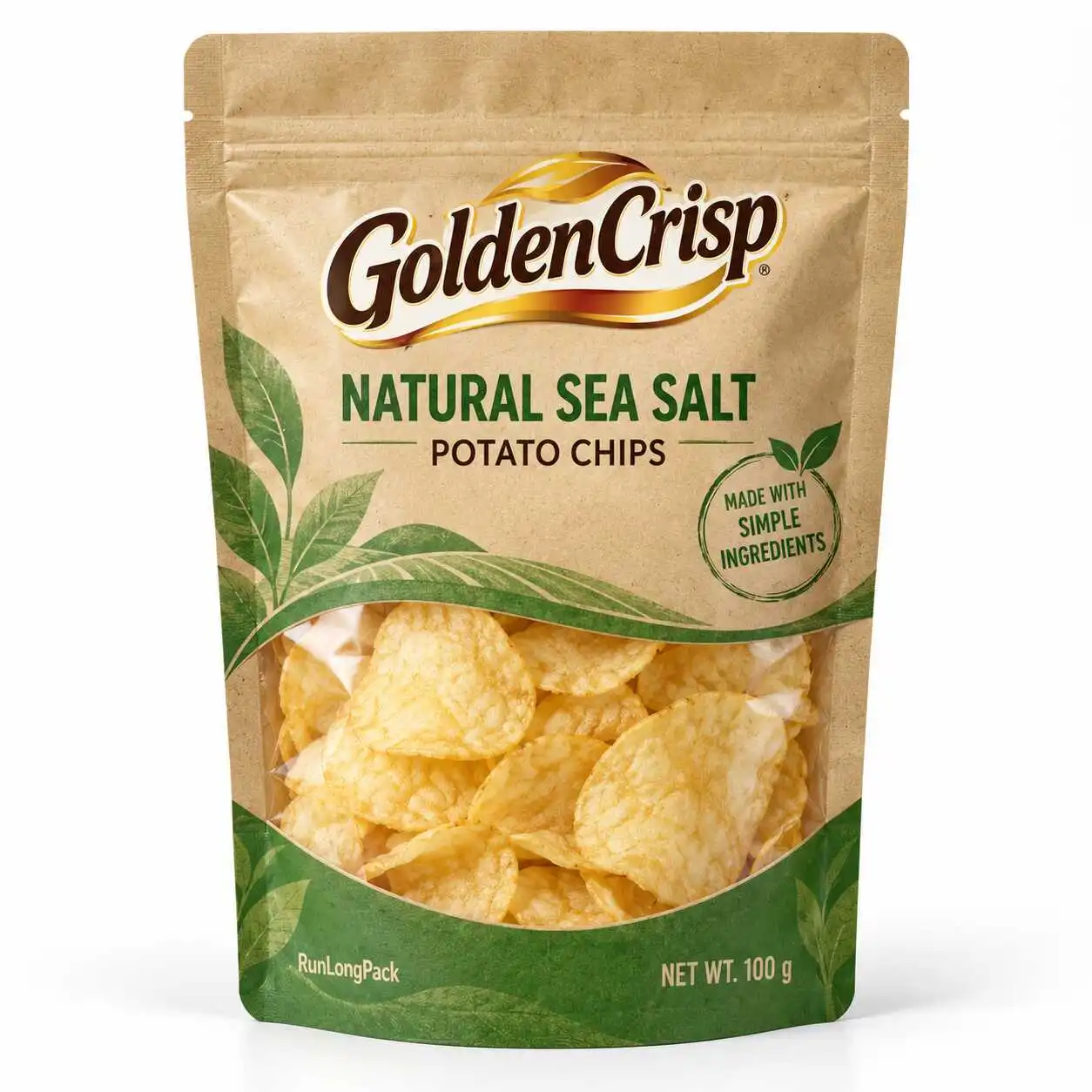
Images are AI-generated packaging concepts, not customer or factory evidence. Brand artwork, nutrition panels and printed weights are illustrative, not approved labels or standard capacities.
Potato Chip Packaging Formats
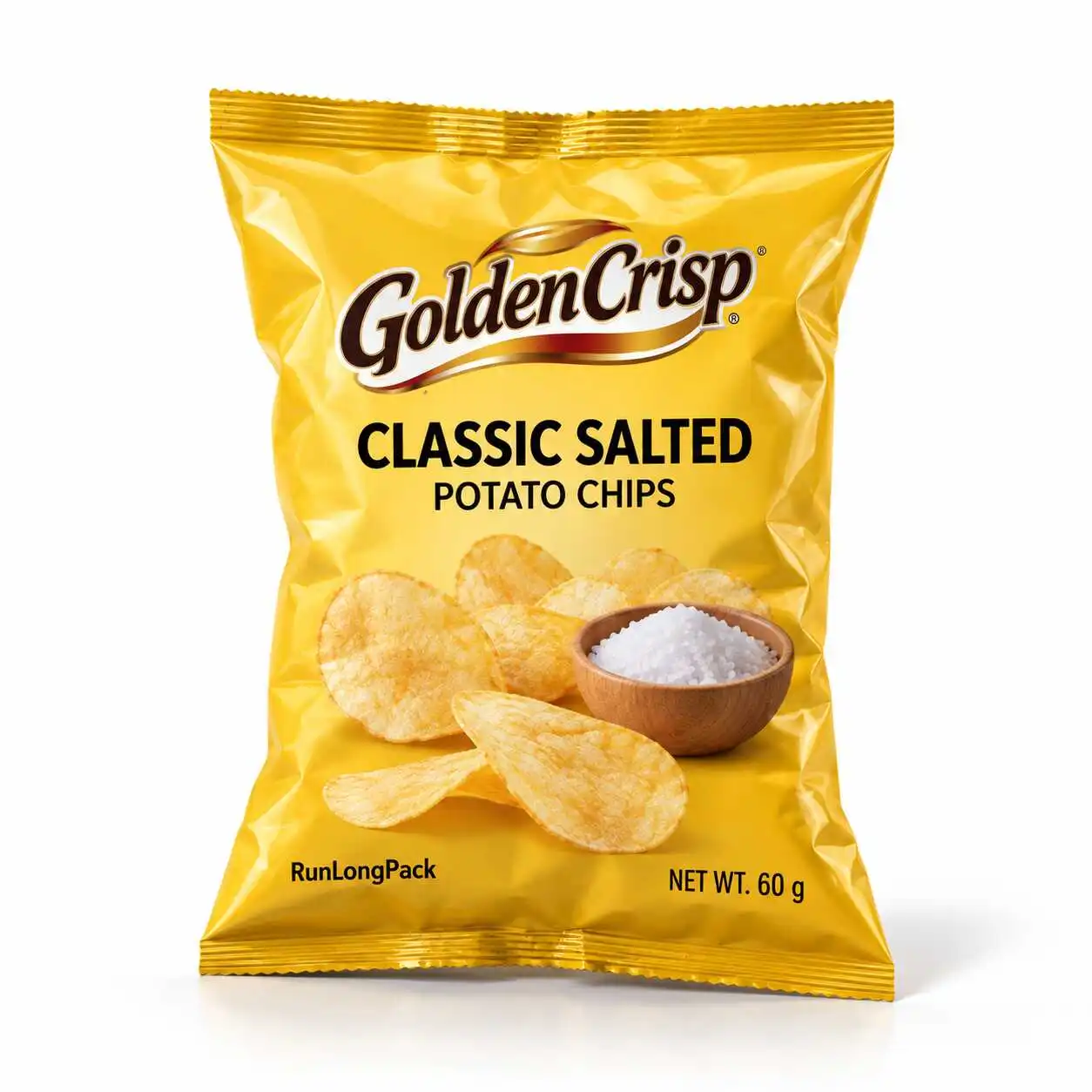
VFFS Pillow Bags for Potato Chips
A potato chip pillow bag is typically formed from rollstock with a longitudinal back seal plus top and bottom seals. Buyers may call it a center-seal bag or back-seal snack bag. Confirm whether the machine uses a fin seal or a lap seal: those seal arrangements need compatible surfaces and are not interchangeable specifications.
This is a common route for individual snack packs, retail bags and family-size packs. Nitrogen flushing is carried out by compatible filling equipment; the packaging film must support the required barrier and sealing performance.
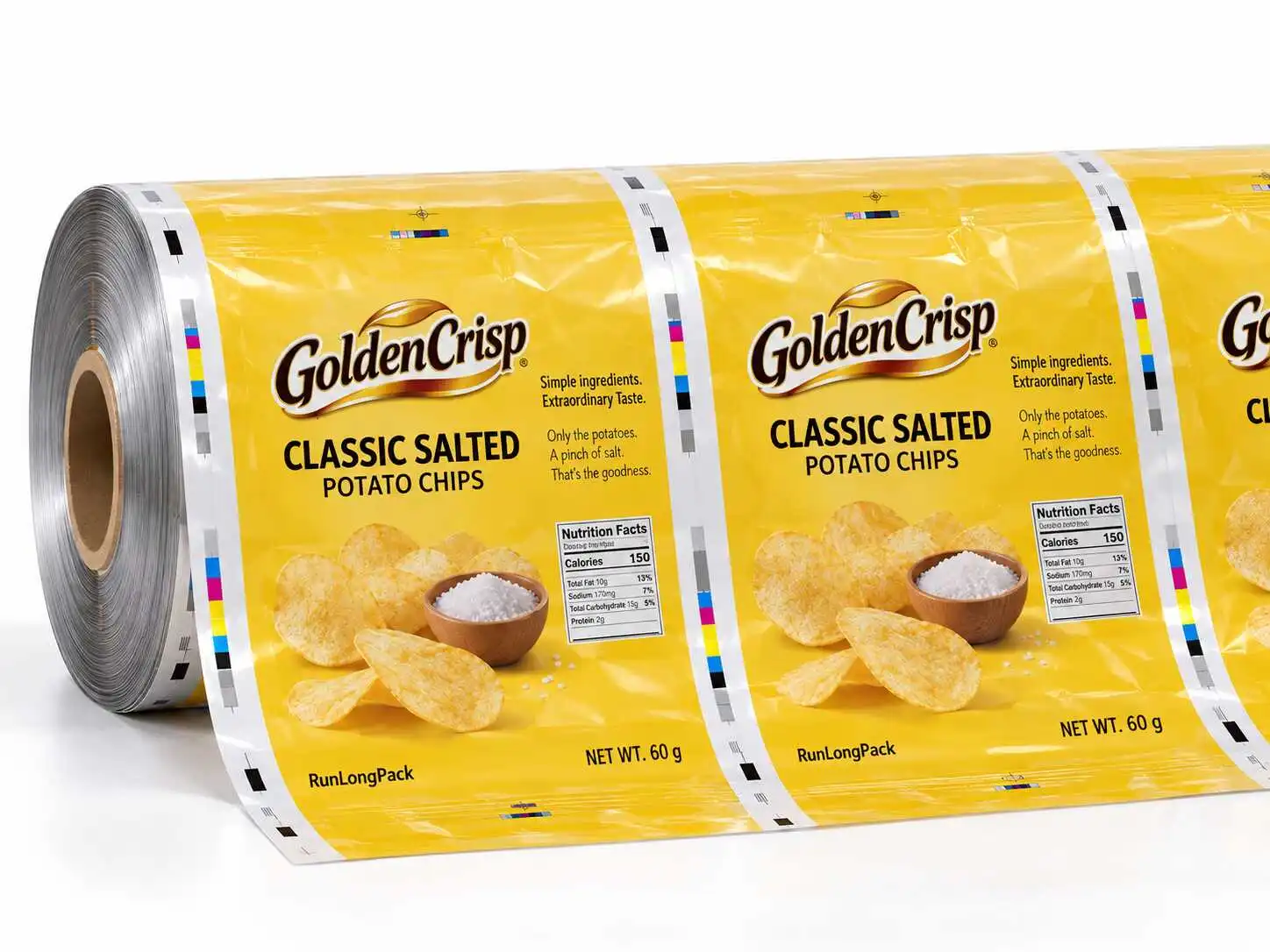
Printed Rollstock Film
Runlong supplies printed rollstock film for project-specific machine requirements. Specify finished bag dimensions, web width, print repeat, unwind direction and sealing conditions before artwork approval.
Potato chip packaging film is supplied as rolls, not prefilled food packs. A visual artwork layout does not establish the correct number of lanes, web orientation or cut position for your machine.
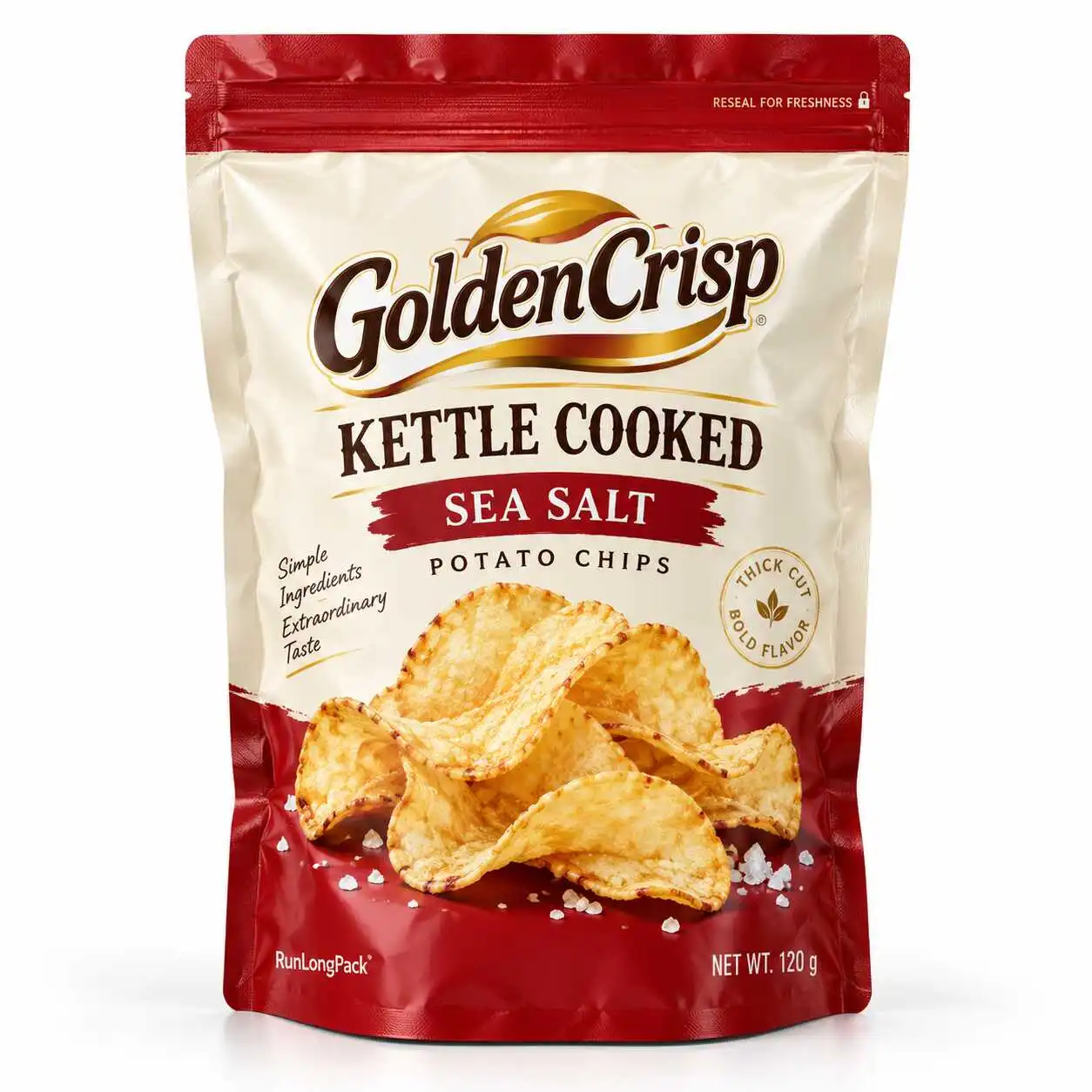
Premade Potato Chip Pouches
Suitable specialty chip projects can use stand-up pouches, zipper pouches or three-side-seal pouches for compatible manual or premade-pouch filling. Discuss opening width, product loading and the final heat seal.
A zipper supports reclosure after opening; it does not replace the initial sealed barrier. For high-volume conventional potato chip production, printed rollstock with automatic VFFS packing is usually the more common route. Gusseted snack bags and other formats require a separate machine and size review.
Do you need empty premade pouches or film for a machine that forms the bags? Send your current package and packing method.
Compare My Packaging OptionsPotato Chip Packaging for Nitrogen Flushing
Nitrogen-flush packaging replaces part of the oxygen-containing air inside the pack with nitrogen during packing. The visible headspace is intentional, but a bag that looks inflated does not by itself prove the gas composition, residual oxygen level or seal quality.
Oxygen Protection
Reducing oxygen exposure can help protect oil and flavor stability. The appropriate residual-oxygen target, gas settings and checks must be established for the product and line; this page does not prescribe a universal target.
Cushioning & Package Shape
Headspace provides some cushioning around delicate chips and affects the filled appearance. It cannot prevent all breakage or compensate for rough conveying, excessive drop heights or overloaded cartons.
For nitrogen-flushed chip bags, evaluate film barrier, gas delivery, filling timing, seals and handling as a system. Modified-atmosphere snack packaging requires filled-product shelf-life validation under the intended storage conditions.
Why Potato Chip Bags Need Extra Headspace
Do not size a bag from net weight alone. Chips have low and variable bulk density; shape, cut, seasoning and how they settle change the space needed. Allow room for filling, gas flushing, seal clearance and product protection.
If the Bag Is Too Small
Chips can bridge at the opening, interfere with the sealing jaws or be compressed during filling. Insufficient space may increase breakage and make clean sealing harder.
If the Bag Is Too Large
Unnecessary film area and poorly utilized cartons can increase costs. Excess size is not a substitute for a validated nitrogen-flushing setup.
Potato Chip Bag Size Reference
Use these example finished-bag dimensions as starting points for discussion, not universal weight-to-size standards or a stock-size list. Chip shape, bulk density, target headspace and machine constraints can change the result.
| Net weight reference | Example finished size, W × L | Before approval |
|---|---|---|
| 30 g | 14 × 21 cm | Confirm actual filling and seal clearance |
| 35 g | 14 × 22 cm | Check chip shape and headspace |
| 56 g | 18 × 23 cm | Review product volume and machine format |
| 60–75 g | 18 × 25 cm | Trial with the actual product and gas setup |
| 135 g | 23 × 28 cm | Check filled shape and carton arrangement |
| 220 g | 24 × 36 cm | Confirm handling, sealing and transport needs |
These are reference examples, not guaranteed capacities. Confirm how width and length are measured on the approved drawing, including seal allowances. Do not derive roll width from this table alone. Final dimensions should be approved after actual filling tests.
Barrier Requirements for Potato Chip Packaging
Moisture
Moisture uptake can reduce crispness. Review moisture-barrier requirements against storage humidity, shelf-life targets and the complete sealed package, not just the nominal film thickness.
Oxygen
Oxygen can affect oils and flavor. High-barrier snack packaging must be considered alongside residual oxygen after packing and potential leakage through imperfect seals.
Light
Some products benefit from reduced light exposure. Review the laminate and any clear window together; an opaque printed appearance alone does not establish a measured light barrier.
Aroma
Flavor retention and resistance to unwanted odor transfer depend on the food, laminate and storage conditions. Validate with the actual seasoned product.
Where oxygen transmission rate (OTR) or water-vapor transmission rate (WVTR) is specified, also state the test temperature, humidity and method. Values measured under different conditions may not be directly comparable. No single OTR or WVTR number guarantees a particular shelf life.
Typical Flexible Film Structures for Potato Chips
Potato chip bag material is commonly a multilayer flexible laminate selected for print support, barrier, mechanical behavior and heat sealing. These construction families are discussion options, not automatic recommendations for every line.
BOPP / Metallized Film Structures
BOPP-based laminates with a suitable metallized barrier and sealable layer can be considered for snack applications. Confirm heat-seal surfaces, friction, stiffness and barrier performance against the machine and product.
PET / Metallized Barrier / Sealant Structures
These can be evaluated when a project needs a different balance of print support, mechanical properties and sealing behavior. Changing the laminate may require line trials rather than transferring old settings unchanged.
Transparent Structures
A transparent laminate or window can show the product, but the barrier must still meet the agreed requirement. A silver-colored inner surface in a photo does not identify whether the material is metallized film, foil or another construction.
The final laminate should be confirmed according to your product, shelf-life target, nitrogen-flushing process, packaging machine and destination-market requirements.
Metallized or Transparent Potato Chip Packaging?
Metallized Film
Metallized snack film is commonly considered when light protection and suitable oxygen/moisture barrier are important. Actual performance depends on the complete construction and its condition after conversion and handling.
Metallized film is not the same as aluminum foil. Do not specify “foil snack packaging” solely because the inside looks shiny; ask for the actual layer structure.
Transparent Packaging
A potato chip bag window can help buyers see the product, especially for specialty snacks. Review the loss of light protection and the barrier performance of the window area before choosing a large clear panel.
A kraft-look finish does not establish paper content, recyclability or compostability. Those claims require confirmation for the actual structure and market.
How to Match Potato Chip Rollstock With a VFFS Machine
Match the film to the actual forming and sealing process. Send a current film specification or sample roll when available; machine photos and a finished package help identify missing details.
| Specification | Why it matters |
|---|---|
| Machine manufacturer/model; finished bag width and length | Establish the forming set, package format and machine limits |
| Roll width and print repeat | Match forming geometry, seal allowance and cut-off position |
| Fin/lap seal arrangement and sealing jaw type | Confirm the surfaces to be joined and compatible sealing behavior |
| Film structure and thickness | Review barrier, stiffness, friction and the process window |
| Unwind direction, print orientation and eye-mark position | Support correct tracking and registration |
| Core ID, maximum roll diameter and roll weight | Confirm mounting and handling limits |
| Sealing temperature, pressure, dwell time and intended speed | Plan realistic trials; film alone cannot guarantee throughput |
| Nitrogen setup, filling timing and product characteristics | Coordinate gas flushing, clean seals and product protection |
There is no universal roll-width formula for all pillow bags, gussets and seal arrangements. Use an approved machine drawing and verify the repeat convention with the equipment supplier. The VFFS rollstock compatibility guide explains the checks in more detail.
Already running a chip line? Send the current film specification, finished bag and machine model.
Send Your Film SpecificationReliable Sealing Matters on Potato Chip Lines
Oil, salt, seasoning powder and broken chips can enter the sealing area and reduce seal reliability. The sealant layer, temperature, pressure, dwell time, jaw alignment and product timing all influence the result. No film should be assumed to seal reliably through unlimited contamination.
For chip bag sealing problems, first compare clean and affected seal areas, inspect the jaws and track when contamination occurs. Test settings within the film supplier’s recommended process window. Simply increasing temperature may damage the film without solving the root cause.
Review finished-pack leakage and seal strength using agreed methods, including representative packs from realistic operating conditions. If nitrogen retention is part of the specification, define the checks and acceptance limits before production.
Packaging Considerations for Reducing Chip Breakage
- Choose bag dimensions and headspace from actual filling trials.
- Coordinate nitrogen delivery with product flow; avoid treating more gas as an automatic improvement.
- Review multihead-weigher handling, drop height and transfer points with the equipment supplier.
- Check chip edges and package handling for puncture risks.
- Validate carton arrangement, stacking and transport with the filled product.
Film alone does not determine chip breakage. Weighing, dropping, filling, conveying and secondary packing all matter. Do not replace filled-pack transport tests with a claim that a thicker film is “break-proof.”
Custom Printed Potato Chip Bags
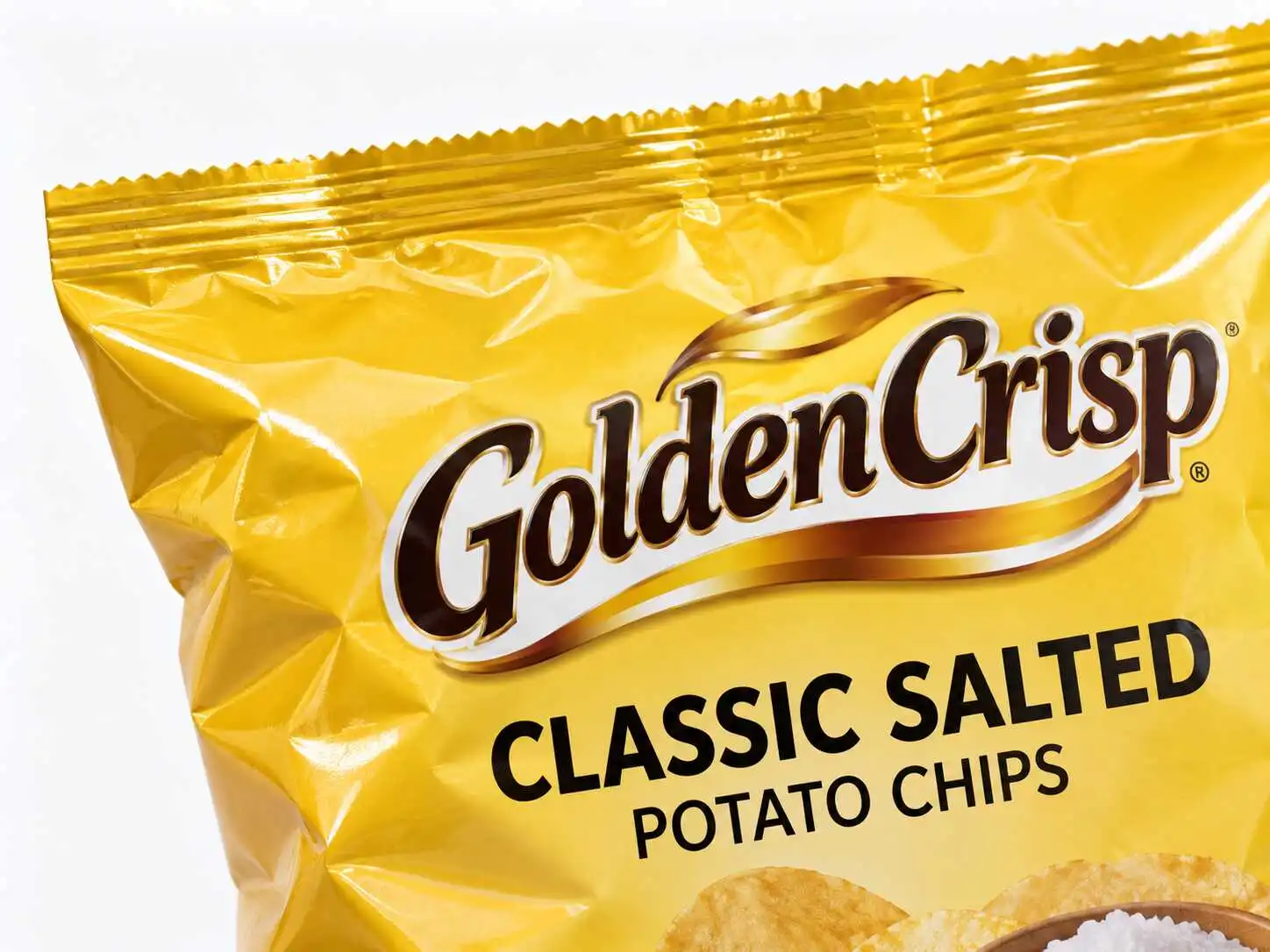
Coordinate brand artwork, flavor colors, nutrition information, barcode, date-code area and registration marks on the approved rollstock layout or pouch dieline. Keep important text out of seals, folds and cut zones.
Matte or gloss appearance can be discussed for the selected construction. Confirm the actual print and surface treatment rather than judging finish from a concept image.
Digital vs Gravure
Digital printing can be evaluated for compatible short runs and multiple designs, without gravure cylinders. Material and web-width compatibility must be checked. The approximately 37 cm maximum finished width for suitable digital premade pouches is not a rollstock web-width specification.
Gravure can be evaluated for planned repeat production. Each design normally needs its own cylinder assessment. Compare quantities per flavor, repeat orders and total project cost; no one method is best for every snack brand.
Digital artwork normally uses CMYK; exact Pantone matching is not guaranteed. The customer must approve wording, nutrition declarations, allergens, barcode, dimensions and layout. Follow the flexible packaging artwork checklist before final approval.
Packaging for Multiple Chip Flavors & SKUs
Original, BBQ, sour cream and onion, cheese, salt and vinegar, spicy or truffle designs may share a format while using different artwork. Confirm that the actual products still fit the same volume and barrier specification.
Send total quantity and quantity per design. Suitable digital projects may be assessed on combined volume, but this is not automatic; gravure must account for separate artwork and cylinders. Different flavors illustrated together on a roll are design examples, not a promise of mixed-flavor production on one machine web.
Packaging for Potato Chips and Other Crispy Snacks
Related flexible snack packaging concepts may be assessed for tortilla and corn chips, cassava, banana and plantain chips, vegetable chips, popcorn, puffed or extruded snacks and crackers. Oil level, sharp edges, bulk density and moisture sensitivity differ, so do not transfer potato chip sizes or barrier requirements unchanged.
For a broader range of products, explore snack packaging options. This page focuses on the particular decisions behind potato chip bags and machine-fed film.
Potato Chip Automatic Packaging Line
A typical line includes product feeding, weighing, VFFS forming and filling, nitrogen flushing where specified, sealing, coding, inspection and cartoning. These functions can overlap or be integrated; the exact sequence depends on the equipment.
Agree the inspection method and position with the line supplier. Metallized or foil-based packaging can affect metal-detection arrangements, so do not assume a detector installed after sealing will suit every laminate.
The film needs to work with the machine rather than being selected independently. See Potato Chip Automatic Packaging Line: weighing, nitrogen flushing and VFFS film considerations. This packaging page does not promise a complete machinery supply package or a fixed line speed.
MOQ for Custom Potato Chip Packaging
MOQ depends on film structure, roll width, repeat length, printing method, number of designs and required film quantity. For multiple flavors, provide both the total order and quantity per SKU.
Machine-Fed Rollstock
Request a project-specific film quantity and trial plan. A rollstock order should not be quoted using a generic premade-pouch minimum or converted to a bag count without the approved specification.
Premade Chip Pouches
Confirm pouch format, dimensions, construction, features and quantity per artwork separately. Availability of a printing route depends on the actual pouch and material, not only the product name.
Production Lead Time
Typical digital production is approximately 8–10 working days for suitable confirmed projects. Gravure cylinder making is approximately 7–9 working days, followed by approximately 15–20 days of production after cylinders are completed. Timing starts after final specifications, artwork and required payment are confirmed. Shipping and any additional trial or testing stages are separate.
Samples & Confirmation
Available reference samples are generally free, with shipping paid by the customer. They help review format, material and print appearance but do not prove your final film will run on your line. Custom proof samples and trial-film quantities are quoted separately according to the project.
Why Runlong Pack
Film and Pouch Routes
Discuss printed rollstock for an existing line or suitable premade formats without treating them as the same product.
Specification-Led Review
Develop the quotation around bag dimensions, material needs, equipment and sealing conditions rather than a product photo alone.
SKU-Based Print Planning
Compare suitable digital and gravure routes using quantities per design and repeat-order requirements.
Food-Contact Documentation
Runlong Pack uses food-grade virgin raw materials. Food-contact documentation must match specified samples, applicable structures, intended use and destination market—not a universal certification claim. Review packaging compliance information.
Before Production
Confirm product and packing route → bag size and headspace → barrier and film specification → artwork → samples or line trials as agreed → written production approval → printing and conversion → agreed quality checks and shipment. Resolve compatibility questions before approving the final specification.
What We Need to Quote Your Potato Chip Packaging
| Information | What to send |
|---|---|
| Product and net weight | Chip type, shape, seasoning and intended weight per pack |
| Finished bag size and style | W × L, gusset if any; pillow bag or premade pouch |
| Equipment | Machine brand/model, forming and sealing arrangement |
| Roll specification | Web width, repeat, unwind, eye mark, core and roll limits |
| Material and thickness | Existing specification if available; otherwise required performance |
| Nitrogen and shelf life | Gas-flush use, target storage conditions and validation requirements |
| Printing and quantities | Artwork, number of flavors, total quantity and quantity per SKU |
| Sample and delivery | Current bag/sample roll if available, destination and schedule |
You do not need every technical answer before contacting us. A current film specification, package photo and machine model are a useful starting point.
Custom Potato Chip Packaging FAQ
What material is used for potato chip bags?
Why are potato chip bags filled with nitrogen?
What type of bag is used for potato chips?
What is VFFS potato chip packaging?
What is the best film for potato chip packaging?
Do potato chip bags need a moisture barrier?
Do potato chip bags need an oxygen barrier?
What size bag is suitable for 30 g of potato chips?
What size bag is suitable for 60 g of potato chips?
Can you make custom printed potato chip bags?
Can you supply rollstock for potato chip packaging machines?
How do I choose the correct roll width?
Can you match my existing VFFS film?
Why do potato chip bags sometimes leak at the seal?
Can different chip flavors use the same packaging size?
Product → size → headspace → barrier → machine → seal → print
Need Potato Chip Packaging That Runs on Your Machine?
Send your finished bag size, net weight, roll width, repeat length, packaging-machine model, current film structure, quantity and number of SKUs. Include nitrogen-flushing and storage requirements so we can review the complete packaging brief.