


Custom printed packaging · Built around your filling process
Custom Sauce & Condiment Pouches
Custom printed sauce pouches and sauce packaging bags for food brands, processors and foodservice suppliers—from single-serve sauce packets to refill pouches and printed rollstock.
Start with what is inside the pack and how it will be filled—not just the pouch shape. Runlong Pack reviews sauce properties, processing conditions, dispensing needs and quantities before recommending a packaging specification.
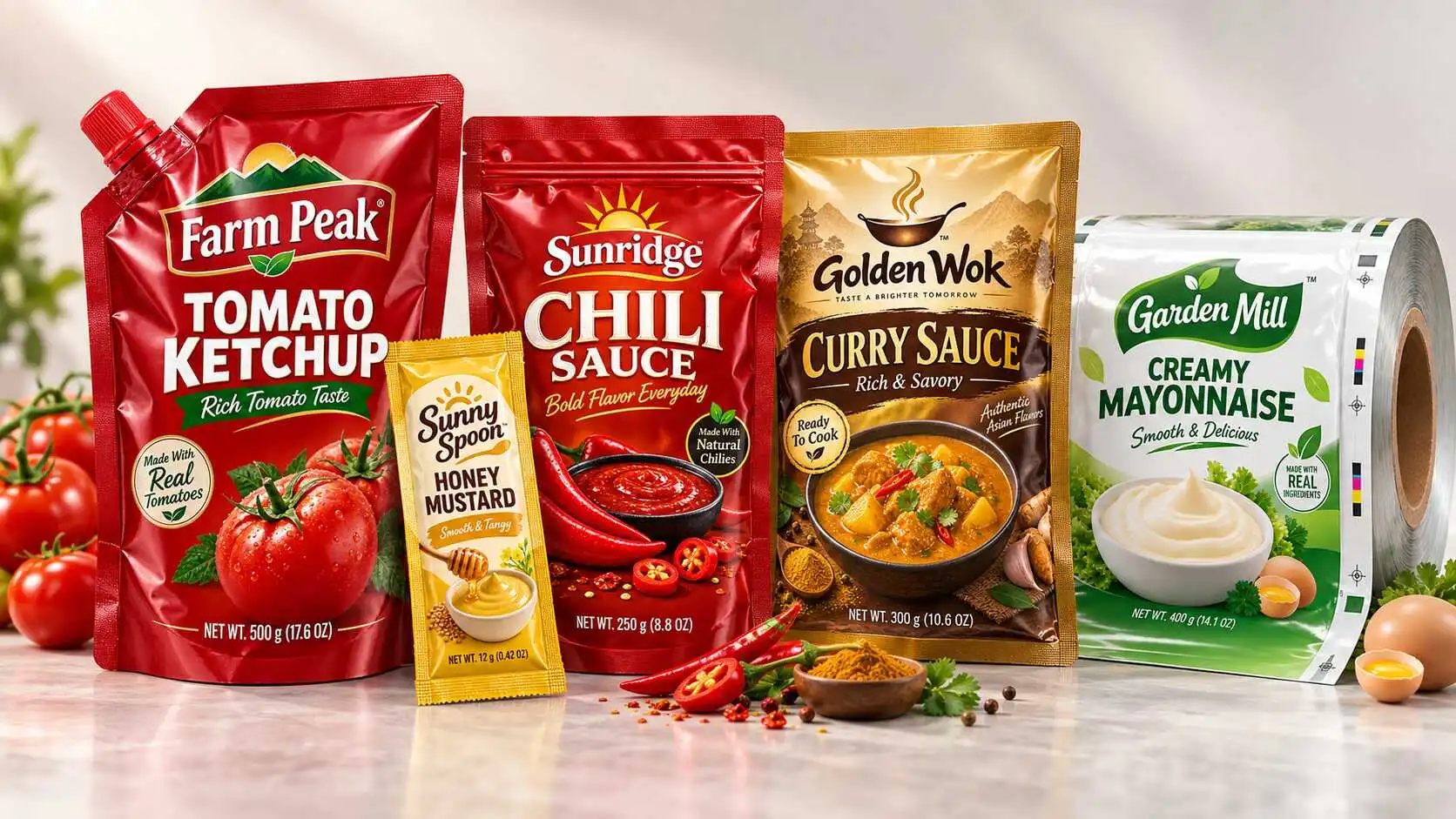
Quick Answer: Which Sauce Packaging Should You Choose?
Choose a spout pouch for controlled pouring or repeated dispensing, a sachet for single servings, a suitable stand-up or flat pouch for a sealed portion or refill, and printed rollstock when your machine forms the package. Then confirm viscosity, particles, oil content, filling temperature and any treatment after sealing. A pouch suitable for cold filling is not automatically suitable for hot filling, pasteurization or retort.
MOQ depends on the format and process: digitally printed spout pouches are recommended from approximately 1,000 pcs, gravure spout pouches from approximately 15,000 pcs, and standard retort pouches typically from approximately 50,000 pcs. These special-product rules take priority over general pouch minimums.
Quick Facts
| Requirement | Planning reference |
|---|---|
| Formats | Spout, sachet, stand-up, three-side-seal/flat and printed rollstock |
| Spout pouch quantities | Digital recommended from approximately 1,000 pcs; gravure approximately 15,000 pcs |
| Standard retort pouch MOQ | Typically approximately 50,000 pcs; confirm structure and processing conditions |
| Selected ordinary pouch projects | Digital approximately 100 pcs may be possible; 1,000–3,000 pcs recommended. General gravure reference: approximately 10,000 pcs. Not a spout or retort rule. |
| Rollstock | Selected compatible digital trials approximately 10 kg; commercial reference approximately 300 kg+ |
| Digital size limit | Maximum finished pouch width approximately 37 cm; format and construction still need review |
| Process and shelf life | Project-specific material, sealing and filled-pack validation required |
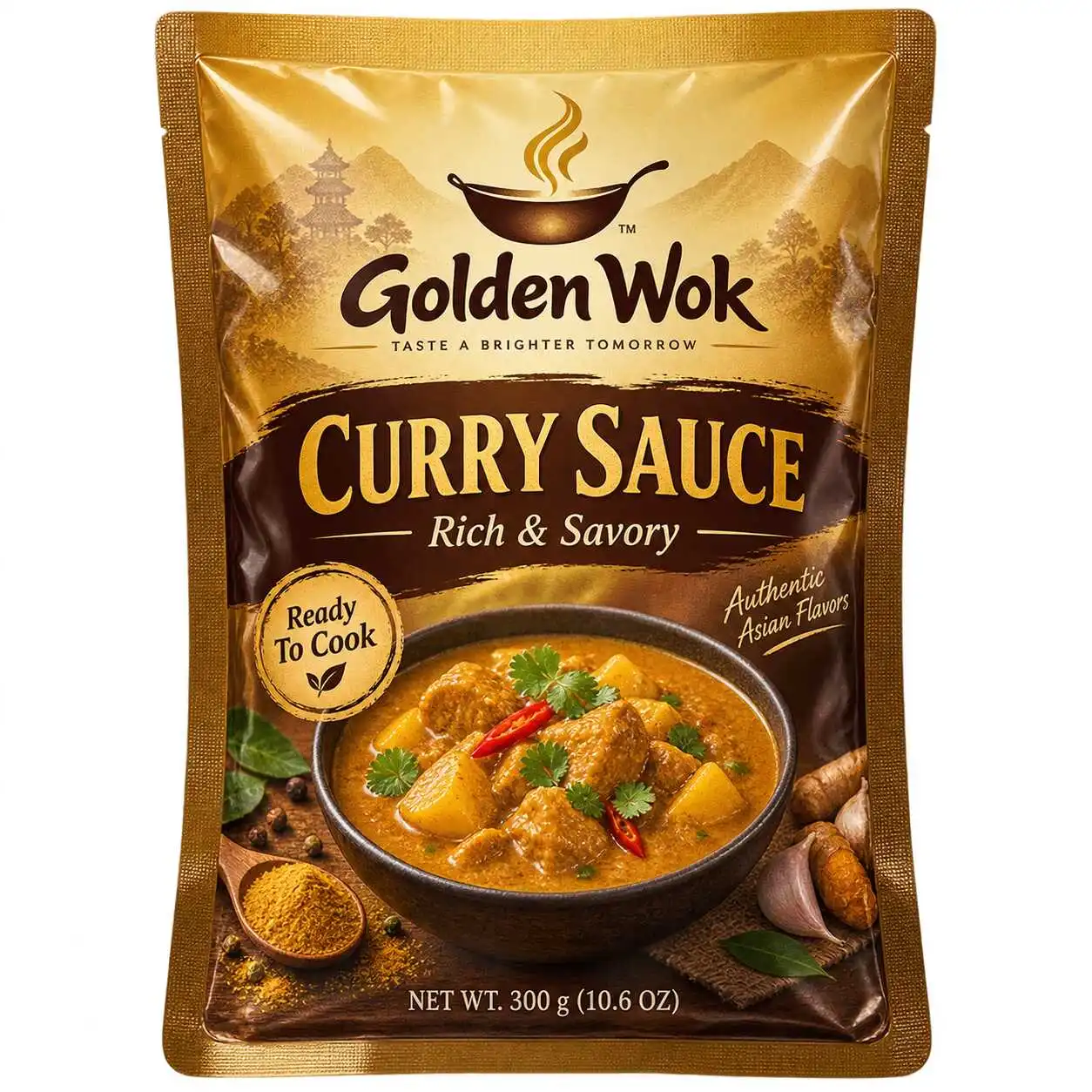
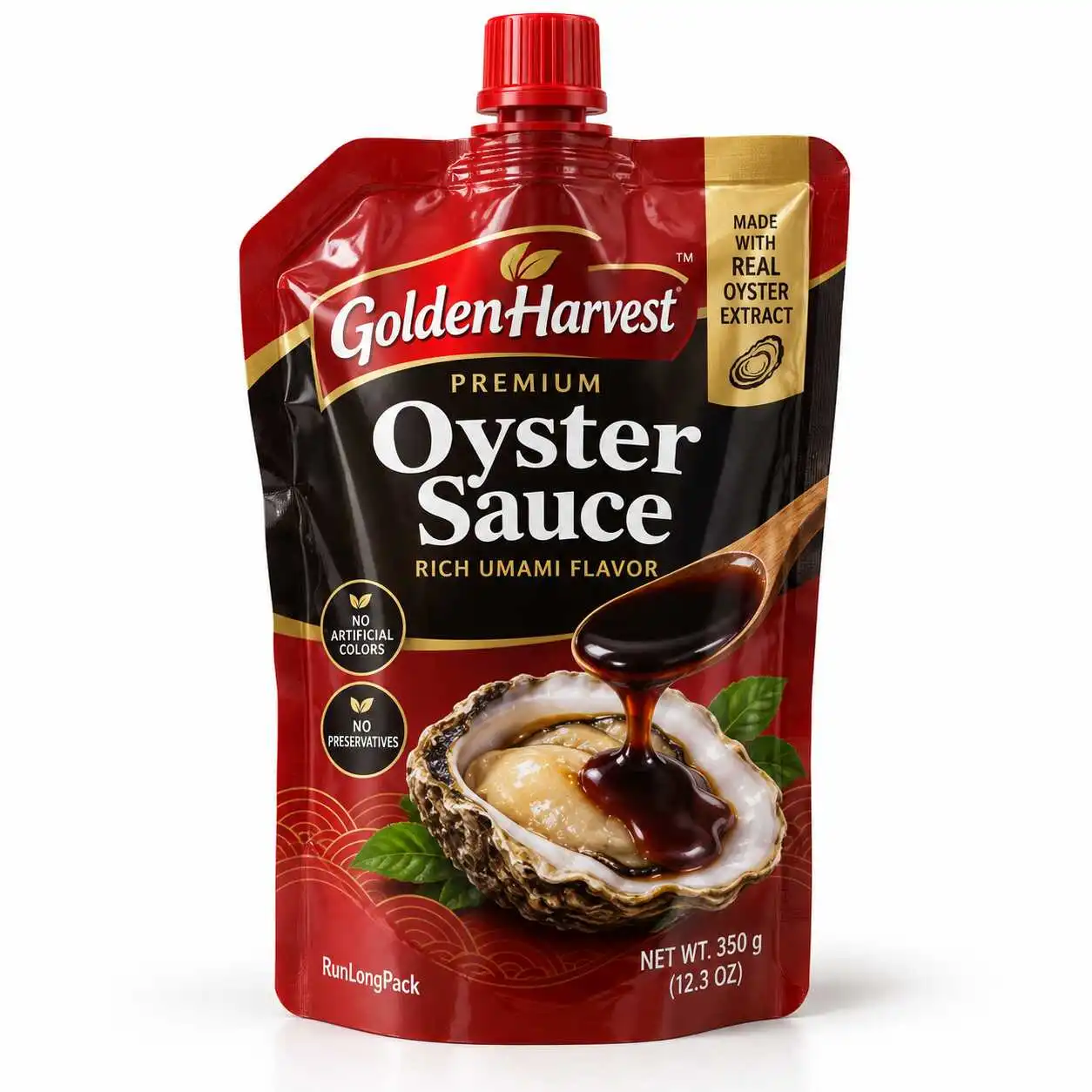
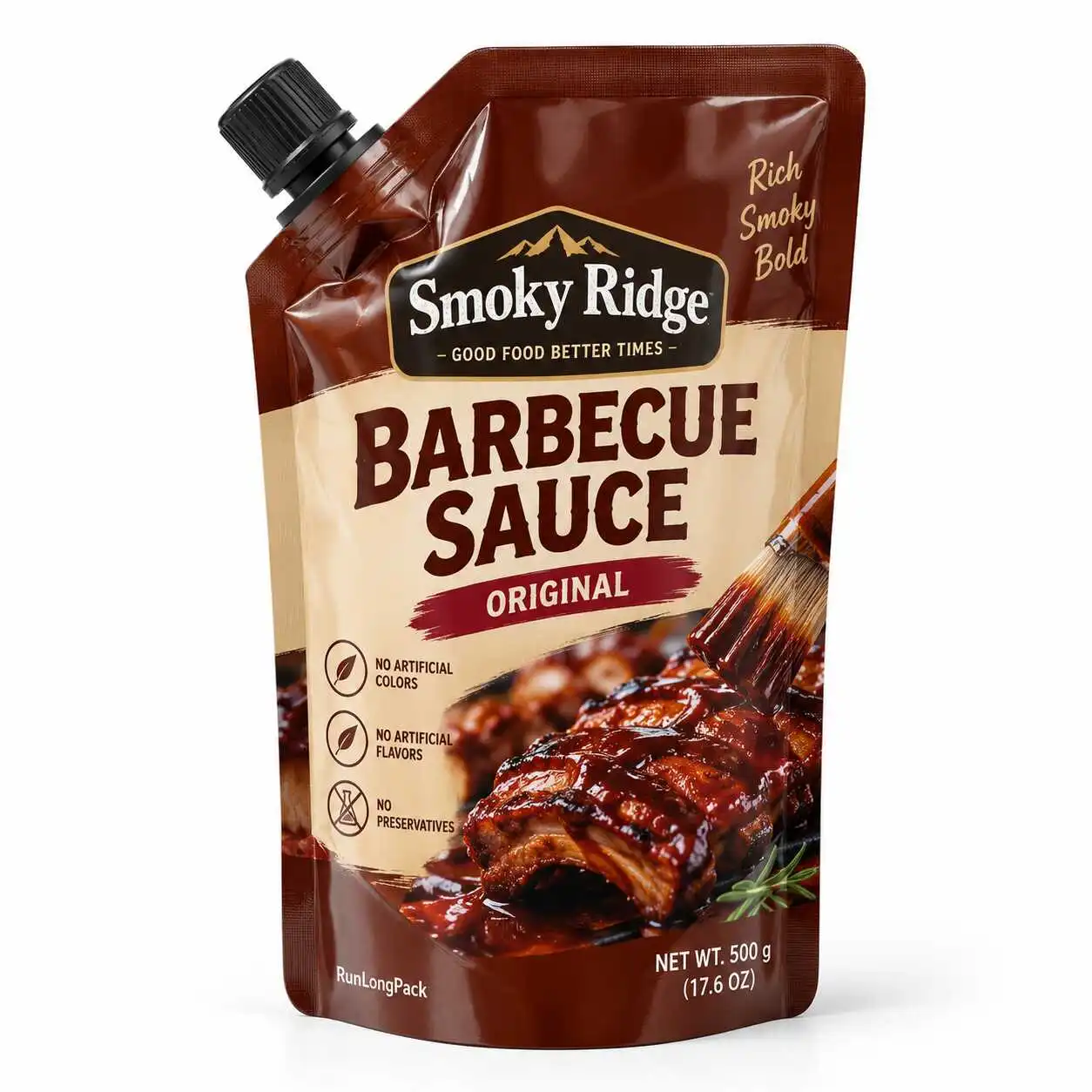
About the images: AI-generated packaging concepts illustrate format and artwork options, not customer projects. Printed weights and claims are examples, not confirmed specifications.
Sauce & Condiment Packaging Formats
Sauce pouches are flexible primary food packages. A spout, zipper or stand-up base describes a feature or format—not a sterilization rating.
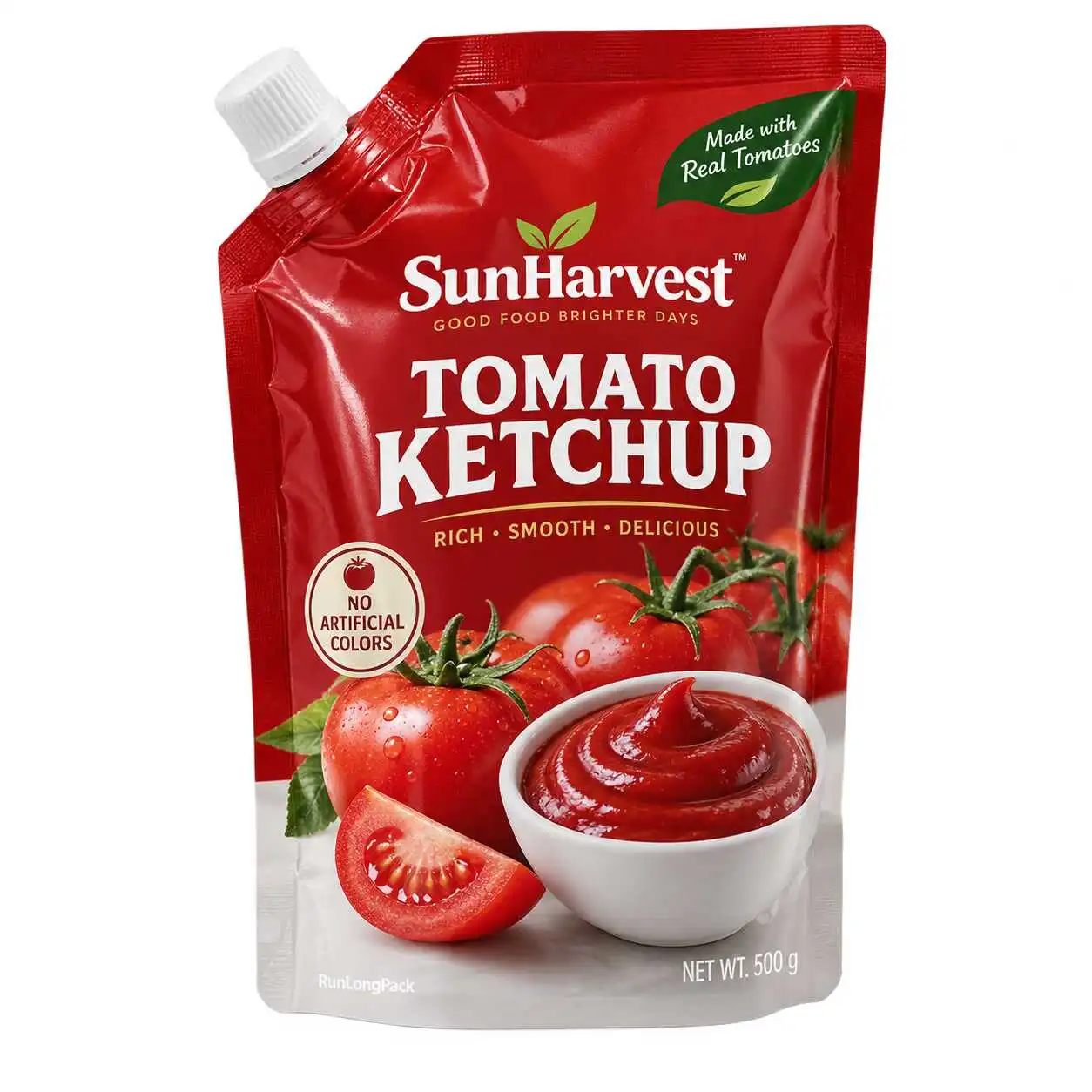
Spout Pouches for Sauces
Consider a spout for pouring, squeezing or resealing. Review bore diameter, position, cap handling and whether filling is through the spout or an open pouch edge. Thick sauces and particles may need a different fitment than thin liquids. Explore custom spout pouch options.
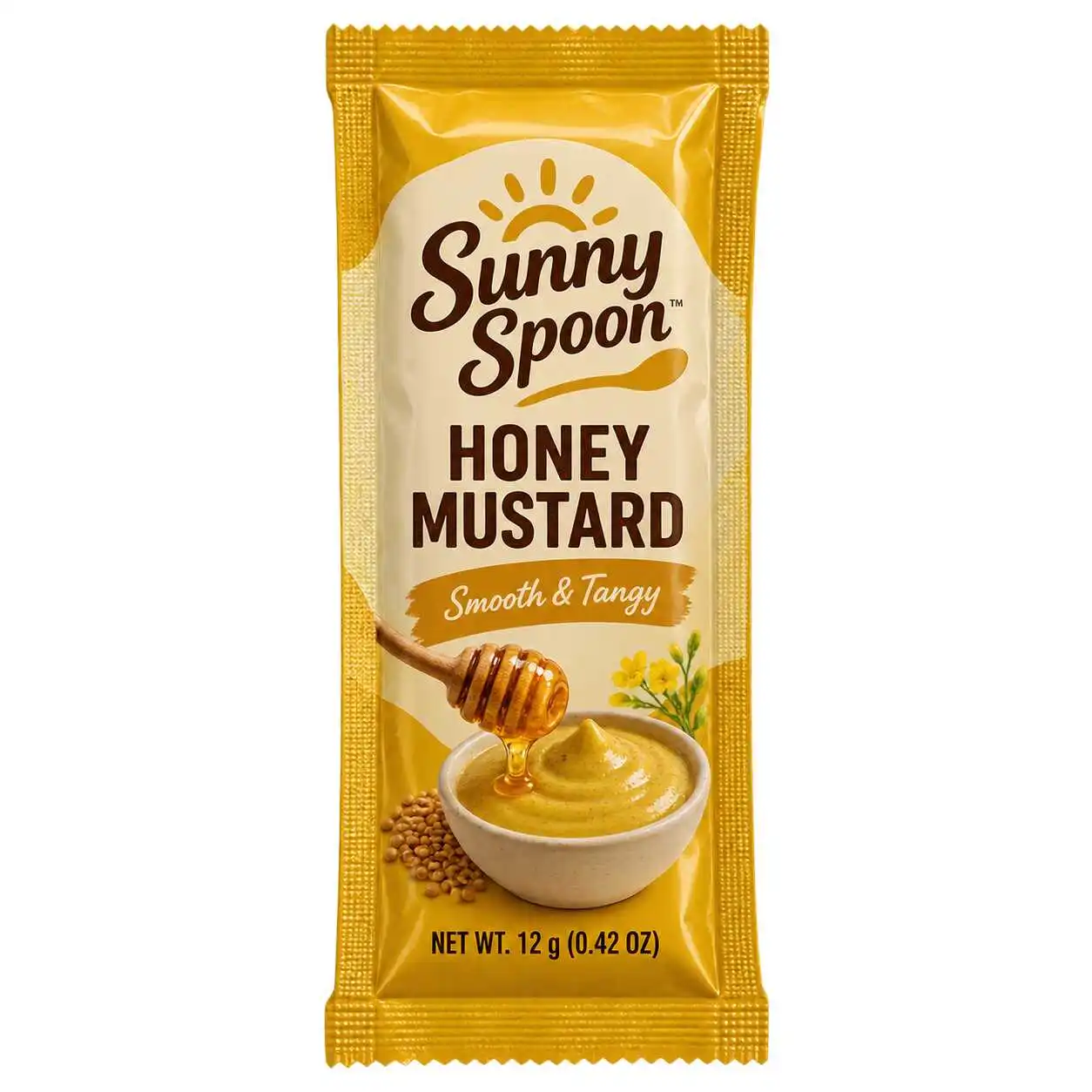
Sauce Sachets & Condiment Packets
Single-serve packets suit portion-controlled foodservice and takeaway. Confirm dose, tear direction, usable seal area and machine route. A premade packet and film for a multi-lane sachet machine are different supply formats. See custom sachet packaging.
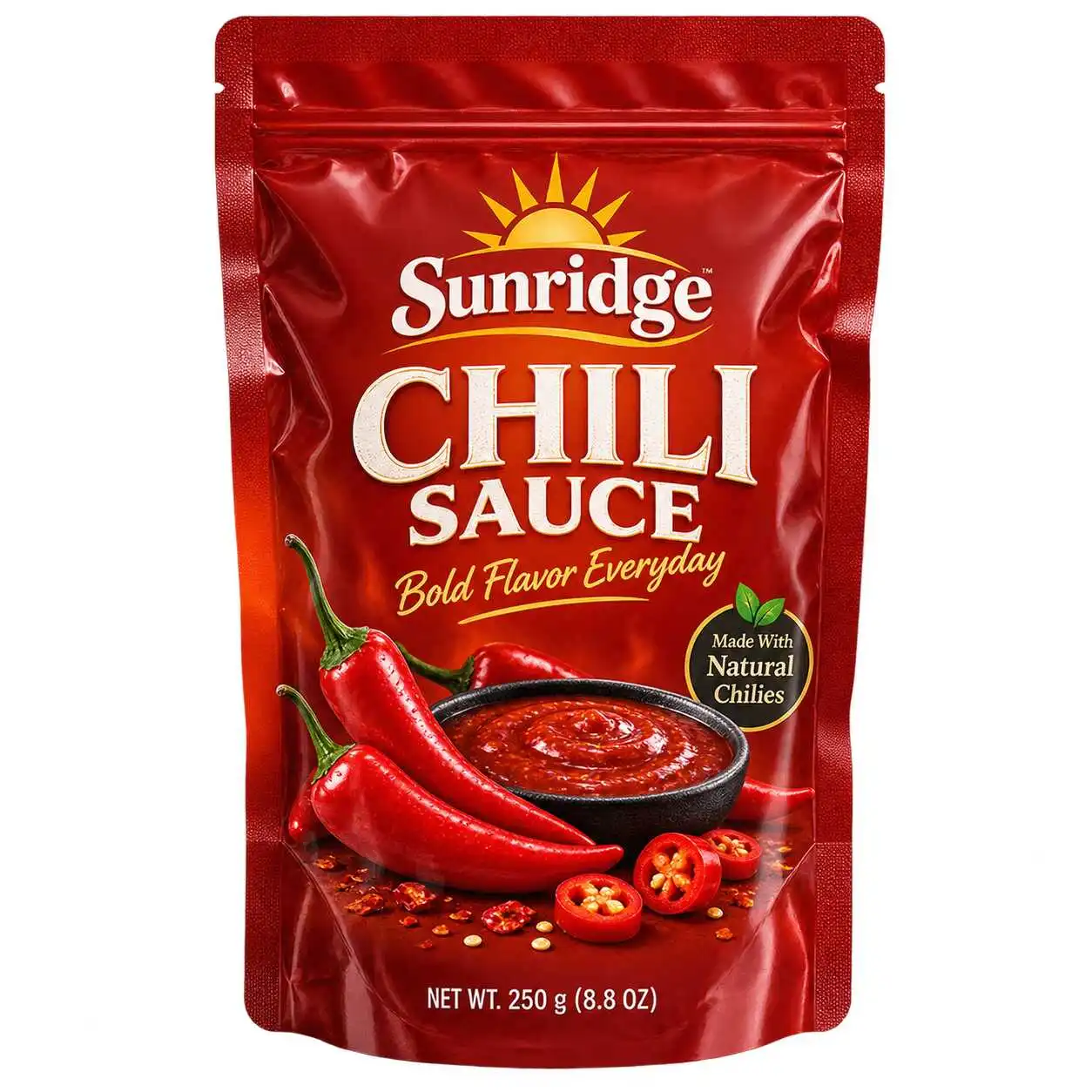
Stand-Up Sauce Pouches
A bottom gusset can support shelf presentation and larger portions. Check filled stability and practical dispensing. A zipper is optional reclosure, not a substitute for the first hermetic heat seal; it may not be useful for messy or thin sauces. Compare stand-up pouch formats.
Three-Side-Seal & Flat Pouches
Flat pouches can suit single-use portions, meal components and refills. Allow room for filling, sealing and handling. A flat shape alone does not make a pouch retort-compatible. Review three-side-seal pouches alongside the intended process.
Printed Rollstock Film
Choose printed rollstock when your equipment forms, fills and seals the pack. Confirm machine drawings before artwork: web width, repeat, registration mark, unwind direction, core and maximum roll diameter. Film shown in the hero is a visual concept, not a machine-ready specification.
Send your current package and filling-machine details to narrow down the format.
Review My Packaging FormatPackaging for Different Sauces & Condiments
Ketchup & Tomato Sauce
Compare portion sachets, dispensing spouts and cooking-sauce pouches. Confirm actual viscosity, acidity, filling temperature and storage requirements. Tomato content alone does not establish a safe processing method.
Chili & Hot Sauce
A smooth hot sauce and an oily chili sauce with seeds behave differently. Discuss particle size, oil level, fitment clearance and how the pack is opened without contaminating the dispensing area.
Mayonnaise & Dressings
Share emulsion characteristics and the intended chilled or ambient distribution route. Review oil compatibility, oxygen protection where required, dosing accuracy and seal contamination during filling.
Soy Sauce & Oyster Sauce
Thin soy sauce can splash into the seal zone, while thicker oyster sauce may need a different nozzle or spout. Review salt content, viscosity at the filling temperature and dispensing requirements separately.
BBQ & Marinades
Check whether herbs or spice particles can travel through the nozzle and fitment. Retail squeeze packs, foodservice refills and single-meal portions need different capacities and handling tests.
Curry & Cooking Sauce
Clarify whether the sauce includes solids and whether the filled pack will undergo thermal processing. A retort requirement changes material selection and order planning; it is not just an extra heat-resistant layer.
Dipping Sauce & Salsa
Match the serving occasion to opening and dispensing. Chunky salsa may be easier to dispense from a wide opening than a small spout. Evaluate the largest particles, fill consistency and the customer’s actual use.
How Sauce Properties Affect Packaging
Thin Liquids
Prioritize accurate dosing, splash control and a clean seal zone. Review leaks under realistic transport and handling conditions, including around fitments. Increasing film thickness alone does not solve a poor seal.
Thick Sauces
Share viscosity at the actual filling temperature, not only at room temperature. Nozzle size, fill speed, cut-off and pouch opening influence filling. Confirm that the customer can dispense the sauce without excessive squeezing.
Sauces With Particles
Provide maximum particle dimensions and concentration. Review nozzle and spout clearance, bridging and particles caught in the seal. Test with real product; water trials cannot represent a chunky sauce.
Oily Sauces
Review food-contact compatibility and the complete laminate under intended storage and processing conditions. Oil around the sealing area can compromise sealing consistency; control filling and validate the seal rather than assuming a material name solves it.
Cold Fill, Hot Fill, Pasteurization & Retort
These are different process routes. Send the actual temperature–time conditions, filling sequence and cooling steps before selecting a laminate or fitment.
| Route | What to confirm | Packaging implication |
|---|---|---|
| Cold fill | Fill temperature, preservation system and storage conditions | Compatibility and seal validation still required; cold filling does not mean ambient shelf stability |
| Hot fill | Temperature at the nozzle, hold/contact time and cooling | Laminate, pouch geometry and fitments must tolerate the specified filling conditions |
| In-pack pasteurization | Treatment after sealing, equipment, time, temperature and cooling | Evaluate seals, laminate and fitments after the complete cycle; not interchangeable with hot fill |
| Retort | Validated process, equipment, pressure conditions and complete cycle | Dedicated retort-compatible construction and filled-pack tests; ordinary pouch specifications do not transfer |
Packaging is not a food-safety process. Your food processor and qualified process authority must determine the appropriate validated process and storage conditions. Pasteurization does not automatically make every sauce shelf stable, and no universal temperature schedule is specified here.
Read the pasteurization pouch selection guide, or review custom retort pouches if your process requires retort.
Flexible Packaging Materials
Start with the function of each layer. An outer print-support layer protects artwork and supports handling. Barrier layers can reduce oxygen or light exposure where the product needs it. Toughness layers may help resist handling damage. The food-contact sealing layer must suit the sauce and the intended sealing and thermal conditions.
Clear, metallized and foil-based laminates are not interchangeable simply because their thickness is similar. A PET/PE-style ordinary pouch should not be assumed suitable for retort. A transparent window changes the local light and barrier performance and needs review.
Runlong Pack uses food-grade virgin raw materials rather than recycled or scrap materials. Documentation must match the specific material, intended food contact and destination market; this is not a blanket certification claim. See our packaging compliance information.
The final structure must be confirmed according to the product, target shelf life, filling method, processing conditions and market requirements.
Barrier, Sealing & Shelf-Life
Discuss oxygen sensitivity, light exposure, aroma retention and moisture protection with the actual food formulation and distribution conditions. Specify measurable barrier requirements where available, including the test conditions. No single barrier number guarantees shelf life.
Validate sealing temperature, pressure and dwell time on your equipment. Evaluate filled-pack integrity, fitment areas, handling and transport, and seal performance after any thermal cycle. Shelf-life testing must use the actual food and package under the intended storage conditions; an empty-pouch test cannot establish food shelf life.
Custom Pouch Features
- Spouts and caps: discuss opening size, position, torque requirements and the filling route. Compatibility is confirmed for each project.
- Tear notches: coordinate with seal position and opening direction; test filled-pack opening.
- Zippers: consider only where useful for the sauce and intended use. Maintain the initial heat seal.
- Gussets and shapes: review stability, usable fill space and machine handling, not just artwork appearance.
- Finishes and windows: check how the choice affects production, process compatibility and barrier requirements.
- SKU artwork: maintain clear flavor identification while keeping technical dimensions and registration consistent.
Digital vs Gravure Printing
Digital: Selected Short Runs & Multiple Designs
Useful for compatible short-run projects and SKU trials. Suitability depends on the pouch format, construction and processing requirements; it is not automatically available for every sauce package. Maximum finished pouch width is approximately 37 cm.
Gravure: Planned Repeat Production
Consider gravure for larger, repeat orders once the specification and artwork are stable. Cylinders require a separate setup stage. Compare quantities per design and repeat-order plans, rather than only the total across all flavors.
Typical digital production is approximately 8–10 working days for confirmed suitable jobs. Gravure cylinder making is approximately 7–9 working days, followed by approximately 15–20 days of production after cylinders. Timing starts after specifications, artwork and payment are confirmed; shipping is separate. Special structures and testing may require additional time.
Sauce Packaging MOQ
Spout Pouches
≈ 1,000 / 15,000 pcs
Digital recommended from approximately 1,000 pcs; gravure approximately 15,000 pcs. Confirm capacity, spout specification, filling temperature and process before quotation.
Standard Retort Pouches
≈ 50,000 pcs
Typical MOQ is approximately 50,000 pcs. Product, dimensions, structure and the complete sterilization process need separate confirmation. Ordinary digital pouch minimums do not apply.
Selected Ordinary Pouches
Project-dependent
Selected suitable digital jobs may start at approximately 100 pcs; 1,000–3,000 pcs is recommended. General gravure projects may be evaluated from approximately 10,000 pcs. This is not a promise for every sauce structure, sachet, spout or thermal application.
Printed Rollstock
≈ 300 kg+ commercial reference
Selected compatible digital trials may be possible at approximately 10 kg with higher unit costs. Retort, high-temperature and special constructions require separate review. Confirm film specification and quantity per design.
Provide quantities per SKU and the thermal process so we can identify the applicable minimum.
Check My MOQ & Printing RouteAutomatic Filling & Rollstock Compatibility
For premade pouches, send the opening method, filling-nozzle dimensions, gripping requirements, seal position and spout-filling arrangement where applicable. A pouch dimension that fits the grippers may still leave insufficient space for clean filling and sealing.
For rollstock, provide the machine model and film drawing, forming width, print repeat, eye-mark position, unwind direction, core size, roll diameter limit and seal arrangement. Review film friction, stiffness and sealing behavior with the equipment supplier. Do not select a film from machine speed alone.
Use a controlled trial with real sauce to check tracking, registration, dosing, seal contamination and finished-pack integrity. See the VFFS film compatibility guide and tomato sauce filling-line guide for related planning questions. Runlong Pack supplies packaging; these guides do not imply machinery supply or a guaranteed line output.
Retail, Foodservice & Industrial Applications
Retail & E-Commerce
Balance shelf presentation, dispensing and shipping durability. Validate filled stability, cap protection and transport conditions for the actual pack.
Foodservice & Takeaway
Choose portion packs or refill formats according to usage, portion consistency, opening convenience and waste handling.
Industrial Ingredients
Discuss handling loads, filling and emptying methods, outer cartons and storage. Larger formats need separate capability review and should not inherit retail-pouch limits or MOQ.
Meal Kits & Cooking Components
Match sauce portions to the meal and storage route. Confirm whether the pouch is opened before heating; do not assume a sauce pouch is microwave-safe or designed for cooking.
Sauce Pouch Sizes & Fill Volumes
Fill volume cannot be calculated reliably from the front-panel dimensions alone. Product density, gusset geometry, seal allowance, headspace and fitment position affect usable capacity. A gram weight is not automatically the same number of milliliters.
Send target fill weight or volume, sauce density where known, available dimensions and a sample of the current package. Confirm capacity with filled samples before approving production. Printed capacities in our concept images are not standard stocked sizes. Any stock-size option is subject to available inventory.
Suitable digital pouches have a maximum finished width of approximately 37 cm. Other dimensions, special shapes, large-volume packs and thermal constructions require separate review.
Why Runlong Pack
Format-Specific Order Planning
Spout, ordinary pouch, retort and rollstock quantities are discussed separately, so a generic minimum does not hide your project’s actual requirements.
Packaging & Process Coordination
We review product properties, filling route and process conditions together before confirming the packaging specification.
Printing Choices for Your SKU Plan
Compare compatible digital and gravure routes against quantities per design, size constraints and repeat-order needs.
Sample-Based Confirmation
Confirm dimensions, filling and sealing with an appropriate sample or trial plan. Concept artwork is not a substitute for a production specification.
What We Need for a Quote
- Product: sauce type, viscosity, maximum particle size, oil content and relevant formulation information.
- Process: fill temperature, cold/hot fill, any post-fill treatment and the complete time–temperature conditions.
- Package: premade pouch or rollstock, dimensions, fill weight/volume and required spout or other features.
- Equipment: machine model, film or pouch drawing, filling route and sealing requirements.
- Commercial details: quantity per SKU, artwork readiness, destination market and delivery schedule.
- Validation: target shelf life, storage conditions, required documentation and sample/testing needs.
Project Workflow
Requirements → process review → format and size → material and fitment review → artwork confirmation → sample/line trial as agreed → printing and conversion → QC and shipment. Resolve trial issues before approving the final production specification.
Custom Sauce & Condiment Pouches FAQ
Which pouch is best for sauce?
What is the MOQ for sauce spout pouches?
Can I order 100 retort pouches with custom printing?
Can the same pouch handle hot filling and retort?
Can sauce with particles use a spout?
Do you supply printed film for automatic sauce packing?
How do I choose pouch size and capacity?
Can you guarantee my sauce shelf life?
How long does custom production take?
Are the pictured designs standard products or customer projects?
Start with the product and the process
Start Your Custom Sauce Packaging Project
Send your sauce type, fill weight or volume, pouch format, dimensions, quantity per SKU, filling method, thermal process and destination market. Include machine drawings or a current packaging sample if available.
We can then review the format, printing route and specifications needed for a project-specific quotation.