


Custom Meat Stick Packaging
Printed flexible packaging for dried, ready-to-eat meat sticks. Evaluate slim premade bags or compatible printed rollstock around stick length, diameter, pack count and your filling and sealing equipment.
For single-stick, twin-pack and other agreed pack formats. This page covers packaging supply, not food production, casings or a complete packing machine.

Choose the Format for Your Product
Single-stick wraps
A narrow pack keeps the layout focused on one portion. Confirm the longest and thickest product, end-seal clearance and the chosen packing method.
Twin or multi-stick packs
Review the total product envelope, how sticks sit together and whether the pack is opened once or needs a different closure.
Printed film for a packing line
Supply the equipment specification for roll-fed wrapping. Film width, repeat, seal arrangement and feeding behavior are machine-specific.
Packaging images are AI-assisted design concepts unless identified as company photography. Printed weights and artwork are illustrative, not stocked food products or completed customer orders.
Premade Bags or Roll-Fed Wrapping?
Choose the supply format before finalizing the artwork. A slim premade bag is filled through an agreed opening; a roll-fed line forms the pack around the product. These routes require different dimensions, delivery specifications and trials.
| Supply route | Information needed | What to verify |
|---|---|---|
| Slim premade pouch | Product dimensions, open filling side, seal margins, bag drawing and filling method. | Insertion without damaging the product, clean seal clearance and opening behavior. |
| Roll-fed wrapper | Machine model, film width, repeat, seam type, unwind drawing, core and roll diameter. | Film tracking, product spacing, registration, end seals and actual line operation. |
| Grouped sticks | Number of sticks, arrangement, product envelope and whether a tray or support is used. | Capacity, presentation, handling and the final sealing route. |
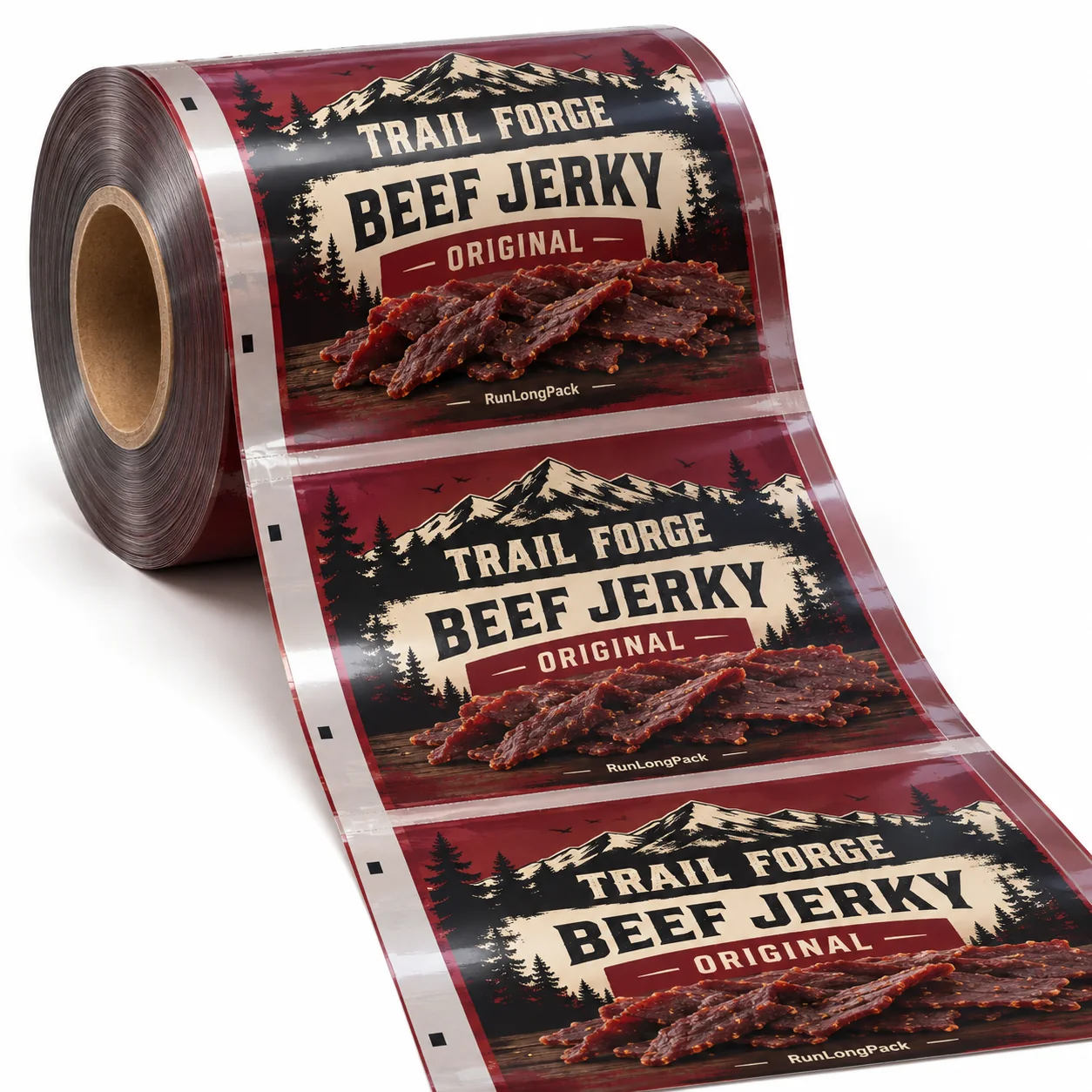
Choose the Delivery Format First
A finished wrapper is the output of your packing process. If your line uses reels, the purchase specification must describe the film roll as well as the finished pack. The adjacent jerky-film concept illustrates rollstock supply, not a validated meat-stick line.
Measure Length, Diameter and Seal Clearance Separately
A meat stick can vary in length, diameter, straightness and surface condition. Share the largest expected dimensions, not only an average product measurement. The package also needs space for its seam and end seals.
For premade bags, check that the mouth allows easy insertion. For roll-fed equipment, let the machine supplier confirm the web width, print repeat and sealing geometry. Do not copy film dimensions from a visually similar finished wrapper.
Reserve clear artwork space for seal zones, date coding and legible mandatory labeling. The buyer approves final food-label text and barcodes before printing.
Define the Food Process Before Selecting the Film
Dried snack sticks, refrigerated meat snacks and products heated in the package do not automatically share a packaging specification. State whether the product is already processed and cooled before packing, and give the intended storage and distribution conditions.
For suitable dried products, evaluate the required oxygen, moisture and light protection along with resistance to handling damage and sealing compatibility. Fat or seasoning on the outside of a stick can contaminate the seal area, so keep product placement and filling behavior in the review.
This page does not promise suitability for retorting, hot filling, vacuum packing or refrigeration without a separate project assessment. Shelf-life and food-safety validation remain specific to the finished product and process.
A Useful Trial Checks More Than Appearance
Use representative sticks and the intended packing conditions. Check whether the product feeds or inserts consistently, stays clear of the sealing jaws and can be opened as intended.
- Record product size range, pack count and packaging specification.
- Check feeding, placement and film tracking where applicable.
- Review registration, seal position and coding space.
- Inspect seals and carry out the agreed integrity checks.
- Record the approved settings and any required changes before a larger run.
Machine speed and output are established by a trial with your equipment; we do not assign a universal packs-per-minute figure to the wrapper.
Your Packaging Specification Checklist
| Item | What to send or confirm |
|---|---|
| Product condition | Dried ready-to-eat, refrigerated or another process; surface oil, storage and any post-packing treatment. |
| Dimensions | Maximum length and diameter, size variation, straightness and stick count per pack. |
| Supply format | Premade pouch or printed film; drawing of seal arrangement and opening direction. |
| Machine information | Equipment model, forming/sealing method and supplier-approved packaging specification. |
| Barrier and labeling | Protection needs, material/thickness if known, date-code area and buyer-approved artwork. |
| Order | Quantity per design for bags, or film weight and roll specification for rollstock; destination and timing. |
Custom Artwork, Materials and Printing
Your Brand, Your Layout
Supply front and back artwork or a concept for review. Basic layout and image preparation can be evaluated; final text, barcodes and legal labeling require your written approval.
Digital or Gravure Evaluation
Compare the actual material, dimensions, quantity and SKU count. Digital usually uses CMYK; strict brand-color requirements need a separate process and color review.
More Than an Exterior Finish
Matte and gloss effects describe appearance, not the barrier specification. Confirm the full structure and seal layer for the product and packing process.
MOQ, Samples and Production Planning
Digital Premade Pouches
Suitable ordinary pouch projects may be evaluated from around 100 pieces; approximately 1,000–3,000 pieces is generally more practical. Small pouch sizes, materials, accessories and SKU splits can change the minimum.
Typical production is approximately 8–10 working days. The digital finished-bag width limit is approximately 37 cm; final suitability is reviewed separately.
Gravure Premade Pouches
Suitable ordinary projects typically start around 10,000 pieces. Small bags can require higher piece counts because of material usage. Cylinder cost and quantity per artwork need separate review.
New cylinders take approximately 7–9 working days, followed by approximately 15–20 days for production after cylinders are ready.
Sample Choices
Limited reference samples are generally free, with shipping paid by the customer. Ordinary custom printed pouch samples before a bulk order are approximately USD 50–70 each, subject to format and process; special finishes are quoted separately.
A qualifying gravure bulk order of more than 20,000 pieces per design can qualify for sample-fee refund under the confirmed policy.
Timing starts after final specifications/artwork and the required payment are confirmed. Transit is additional. Material availability, special processes, holidays and production scheduling can affect the final plan. Confirm the order-specific schedule rather than treating these guidelines as a delivery guarantee.
Review sample options and costs for the applicable evaluation route.
Custom Flexible Packaging from Runlong Pack
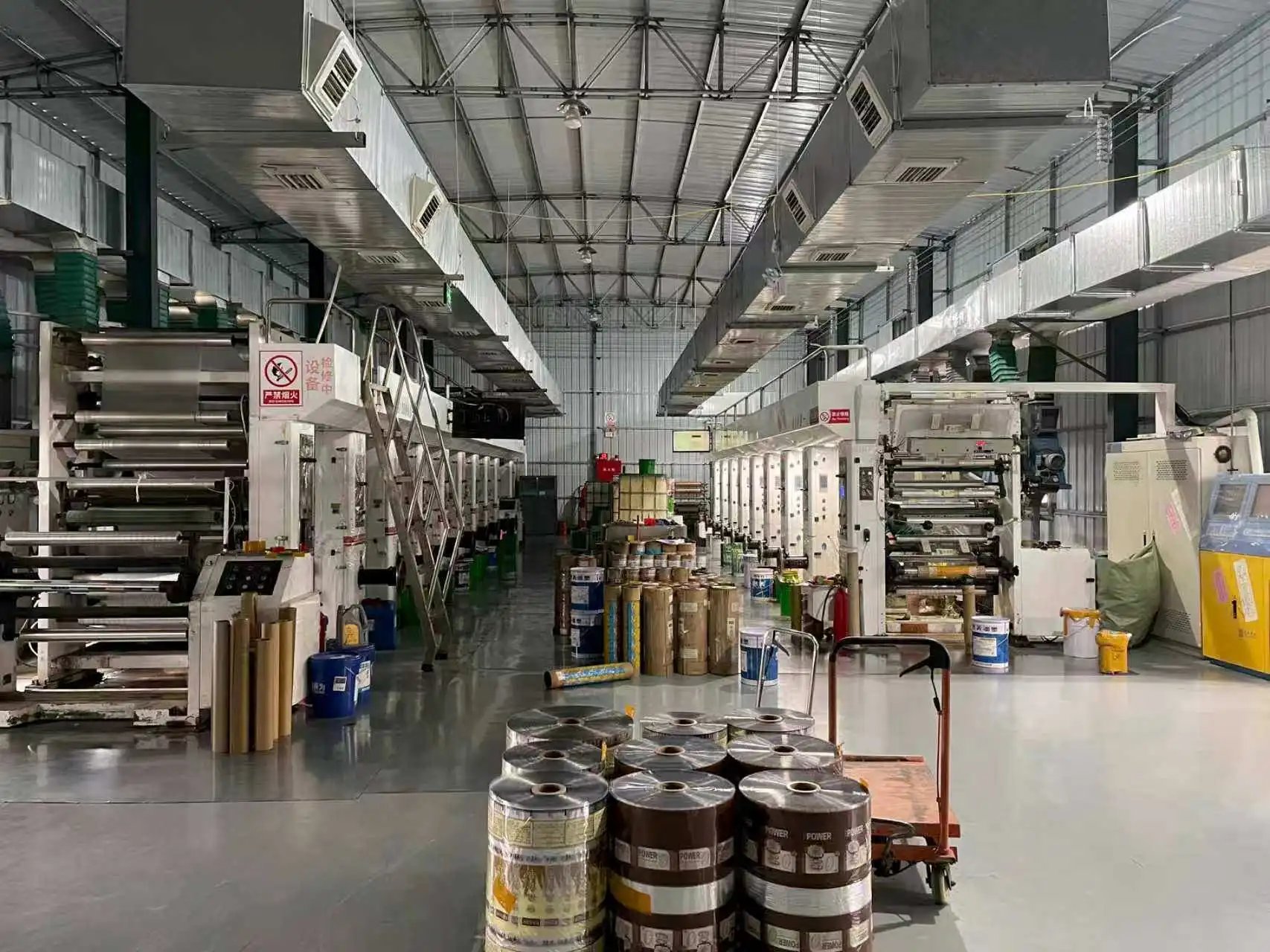
Runlong Pack supplies custom flexible packaging for brands, food producers, importers and distributors. Our capabilities include digital and gravure printing, premade pouches, printed rollstock and project-specific sizes and materials.
We use food-grade raw materials for all flexible packaging production and do not use recycled, secondary or scrap materials. Suitability must still be checked against the actual material, product, use conditions and destination market.
Learn about Runlong Pack and review available food-contact documents.
From Confirmed Specification to Shipment
Review and Approve
Agree the packaging drawing, material, artwork, quantities and sample or trial requirements. Final dimensions and product fit require buyer confirmation.
Order-Specific Inspection
Review dimensions, printing, lamination and seals against the order. Leakage, pressure or other checks are selected where applicable, not assumed identical for every packaging format.
Plan Delivery
Confirm destination, shipping method and trade terms. DDP can be evaluated where a suitable route exists; do not assume the same transit time or service for every destination.
Meat Stick Packaging FAQ
Is meat stick packaging the same as powder stick-pack packaging?
No. A solid meat stick has its own product envelope, feeding and sealing requirements. Do not assume powder sachet equipment or dimensions are suitable simply because both names contain “stick”.
Can you supply individual beef stick wrappers?
Suitable printed film or slim premade pouch projects can be evaluated. The supply format, product dimensions and sealing process must be agreed before quotation.
Can you make twin-pack packaging?
Yes, a suitable pack can be evaluated around the combined product dimensions and chosen filling route. Confirm the number, arrangement and size variation of the sticks.
Are all meat stick products shelf-stable in these packs?
No. Shelf stability depends on the food formulation, processing, packaging and storage. Refrigerated products or in-pack heat treatment require a separate material and process review.
Can I order a small test run?
Trial feasibility depends on whether you need premade bags or rollstock, plus material, size and process. A qualifying digital rollstock trial may be evaluated around 10 kg; that is not a universal minimum.
Can you guarantee the wrapper runs on my machine?
Not without specification review and an appropriate trial. Provide the machine supplier’s film requirements, sealing arrangement and winding details before production.