


Custom Printed Jerky Packaging Rollstock
Custom printed film rolls for compatible jerky packaging lines. Coordinate material structure, web width, print repeat and winding details with your equipment before placing the production order.
For food producers buying rollstock rather than premade bags. Send your current film specification or machine supplier drawing to start.
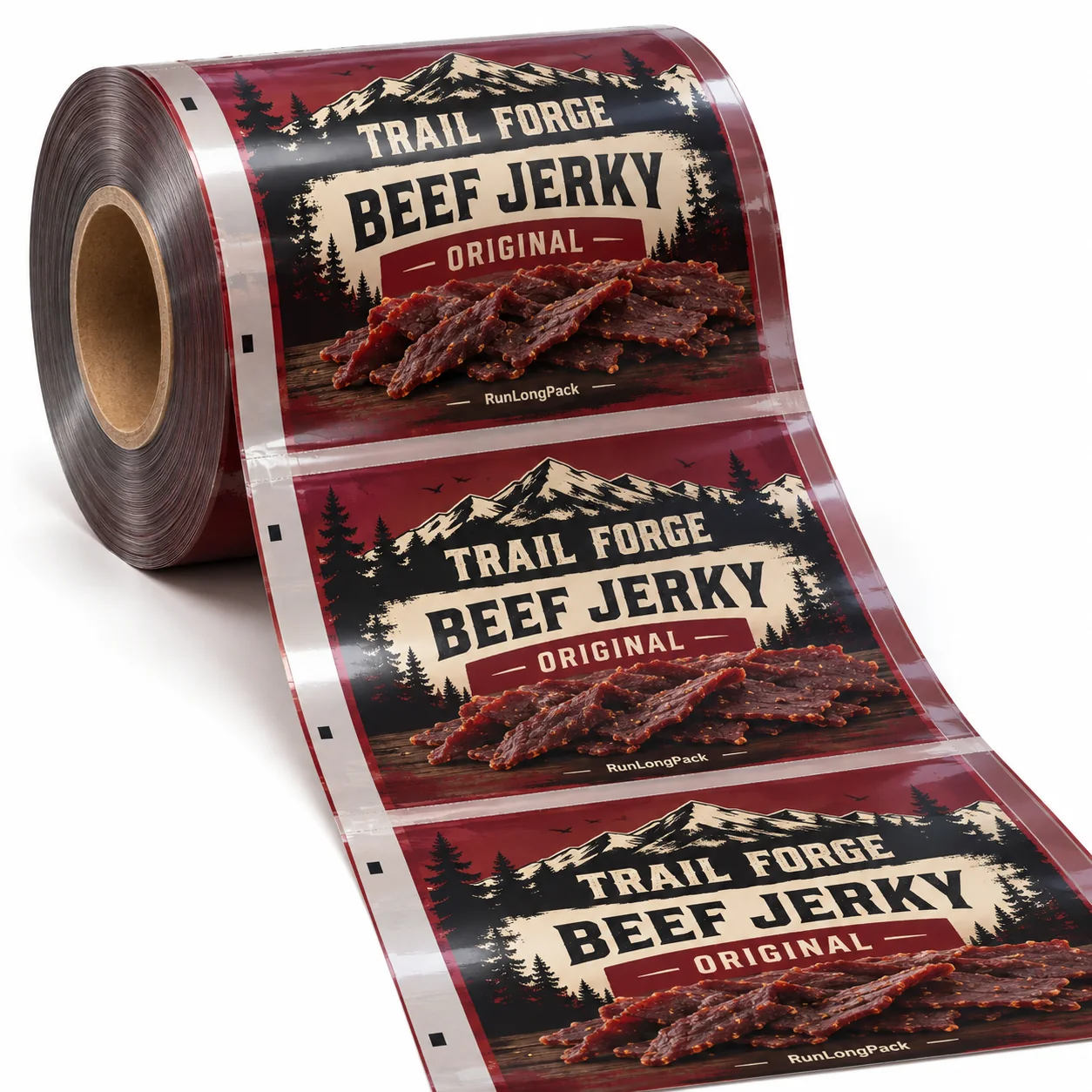
Choose the Format for Your Product
Repeat retail artwork
Print your jerky branding as a continuous web with machine-approved repeat and registration requirements. Keep coding and seal zones clear.
Application-specific barrier
Evaluate oxygen, moisture and light protection together with seal-layer and handling requirements. Film appearance alone does not establish performance.
Controlled roll delivery
Agree the roll core, maximum diameter, winding direction, slit width and any splice requirements before production.
Packaging images are AI-assisted design concepts unless identified as company photography. Printed weights and artwork are illustrative, not stocked food products or completed customer orders.
Printed Film Supplied for Your Packing Process
Rollstock is a continuous printed web. Your compatible equipment forms and seals the final package. It is not supplied as individual finished bags, and an order in kilograms cannot be translated into a guaranteed bag count without the actual film specification.
Jerky pieces, strips and meat sticks may need different handling and forming arrangements. Tell us your equipment model and product presentation. A film suitable for one line is not automatically suitable for another.
| Purchase item | What it means | Confirm with your packing team |
|---|---|---|
| Film web | Material structure and total thickness, with defined print and seal faces. | Barrier requirements, seal-layer compatibility and handling behavior. |
| Artwork repeat | One agreed repeating print layout along the web. | Finished pack length, cut position, registration mark and machine layout. |
| Finished roll | Slit film wound on the agreed core. | Width, diameter, weight limit, winding drawing and splice rules. |
Confirm These Rollstock Fields Before Approving Artwork
A roll photograph does not define the unwind direction. Use a labeled drawing showing the print face, seal face, leading edge and how the reel mounts on the machine. Ask your equipment supplier to approve it.
Position the registration mark where the sensor can read it, and keep the relevant background and contrast consistent with the machine requirement. Leave the agreed seal and coding zones clear of critical text.
Barrier Performance and Sealing Must Work Together
Provide the jerky recipe-related requirements, target shelf life, storage environment and existing material specification where available. Suitable clear, metallized or foil-based structures can be evaluated for the intended application.
Oxygen and moisture transmission data need the applicable test conditions and actual construction. A barrier value is not a finished-product shelf-life guarantee. The seal layer must also suit your jaws, dwell time, pressure and operating window.
Discuss stiffness, friction and film tracking with the equipment supplier. For gas-flushed packs, validate the complete process including seal integrity and the relevant atmosphere checks. No universal machine setting or production speed is promised here.
From Trial Roll to Repeat Production
- Agree the specification. Confirm material, width, repeat, artwork and roll drawing.
- Arrange an appropriate trial. Decide the roll quantity and test requirements for the actual line.
- Record machine behavior. Check tracking, registration, cut position and seals using representative jerky.
- Review finished packs. Apply agreed seal/integrity and food-process checks before accepting the specification.
- Approve the production version. Keep the agreed artwork and roll specification for reorder discussions.
For quotes, compare the same laminate, thickness, width, print repeat, SKU split, cylinder charges and delivery terms. A lower price per kilogram does not necessarily mean a lower cost per usable pack.

One Film Specification per Approved Application
Small jerky pieces and long meat sticks can require different feeding and forming layouts. Use the actual intended pack as the trial target, not a generic picture of a film roll.
Your Packaging Specification Checklist
| Item | What to send or confirm |
|---|---|
| Product and process | Jerky form, filling temperature, storage requirements, target shelf life and any gas-flush or absorber process. |
| Material | Layer structure and total thickness if known; otherwise the functional protection and sealing requirements. |
| Web and artwork | Slit width, print repeat, print face, eye-mark size/location, seal zones and coding space. |
| Winding | Approved unwind diagram, core internal diameter, maximum roll outside diameter and weight limit. |
| Equipment | Machine model, seal arrangement and equipment supplier’s film specification. |
| Order and inspection | Kilograms per artwork, roll distribution, allowable splices and agreed trial/inspection requirements. |
| Delivery | Destination, requested receiving date, shipment mode and trade terms. |
Custom Artwork, Materials and Printing
Your Brand, Your Layout
Supply front and back artwork or a concept for review. Basic layout and image preparation can be evaluated; final text, barcodes and legal labeling require your written approval.
Digital or Gravure Evaluation
Compare the actual material, dimensions, quantity and SKU count. Digital usually uses CMYK; strict brand-color requirements need a separate process and color review.
More Than an Exterior Finish
Matte and gloss effects describe appearance, not the barrier specification. Confirm the full structure and seal layer for the product and packing process.
MOQ, Samples and Production Planning
Commercial Film Orders
Normal commercial rollstock orders are generally recommended around 300 kg or more. Confirm kilograms per design, material, width and the required roll distribution.
Do not use the premade-bag piece-count MOQ for rollstock. Per-pack cost needs the real film specification and expected usable yield.
Conditional Digital Trials
Some projects can be evaluated at approximately 10 kg when the digital equipment, film structure, width and process are suitable. This is not a universal MOQ and unit packaging cost is higher.
Retort-grade, special-temperature and other special structures require separate confirmation. Trial quantity and lead time are agreed for the project.
Production and Samples
For a gravure route requiring new cylinders, allow approximately 7–9 working days for cylinders, followed by approximately 15–20 days for production after cylinders are ready, subject to order review.
Existing material or print references can support discussion. Arrange a machine-suitable trial roll separately; a flat print sample does not prove runnability.
Timing starts after final specifications/artwork and the required payment are confirmed. Transit is additional. Material availability, special processes, holidays and production scheduling can affect the final plan. Confirm the order-specific schedule rather than treating these guidelines as a delivery guarantee.
Review sample options and costs for the applicable evaluation route.
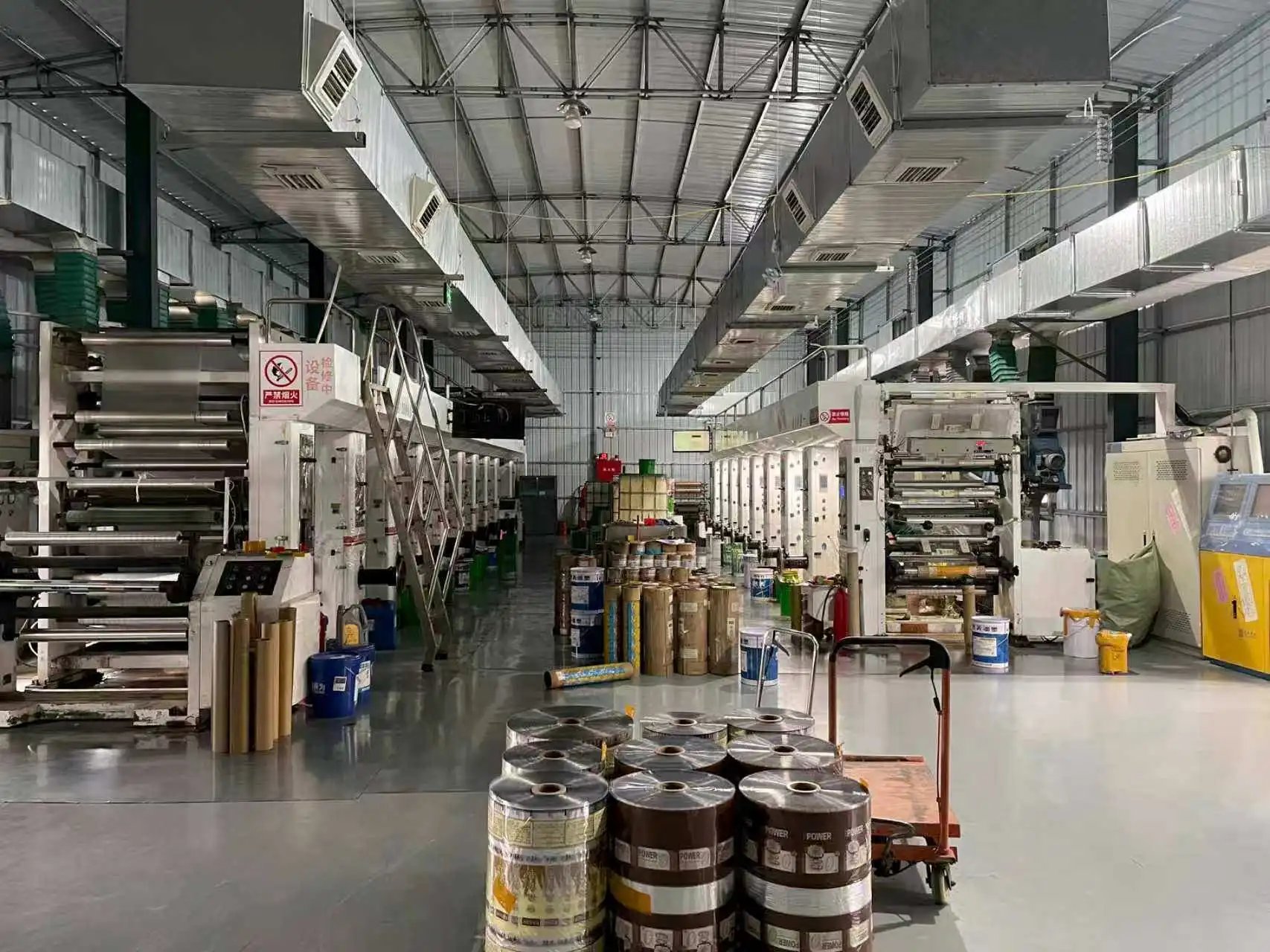
Custom Flexible Packaging from Runlong Pack
Runlong Pack supplies custom flexible packaging for brands, food producers, importers and distributors. Our capabilities include digital and gravure printing, premade pouches, printed rollstock and project-specific sizes and materials.
We use food-grade raw materials for all flexible packaging production and do not use recycled, secondary or scrap materials. Suitability must still be checked against the actual material, product, use conditions and destination market.
Learn about Runlong Pack and review available food-contact documents.
From Confirmed Specification to Shipment
Review and Approve
Agree the packaging drawing, material, artwork, quantities and sample or trial requirements. Final dimensions and product fit require buyer confirmation.
Order-Specific Inspection
Review dimensions, printing, lamination and seals against the order. Leakage, pressure or other checks are selected where applicable, not assumed identical for every packaging format.
Plan Delivery
Confirm destination, shipping method and trade terms. DDP can be evaluated where a suitable route exists; do not assume the same transit time or service for every destination.
Printed Jerky Packaging Rollstock FAQ
Is this the same product as premade jerky bags?
No. Rollstock is supplied as continuous film on reels. Compatible equipment forms and seals the packages. Premade bags are supplied already converted, with the agreed opening left for filling.
What is the MOQ for jerky packaging rollstock?
Normal commercial orders are generally recommended around 300 kg or more. Some qualifying digital trials can be evaluated around 10 kg, subject to material, width, structure and process compatibility, at a higher unit packaging cost.
How many packs will one kilogram of film produce?
The theoretical yield depends on web width, repeat length and film mass per area. Actual usable output also depends on setup and production waste. We need the specification before making a project estimate.
How do I specify the unwind direction?
Use the equipment supplier’s drawing showing print face, seal face, leading edge and reel mounting. A numbered orientation or photograph without its reference drawing can be ambiguous.
Can one film run on different machines?
Possibly, but each machine’s forming, sensing, sealing and roll limits must be checked. Do not assume compatibility without a suitable review and trial.
Can I use the same artwork for different pack lengths?
Not automatically. A different repeat or seal layout can require artwork changes and, for gravure, new cylinder arrangements. Confirm the machine layout before approving the print file.
Is a small digital trial available for retort or special-temperature film?
Those projects require separate confirmation. The approximately 10 kg trial guideline does not automatically apply to retort-grade, special-temperature or other special structures.