


Custom Single-Serve Beef Jerky Packaging Bags
Custom printed flat pouches for beef jerky portions intended to be opened and eaten in one sitting. Evaluate a compact three-side-seal format, easy-opening details and suitable barrier materials around your product and packing process.
For jerky bites, short strips and retail portion packs. Share your fill weight, product dimensions and quantity per design to start.
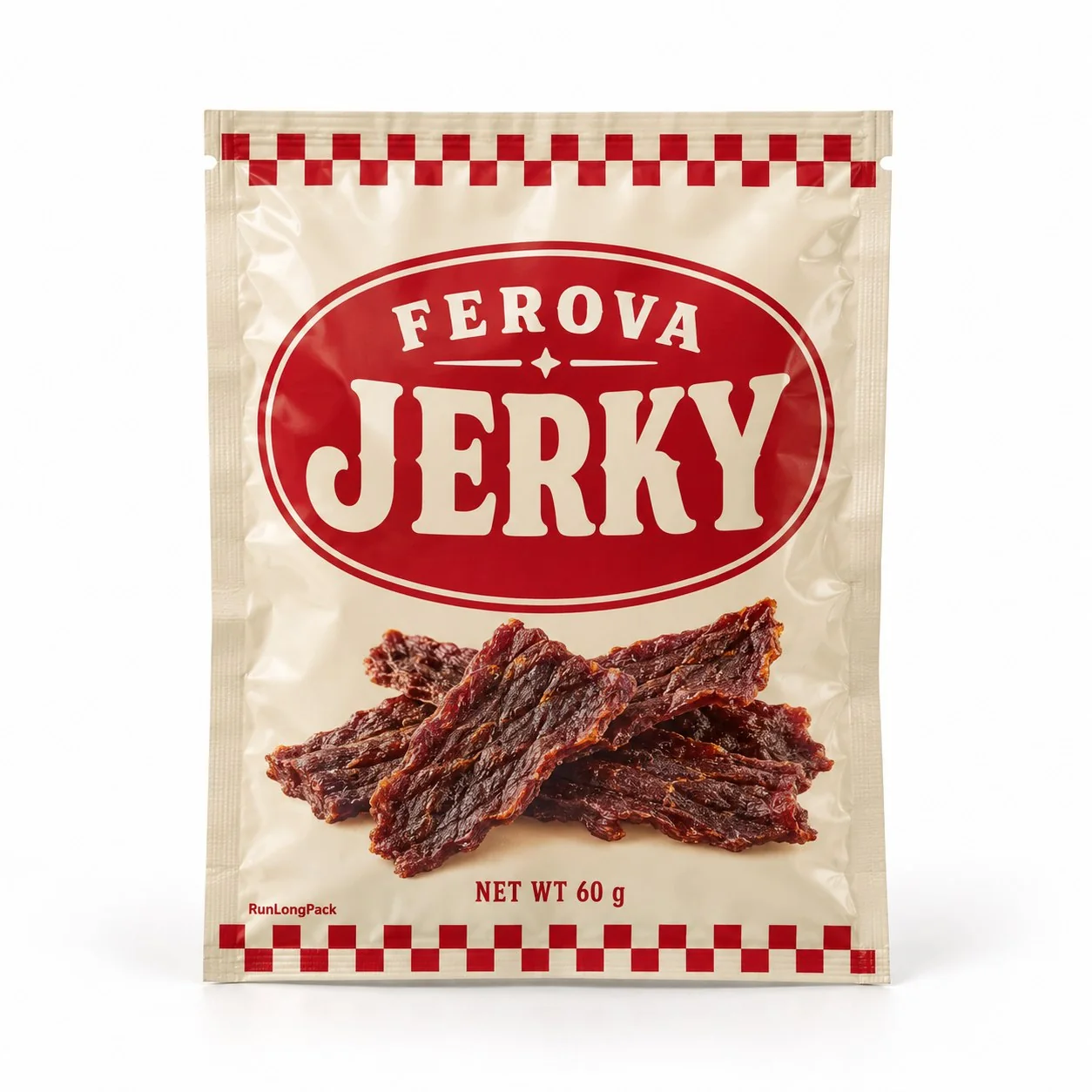
Choose the Format for Your Product
Compact portion packs
A flat pouch without a zipper can suit a single eating occasion. Confirm the usable internal space rather than choosing by net weight alone.
Retail hanging packs
A hanging hole can be evaluated for peg displays. Keep its position outside the food enclosure and coordinate the header with the final seal and tear notch.
Custom branded samples
A smaller branded portion can support product introductions. Small pouch dimensions can increase the piece-count MOQ, so review material usage and order quantity together.
Packaging images are AI-assisted design concepts unless identified as company photography. Printed weights and artwork are illustrative, not stocked food products or completed customer orders.
Three-Side-Seal Bags for One-Time Opening
The pouch is supplied with three sides sealed and one specified side left open for filling. Your packing team fills the bag and applies the final seal. Confirm the filling side on the drawing; a finished-pack concept image shows the sealed appearance, not the open-bag delivery condition.
Unlike a resealable share pack, this format does not need a zipper when all contents are consumed at once. It still needs sufficient filling access, a reliable heat seal and an opening that works with the selected laminate.
| Decision | Single-serve project consideration |
|---|---|
| Filling opening | Match the open side and mouth width to the largest jerky pieces and your filling method. |
| Tear notch | Place the notch so the intended tear removes a usable opening without cutting through the product zone. Confirm tear behavior on samples. |
| Seal margins | Keep the product, oil and seasoning out of the final seal. Reserve sufficient clean space for the sealing jaws. |
| Retail hole | Review hole location, header depth and hanging behavior using a filled sample. |
A Flat Pack with Space for Your Brand
Keep essential product information clear and legible. Coordinate seal margins and opening details before placing artwork, rather than fitting the bag around a finished graphic.
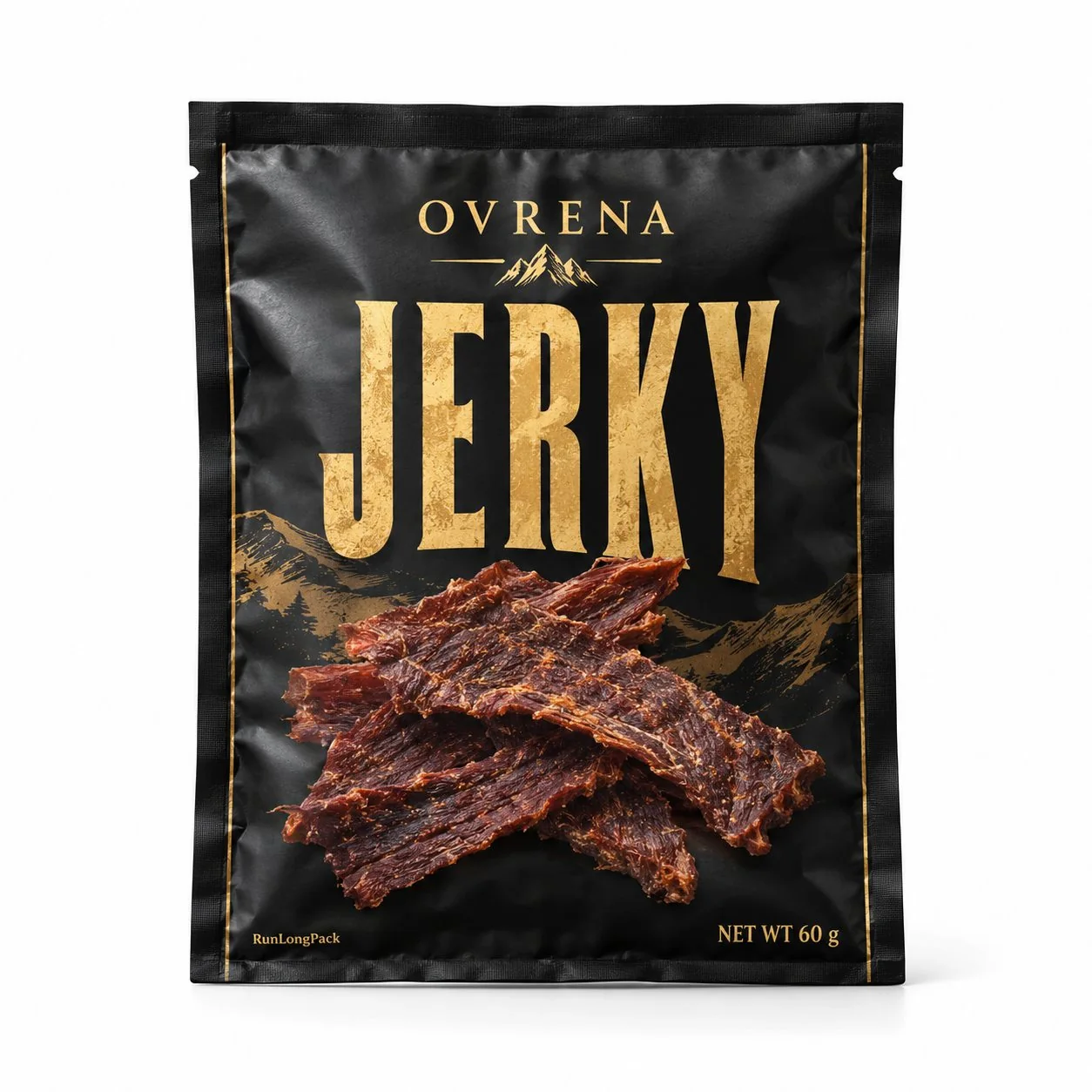
Choose Protection for Your Recipe and Distribution
Oxygen, moisture and light requirements depend on the jerky recipe, processing, target shelf life and distribution conditions. Clear, metallized or foil-based laminates can be evaluated where suitable; no single construction is automatically correct for all beef jerky.
A clear window changes the complete package protection. An opaque foil or ordinary metallized layer cannot cover the transparent area itself. Check window size and the actual laminate rather than treating a metallic appearance as proof of barrier performance.
If you use oxygen absorbers or nitrogen flushing, tell us the process. Compatibility, absorber selection and final food shelf life require your food-process and packing validation. An empty pouch is not evidence of shelf stability.
Size the Pouch Around the Actual Portion
Thin slices, thick strips and dense bites can have very different packing volumes at the same weight. Measure the product envelope, check the mouth width and allow for side seals, headspace and the final heat seal.
- Provide your intended fill weight and representative product photos.
- Compare candidate dimensions using reference samples or a dimensioned mock-up.
- Fill the pouch using the intended process and check product placement.
- Seal and open samples, then approve final dimensions in writing.
Use the bag size guide for measurement terms. It is a starting point, not a fixed grams-to-bag-size conversion.
Your Packaging Specification Checklist
| Item | What to send or confirm |
|---|---|
| Product | Jerky bites or strips, fill weight and maximum piece dimensions. |
| Bag drawing | Finished width and height, seal margins, filling side, tear notch and any hanging header. |
| Protection | Recipe-related requirements, target shelf life, storage, light exposure and existing material specification if available. |
| Packing process | Manual or semi-automatic filling, compatible premade-pouch machine, seal equipment and any gas/absorber process. |
| Artwork | Front and back files, window location, date-code space, flavor count and required finish. |
| Order | Quantity per artwork, sample needs, destination and required receiving date. |
Custom Artwork, Materials and Printing
Your Brand, Your Layout
Supply front and back artwork or a concept for review. Basic layout and image preparation can be evaluated; final text, barcodes and legal labeling require your written approval.
Digital or Gravure Evaluation
Compare the actual material, dimensions, quantity and SKU count. Digital usually uses CMYK; strict brand-color requirements need a separate process and color review.
More Than an Exterior Finish
Matte and gloss effects describe appearance, not the barrier specification. Confirm the full structure and seal layer for the product and packing process.
MOQ, Samples and Production Planning
Digital Premade Pouches
Suitable ordinary pouch projects may be evaluated from around 100 pieces; approximately 1,000–3,000 pieces is generally more practical. Small pouch sizes, materials, accessories and SKU splits can change the minimum.
Typical production is approximately 8–10 working days. The digital finished-bag width limit is approximately 37 cm; final suitability is reviewed separately.
Gravure Premade Pouches
Suitable ordinary projects typically start around 10,000 pieces. Small bags can require higher piece counts because of material usage. Cylinder cost and quantity per artwork need separate review.
New cylinders take approximately 7–9 working days, followed by approximately 15–20 days for production after cylinders are ready.
Sample Choices
Limited reference samples are generally free, with shipping paid by the customer. Ordinary custom printed pouch samples before a bulk order are approximately USD 50–70 each, subject to format and process; special finishes are quoted separately.
A qualifying gravure bulk order of more than 20,000 pieces per design can qualify for sample-fee refund under the confirmed policy.
Timing starts after final specifications/artwork and the required payment are confirmed. Transit is additional. Material availability, special processes, holidays and production scheduling can affect the final plan. Confirm the order-specific schedule rather than treating these guidelines as a delivery guarantee.
Review sample options and costs for the applicable evaluation route.
Custom Flexible Packaging from Runlong Pack
Runlong Pack supplies custom flexible packaging for brands, food producers, importers and distributors. Our capabilities include digital and gravure printing, premade pouches, printed rollstock and project-specific sizes and materials.
We use food-grade raw materials for all flexible packaging production and do not use recycled, secondary or scrap materials. Suitability must still be checked against the actual material, product, use conditions and destination market.
Learn about Runlong Pack and review available food-contact documents.
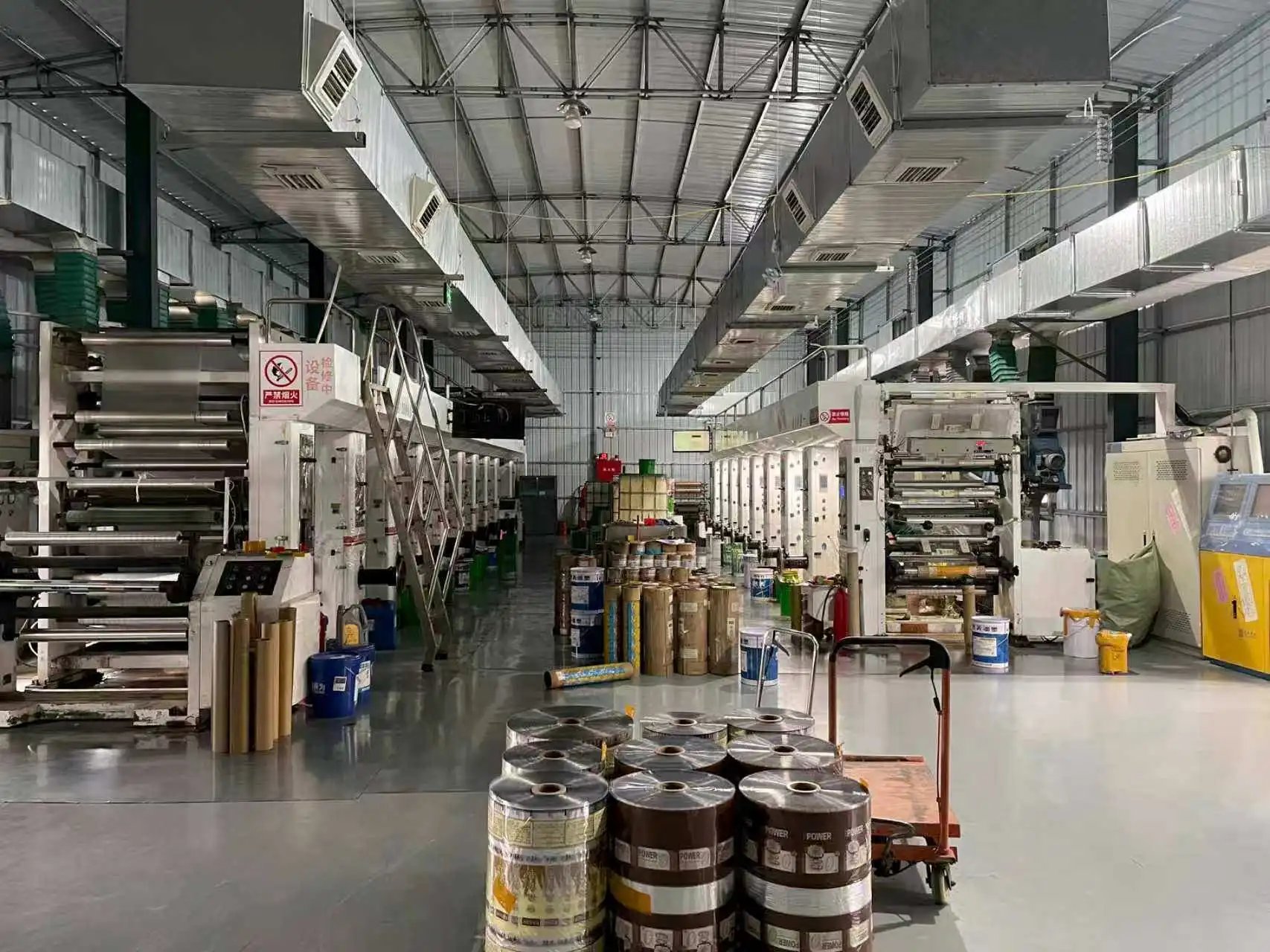
From Confirmed Specification to Shipment
Review and Approve
Agree the packaging drawing, material, artwork, quantities and sample or trial requirements. Final dimensions and product fit require buyer confirmation.
Order-Specific Inspection
Review dimensions, printing, lamination and seals against the order. Leakage, pressure or other checks are selected where applicable, not assumed identical for every packaging format.
Plan Delivery
Confirm destination, shipping method and trade terms. DDP can be evaluated where a suitable route exists; do not assume the same transit time or service for every destination.
Single-Serve Beef Jerky Packaging Bags FAQ
Do single-serve beef jerky bags need a zipper?
Not usually when the pack is intended to be consumed in one sitting. A zipper may be useful for a different use case, but it should not be added automatically to a small portion pack.
Are these bags supplied filled with beef jerky?
No. Runlong Pack supplies custom empty packaging. You or your packing partner fills and seals the bags using a validated process.
Which side is open when the pouches are delivered?
The filling side is specified on the agreed bag drawing. A three-side-seal pouch has three sides made before delivery; the remaining side is sealed after filling.
Can you add a hanging hole and tear notch?
Suitable positions can be evaluated. Confirm the header, seal band, tear path and product clearance, then test the filled pouch before production approval.
Does a smaller pouch mean a lower MOQ?
Not necessarily. Material usage, size, printing method and SKU split affect MOQ. Small bags may need a higher piece count to meet a practical production run.
Can I use one bag size for several portion weights?
Only if filling trials confirm sufficient usable capacity and a suitable presentation for every product. Similar net weights do not guarantee the same packing volume.