

Custom Flat Bottom Freeze-Dried Fruit Bags
Printed box pouches for freeze-dried fruit brands seeking a structured shelf presentation and additional artwork panels. Confirm the base dimensions, fill volume and closure before choosing your production route.
Custom dimensions · Digital and gravure evaluation · Food-contact documentation available for applicable specifications
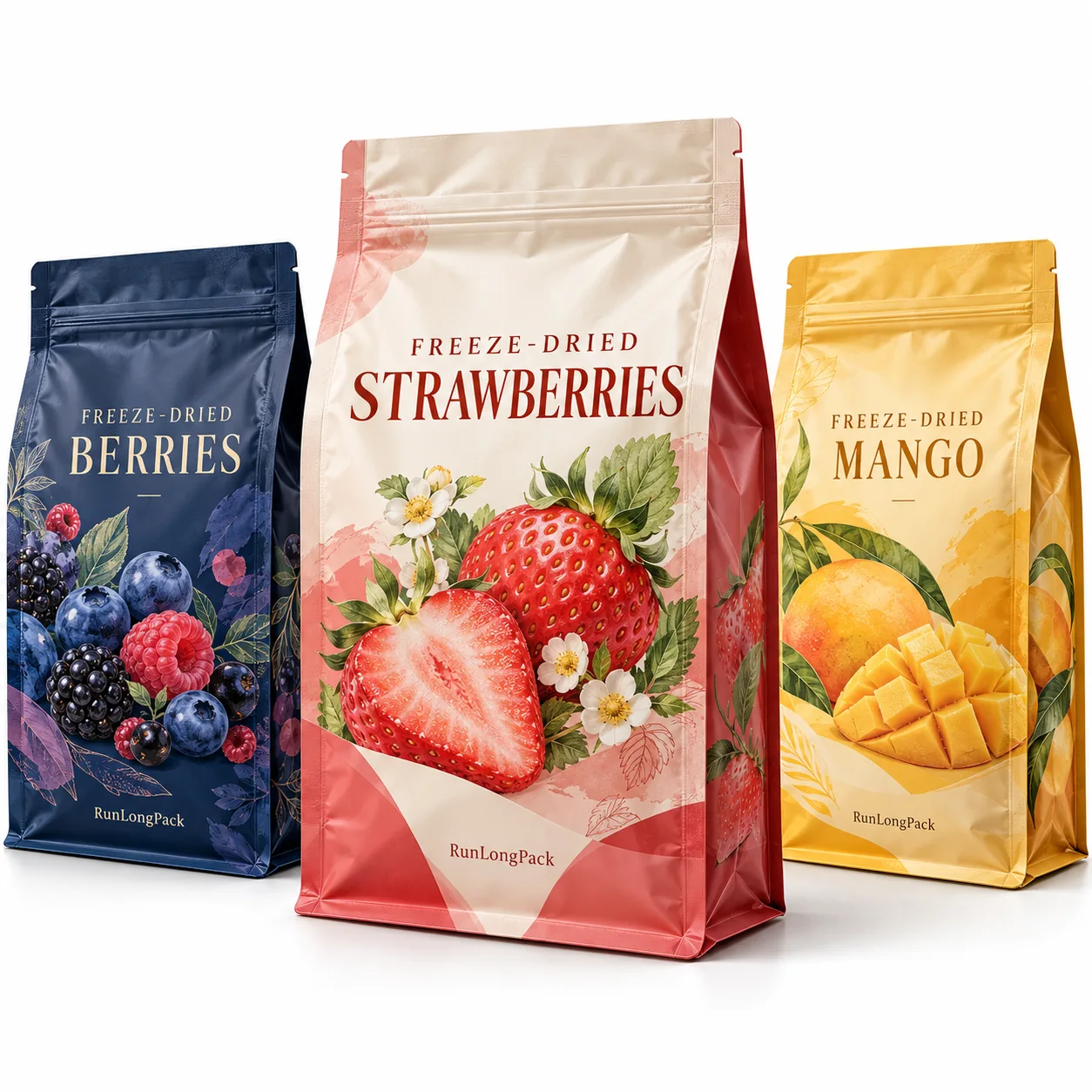
A Box Pouch Built Around Shelf Presentation
Defined Base and Side Panels
A flat base and side gussets create a different presentation from a conventional bottom-gusset stand-up pouch. Check stability with the actual low-density fruit, not an empty mockup.
Space for Product Information
Use front, back and side panels for brand artwork, ingredients and preparation ideas. Keep important text away from folds, seals and date-code areas.
Closure Matched to Use
Evaluate a suitable zipper for repeated use or a non-resealable opening for the intended serving format. Confirm the closure geometry on the pouch drawing.
When Is Flat Bottom Worth Considering?
This format can suit premium retail assortments, multi-serve fruit snacks and products needing more printable panel area. It is not automatically the lowest-cost option: the pouch construction is more complex and can use more film than a regular stand-up pouch.
| Decision | What to confirm |
|---|---|
| Shelf display | Check filled width, height and base depth against shelf and tray dimensions. A broad base alone does not guarantee stability with light contents. |
| Packing workflow | Confirm the usable top opening, filling nozzle or funnel clearance, zipper position and sealing-jaw access. |
| Cost comparison | Compare the same approved barrier and fill volume in both flat bottom and conventional stand-up formats. Include sample cost and artwork changes. |
| Distribution | Test filled bags in the intended outer carton. Flexible panels do not provide the same crush protection as a rigid container. |
Moisture Barrier First — Then Oxygen, Light and Seals
Freeze-dried fruit can absorb moisture and lose its crisp texture. Select the barrier using the product condition at packing, target shelf life, expected humidity and temperature, and distribution route. The fruit name or an exterior metallic appearance is not enough to confirm a structure.
Opaque Barrier Options
Foil-containing or metallized laminates can be evaluated where moisture, oxygen and light protection are priorities. Compare the complete structure and its applicable test data, not only total thickness.
Transparent Window Options
A clear window needs a transparent construction in that area; a continuous aluminum-foil or metallized layer cannot remain across the clear opening. A transparent front with an opaque foil or metallized back may be evaluated, but total-pack performance still needs validation.
Measured, Not Assumed
Ask for WVTR and OTR information where available, with test conditions and units. Values from different conditions are not directly interchangeable. Confirm seals and the completed pack, not only a flat film sample.
We do not promise a universal shelf life or specify one laminate for every fruit. Clear high-barrier options, window size and final structure require project review. Printed fruit artwork can provide visibility of the product type without opening a transparent area in an opaque pack.
Clear-Front and Window Options for Flat Bottom Fruit Bags
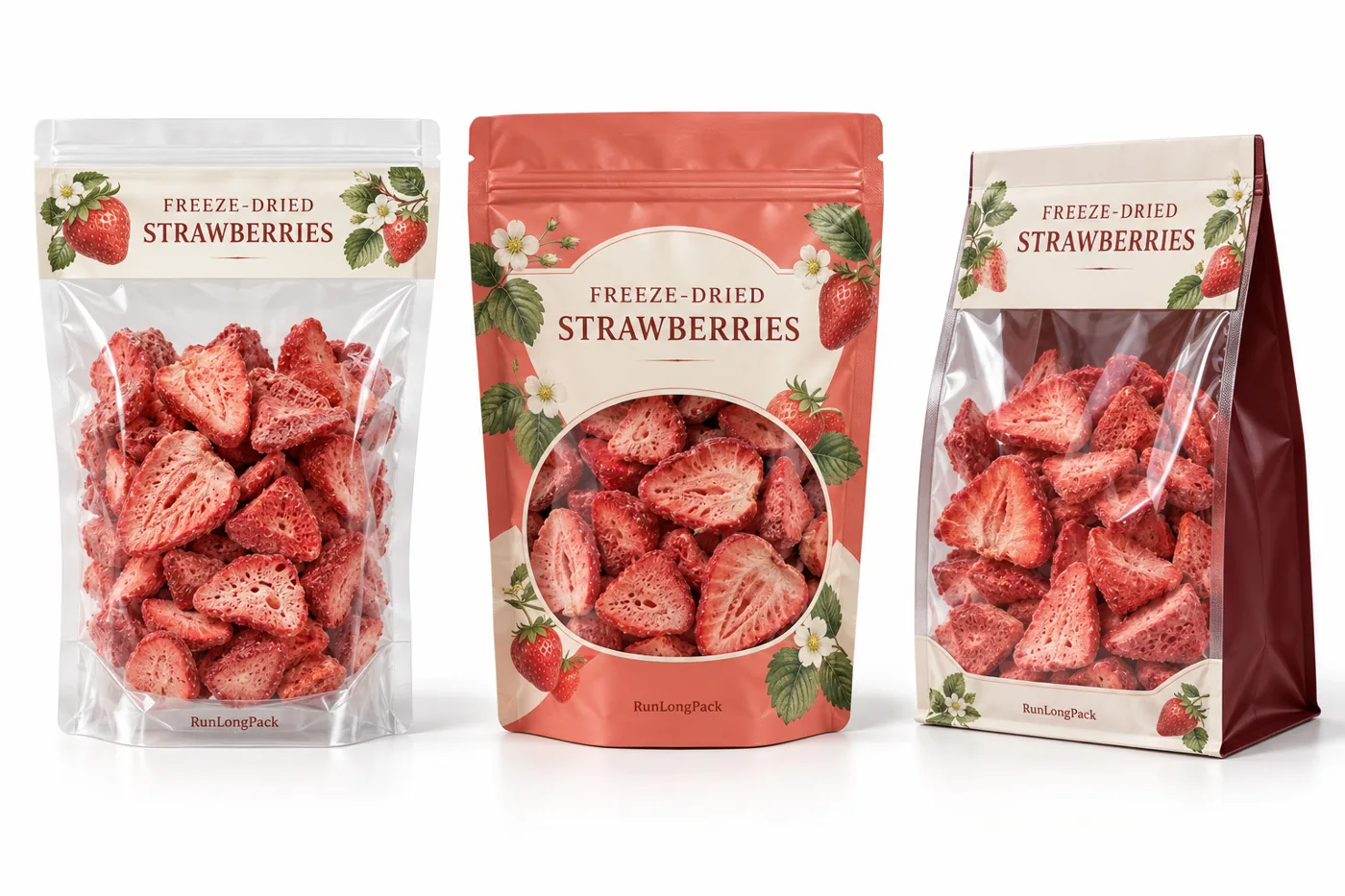
For a flat bottom bag, a transparent front or a shaped window can reveal the fruit while side and back panels carry your artwork. Confirm the viewing area on the pouch drawing: folds, gussets and a low fill level can change what the customer actually sees.
| Option | Retail application | What to validate |
|---|---|---|
| Mostly clear pouch | Show fruit color, slice size and visible piece condition. Useful when product visibility is central to the retail design. | Evaluate transparent barrier films against humidity, oxygen and light requirements. Clear appearance alone says nothing about the barrier grade. |
| Printed pouch with a window | Combine brand artwork with a controlled viewing area. Choose the window position around the actual fill level. | The clear area cannot retain a continuous opaque aluminum-foil or metallized layer. Confirm the window construction and finished-pack performance. |
| Clear front with opaque back | Keep the product visible at the front and reserve the back for information and an opaque material option. | A foil-containing or metallized back may be evaluated, but it does not give the whole pouch the barrier or light protection of an all-opaque foil pouch. |
Choose visibility and protection together. Compare available WVTR and OTR data under stated test conditions, then evaluate filled-pack seals, storage humidity, light exposure and the intended shelf life. A shorter selling cycle does not remove the need for suitable moisture protection. Check product stability with the proposed pack; do not choose solely by film thickness or appearance.
For flat bottom formats, include the base folds, side-gusset seals and closure in the sample review. Ask for a filled sample check before approving window placement or a transparent-front design.
Ask us to compare a clear, windowed and opaque specification for your fruit, fill volume, storage conditions and target shelf life.
Printed Design Directions
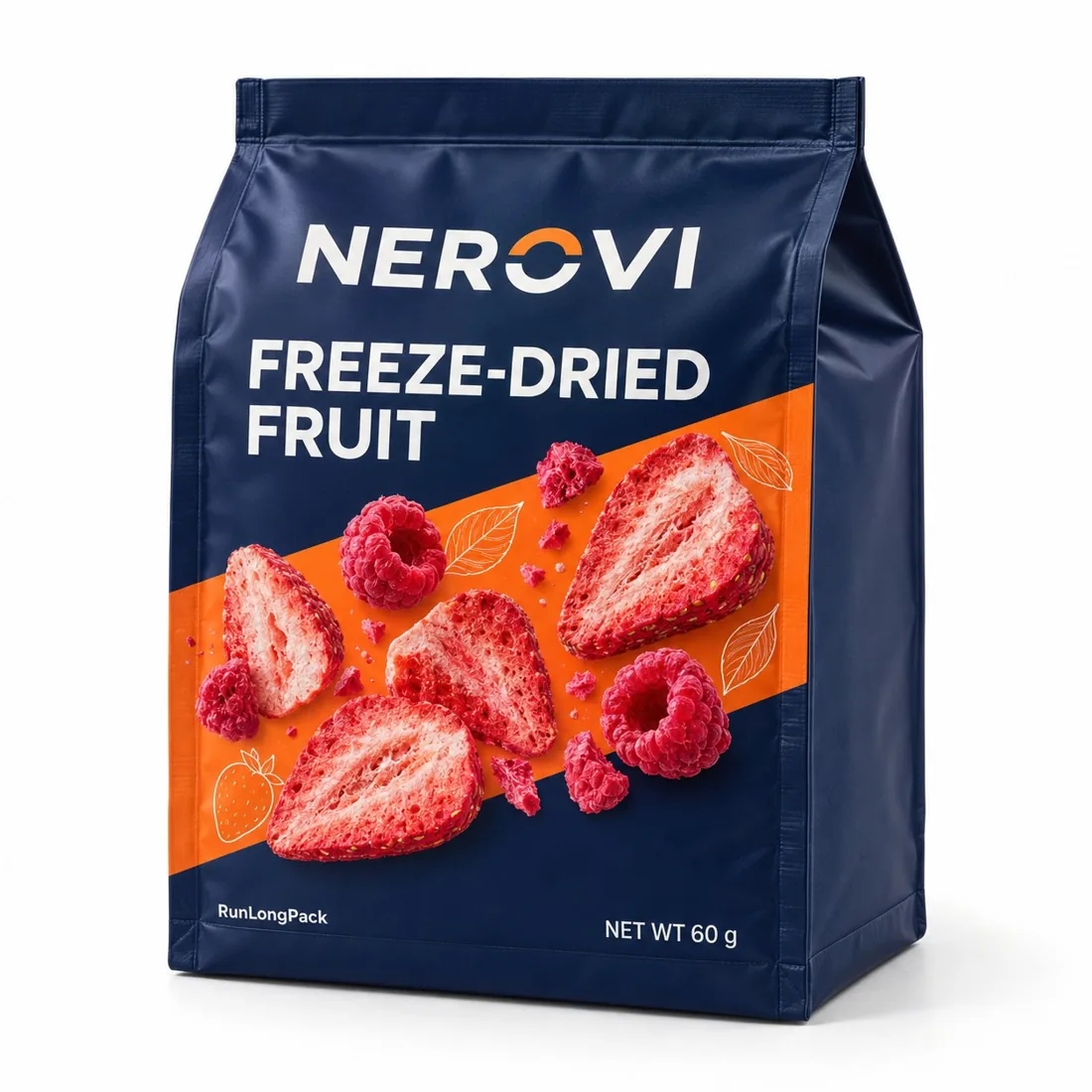
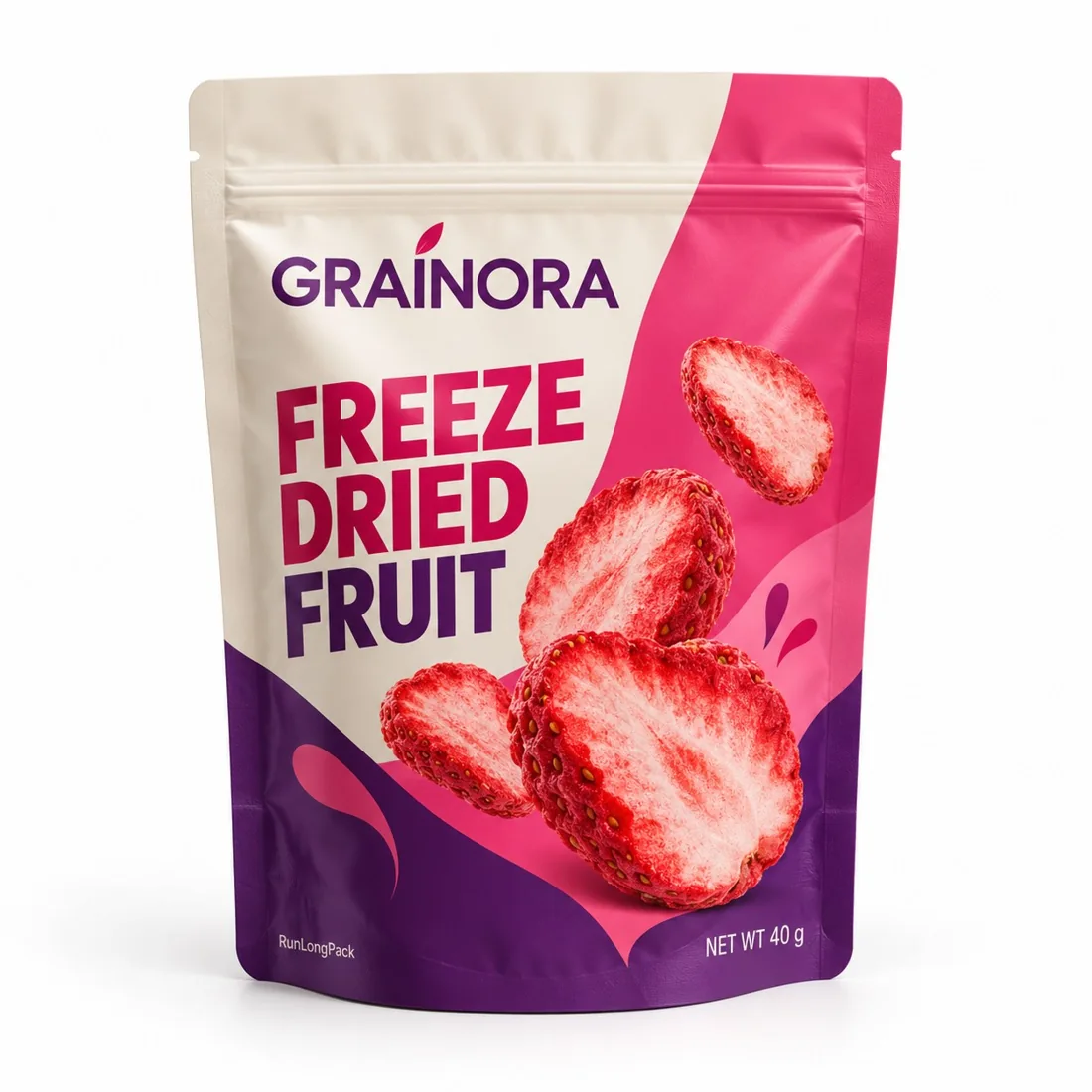
AI-assisted packaging design concepts from our reusable image collection. Artwork, brand names and printed weights illustrate design directions; they are not stocked products, customer case studies or validated fill capacities. The alternative pouch image is included for format comparison.
Size the Pack with Real Fruit, Not Weight Alone
| Decision | What to confirm |
|---|---|
| Product and fill | Fruit type, whole pieces or slices, weight per pack, measured loose-fill volume and approximate largest piece dimensions. |
| Finished dimensions | Width, height and side-gusset/base dimensions; identify how every dimension is measured. |
| Usable space | Allow for the zipper, heat seal, handling clearance and product headspace. External bag dimensions are not the usable fill area. |
| Barrier target | Target shelf life, storage conditions, light protection and available material requirements. |
| Filling and sealing | Manual, semi-automatic or premade-pouch line; filling opening, sealing equipment and intended gas-flushing process. |
| Commercial details | Quantity per artwork, number of fruit SKUs, print finish, delivery destination and requested delivery window. |
Start with a reference bag or trial size, fill it without forcing the fruit, then check closure, shelf appearance and carton fit. Confirm the approved dimensions in writing before production. A bag suitable for dense dried fruit is not automatically suitable for the same weight of freeze-dried fruit.
Before Approving Your Filled-Pack Trial
Protect Fragile Pieces
Review filling drop height, product handling and outer-carton support. Avoid assuming that pulling a vacuum is appropriate for delicate fruit; compression may damage the product.
Keep the Seal Area Clean
Fruit fragments and powder can interfere with sealing. Confirm a clean seal band and validate the temperature, dwell time and pressure on the actual equipment.
Confirm the Complete System
If nitrogen flushing or a food-compatible desiccant is planned, evaluate it with your food and packing process. Neither replaces the required material barrier or a reliable seal.
Custom Printing for Your Fruit Range
Digital for Suitable Smaller Runs
Evaluate digital for launches and multiple fruit designs, subject to the pouch structure and size. Maximum finished pouch width is approximately 37 cm; larger formats require another route.
Gravure for Repeat Production
Compare gravure for stable artwork and larger orders. Cylinders and SKU quantities are reviewed per design; total mixed-SKU quantity is not automatically one MOQ.
Artwork Ready for Production
We can assess editable artwork or an initial concept and provide basic layout assistance. Approve the final copy, barcode, net weight, regulatory text and pouch drawing before production.
MOQ, Sample Costs and Production Timing
Flat Bottom Order Planning
Digital projects can be evaluated around 1,000–2,000 pieces. At 3,000+ pieces, compare digital and gravure total cost; around 10,000 pieces, gravure is often more economical. Final minimums depend on size, material, artwork and process.
Flat Bottom Samples
A custom printed flat bottom / eight-side-seal sample is USD 110 each because of the pouch process. Additional UV or hot stamping is quoted separately. Do not apply the ordinary pouch sample price to this format.
Reference Samples
Limited reference samples are normally free, with freight paid by the buyer. They support format and print evaluation but do not prove the final fruit shelf life or exact fit.
Typical digital production is approximately 8–10 working days. For gravure with new cylinders, allow approximately 7–9 working days for cylinders, followed by approximately 15–20 days for production after the cylinders are ready. Timing starts after final artwork/specification approval and the required payment. Shipping is additional; materials, special finishes, holidays and scheduling can affect timing.
For a qualifying gravure bulk order of more than 20,000 pieces per design, the sample fee may be refunded under the confirmed policy. See sample options and costs.
Runlong Pack: Custom Flexible Packaging for Your Brand
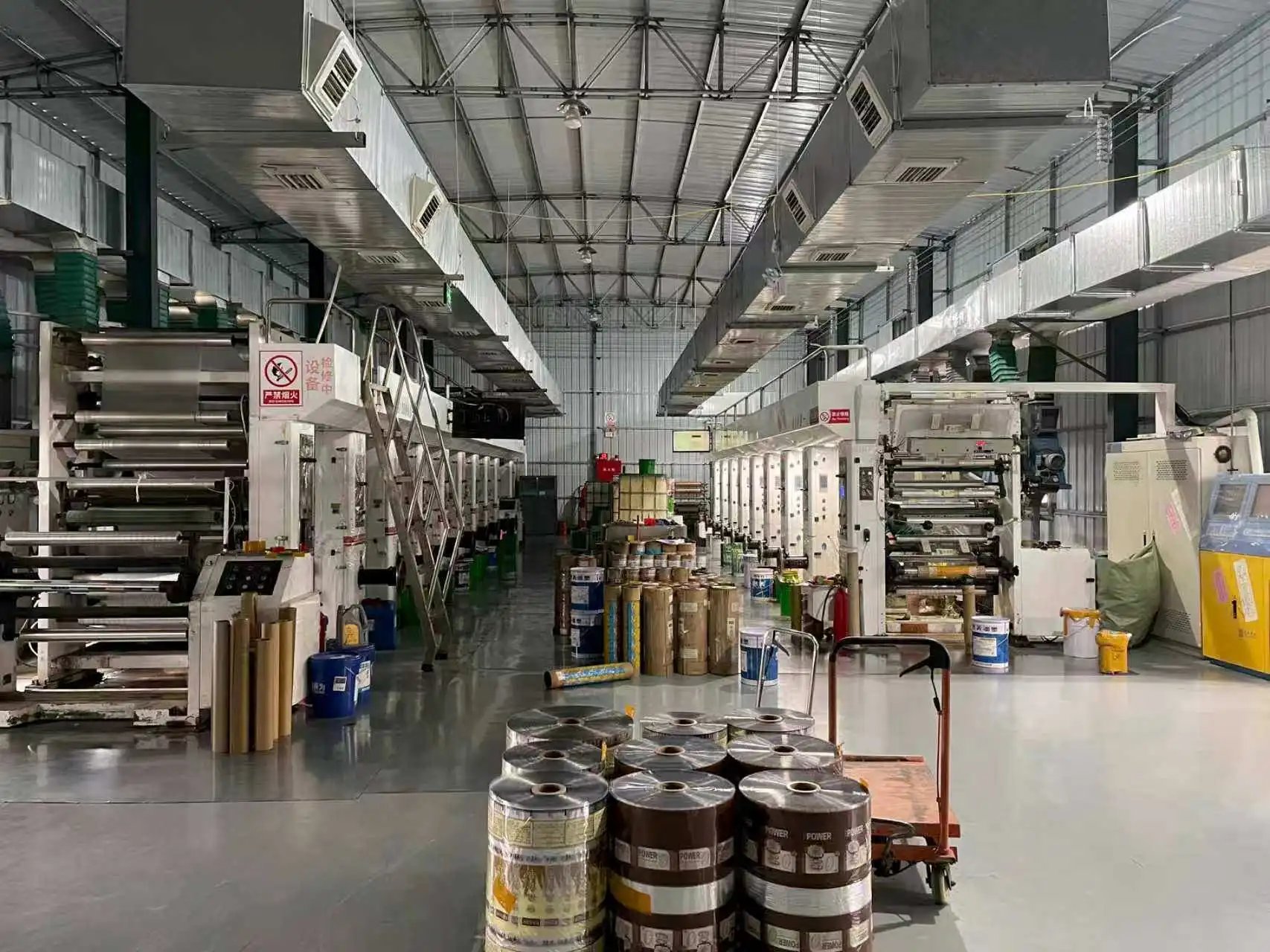
Runlong Pack supplies custom printed pouches and rollstock for brands, food producers, importers and distributors. We evaluate digital and gravure printing, dimensions, materials and functional details around the intended product and order.
We use food-grade raw materials for all flexible packaging production and do not use recycled, secondary or scrap materials. Food-contact suitability must still be checked against the actual structure, intended use and destination market.
From Specification to Production
Confirm the Drawing
Agree dimensions, gussets, closure, seals and artwork. Use filled-pack evaluation for fit and handling questions rather than relying on concept images.
Review Applicable Quality Checks
Dimensions, printing, lamination and sealing are reviewed against the order. Additional leakage, pressure or handling checks depend on the agreed packaging specification.
Plan the Shipment
Confirm carton requirements, destination and shipping terms. DDP can be evaluated where a suitable route exists; final route availability and transit time need confirmation.
Freeze-Dried Fruit Packaging FAQ
Can you print our brand on the bags?
Yes. Custom artwork can be evaluated for digital or gravure printing. Final material, dimensions, quantity per design and artwork determine the production route.
Do you recommend a clear window for freeze-dried fruit?
Only after reviewing barrier and shelf-life requirements. A clear area cannot contain a continuous opaque foil or metallized layer. Compare transparent-barrier options or printed fruit artwork and validate the completed pack.
Can the bag guarantee a specific shelf life?
No generic bag can establish the shelf life of every fruit product. Product condition, barrier, seal quality, filling method, storage and distribution must be evaluated together.
Is the zipper enough to seal the product for sale?
A reclosable zipper is not a substitute for the initial production heat seal. Confirm the sealing arrangement and instructions for reclosing the pack after opening.
How do we choose a size for light fruit pieces?
Use real fruit volume, largest piece dimensions and a trial fill, not weight alone. Include closure clearance and check the filled pack in the shipping carton.
What is the sample cost for this format?
Custom printed flat bottom samples are USD 110 each; added special finishes require a separate quote.
Can we receive food-contact documents?
Applicable test reports and material documents can be reviewed for the proposed structure and use conditions. A generic certificate is not a substitute for matching documentation to your project.