

Custom Resealable Rice Packaging Bags
Make a multi-use rice pack easier to pour from and close again. Runlong Pack supplies custom printed resealable rice pouches for food brands, packers and private-label buyers, with the zipper, opening and bag volume developed around your filling process.
Resealable zipper · Custom printed branding · Window options · Filling and pouring review
Share your rice variety, fill weight, current bag reference and pieces per design. We supply empty packaging.

Rice Pouches Designed for Repeat Opening
Household Multi-Use Packs
For rice sold in portions larger than one meal, a zipper gives shoppers a way to close the pack between uses. Define the target fill weight, storage needs and expected pouring method before choosing the bag drawing.
Private-Label Rice Ranges
Use a consistent printed identity across jasmine rice, basmati, brown rice or specialty varieties. Keep the variety and net weight readable while allowing space for market-specific information, coding and the zipper opening instructions.
Rice and Grain Blends
A blended recipe can occupy a different volume from white rice at the same weight. Send the actual blend or bulk-density reference and assess filling, standing and pouring with representative product.
A Zipper and an Initial Heat Seal Do Different Jobs
Heat Seal Before Sale
The final heat seal above the zipper closes the filled retail pack before sale. Confirm the opening method and tear-notch position, leaving enough space for filling and a consistent final seal on your equipment.
Reclose After Opening
Choose a zipper that customers can access and operate comfortably. Check that the opening is wide enough to pour or scoop rice without putting the closure under unnecessary stress.
Keep the Closure Clear
Loose grains in the zipper channel can interfere with reclosure. Filling trials should check grain control, seal-area cleanliness and how easily the pack closes after product has been dispensed.
Select the Base and Opening Together
Stand-Up Zipper Pouch
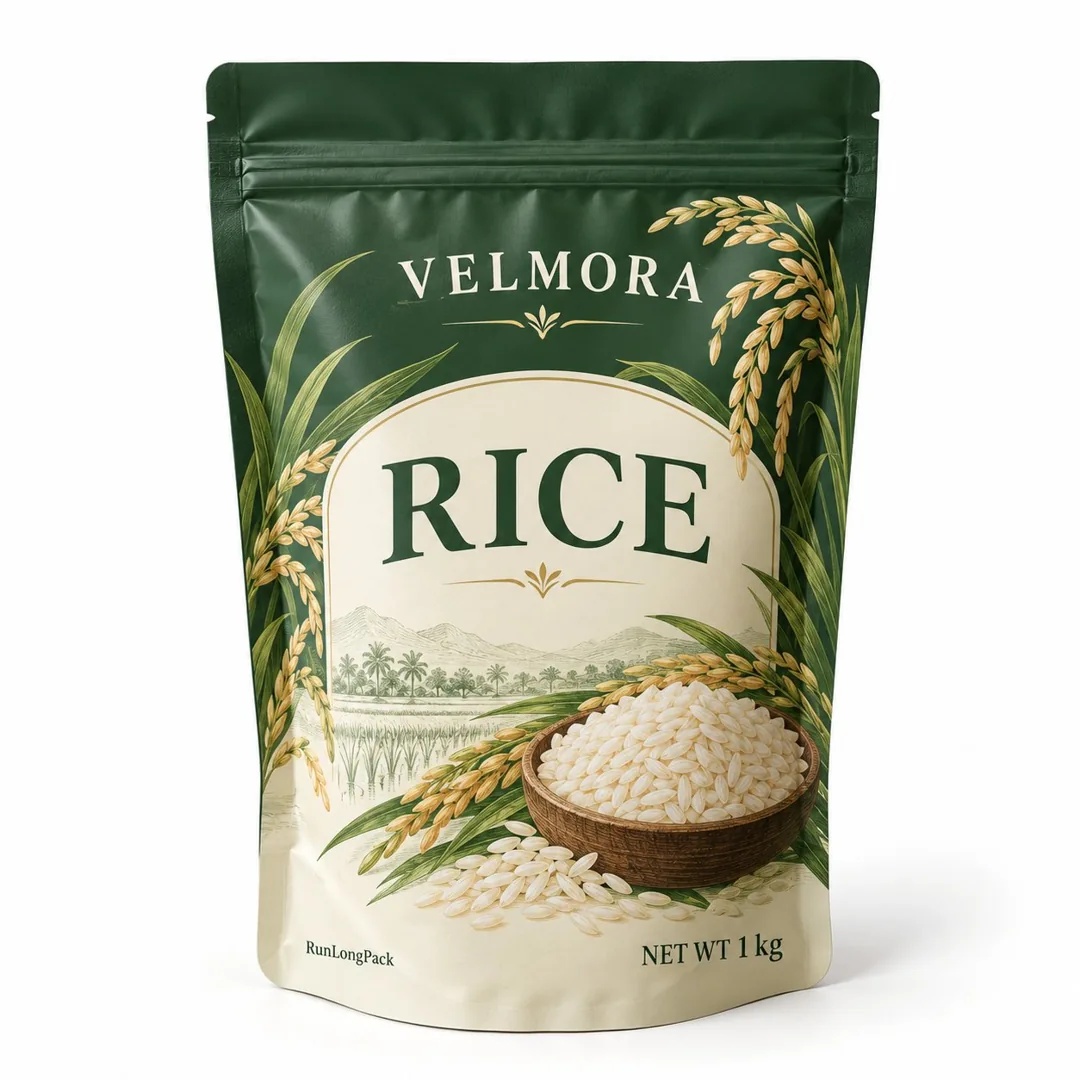
A bottom gusset can provide a standing retail format for suitable rice packs. Review stability at the intended fill level, the amount of rice remaining after use and the required top opening.
Flat-Bottom Zipper Bag
A flat-bottom format offers a different base and panel layout. It uses separate quantity and sample rules. Check zipper placement and access, rather than assuming every flat-bottom construction works like a standard stand-up pouch.
Weight Is a Starting Brief
Requests such as 500 g, 1 kg and 2 kg help define the project, but they are not standard dimensions. Use your grain variety, desired headspace, zipper clearance and distribution requirements to confirm the final specification.
Explore stand-up pouch capabilities and flat-bottom pouch options.
Window and Material Options for Resealable Rice Bags
Show the Rice Clearly
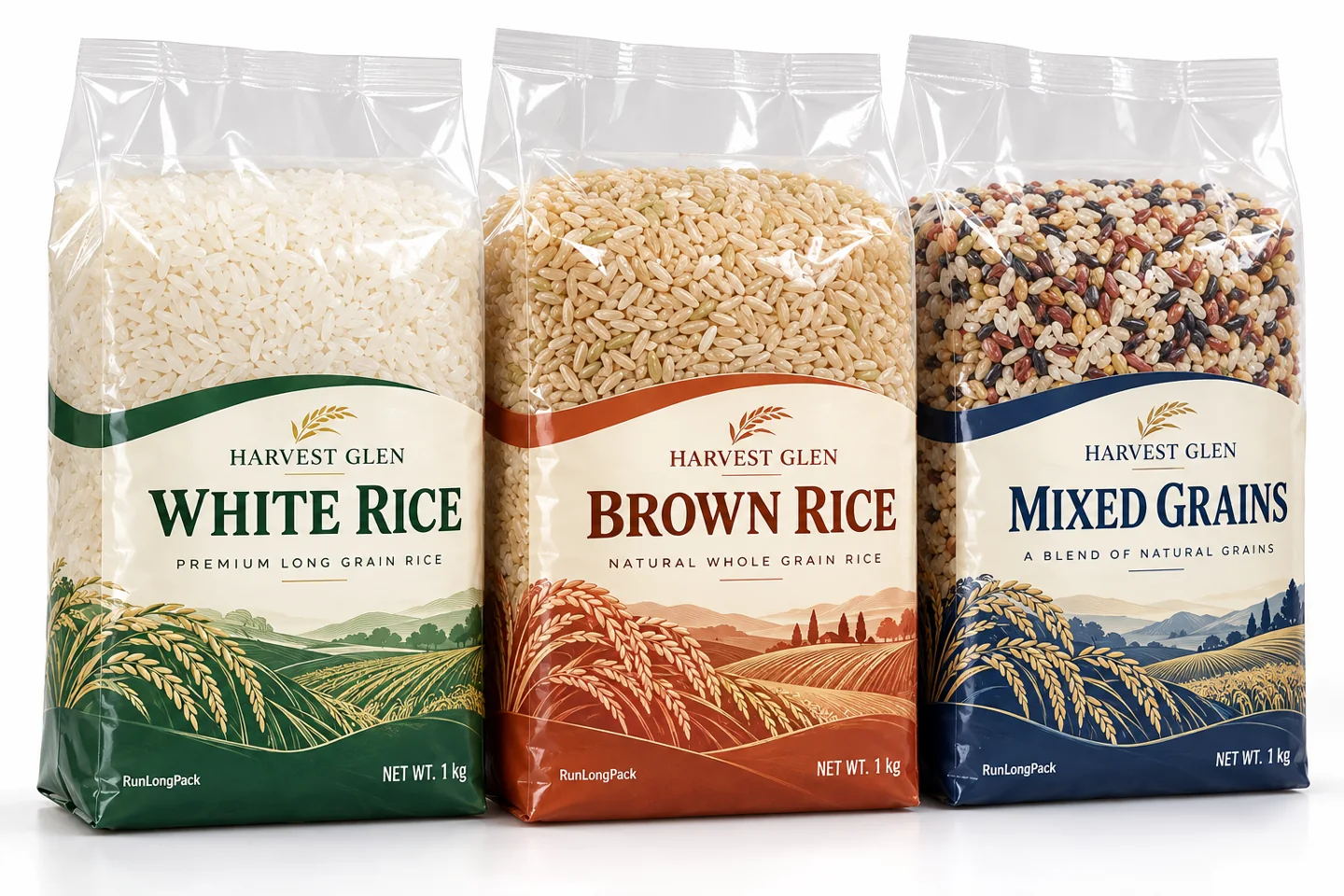
A transparent window can display grain length, color or a blend. Agree its position against the real fill line so the display still works after sealing and when the bag is standing on a shelf.
Coordinate the Barrier Structure
Review moisture, oxygen and light requirements together with the window. Continuous opaque foil or metallization cannot also be transparent. An opaque back with a clear front can be evaluated as a distinct structure.
Review Food-Contact Documents
We use food-grade raw materials without recycled, secondary or scrap materials. Available documentation is matched to the proposed structure and use. The zipper alone does not establish food shelf life or compliance for every market.
Approve the Usable Space Below the Zipper
Define the Finished Drawing
Provide external width, height and gusset convention, plus zipper distance from the top. Confirm whether the gusset number refers to one folded side or total opened depth.
Test Filling and Dispensing
Fill the proposed bag with actual rice, check the seal margin, open it as a consumer would and pour out a portion. Reclose the zipper and repeat to assess access and practical handling.
Retain the Approved Reference
Keep the final drawing, material, artwork and filled-sample observations for repeat orders. If the grain variety or fill weight changes, review fit and closure behavior again before reusing the old specification.
| Confirm | Information to send |
|---|---|
| Rice and fill | Rice variety or blend, net weight and target storage conditions. |
| Drawing | External width × height + gusset convention, zipper position and usable fill area. |
| Closure and display | Opening method, pouring or scoop access, optional clear window and artwork. |
| Packing | Manual or automatic filling, machine reference, final seal and grain-control requirements. |
| Order | Pieces per design, number of varieties, delivery destination and timing. |
Review the packaging bag size guide, then confirm the drawing through a filling trial.
Match the Zipper Pouch to Your Packing Process
Manual or Semi-Automatic Filling
Check the open mouth, filling clearance, top-seal area and sealant compatibility with your equipment. Agree how grain contamination at the zipper and seal will be controlled.
Premade-Pouch Packing Lines
Share the machine model and accepted bag drawing. Opening, gripping, filling and sealing compatibility must be checked, including any restriction caused by the zipper or bag base.
Compare Other Routes
If your machine forms pillow packs from film, evaluate rollstock separately. A resealable premade pouch is a different packing route and cannot be assumed to replace machine-formed film packs without equipment review.
MOQ, Sampling and Production Planning
Printing and Quantity
Some suitable ordinary digital pouch projects can be evaluated around 100 pieces; approximately 1,000–3,000 pieces is generally recommended for value. Ordinary gravure projects generally start around 10,000 pieces, subject to dimensions, material and artwork. Flat-bottom digital projects can be evaluated around 1,000–2,000 pieces, with routes compared around 3,000+ pieces.
Size and Printing Eligibility
The maximum finished digital pouch width is approximately 37 cm. Wider bags need another printing route such as gravure evaluation. Material, handle or closure construction and conversion compatibility still require review.
Samples and Approval
Available reference samples are normally free with buyer-paid freight. Ordinary custom printed samples are approximately USD 50–70 each; selected special finishes are generally USD 100–150. A flat-bottom custom printed sample is approximately USD 110 each, with additional special finishes quoted separately.
For a qualifying gravure bulk order of more than 20,000 pieces per design, the sample fee can be refunded under the confirmed project arrangement.
Eligible digital production typically takes approximately 8–10 working days. New gravure cylinders normally take approximately 7–9 working days, followed by approximately 15–20 days of production after cylinder completion. Timing starts after final artwork/specification approval and required payment; shipping is additional. Special constructions and the actual production schedule are confirmed for the project.
Review the MOQ guide, printing comparison and sample policy.
Manufacturing Support from Runlong Pack
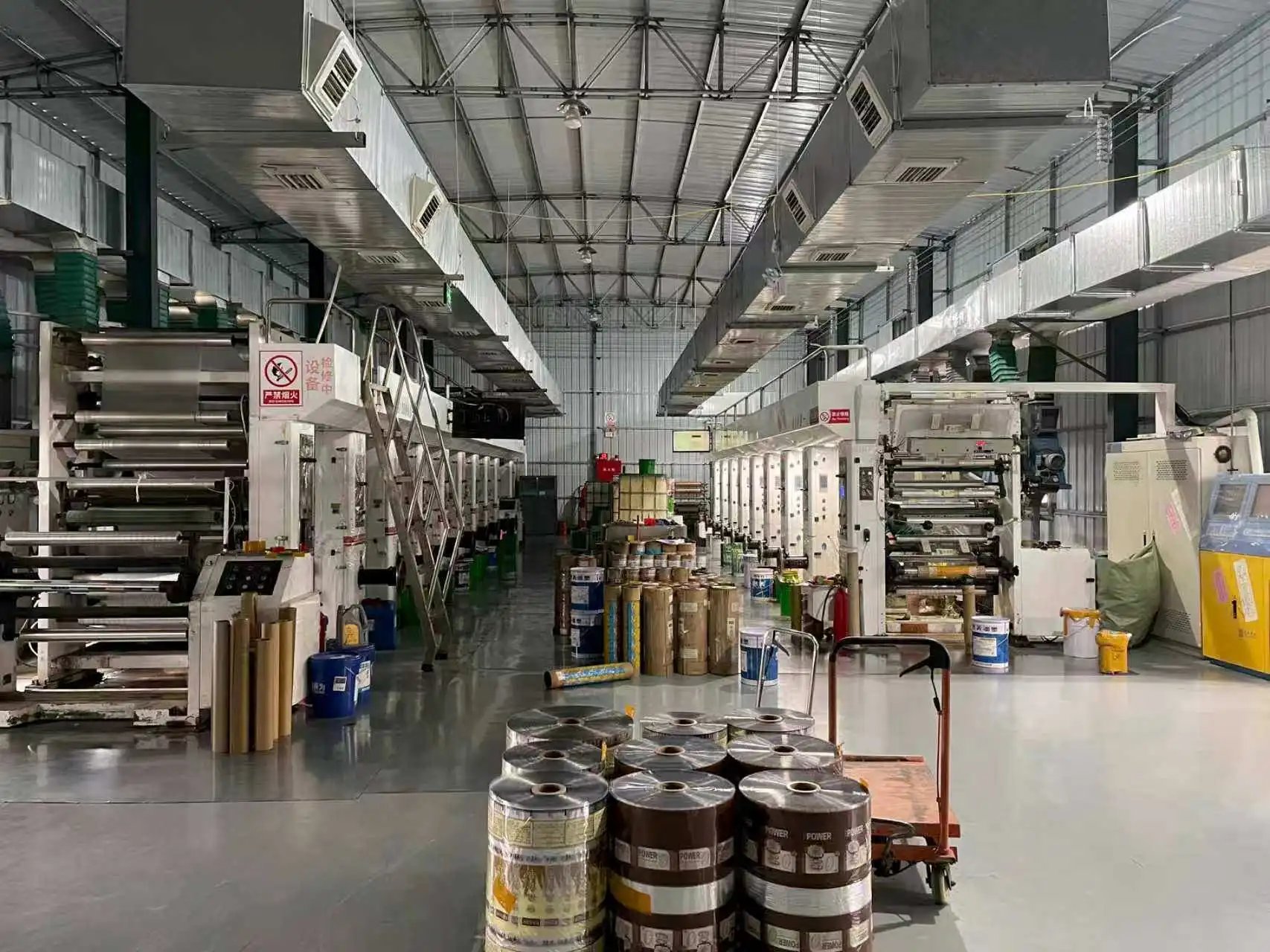
Runlong Pack is the brand of Shantou Runlong Packaging Co., Ltd., a custom flexible packaging manufacturer in Shantou, China. We support food brands, packers, importers and private-label buyers with specification review, artwork preparation, printing, conversion and delivery coordination.
We use food-grade raw materials throughout flexible packaging production and do not use recycled, secondary or scrap materials. Available food-contact documentation is reviewed for the proposed structure and intended use.
Project checks may cover dimensions, printing, lamination and seals, with other checks agreed for the actual construction. Retain the approved drawing, artwork and filled-trial observations for repeat orders.
Learn about our manufacturing capabilities and available testing documentation.
Custom Resealable Rice Packaging Bags FAQ
Can rice bags be custom printed with a resealable zipper?
Yes, suitable premade pouch projects can be evaluated with custom printing, dimensions and zipper options. Send the rice type, net weight, bag format and quantity per design for review.
Does the zipper replace the top heat seal?
No. A retail rice pack normally needs its initial heat seal above the zipper. The zipper supports reclosure after opening; final sealing requirements depend on the approved bag and packing process.
Can a zipper rice pouch have a clear window?
A suitable transparent area can be evaluated with the material and artwork. The clear area cannot contain continuous opaque foil or metallization. Window placement and protection needs are reviewed together.
What size is needed for a 1 kg resealable rice bag?
There is no universal drawing for every 1 kg rice pack. Rice variety, bulk density, bag base, zipper clearance and seal margin affect fit. Confirm dimensions with the actual product.
What is the MOQ for printed zipper rice bags?
Some suitable ordinary digital pouch projects can be evaluated around 100 pieces; approximately 1,000–3,000 pieces is generally recommended. Ordinary gravure projects generally start around 10,000 pieces. Flat-bottom and other special constructions use separate conditions.
Will resealing guarantee a longer shelf life?
A zipper provides reclosure convenience. Shelf life also depends on rice condition, material, initial seals, handling after opening and storage. Validate the finished food in the proposed package rather than assigning a fixed life from the closure alone.