

Custom Matcha Packaging Bags
Make your matcha range stand out. Build protection into the specification.
Custom printed bags for pure matcha powder, culinary matcha and matcha latte mixes. Choose resealable pouches, back-seal sachets or machine rollstock, with matching custom paper boxes for your retail range.
Share your powder type, target fill and quantity per design. We supply empty packaging; pictured brands and printed weights are design examples.
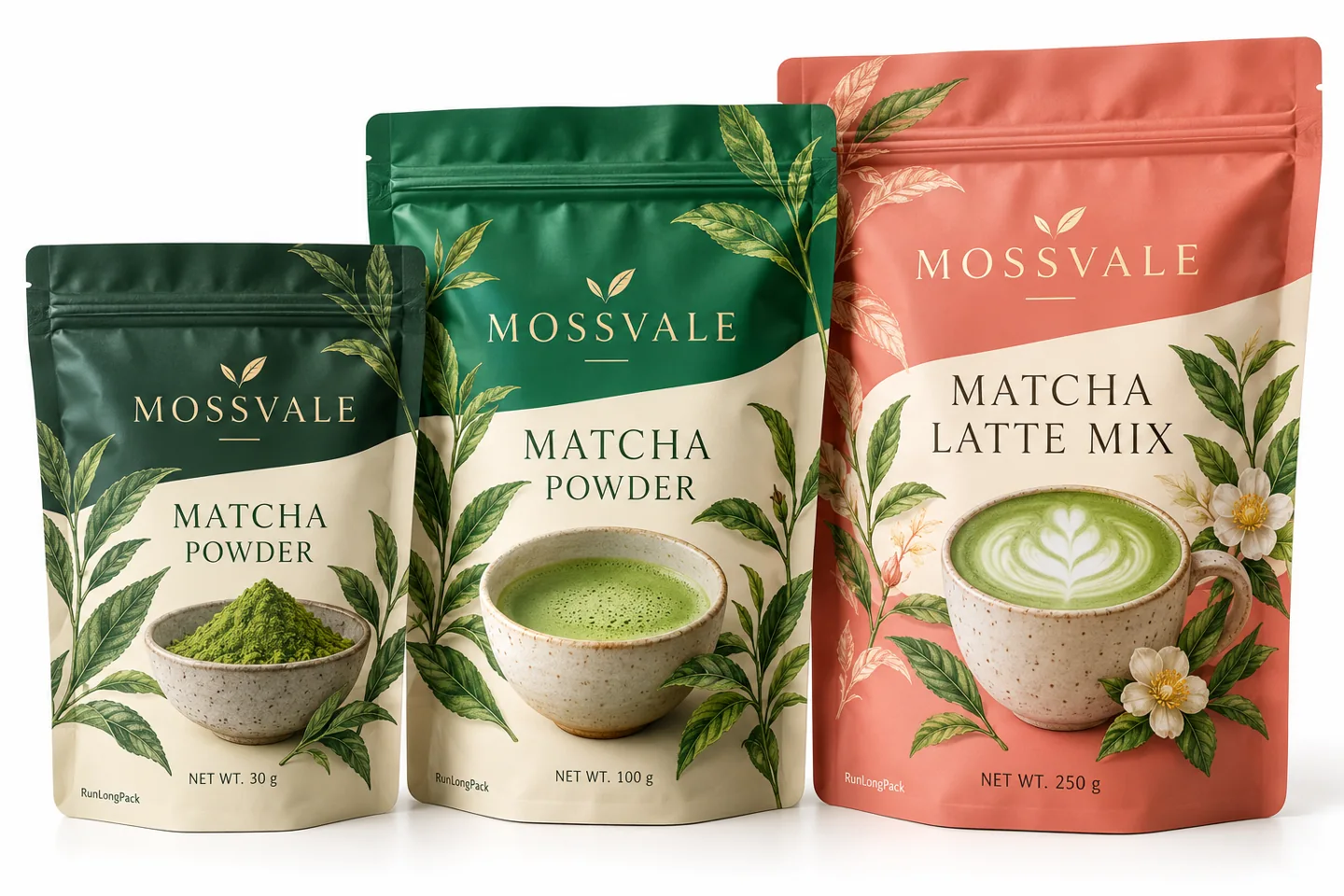
What Makes a Suitable Matcha Packaging Bag?
Start with an opaque, heat-sealed pouch and review the required oxygen and moisture barrier. Matcha is a fine powder, so usable filling space, clean seals and convenient opening matter alongside the printed design.
A zipper stand-up pouch can suit repeated use; a small flat pouch can suit selected portions. Automatic sachet or stick-pack lines use a separate rollstock specification. Choose the route around the product and filling process, then confirm a representative sample.
Pure Matcha, Culinary Matcha and Latte Mixes
Pure Matcha Retail Packs
Small fills need room for readable branding, accurate net quantity, opening and final sealing. Review light exposure, repeated opening and the intended use period after opening.
Culinary & Food-Service Packs
Larger packs for bakeries and cafés need usable scoop access, reliable reclosure and a practical filled shape. Include the actual powder volume and how frequently the pack will be opened.
Matcha Latte Mixes
For other beverage mixes, explore powdered drink packaging and compare portions with resealable formats.
Sugar, milk powders and other ingredients change the formulation and bulk density. Size and specify the blend separately; reserve space for the buyer-approved ingredient and allergen information.
“Ceremonial,” “culinary,” organic status and origin are food-brand claims supplied and approved by the buyer. Packaging appearance does not verify the grade or source of the contents.
Resealable Matcha Pouches or Single-Portion Packaging?
Zipper Stand-Up Pouches
A useful starting point for multi-serving retail or refill packs. Confirm bottom-gusset expansion, scoop clearance and a heat-seal area above the zipper.
Explore stand-up pouches →Small Flat Pouches
Evaluate for suitable portions, sample packs or outer cartons. Check the usable interior and tear opening; very small bags can have different production minimums.
Explore three-side-seal pouches →Printed Sachet Rollstock
For machines forming and filling sachets or sticks from film. Supply the approved web drawing and dosage; finished packs shown in designs are illustrative.
Explore printed rollstock →Moving from a tin to a refill pouch? Share the intended refill quantity, how the user transfers the powder and the outer-pack arrangement. Matching paper boxes can be quoted alongside bags or film; a canister is not part of the bag quotation.
Matcha Back-Seal Sachets and Custom Paper Boxes
Long Sachets, Coordinated Retail Presentation
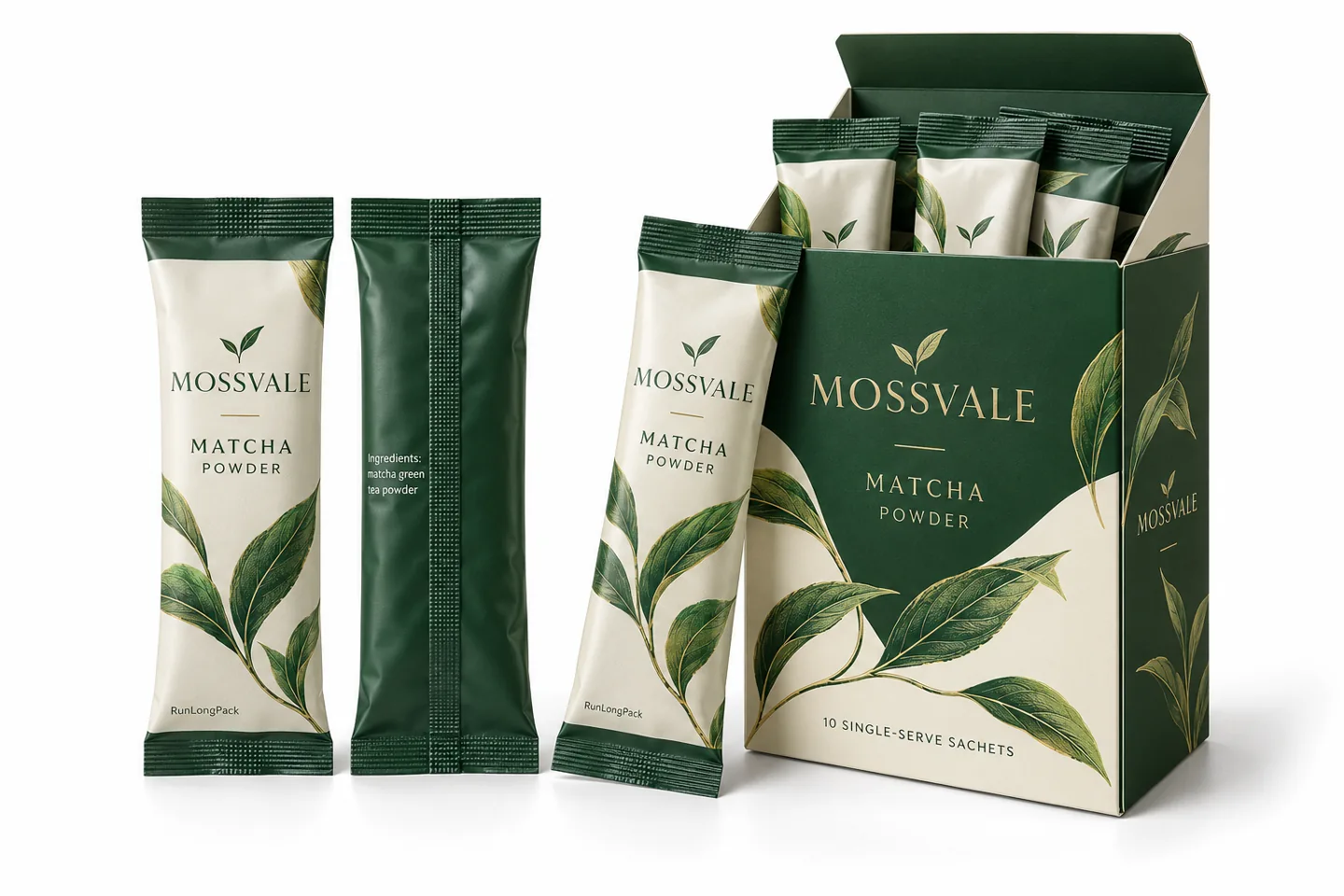
Many matcha brands choose elongated back-seal sachets, also called center-seal or fin-seal bags. A longitudinal seam runs down the back, leaving the front available for branding. Matching printed paperboard boxes can group the sachets into a retail pack.
Specify the supply route before approving the shape. A finished narrow stick made on an automatic line may look simple, but it can be difficult to fill as a premade bag.
Choose the filling method first; then confirm the sachet and box dimensions. We supply empty packaging. Food filling and the automatic packaging machine are not included in the packaging quotation.
Startup: Premade Back-Seal Bags
For suitable startup projects, use empty premade bags with the agreed filling end open. Fill manually or with suitable dosing equipment, keep powder out of the seal area, then apply the final heat seal.
Our practical recommendation: evaluate an approximately 5 cm (50 mm) usable filling opening. A very narrow stick opening makes powder filling more difficult. Confirm the clear opening on the bag drawing and test your actual powder and tools; do not assume external flat width equals usable opening.
Automatic Line: Printed Rollstock
For slim single-portion sticks, the usual route is printed rollstock on a compatible automatic powder packaging machine. The machine forms the back seam, doses the powder and completes the end seals.
The buyer needs suitable automatic packaging equipment. Send its approved film drawing and dosing/sealing requirements before ordering film; the film itself does not provide a filling solution without the machine.
Retail Pack: Matching Paper Boxes
Add custom printed folding cartons to coordinate the outer pack with the inner sachets. Share the sachet count per box, filled dimensions and thickness, arrangement, carton style and artwork.
Confirm the box with filled-pack samples. The carton groups and presents the product; it does not replace the sealed inner pouch’s food-contact and barrier functions. Box MOQ, material, sample cost and quotation are assessed separately.
Light, Oxygen and Moisture: Review Them Together
Start with an Opaque Matcha Pouch
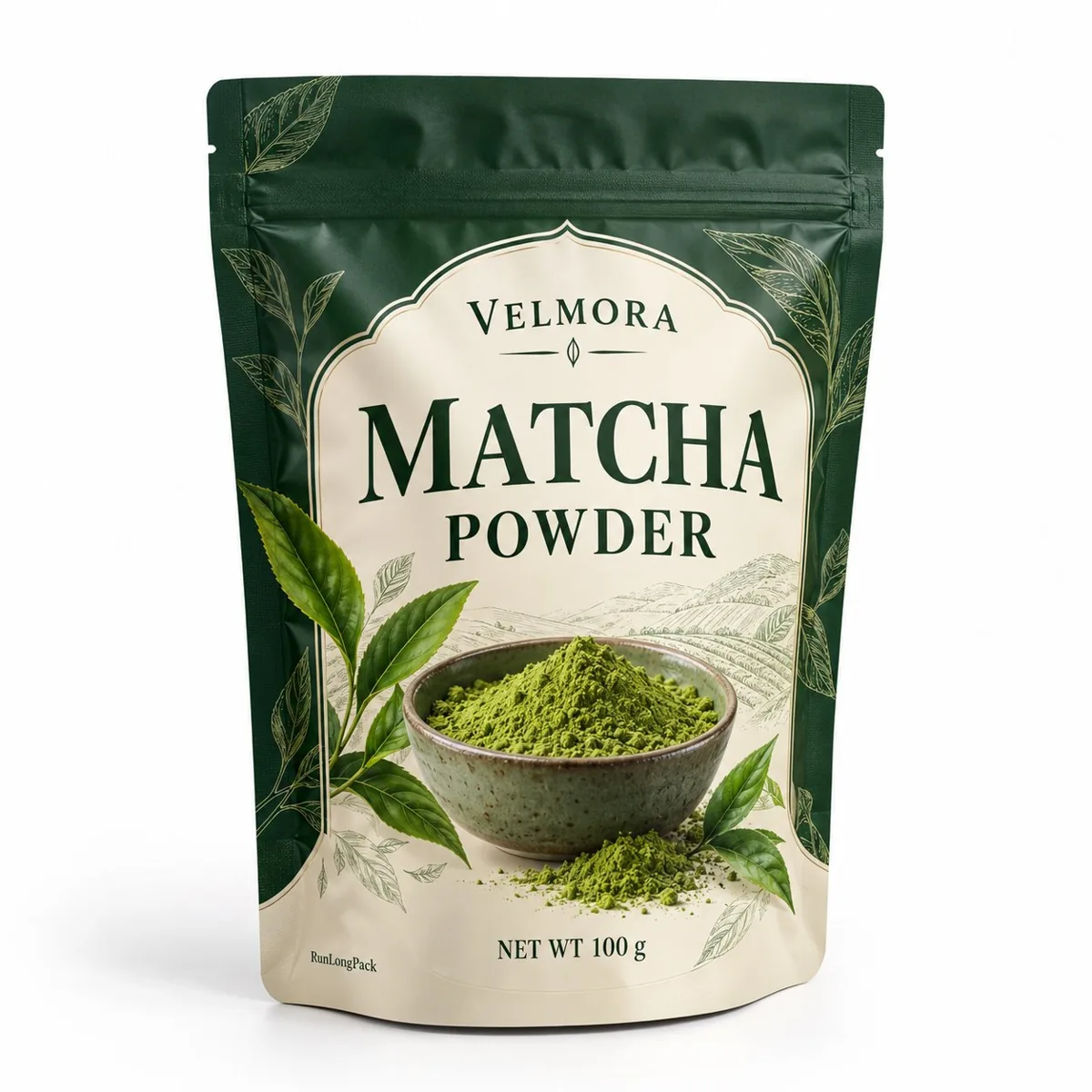
Light exposure, oxygen and moisture are relevant to matcha quality. Review the complete laminate, seals, storage conditions and target shelf life rather than assuming a dark print or thicker film is sufficient.
Suitable foil-containing and metallized structures can be evaluated. Aluminum foil and metallized film are different materials; the proposed construction and applicable performance information should identify which is supplied.
A clear window changes the protection brief. Continuous opaque foil or metallization cannot remain across a transparent viewing area. If visibility is essential, assess the exposure and complete package before approving that feature.
A matte finish, botanical design or kraft-look print describes appearance. It does not establish a mono-material, recyclable or compostable construction.
| Requirement | Information to send | What to confirm |
|---|---|---|
| Light exclusion | Retail display, distribution and any proposed window. | Opacity of the selected structure across the product area. |
| Oxygen & moisture | Product, shelf-life target, storage and relevant barrier targets. | Proposed laminate and supporting performance information; validate the food in the sealed pack. |
| Powder contact & seals | Pure powder or blend, filling line and seal conditions. | Applicable contact layer, sealing compatibility and powder contamination control. |
| Nitrogen flushing | Equipment, process and agreed pack-test criteria. | Material and seal suitability for the buyer’s actual process; no universal gas settings. |
Runlong Pack uses food-grade raw materials without recycled, secondary or scrap materials. Request available food-contact documentation applicable to the chosen structure and use. The food producer validates shelf life and storage instructions for the final product.
Plan Matcha Pouch Size Around the Actual Powder
30 g, 50 g and 100 g are helpful retail briefing examples, not guaranteed capacities for a fixed pouch. The same net weight can occupy a different volume in pure matcha and a latte blend.
Use our bag size guide to prepare width, height and gusset measurements. Approve the drawing and measurement convention before making production artwork.
Keep Your Matcha Range Recognizable and Readable
Lead with the Product
Separate pure matcha from sweetened latte mixes clearly. Use a consistent brand system with readable product names and distinct SKU colors.
Plan the Back Panel
Reserve space for ingredients, applicable allergens, preparation and storage instructions, net quantity, barcode and lot/date coding. The buyer approves market-specific wording.
Approve the Print Route
Compare digital and gravure by quantity per design, dimensions, laminate and reorder plans. Review matte, gloss or selected special finishes on the actual specification.
Confirm the design on an approved dieline. Keep critical text away from seals, folds and tear areas; a screen mockup alone cannot confirm small-text readability in production.
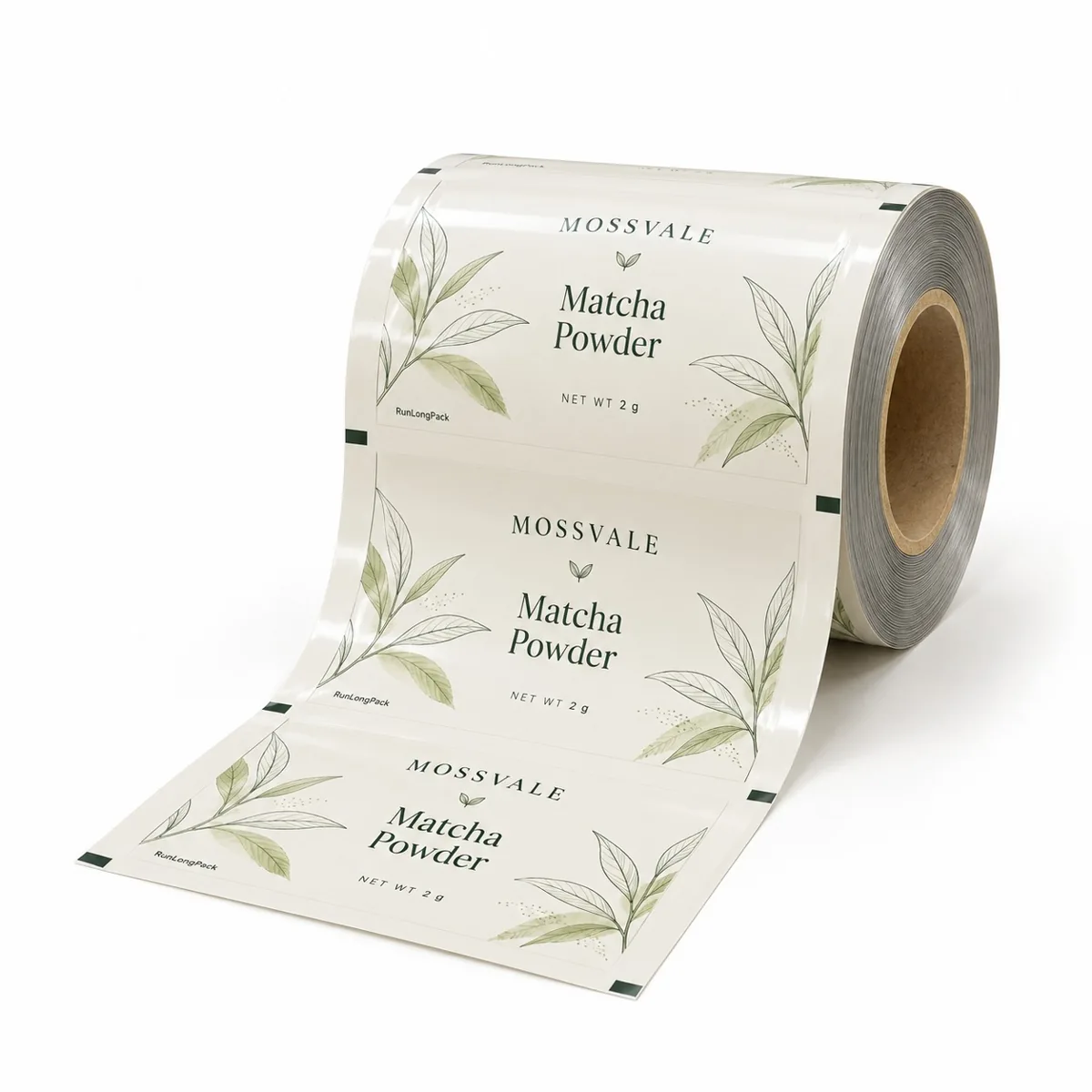
Matcha Sachets Need a Machine-Specific Film Brief
For automatic dosing, share the target portion, machine model, lane arrangement, web width, repeat pitch, eye-mark requirements and unwind direction. Include core and reel limits and the sealing conditions.
Fine powder can contaminate seal areas. Agree a film trial with representative product and equipment to assess registration, cutting, filling and seal quality before a commercial run.
Rollstock is supplied on reels, not as already filled sticks. Sachet count per kilogram varies with dimensions, material, thickness and usable yield. Film trials and pouch sample fees use separate quotations.
MOQ, Samples and Production Timing
| Route | Planning reference | Confirm before quotation |
|---|---|---|
| Ordinary digital pouches | Some suitable projects around 100 pieces; approximately 1,000–3,000 pieces generally recommended for value. | Dimensions, structure, finishes and quantity per design. |
| Ordinary gravure pouches | Generally around 10,000 pieces. | Cylinders, colors, material, size and repeat-order plan. |
| Printed rollstock | Suitable digital trials around 10 kg may be evaluated; normal commercial recommendation around 300 kg+. | Machine drawing, material, web width, repeat, unwind and sealing conditions. Film trial cost is assessed separately. |
Conditional references, not universal minimums. Maximum finished digital pouch width is approximately 37 cm; this is not a rollstock web-width limit. Special structures and formats require separate confirmation.
Samples
Available reference samples are normally free, with buyer-paid freight. Ordinary custom printed samples are typically USD 50–70 each; selected special finishes may be USD 100–150 each. Flat-bottom custom printed samples are USD 110 each before any separately quoted extra finishes. Film trials and other special formats are quoted separately.
Production
Digital production is typically around 8–10 working days. Gravure cylinder making typically takes 7–9 working days, followed by around 15–20 days of production after cylinders are ready.
Approvals and Delivery
Timing follows final specification/artwork approval and the required payment. Shipping, holidays and production scheduling are additional factors. Qualifying gravure orders of more than 20,000 pieces per design can receive a sample-fee refund under agreed conditions.
Develop Your Packaging with Runlong Pack
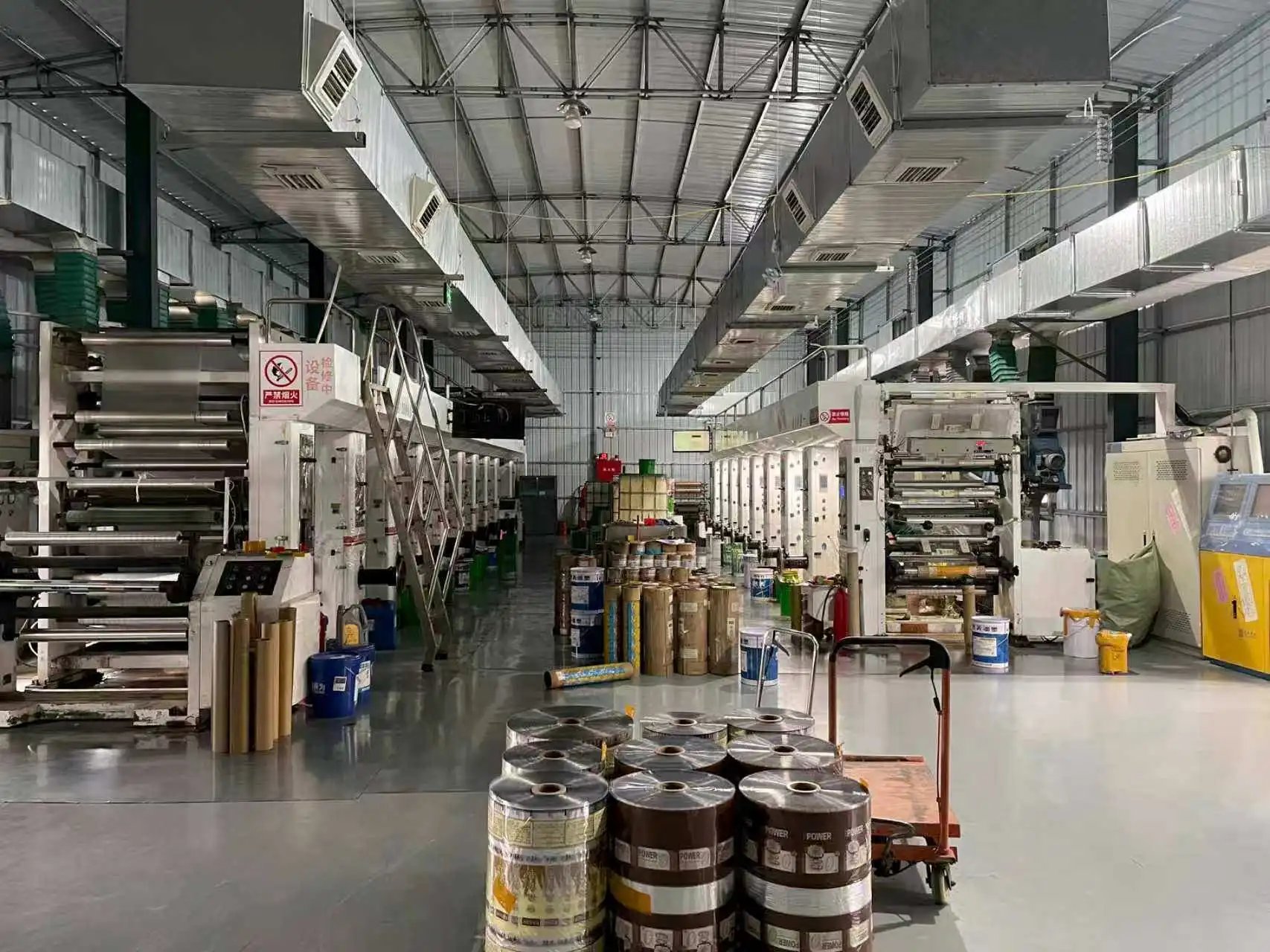
Runlong Pack is the brand of Shantou Runlong Packaging Co., Ltd., a flexible packaging manufacturer in Shantou, China. We supply custom printed premade pouches and rollstock for food brands, processors, importers and private-label businesses.
Bring your product, drawing, artwork and filling process into one specification. Request available samples and food-contact documentation applicable to your intended use.
Learn about Runlong Pack →Custom Matcha Packaging Bags FAQ
What packaging is suitable for matcha powder?
A heat-sealed opaque pouch with suitable moisture and oxygen barrier properties is a useful starting point. Choose the structure, opening, zipper and size around the actual powder, target shelf life, filling process and storage conditions. The food producer validates the final packed product; a green or metallic-looking pouch alone does not establish protection.
Can you make resealable matcha stand-up pouches?
Yes. Suitable premade pouches can include a resealable zipper, bottom gusset and tear notches. Apply the initial heat seal above the zipper after filling. Keep powder away from the seal and zipper tracks. Reclosing does not restore the unopened-pack conditions.
Should matcha packaging have a transparent window?
An opaque construction is a sensible starting point where light exclusion is important. A clear window exposes that part of the product to light and changes the material brief. Continuous opaque foil or metallization cannot remain across a transparent viewing area. Any window proposal needs a whole-package review and product validation.
Can I use aluminum foil or metallized matcha bags?
Suitable foil-containing or metallized laminates can be evaluated against the light, oxygen, moisture, sealing and handling brief. They are different constructions, not interchangeable names. Request the actual material specification and applicable test information rather than choosing from appearance or thickness alone.
What pouch size fits 30 g, 50 g or 100 g of matcha?
These weights are useful briefing examples, not standard bag capacities. Loose and settled powder volume, gusset expansion, opening width, scoop access and top-seal clearance affect fit. Provide actual powder or representative fill-volume information and confirm dimensions using a filled sample.
Can you supply matcha sachets or stick-pack film?
Yes. Premade back-seal sachets and printed rollstock can be evaluated as different supply routes. With premade bags, the buyer fills through the agreed open end and applies the final seal. For narrow sticks formed from rollstock, the buyer needs a compatible automatic powder packaging machine. Provide dosage, web width, repeat, lanes, eye marks, unwind direction, reel limits and sealing requirements. Tiny sachets do not automatically qualify for the ordinary pouch minimum.
What is the MOQ for custom matcha packaging bags?
Some suitable ordinary digital pouch projects can be evaluated around 100 pieces, with approximately 1,000–3,000 pieces generally recommended for value. Ordinary gravure pouches generally start around 10,000 pieces. Dimensions, structure, finishes and quantity per design affect the minimum; very small sachets and rollstock require separate review.
Can the same bag be used for pure matcha and latte powder?
Not automatically. Pure matcha and blends containing sugar, milk powder or flavor ingredients can differ in bulk density, storage requirements and filling behavior. Submit each recipe category, intended fill and storage brief. Shared artwork dimensions do not prove a shared material or capacity is suitable.
Can you make packaging for nitrogen-flushed matcha?
Tell us if your filling line uses nitrogen flushing. Review the proposed material, machine, seal conditions and relevant pack-validation criteria together. The packaging supplier does not determine the gas settings, residual oxygen target or finished-food shelf life from the bag artwork.
Can I get a sample and see my logo on the pouch?
Available reference samples are normally free with buyer-paid freight. Ordinary custom printed samples are typically USD 50–70 each, with special formats or finishes quoted separately. A free static mockup is normally prepared within two days after receiving the needed logo, product information and design idea. A mockup does not replace a filled sample or approved production artwork.
Can a startup fill premade matcha back-seal bags without a full automatic line?
Premade back-seal bags can be evaluated for startup filling, followed by final heat sealing. Very narrow openings make fine-powder filling difficult. As a practical starting recommendation, we suggest an approximately 5 cm (50 mm) usable filling opening where the format allows it. Confirm the opening on the drawing and test with your powder and filling tools; it is not a universal external bag-width rule.
Do I need an automatic machine for narrow matcha stick packs?
For the rollstock route, yes: you need a compatible automatic powder packaging machine to form the bag, dose the powder and seal it. Finished narrow sticks are not the same as easy-to-fill premade bags. Review dosing, web width, repeat, back-seal arrangement and sealing conditions with the equipment supplier before ordering film.
Can you supply custom paper boxes for matcha sachets?
Yes. Matching printed paperboard boxes can be quoted with the inner matcha sachets or pouches. Send the number of filled sachets per box, their finished dimensions and thickness, the packing arrangement and desired carton style. Confirm box dimensions using filled samples. The box supports presentation and grouping; the sealed inner packaging provides the specified food-contact and barrier functions. Box MOQ, samples and pricing are confirmed separately.