

Custom Aquarium Fish Food Packaging Bags
Create fish food pouches that are easy to display, fill and use.
Custom printed flexible packaging for dry aquarium fish food flakes, pellets and powders. Runlong Pack helps fish-food brands, manufacturers and distributors select the pouch format, dimensions and printing approach for their product and packing process.
Send your product details and packing method. We supply empty packaging; pictured brands and fill weights are design examples.
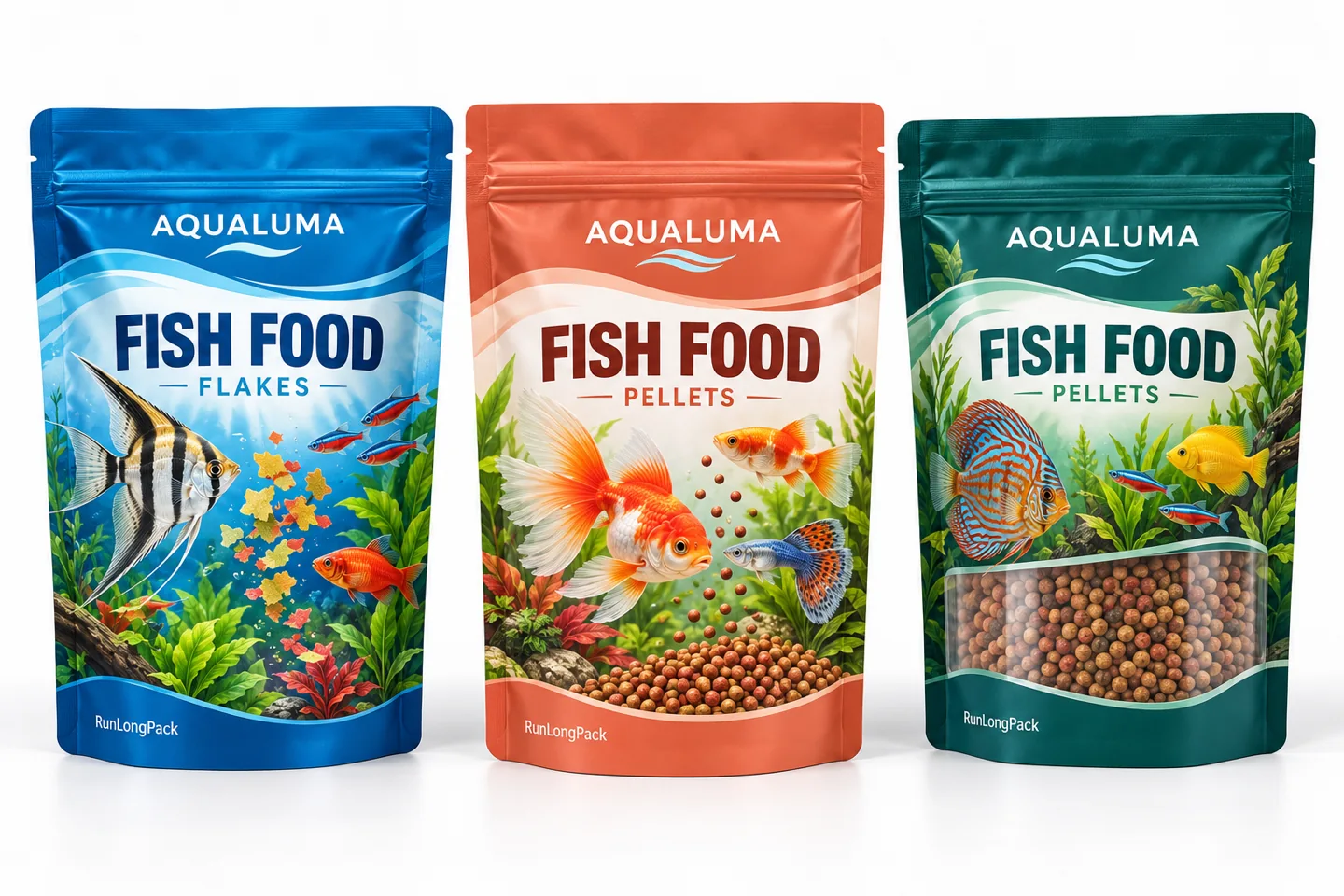
Which Packaging Route Fits Your Product?
Start with the dry feed form and actual fill volume. Delicate fish-food flakes, firm pellets and fine powders may need different handling and pouch dimensions at the same net weight. A printed stand-up zipper pouch can suit repeated use; select materials and pack construction around the real product, storage and distribution conditions.
This page addresses packaging for dry ornamental aquarium fish food. Live feed, refrigerated or frozen feed, medicated products, liquid feeds and large industrial aquaculture sacks require separate assessment.
Packaging for Your Actual Product
Fish Food Flakes
Thin flakes can break into smaller pieces during handling. Review loose and settled volume, filling and carton packing with a representative product sample.
Fish Food Pellets & Granules
Confirm pellet dimensions, target net weight, fill volume and whether small particles could collect in the zipper or heat-seal area.
Fine Powder or Fry Food
Fine feed can be dusty and behave differently during filling. Check dispensing, dosing access and a clean seal area with the actual formula.
Choose a Fish Food Bag Format
A decorative aquarium fish food package should also be practical to fill, store and reopen. Match the pouch structure to the dry feed, the packing method and the way the product will be displayed. These formats are project options, not a claim that one construction fits every fish food formula.
| Format | Possible use | What to confirm |
|---|---|---|
| Zipper stand-up pouch | Retail pellets, granules or flakes used over several feedings. | Usable zipper opening, filled volume, base dimensions and initial top-seal space. |
| Flat-bottom pouch | Structured display for a suitable fish-food range. | Panel layout, filled stability, filling access and format-specific sample and MOQ. |
| Small hanging pouch | A compact retail portion displayed on a peg. | Pouch dimensions, filled weight, hole position and distance from the functional zipper and seals. |
| Printed rollstock | Compatible automatic forming, filling and sealing equipment. | Full web width, repeat, registration, seals, reel dimensions and actual machine drawing. |
Premade pouches are supplied empty for a suitable manual, semi-automatic or automatic filling operation. A film reel needs a compatible machine that forms and seals the final pack. If your business is starting out, tell us the filling equipment you have so we can assess a practical opening and format.
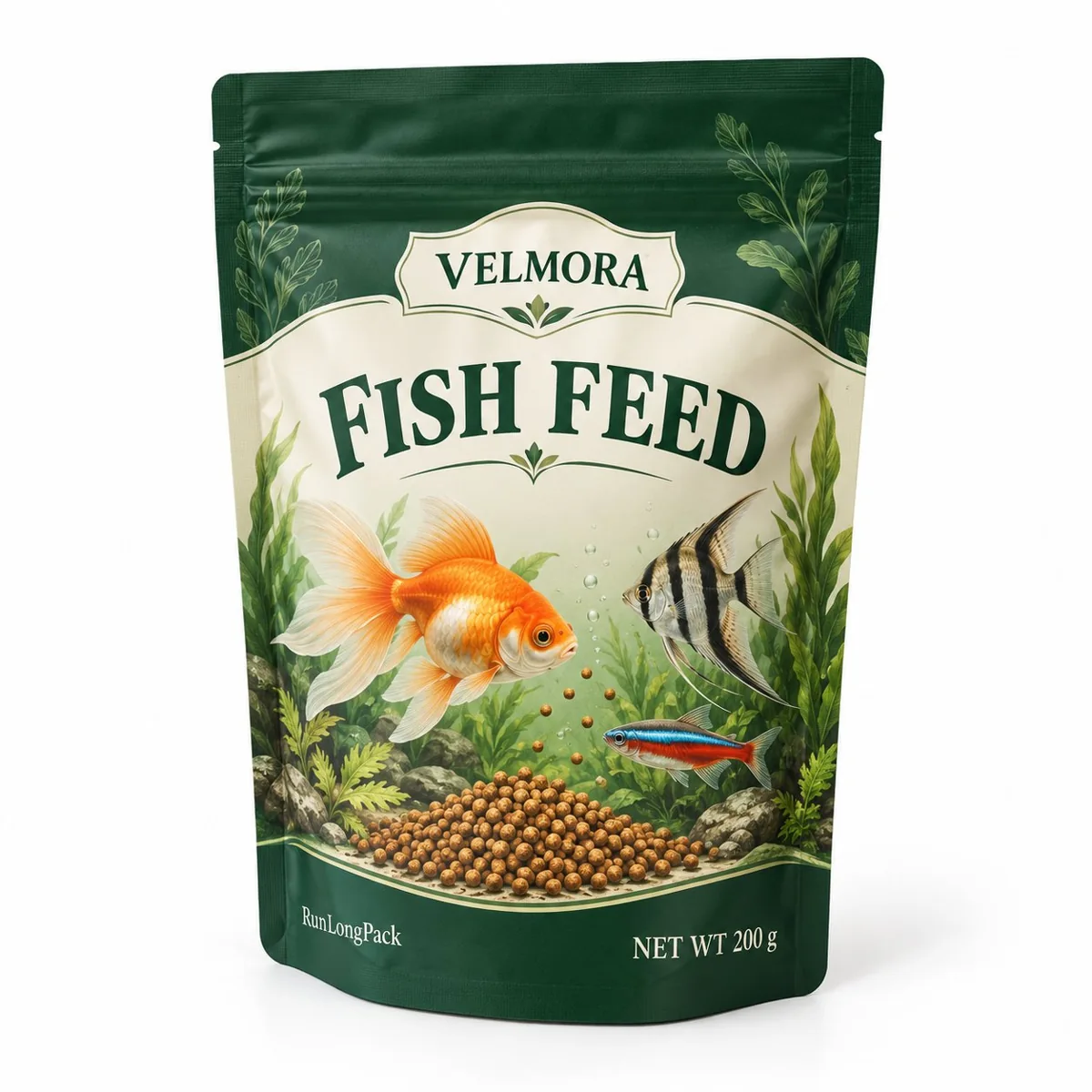
A Clear Fish-Food Design for the Shelf
A printed pouch can identify the intended fish-food product at a glance. Color, fish illustrations and a readable product name help distinguish flakes, pellets or other variations within a range.
The pictured brand and 200 g print are illustrative design details, not a standard capacity. Determine the final pouch size with your actual feed. Keep the initial heat seal above the zipper appropriate to the selected bag and filling process.
For several formulas or fish categories, define a controlled artwork version for each SKU. The product owner approves ingredients, directions, batch information, barcode and any claims needed in the destination market.
Match Pouch Size to Flakes, Pellets or Powder
Net weight alone does not tell you how much space a dry fish food needs. A light flake product, a small pellet and a fine powder can have different loose and settled volumes at the same weight. Use a representative product sample instead of copying another brand’s bag size.
Thin flakes may settle and break when handled. Assess the filling and shipping process with real product; flexible packaging, a zipper or a particular artwork design cannot by itself guarantee crush protection. Select appropriate outer cartons and handling methods for your distribution route.
For pellets and fine powders, check whether particles enter the zipper track or heat-seal area. Equipment setup, dust control and actual sealing conditions matter alongside the selected laminate. Review our bag size guide for the measurements to send, then approve the final size using your own filled sample.
Balance Visibility and Storage Needs
Fish food recipes differ. Review the complete dry feed, target shelf life, sensitivity to moisture, oxygen, light and aroma changes, and expected storage and distribution conditions before selecting a structure. Oily or strongly scented feed may require a separate compatibility and aroma review. Foil-containing, metallized or other appropriate laminates can be considered for a confirmed project.
A transparent window can show the actual flakes or pellets. Continuous opaque foil or metallization cannot cover the same clear area; a clear front with an opaque back is a different construction from a mostly opaque bag with a window. Assess the complete pouch, including the clear region and seals, against the product’s storage objectives.
Fish food may be used near an aquarium, but a zipper pouch must not be described as waterproof merely because it is resealable. The brand should specify intended storage and test the complete filled pack under its own conditions. Reclosure is not a replacement for an initial heat seal and does not restore unopened-pack storage conditions.
We use food-grade raw materials without recycled, secondary or scrap materials for our flexible-packaging production. Request any available material documentation relevant to the chosen structure, application and market. The raw-material policy alone does not establish compliance for every pet-feed application or a validated shelf life.
Information to Prepare for a Fish Food Packaging Quote
Feed & Fill
Flakes, pellets, granules or powder; intended product category; formula or relevant oil/aroma characteristics; net weight and filled volume.
Pouch & Design
Finished width, height, gusset, opening and preferred zipper, hang hole or transparent window. Provide existing artwork or your logo and design direction.
Production & Shipping
How the pack will be filled, quantities per design, sample needs, destination and requested delivery date. For rollstock, attach the machine drawing.
When several similar fish-food SKUs are planned, confirm whether they can share a bag size after real filling tests. Each artwork still needs its own approved product description and relevant label information. Compare different sizes or film structures in the quote rather than assuming the same piece price across the range.
If you need a prototype, tell us what the sample should demonstrate: printed appearance, product fit, opening, seal clearance, display stability or filling equipment compatibility. An artwork mockup is useful for design review, while an appropriate physical sample and filled-pack trial are separate steps.
Make the Printed Pack Useful to Buyers and Easy to Reorder
Make the Product Clear
Use a readable product name, flavor and net quantity. Coordinate colors across the range while keeping each recipe or serving size easy to identify.
Respect Functional Areas
Reserve seal lanes, folds, opening features and date-code space. Place approved ingredients, relevant allergens, barcode and preparation or storage instructions where they remain readable.
Approve a Controlled File
Confirm the drawing, material, text, colors and artwork version before production. Editable print files are preferred; an AI concept or JPG can begin the discussion but may require preparation for printing.
Printing, MOQ, Samples and Lead Time
| Route | Planning reference | Confirm for your order |
|---|---|---|
| Ordinary digital pouches | Some suitable projects around 100 pieces; approximately 1,000–3,000 generally recommended for value. | Format, dimensions, material, finishes and quantity per design. |
| Ordinary gravure pouches | Generally around 10,000 pieces. | Artwork/cylinder requirements, structure and repeat-order quantity. |
| Printed rollstock | Some compatible digital trials around 10 kg; normal commercial recommendation around 300 kg+. | Machine drawing, process, material, reel format and separately quoted trial scope. |
These are conditional planning figures. Very small bags, special formats and processes may need different quantities. Flat-bottom pouches use separate production and sample rules; do not apply the ordinary-pouch minimum to every format.
Reference and Custom Samples
Available reference samples are normally free with buyer-paid freight. Ordinary printed pouch samples are typically USD 50–70 each; selected special finishes may be USD 100–150. Flat-bottom printed samples are USD 110 each, before separately quoted extra finishes. Film trials are quoted separately.
Production Timing
Typical digital production is around 8–10 working days. Gravure cylinder making typically takes 7–9 working days, followed by around 15–20 days of production after cylinders are ready.
Start and Delivery Conditions
Timing follows final artwork/specification approval and receipt of required payment. Materials, trials, special processes, scheduling, holidays and transport affect the actual delivery plan.
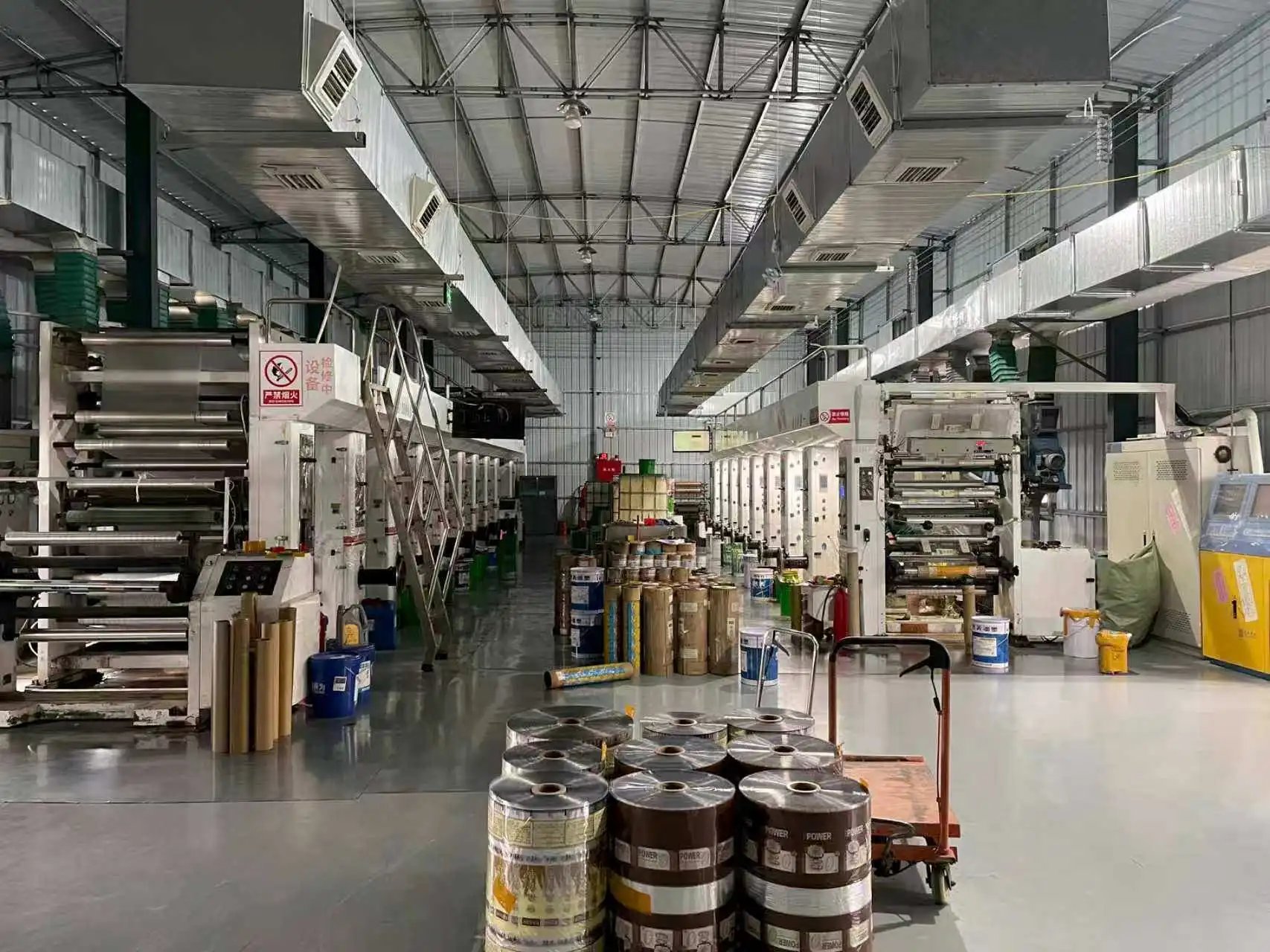
Work with Runlong Pack in China
Runlong Pack is the brand of Shantou Runlong Packaging Co., Ltd., a flexible packaging manufacturer in Shantou, China. We supply custom printed premade pouches and rollstock for food producers, brands, importers and private-label businesses.
We use food-grade raw materials without recycled, secondary or scrap materials. Ask for available food-contact documentation applicable to the selected structure and intended use.
Our review connects the product, drawing, printing method and packing route. Reference samples, an artwork mockup and an agreed trial help you decide what to approve for production.
About Runlong Pack →Aquarium Fish Food Packaging Bags FAQ
Key format, minimum-order and timing information is shown above. These questions address the practical details buyers often need before requesting a quote.
Do you supply fish food or only the packaging?
Runlong Pack supplies custom flexible packaging, including suitable premade pouches and printed film. The fish-food brand or co-packer supplies and fills the feed. Share the dry feed type, size, filling route and storage brief.
Which bag is suitable for aquarium fish food flakes?
A resealable stand-up pouch can be evaluated for a retail flake product. Check the actual flake volume, filling opening, top-seal clearance and how the filled bag is packed into cartons. The pouch alone does not guarantee that fragile flakes will remain unbroken.
Can fish food pouches have a zipper and hang hole?
A zipper and hang hole can be evaluated for suitable formats. Confirm the pouch dimensions, filled weight and display requirements. Place the hang hole in an appropriate area without compromising the zipper, usable seal or printed information.
How do I choose the pouch size for pellets or flakes?
Use the actual feed and target net weight to compare loose and settled volume, then confirm pouch width, height, gusset, opening and seal clearance with a filled sample. Different pellet sizes and flakes do not have one universal weight-to-bag-size conversion.
Can I add a clear window to show the pellets?
A clear window can be considered when the selected construction and product storage needs allow it. Continuous opaque foil or metallization cannot also cover the same transparent area. Review the whole pouch, not just the opaque parts, against moisture and light requirements.
Which material should I choose for fish-food bags?
Assess the dry feed formula, sensitivity to moisture, oxygen, light and aroma loss, target shelf life and distribution conditions. Foil-containing, metallized or other suitable laminates can be reviewed. Validate the filled pack under your actual storage conditions.
What is the MOQ for printed fish food pouches?
Some suitable ordinary digital pouch projects can be evaluated around 100 pieces, with approximately 1,000–3,000 generally recommended for value. Ordinary gravure pouches generally start around 10,000 pieces. Format, dimensions, material, finishes and quantity per design determine the final minimum; very small and special bags need separate assessment.
Can you make printed rollstock for our packing line?
Suitable rollstock can be assessed for a compatible automatic forming, filling and sealing machine. Send the approved full-web width, repeat, seal type, registration mark, unwind direction and reel limits. The machine forms the finished pack from the reel.
Can I request samples and design assistance?
Available reference samples are normally free with buyer-paid freight. An ordinary custom printed pouch sample is typically USD 50–70 each, depending on size and type; flat-bottom samples and special finishes follow their own project-specific rules. A free static mockup is normally prepared within two days after receiving the necessary logo and design direction.
What are the production lead times?
Digital production is typically around 8–10 working days. Gravure cylinder making typically takes around 7–9 working days, followed by approximately 15–20 days of production once the cylinders are ready. Timing starts after final artwork/specification approval and required payment; transport is additional.