

Custom Stand Up Pouches with Window
Show the product. Keep your brand in focus.
Custom printed window pouches for food brands, processors and private-label buyers. Combine a clear viewing area with your artwork, resealable zipper and a material structure selected for your product.
Send your product photo, fill weight and quantity per design. We help review the size, window and printing route. Empty packaging supplied.

What Is a Window Stand-Up Pouch?
A window stand-up pouch is a flexible bag with a bottom gusset and an intact transparent area that lets customers see the contents. The rest of the bag can carry printed branding and product information. A zipper is optional; the clear window, film structure and initial heat seal are specified together.
Start with the product, then choose how much to show. A larger window improves visibility but reduces the printed area and exposes more of the product to light.
Make the Window Part of Your Packaging Design
A small, well-positioned window can be more useful than a large one that shows only empty headspace. Place it where the filled product will sit on the shelf, leaving room for the product name, required information and clean sealing areas.
Horizontal Windows
A broad band can show nuts, granola or similar products while leaving a substantial printed panel above. Review the position against the bottom gusset and actual fill level.
Round & Oval Windows
Use a compact focal point to show texture or product pieces. Keep the outline coordinated with your artwork and review how the pouch looks both filled and partly empty.
Vertical & Custom Shapes
A narrow strip or shaped viewing area can support a distinctive layout. Submit the outline for review with the film and printing route before approving the design.

The illustrated windows remain covered by transparent film. A clear-film print window is not automatically a separate cutting operation.
Clear Windows, Foil Backs and Material Choices
For dry foods, review moisture, oxygen, aroma and light requirements together with the storage and distribution conditions. Film thickness or a metallic appearance alone does not establish the protection of the finished package.
| Option | What the customer sees | What to review |
|---|---|---|
| Printed clear film | A reserved transparent area surrounded by printed artwork. | Suitable laminate, barrier needs, white-ink coverage and the light exposure through the window. |
| Paper-look or kraft laminate | A paper-style finish with a visible product area. | Actual paper versus a printed paper effect, the film behind the window and the manufacturing route. A paper look does not establish recyclability. |
| Clear front + opaque back | Product visibility on the front with an opaque rear panel. | A suitable foil or metallized back can be evaluated. Confirm the front material, seal compatibility and complete-pouch protection. |
| Fully opaque pouch | Printed artwork without a viewing window. | Consider this route when light protection takes priority over showing the contents. |
No. Continuous opaque aluminum foil or metallization cannot remain across a transparent area. A clear front and an opaque back are a different structure; the back alone does not give the whole package full-foil barrier performance.
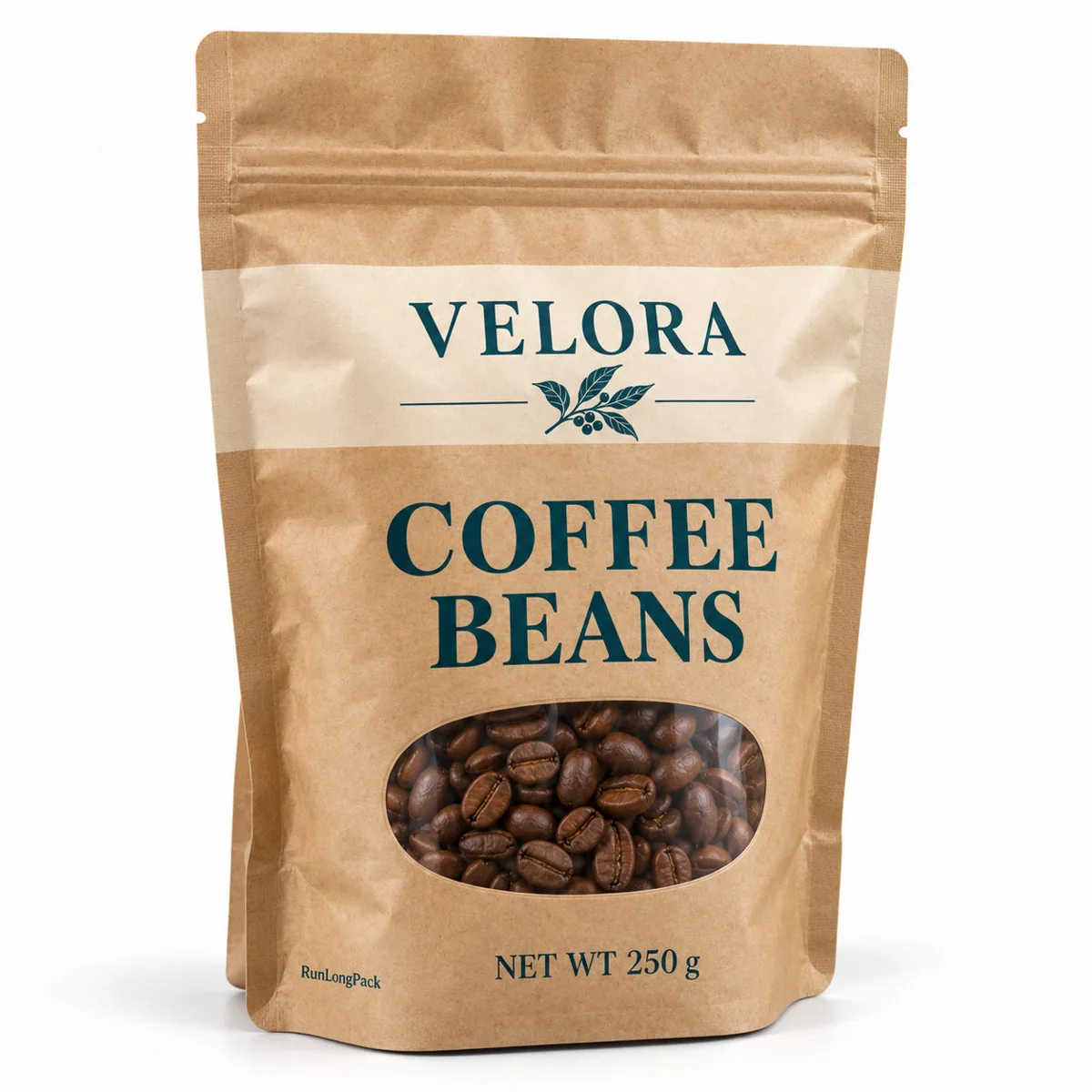
Match the Finish to Your Product
Choose a printed film, a paper-style presentation or a suitable paper laminate around the protection and branding brief. Matte or gloss surfaces and selected finishes can be evaluated without hiding the intended window.
For sensitive products, request available barrier data and applicable food-contact documentation for the proposed structure. Runlong Pack uses food-grade raw materials, without recycled, secondary or scrap materials.
Review our compliance and quality information with your intended food, use conditions and sales market.
Window Pouches for Your Product Range
For dry beans and lentils, review fill weight, product visibility and a suitable window construction.
Nuts & Snacks
Show shape and roast appearance while reviewing oils, sharp pieces, portion size and storage conditions.
Explore nut packaging →Granola & Cereal
Display clusters and ingredients. Check bulk volume, crumbs around the zipper and the window at the intended fill level.
See granola window pouches →Dried & Freeze-Dried Fruit
Review the specific product: moisture sensitivity, fragility, stickiness and storage needs differ between drying processes.
Review freeze-dried fruit options →Tea & Herbs
A window shows leaf shape, but light and aroma requirements may favor a smaller window or an opaque alternative.
Explore tea packaging →Explore application-specific window pouch briefs for dried fruit, ready-to-eat popcorn, dried mushrooms and dry pasta.
Choose the Size Around the Actual Contents
A 250 g almond pouch and a 250 g herb pouch need different volumes. Send the real product or a representative sample, not just the target weight. We review the finished drawing before production.
Width, Height & Gusset
Identify external dimensions and whether the bottom-gusset measurement means one folded side or the full opened depth. Check the usable opening and filled standing behavior.
Zipper & Top Seal
Allow clearance for filling and the initial heat seal above the zipper. Keep product and powder out of both areas; the zipper supports later reclosure.
Window & Artwork
Check the visible product level, barcode area, lot/date coding and label text. Confirm the clear area and white-ink layer on the approved artwork.
Use our bag size guide to prepare your brief, then approve dimensions through a filled sample. Suitable digital projects have a maximum finished pouch width of approximately 37 cm; larger sizes need another production review.
Custom Printing That Keeps the Window Clear
Prepare the Layout
Supply your logo and product information, or share a reference with a design idea. Mark the desired window separately from the printed artwork.
Review the Print Layers
Check color artwork, white ink, clear areas and finishing effects. Match multiple SKUs to an agreed window position, or review the cost of different layouts.
Approve the Sample
Review appearance, filling, standing, zipper use and heat sealing with your actual product. Retain the approved specification for repeat orders.
Digital and gravure routes are selected around structure, dimensions, quantities per design and repeat-order plans. A custom-shaped print window does not automatically require a pouch-shape cutting die; paper-window and special constructions are quoted separately.
MOQ, Samples and Production Timing
Suitable Digital Trials
Some ordinary digital pouch projects can be evaluated around this quantity. Approximately 1,000–3,000 pieces is generally recommended for value.
Ordinary Gravure Projects
A typical starting reference, subject to the pouch size, structure, artwork and window route. Compare the total cost and repeat-order plan.
Free Static Mockup
Normally prepared within two days after the required logo, design idea and product information arrive. Physical samples are a separate step.
*Planning references, not fixed minimums or guarantees for every construction. Special window processes and other bag formats require their own review.
| Reference samples | Available reference samples are normally free; the buyer pays freight. |
|---|---|
| Custom printed samples | Ordinary printed samples are typically USD 50–70 each. Selected special finishes may be around USD 100–150 each. Confirm the actual structure and process before ordering. |
| Sample-fee refund | For a qualifying gravure order of more than 20,000 pieces per design, the sample fee can be refunded under the agreed conditions. |
| Digital production | Typically around 8–10 working days. |
| Gravure production | Cylinder making typically takes 7–9 working days, then production around 15–20 days after cylinders are ready. |
Timing is confirmed after the required specification, artwork and payment approvals. Shipping is additional; holidays, structure and production scheduling can affect the plan. See the sample cost guide.
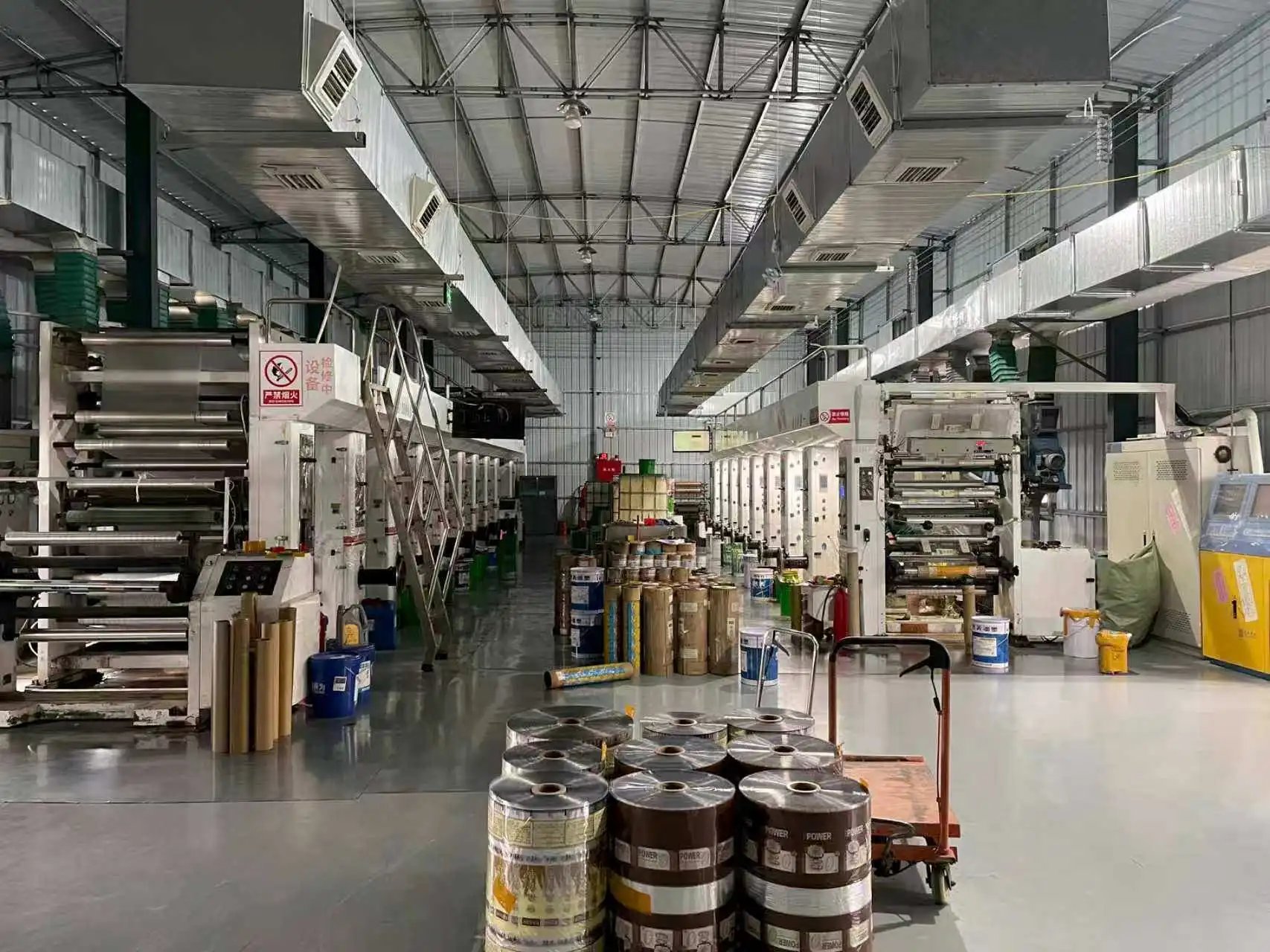
Work with Runlong Pack in Shantou, China
Runlong Pack is the brand of Shantou Runlong Packaging Co., Ltd. We supply custom printed premade pouches and rollstock film, with digital or gravure printing selected for the project.
For a window-pouch order, our review brings the product brief, material, drawing, artwork and packing process together. Available testing documents are reviewed for the intended structure and use.
Start with the actual product and commercial requirements. We help compare a suitable specification before you commit to production.
Meet Runlong Pack →Window Stand-Up Pouch FAQ
Can you print a stand-up pouch and leave a clear window?
Yes. Suitable transparent-film pouches can be printed with a reserved clear area. We review the window outline, white-ink coverage, film structure and finished bag drawing together so the visible product and printed artwork work as one design.
Can an aluminum foil pouch have a transparent window?
A continuous opaque aluminum foil or metallized layer cannot remain across a transparent viewing area. A suitable clear front with an opaque foil or metallized back can be evaluated as a different construction. The complete pouch, including its transparent panel and seals, must meet the product brief; it does not inherit full-foil performance simply from the back panel.
Are custom window shapes holes cut into the pouch?
For a printed clear-film window, the transparent film remains intact and the artwork leaves the viewing area clear. A paper-window construction may use an opening in the outer paper layer backed by film. The window is not an open hole exposing the food. Shape and manufacturing route are confirmed before production.
Can window pouches protect nuts, granola or dried fruit?
They can be evaluated for suitable products, but the answer depends on the recipe, storage conditions, target shelf life, transparent material and sealed package. Discuss moisture, oxygen and light needs before choosing the window area. The food producer validates the filled product and its shelf life.
What is the MOQ for custom printed window stand-up pouches?
Some suitable ordinary digital pouch projects can be evaluated around 100 pieces, with approximately 1,000–3,000 pieces generally recommended for value. Ordinary gravure projects generally start around 10,000 pieces. Size, structure, artwork count and window manufacturing route can change the suitable minimum; these are not universal minimums for every window construction.
What size should I use for a 250 g product?
There is no universal 250 g pouch size. Almonds, granola and dried herbs have different bulk volumes. Send the actual product, target fill weight and current bag measurements if available. Confirm width, height, bottom gusset convention, zipper clearance and window position with a filled sample.
Can you help if I only have a logo and a design idea?
Yes. Share your logo, product information, preferred colors and a window reference. We can help with a basic layout and normally prepare a free static mockup within two days after receiving the necessary information. It is a visual proposal; final artwork, materials and manufacturability require approval.
Does the zipper replace the top heat seal?
No. A zipper supports reclosure after opening. For the initial pack, use the agreed heat-seal area above the zipper and confirm sealing conditions with the actual film and filling process. Keep product and powder out of both the zipper and the final seal.
How long does production take?
Typical digital production is around 8–10 working days. For gravure, cylinder making typically takes 7–9 working days, followed by around 15–20 days of production after cylinders are ready. Timing is confirmed after the required specification, artwork and payment approvals; shipping and holidays are additional factors.