


Custom Cracker Packaging Bags
Plan the pack around the stack, the tray and the crunch.
Custom printed packaging for salted crackers, rice crackers and other dry thin crisps. Compare loose-fill pouches, tray-supported packs and automatic rollstock around your product geometry and filling line.
Send a product photo, target fill and quantity per design. We supply empty packaging; pictured brands and weights are illustrative concepts.
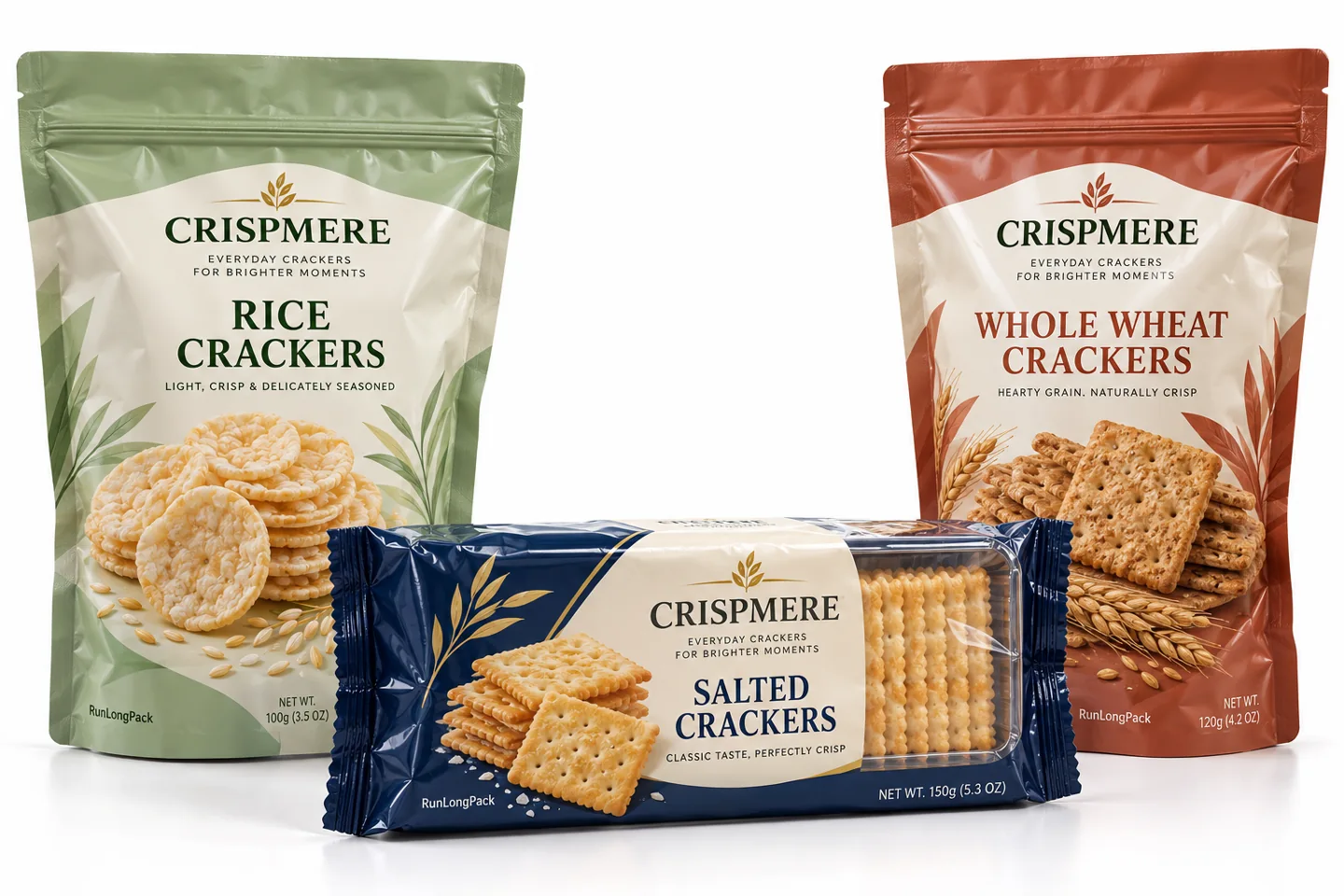
Which Packaging Route Should You Choose?
A resealable pouch can suit robust loose pieces, while fragile thin crackers may need a tray or another secondary support inside the final pack. For automatic wrapping, size the film around the loaded tray or product arrangement, not one cracker alone. Validate the package using representative filled samples.
For dry crackers and rice-cracker products. Cookie packaging, fresh bakery goods and wet filled products have separate briefs.
Different Products Need Different Packing Briefs
Square Salted Crackers
Thin edges, surface salt and perforations influence breakage and crumbs. Review whether the intended stack needs a tray or controlled loading.
Rice Crackers
Round, flat and irregular rice snacks have different piece thickness and fill volume. Use the actual product rather than a generic snack-bag size.
Seeded & Whole-Wheat Crisps
Oil, seed particles, rough edges and crumbs can affect contact and seals. Confirm the recipe category and product condition before selecting the laminate.
Premade Pouches or Printed Packaging Film?
Loose-Fill Zipper Pouches
Evaluate for products that tolerate the intended filling and transport route. Reclosure adds convenience but does not prevent crushing.
Stand-up pouches →Flat Premade Bags
For suitable portions or supported product arrangements. Check loading access, usable dimensions and final-seal clearance.
Flat pouch options →Tray Flow-Wrap Film
For compatible automatic equipment. The loaded tray, feeding orientation, cut pitch and seal allowances determine the film brief.
Printed wrapping film →Choose the Cracker Arrangement Before the Outer Pack
Thin square crackers, round rice crackers and irregular crisps respond differently to loading and transport. Begin with the actual pieces and the intended count or net weight, then decide whether they can be packed loose or need a tray.
A reclosable pouch can help the consumer use a pack over several occasions. Apply a first heat seal and keep crumbs out of zipper tracks; reclosure does not return the food to unopened-pack conditions.
Moisture, Oils and Seal Cleanliness Matter Together
Crackers can lose their intended eating texture when storage and packaging are mismatched. Define moisture and oxygen requirements, formulation category, oils, seasoning, target shelf life and the intended storage route.
Assess the laminate and seals together. A rough seeded edge, crumb contamination or tray corner can create a different handling brief from a smooth cracker stack. Validate with representative packs rather than selecting material by appearance alone.
What to Send for a Size Recommendation
| Information | Useful details |
|---|---|
| Actual product | Photos, representative pieces, recipe category and normal shape/size variation. |
| Intended fill | Net weight or count, loose or arranged product, tray dimensions where used, and fill level. |
| Bag or machine route | Premade opening, width/height/gusset, or the equipment supplier’s approved web specification. |
| Storage & distribution | Target shelf life, storage conditions, handling route and carton arrangement. |
Use our bag size guide to prepare measurements. Confirm the convention for gussets and seals on an approved drawing; a generic capacity chart cannot replace a filled sample.
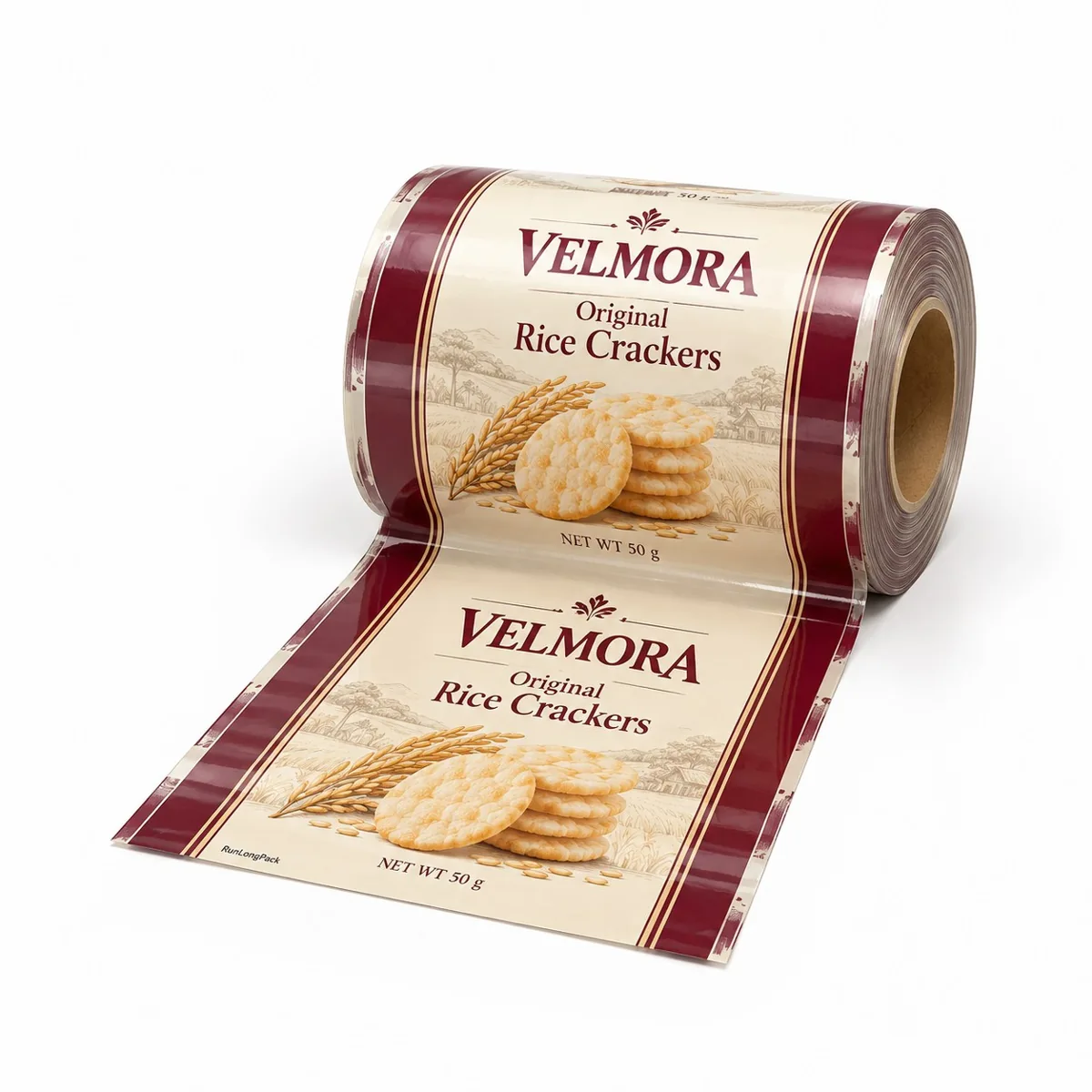
Review Automatic Packing Film Before Production
Printed rollstock is supplied on reels for your compatible forming and filling line. A product illustration on the film is an artwork concept, not a machine drawing. Confirm web width, repeat, registration marks, unwind direction, core and reel limits, and seal conditions with the equipment supplier.
For tray-supported wrapping, provide loaded-tray length, width and maximum height, feeding orientation and cut pitch. Assess film travel, registration, seal position and crumbs on representative trials. The tray is not assumed included in a film quotation.
Make Your Range Easy to Recognize and Reorder
Identify Each Product
Keep the variety or flavor name prominent. Coordinate artwork across SKUs while making each product easy to distinguish.
Reserve Functional Space
Allow for approved ingredients, relevant allergens, net quantity, storage or preparation instructions, barcode and lot/date coding. Buyers approve market-specific wording.
Approve Each Revision
Review dieline, artwork, colors, structure and quantity per design. Keep important text clear of folds and seals and record the approved version for reorders.
MOQ, Samples and Production Planning
| Route | Planning reference | Confirm before quote |
|---|---|---|
| Ordinary digital pouches | Some suitable projects around 100 pieces; approximately 1,000–3,000 generally recommended for value. | Format, dimensions, structure, finishes and quantity per design. |
| Ordinary gravure pouches | Generally around 10,000 pieces. | Cylinders, colors, structure, quantity and reorder plan. |
| Printed rollstock | Some suitable digital trials around 10 kg; normal commercial recommendation around 300 kg+. | Approved machine drawing, structure and sealing requirements. Trial film is quoted separately. |
Conditional references, not universal minimums. The approximate 37 cm maximum finished digital-pouch width is not a rollstock web-width rule. Special formats and very small bags require separate confirmation.
Samples
Available reference samples are normally free with buyer-paid freight. Ordinary printed samples are typically USD 50–70 each; selected special finishes may be USD 100–150. Other formats and film trials are quoted separately.
Production
Digital production is typically around 8–10 working days. Gravure cylinders typically take 7–9 working days, followed by around 15–20 days of production after cylinders are ready.
Approvals & Delivery
Timing follows final specification/artwork approval and required payment. Trials, special processes, scheduling, holidays and shipping affect the actual delivery plan.
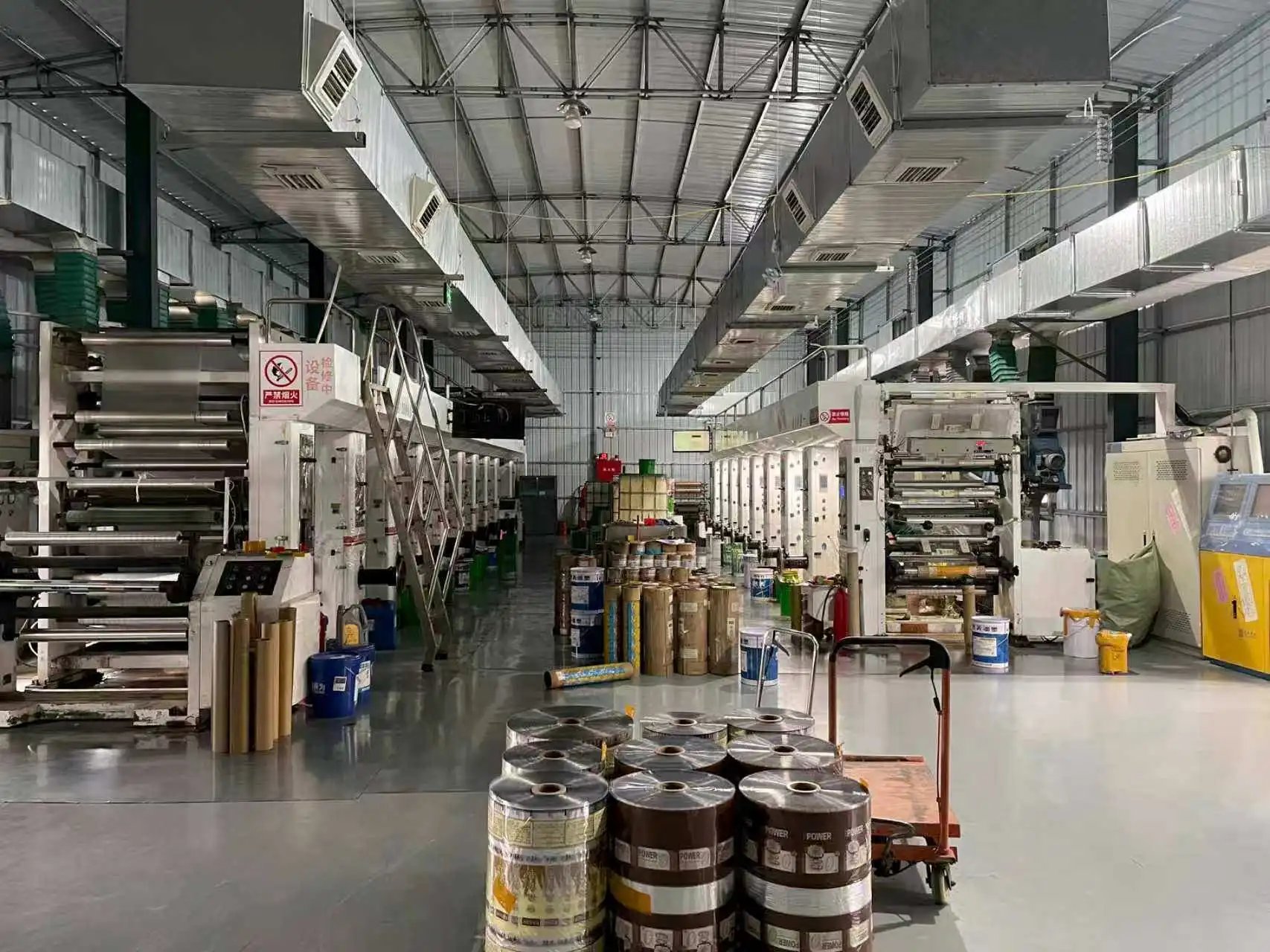
Develop Your Packaging with Runlong Pack
Runlong Pack is the brand of Shantou Runlong Packaging Co., Ltd., a flexible packaging manufacturer in Shantou, China. We supply printed pouches and rollstock for food brands, processors, importers and private-label businesses.
We use food-grade raw materials without recycled, secondary or scrap materials. Request available food-contact documentation applicable to the selected structure and intended use. The producer validates the product’s shelf life in the final package.
Learn about Runlong Pack →Cracker Packaging Bags FAQ
What packaging formats can you supply for crackers?
Suitable projects can use resealable pouches, flat premade bags or printed rollstock for a compatible automatic line. Choose the route around cracker dimensions, fragility, stack or tray arrangement, target fill and the actual filling process.
Do thin crackers need a tray?
Some products benefit from a tray or another secondary support, while more robust pieces may suit loose filling. Review representative pieces, stack height, loading and carton handling. A pouch alone is not a guarantee against breakage, and tray sourcing or supply should be confirmed in the quotation.
Can a zipper pouch be used for rice crackers?
A suitable resealable pouch can be evaluated for the actual rice-cracker product and fill. The producer applies the initial top heat seal. Check crumbs near the seal, standing behavior and the user opening; reclosure does not restore unopened-pack conditions.
How should I measure a tray-supported cracker pack?
Measure the loaded tray’s length, width and maximum height, including the cracker stack and tolerances. For machine film, confirm the approved web width, repeat pitch, feeding orientation and seal allowances with the equipment supplier. One cracker’s dimensions are not a film specification.
Which material should I use for salted crackers?
Review moisture and oxygen requirements, oils, seasoning, intended shelf life, storage and seal conditions. Clear, metallized or foil-containing structures may be evaluated where appropriate. The food producer validates the final packed product; material appearance alone does not establish performance.
Can you make transparent cracker packaging?
Printed clear film or a reserved clear window can show the product or tray. The transparent area remains intact film. It cannot retain a continuous opaque foil or metallized layer, and the complete package must still meet the approved brief.
Do you supply finished flow-wrap bags or film?
For the automatic flow-wrap route, we supply printed rollstock for the buyer’s compatible machine to form, fill and seal. Premade pouch orders are a separate route. A rendered finished wrapper illustrates the pack appearance, not an automatic promise of individual premade wrappers.
What is the MOQ for printed cracker packaging?
Some suitable ordinary digital pouch projects can be evaluated around 100 pieces; approximately 1,000–3,000 pieces is generally recommended for value. Ordinary gravure pouches generally start around 10,000 pieces. Printed film uses separate kilogram-based references and project confirmation.
Can the package be used with nitrogen flushing?
Tell us if your line uses gas flushing. Review the material, machine process, seals and agreed validation criteria together. The packaging supplier does not determine a universal gas setting, residual oxygen level or finished-food shelf life from the artwork.
Can I request samples and a mockup for my cracker range?
Available reference samples are normally free with buyer-paid freight. Custom pouch samples, special formats and film trials are quoted for their specification. A free static mockup is normally prepared within two days after receiving the necessary logo, product information and idea; filled samples and final production files are approved separately.