

Custom Hard Candy Packaging Bags
Present your hard candy in a printed retail bag developed around the sweets, their wrappers and the way the pack is filled. Runlong Pack supplies custom empty flexible bags for confectionery brands, food manufacturers and private-label buyers, with resealable and clear-window options where suitable.
Custom printing · Loose or wrapped candy · Moisture-barrier review · Retail and refill formats
Tell us whether the candy is loose or individually wrapped, its shape, pack weight and pieces per design. We manufacture packaging—not filled candy.
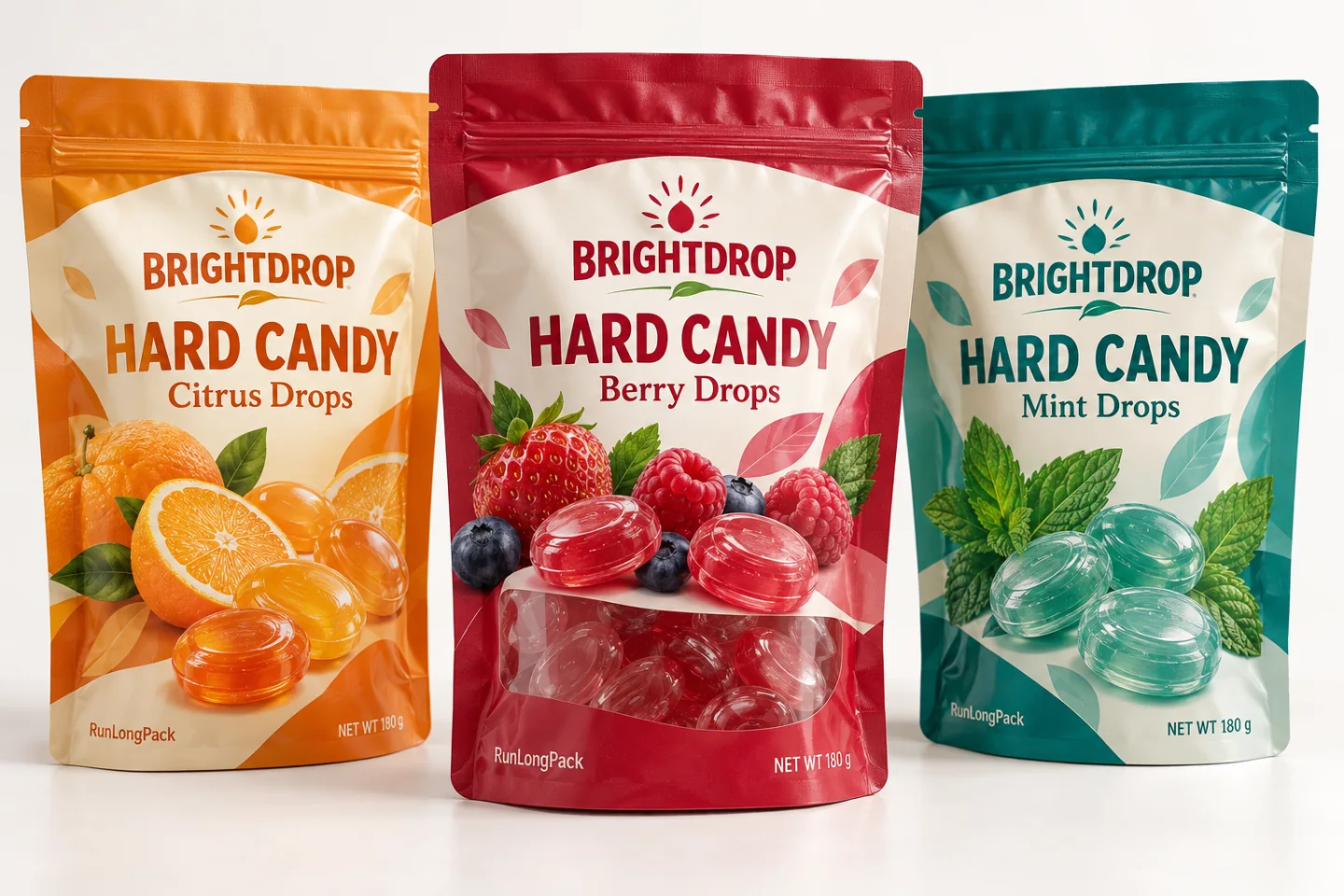
Different Hard Candies Need Different Packaging Briefs
Loose Fruit Drops and Boiled Sweets
The pouch directly contacts the candy. Share the product shape, surface finish, any dusting or coating, and its moisture sensitivity. Review the contact layer, barrier needs and clean filling process together.
Individually Wrapped Hard Candy
The outer bag groups wrapped pieces for retail or refills. Include the full wrapper dimensions and any projecting twist ends in the size trial. Do not assume an individual twist wrap provides a hermetic moisture barrier.
Mint and Assorted Flavor Packs
Describe strong aromas, coatings and mixed shapes so odor transfer and handling requirements can be reviewed. A single assorted pack needs a clear product-information plan; separate flavors need quantities stated per artwork.
Choose a Retail Bag That Fits the Selling Format
Stand-Up Retail Pouches
A gusseted base can support shelf display for a multi-piece pack. Check the filled stance and opening rather than choosing from an empty pouch photo. A zipper can add convenient reclosure where shoppers use the contents over several occasions.
Flat or Hanging Bags
A compact flat bag may suit certain pack sizes or hanging displays. Confirm the filling opening, usable volume, seal margins and optional hanging-hole location on the approved drawing.
Refill and Larger Packs
For refill or food-service packs, review the actual fill volume, handling weight, sealing and carton arrangement. Larger bags need a separate size and production check; a small retail specification should not simply be scaled up.
Explore stand-up pouch options or printed barrier pouch formats. A bag name alone does not establish its material specification.
Manage Moisture, Surface Tack and Product Condition
Moisture Protection
Hard candy can absorb moisture and develop surface tack or clumping under unsuitable conditions. Review the recipe, storage humidity, intended shelf life and proposed laminate using relevant performance information and filled-product evaluation.
Packaging Is Part of the Process
The candy condition at filling and the packing environment matter alongside the bag. Agree the conditioning or cooling process with the food producer; a barrier pouch cannot correct candy already carrying excess surface moisture.
Choose Protection Before Appearance
Clear, metallized and foil-containing structures offer different possibilities. Select around product sensitivity, seal requirements and distribution, not silver appearance alone. Neither a film name nor thickness establishes a guaranteed shelf life.
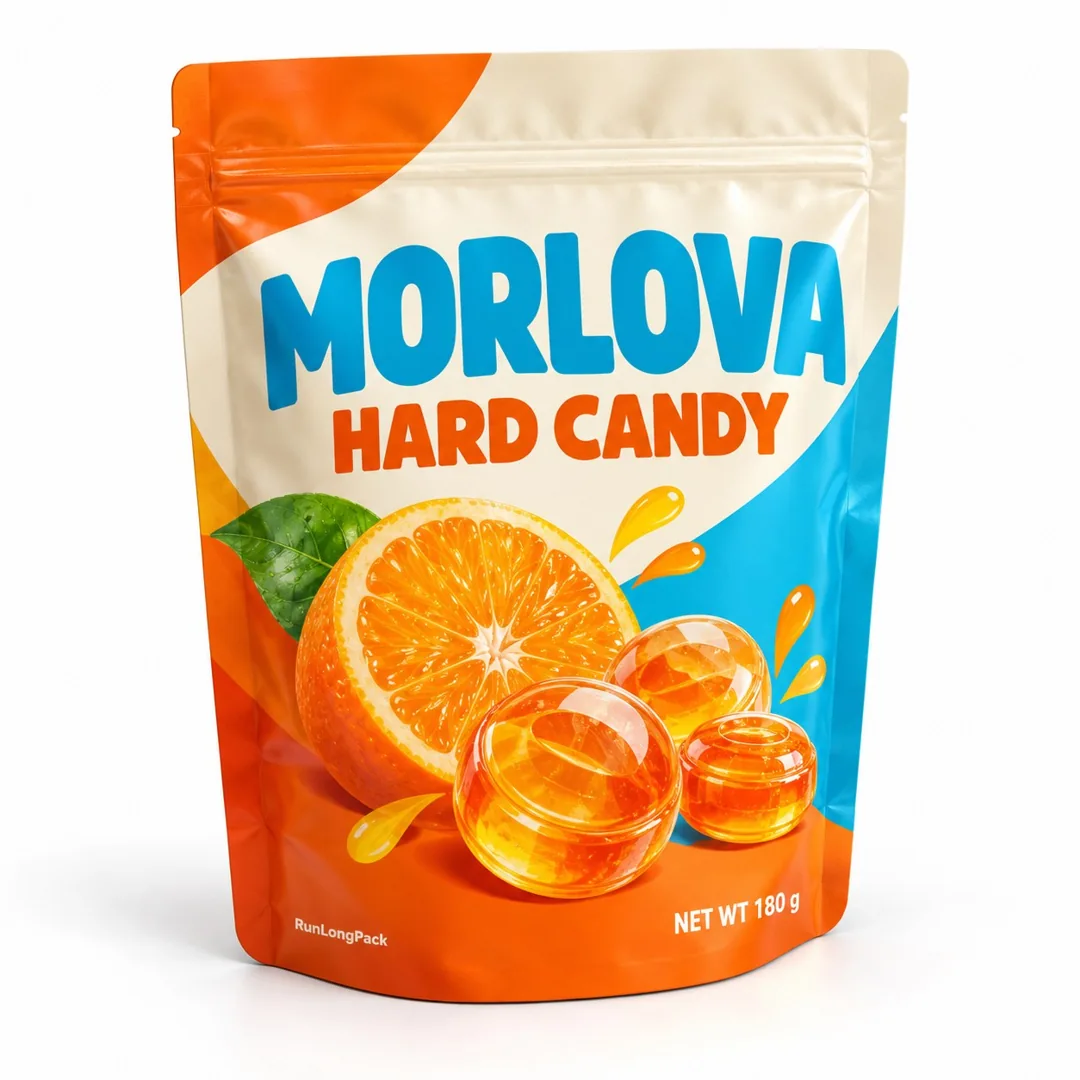
Approve the filled bag—not just the artwork
This hard-candy pouch concept illustrates printed branding, a zipper and a standing base. Test your actual candy or wrapped pieces inside the proposed format, checking loading, settling, closure clearance and handling. Printed weights are illustrative artwork, not confirmed bag capacities.
Check Puncture Risk, Closures and Distribution
Hard Edges and Wrapper Ends
Some candy shapes, broken pieces or stiff wrapper ends may create localized stress. Assess the complete laminate, bag fit and filled-pack handling rather than claiming every thicker film is puncture-proof.
Clean Initial Seals
Keep candy, dust and wrapper tails out of the final sealing area. Allow sufficient loading and top-seal space and test on the actual sealing equipment. Where a zipper is used, the original heat seal above it remains a separate requirement.
Transport and Reclosure
Evaluate filled bags in the planned outer carton for movement, compression, seal condition and presentation after handling. A flexible pouch is not a rigid crush-resistant box, and a zipper does not restore unopened barrier conditions after repeated use.
Confirm Size from Candy Count, Volume and Wrappers
Weight Alone Is Not a Size
Provide target net weight, approximate piece count and the largest candy dimensions. For wrapped sweets, include the wrapper rather than measuring only the edible center. Mixed shapes can settle differently.
Clarify External and Usable Dimensions
Specify width, height and any bottom gusset, stating whether the gusset figure is one folded side or the total opened depth. Keep usable space below the zipper and adequate clearance above the fill for sealing.
Run a Representative Fill Trial
Use production-equivalent sweets to check loading, standing, pouring, closure operation and carton fit. Compare loose and wrapped products separately, then approve the final size and drawing before preparing production artwork.
| Confirm | Information to send |
|---|---|
| Product and wrapping | Candy type, shape, coating/dusting, loose or individually wrapped, plus photos or samples. |
| Fill target | Net weight, approximate piece count, loose-fill volume and maximum overall piece/wrapper dimensions. |
| Bag layout | Width × height + gusset convention, filling opening, zipper/hanging-hole needs and window idea. |
| Protection | Storage and transport conditions, shelf-life target, moisture/aroma concerns and current laminate if known. |
| Packing and artwork | Filling/sealing equipment or manual process, logo/files, finish and number of designs. |
| Order and delivery | Pieces per artwork, destination, target arrival date and sampling requirements. |
Use our bag size guide as a starting point, then approve the dimensions through a real filling trial.
Print a Clear Hard-Candy Range
Brand, Flavor and Required Information
Make the candy type and flavor recognizable while retaining space for ingredients, allergens, net content, barcode and lot/date coding. Buyers approve the applicable market wording and final files before production.
Windows and Opaque Designs
A window can show colorful sweets or their individual wrappers. Check the actual fill level and white-ink layout. A clear area cannot retain continuous opaque foil or metallization; transparent and opaque areas must be reviewed with the material structure.
Artwork and Finish Options
Compare digital or gravure around the dimensions, material, designs and order quantity. Matte, gloss and selected special effects require project review; the concept image is not proof of manufacturing feasibility or exact print-color matching.
Match the Bag to the Packing Operation
Manual or Semi-Automatic Filling
Confirm how loose or wrapped sweets enter the bag and the available sealing process. Check that pieces do not bridge at the opening and that wrappers remain below the final seal area.
Premade-Pouch Machines
Share the equipment model and bag drawing for opening, gripping, loading and sealing review. Hard candy shape and wrapper behavior affect the trial; no standard-looking bag automatically fits every line.
Individual Wrapping and Rollstock
When equipment forms packages from a continuous web, film supply is a separate brief. Individual twist wrapping and heat-sealed pillow packs can require different materials and machine functions; confirm the actual process before choosing film.
For a line that forms the pack from a web, review custom printed rollstock film with the machine supplier’s approved drawing.
Printing, MOQ, Samples and Production Time
Digital Printing
Some suitable ordinary pouch projects can be evaluated from around 100 pieces. Approximately 1,000–3,000 pieces is generally recommended for better value. Maximum finished digital pouch width is approximately 37 cm; material and process compatibility still need review.
Gravure Printing
Ordinary custom pouch projects generally start around 10,000 pieces, subject to size, structure and artwork. Review quantity per design and cylinder requirements for a multi-flavor range.
Reference and Printed Samples
Available reference samples are normally free, with buyer-paid freight. Ordinary custom printed pouch samples are approximately USD 50–70 each; selected special finishes are generally USD 100–150 each, subject to confirmation.
For a qualifying gravure bulk order of more than 20,000 pieces per design, the sample fee may be refunded under the confirmed project arrangement. Separate bag types, such as flat-bottom pouches, use their own commercial and sampling rules.
Eligible digital production typically takes approximately 8–10 working days. New gravure cylinders normally take approximately 7–9 working days, followed by approximately 15–20 days of production after cylinders are completed. Timing starts after final artwork/specification approval and required payment; shipping is additional. Confirm the actual project schedule.
Review the MOQ guide, printing comparison and sample policy.
Manufacturing Support from Runlong Pack
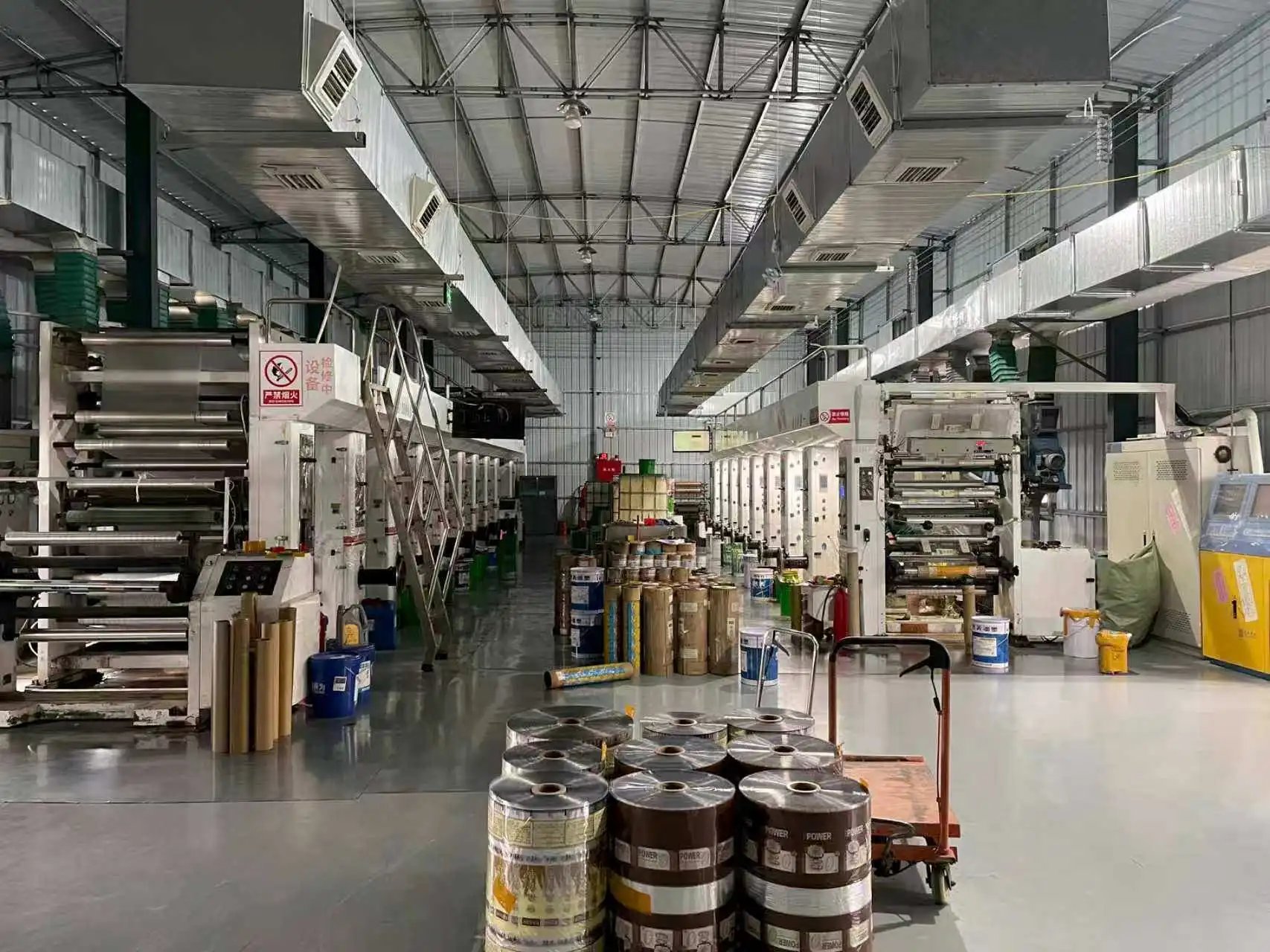
Runlong Pack is the brand of Shantou Runlong Packaging Co., Ltd., a custom flexible packaging manufacturer in Shantou, China. We support food brands, manufacturers, importers and other B2B buyers with printed premade pouches and rollstock, from specification review and artwork preparation to printing, conversion and delivery coordination.
Our food-grade raw-material policy applies across flexible packaging production. We review available food-contact documentation against the proposed material and intended use. Project quality checks may include dimensions, printing, lamination and seals, with further checks selected for the agreed package.
Keep the approved artwork, dimensions, material and filling-trial record together for repeat orders. Discuss required arrival dates early, allowing for production and transport rather than assuming an immediate reorder.
Learn about our manufacturing capabilities and food-contact documentation and testing.
We use food-grade raw materials for all flexible packaging production and do not use recycled, secondary or scrap materials.
Custom Hard Candy Packaging Bags FAQ
Do you supply bags for loose and wrapped hard candy?
Both can be evaluated, but the packaging brief differs. Loose candy directly contacts the pouch; individually wrapped pieces need space for the full wrapper and its ends. Send actual samples or dimensions before size approval.
Can the bag prevent hard candy becoming sticky?
A suitable moisture-barrier structure can help limit exposure, but the recipe, conditioning, packing environment, initial product condition and storage also matter. Validate the finished candy in the intended package rather than relying on a bag-only promise.
Do individually wrapped sweets still need an outer barrier bag?
It depends on the individual wrapper, its closure, the candy and distribution conditions. A twist wrap is not automatically a hermetic barrier. Assess the whole packaging system and the intended shelf-life target.
Can sharp candy edges or wrappers damage a pouch?
They can create local stress depending on shape and handling. Evaluate the actual product, laminate, pack fit and transport arrangement. Film thickness alone does not guarantee puncture resistance or prevent breakage.
Can I add a zipper or a clear window?
Suitable zipper and window options can be reviewed with the bag drawing, artwork and material. The zipper does not replace the original heat seal. A clear window cannot retain continuous opaque foil or metallization.
What size pouch is needed for 180 g of hard candy?
There is no universal size based on weight alone. Candy dimensions, shape, wrappers, settled volume and seal clearance affect fit. The 180 g artwork shown is illustrative; confirm the final dimensions with a filling trial.
What MOQ applies to custom printed hard candy bags?
Some suitable ordinary digital pouch projects can be evaluated from around 100 pieces, with approximately 1,000–3,000 pieces generally recommended for value. Ordinary gravure pouches generally start around 10,000 pieces, subject to size, material and artwork. Special formats use separate rules.
Can I review branding and samples before production?
Send your logo and design idea for a free static mockup, normally within two days after the necessary information is received. Final artwork approval, physical printed samples and filled-product trials are separate steps; sample costs are confirmed for the bag and finish.