

Custom Nutritional Yeast Packaging Bags
Give delicate yeast flakes room, and make everyday pouring and resealing easier.
Custom printed flexible packaging for nutritional yeast flakes and powder, from retail zipper pouches to suitable larger foodservice packs. Runlong Pack helps review the actual product, filling route, material and artwork before preparing your quote.
Send your product details and packing method. We supply empty packaging; pictured brands and fill weights are design examples.
Which Packaging Route Fits Your Product?
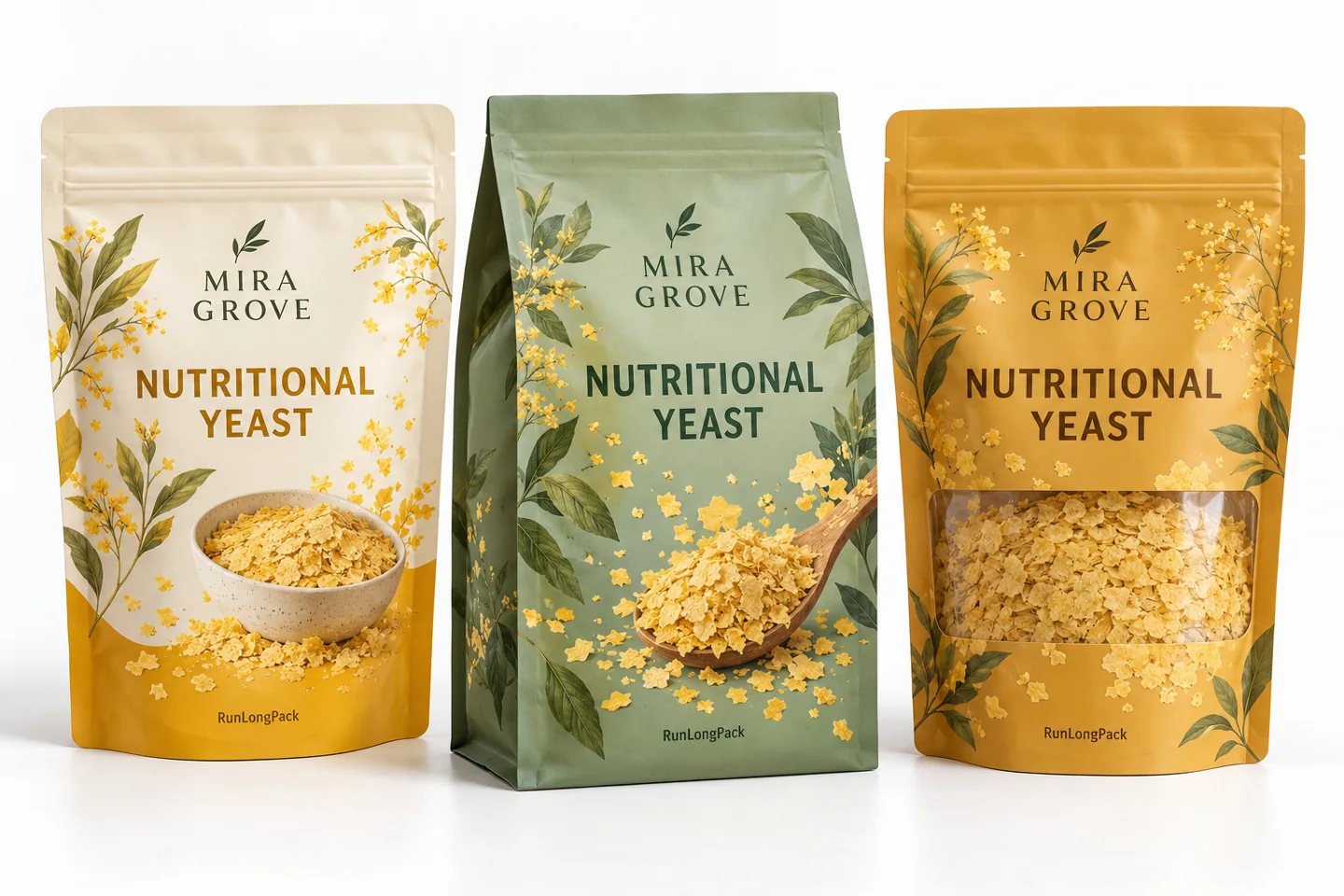
Start with a representative filled-volume test. Nutritional yeast flakes and powder can occupy different volumes at the same net weight, so a weight alone is not enough to select a bag. A resealable stand-up pouch can suit repeated retail use; evaluate flat-bottom pouches or suitable larger formats for other display and filling needs.
This page covers dry nutritional yeast flakes, powder and suitable dry blends. Live baking yeast, liquid products and special processing applications require a separate product and material review.
Packaging for Your Actual Product
Nutritional Yeast Flakes
Flakes are light and irregular. Measure loose and settled volume and review handling so the selected pouch offers practical room without relying on excessive compression.
Nutritional Yeast Powder
Fine powder can behave differently during dosing and may settle around the zipper or sealing area. Check the nozzle, dust control and seal clearance with the actual powder.
Seasoned or Blended Yeast
Herbs, spices and other ingredients change bulk volume, aroma and labeling requirements. Evaluate the complete recipe and its actual storage conditions.
Packaging Formats for Nutritional Yeast
Choose the format for how the product will be filled, displayed and used. The right package for a small retail flake pack is not automatically the best option for a larger restaurant refill. The examples below show supply routes; final construction, dimensions and material depend on the project.
| Format | Where it can fit | What to check |
|---|---|---|
| Resealable stand-up pouch | A retail bag used repeatedly for sprinkling or pouring. | Base width, usable zipper opening, fill height and heat-seal clearance above the zipper. |
| Flat-bottom pouch | A structured shelf-display option where the product and order quantity fit. | Five-panel artwork, fill stability, filling access, structure-specific MOQ and sample cost. |
| Larger foodservice bag | Refill or back-of-house handling for a suitable filled weight. | Handling weight, open-and-pour convenience, support and filled-pack transport testing. |
| Printed film on a reel | A compatible automatic forming, filling and sealing line. | Machine drawing, film width, repeat, seal system, eye mark, unwind and reel limits. |
Premade bags arrive as empty pouches to be filled and sealed by you or your co-packer. Rollstock is a continuous reel for a compatible automatic packaging machine; it is not a stack of ready-made bags. For a small initial operation, review available filling and sealing equipment before choosing a very narrow opening or a high-output film route.
Leave Access to Fill and Seal
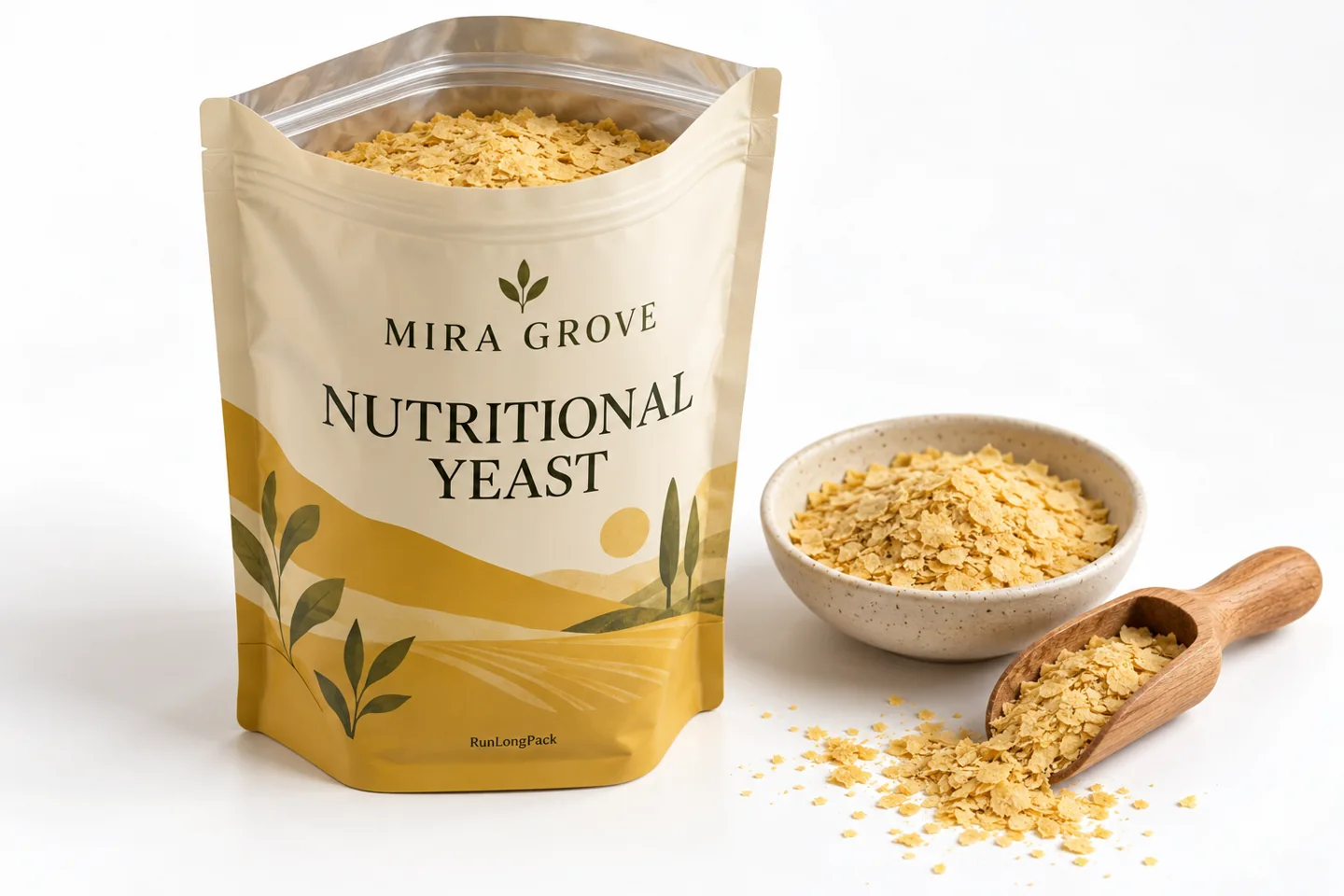
Plan the empty pouch around the actual filling nozzle, scoop or funnel. Measure the usable opening instead of only the external pouch width. After filling, leave adequate room for the closure and final heat seal and keep the seal area free of flakes or powder.
An open zipper illustrated in the image is a packaging concept. For the typical retail format, the zipper is for later reclosure and the packer applies the initial heat seal above it. Check your own filling sequence, zipper placement and applicable pack specification.
Do not treat a zipper as a replacement for the first heat seal or as proof that an opened product will retain its original storage conditions.
Size Yeast Flakes by Volume, Not Weight Alone
Flakes can be light, irregular and prone to settling. Powder and mixed recipes can pack at a different density. A pouch that fits a particular weight of powder may look partly empty or be overfilled when used for a different flake grade. Avoid copying a generic size chart without testing the actual product.
For foodservice or refill packs, include the actual shipping and handling conditions in the brief. A wider base can improve presentation but does not by itself prove that a filled pouch will resist crushing or remain upright in every carton. Use representative transit and handling checks suitable for your distribution route.
Our packaging bag size guide explains dimensions and gussets, while your own sample determines the final size. Send a drawing, existing pouch or filled-volume photos if available; we can help identify which measurements still need confirmation.
Balance Product Visibility with Storage Requirements
Choose a material structure using the product’s sensitivity to moisture, oxygen, light and aroma loss, as well as the target shelf life, storage temperature and distribution conditions. Appropriate foil-containing, metallized or other suitable laminates may be assessed for the complete project. A silver appearance alone does not establish a barrier rating or prove a particular shelf life.
A clear front or window lets buyers see the golden flakes. An uninterrupted opaque foil or metallized layer cannot also pass through that same clear area. A transparent front with an opaque back is a different construction from an opaque bag with a clear window. Review the entire pack, including seals and the window area, against your storage objectives before choosing the appearance.
Request applicable food-contact documentation for the actual structure and intended use. Testing documents cover the identified samples and conditions. Your filled-pack storage and shelf-life program should validate the product under the conditions you intend to use; packaging alone cannot establish a universal freshness period.
For blends containing herbs, oils or other additions, describe the whole formulation category and any relevant contact or aroma concerns. If you are considering an oxygen absorber or gas flushing, discuss suitability and validation with your food and packing teams rather than assuming either is required for all nutritional yeast.
Prepare Your Nutritional Yeast Packaging Brief
Product & Fill
Flakes, powder or blend; target net weight; loose and settled volume; particle size and any relevant storage or aroma concern.
Pouch & Opening
Finished width, height and gusset, bag type, zipper or other opening, preferred clear area and the way the customer will pour the product.
Production & Delivery
Filling method or machine drawing, designs and quantity per design, desired sample and destination. Give the required delivery date early.
Check fine particles or broken flakes do not sit in the seal or zipper track. The filling nozzle, dust control, product settling and seal settings are part of the packing process, not properties of the printed artwork. Approve a test using the actual product and filling conditions, then inspect the agreed seal and package presentation.
When the final artwork is prepared, the brand owner should approve the ingredients, allergens where relevant, weight, batch-code position, barcode and all claims required for the destination market. A fictional brand shown in the pictures is a design concept, not evidence of an existing customer order or a claim about nutritional benefits.
Make the Printed Pack Useful to Buyers and Easy to Reorder
Make the Product Clear
Use a readable product name, flavor and net quantity. Coordinate colors across the range while keeping each recipe or serving size easy to identify.
Respect Functional Areas
Reserve seal lanes, folds, opening features and date-code space. Place approved ingredients, relevant allergens, barcode and preparation or storage instructions where they remain readable.
Approve a Controlled File
Confirm the drawing, material, text, colors and artwork version before production. Editable print files are preferred; an AI concept or JPG can begin the discussion but may require preparation for printing.
Printing, MOQ, Samples and Lead Time
| Route | Planning reference | Confirm for your order |
|---|---|---|
| Ordinary digital pouches | Some suitable projects around 100 pieces; approximately 1,000–3,000 generally recommended for value. | Format, dimensions, material, finishes and quantity per design. |
| Ordinary gravure pouches | Generally around 10,000 pieces. | Artwork/cylinder requirements, structure and repeat-order quantity. |
| Printed rollstock | Some compatible digital trials around 10 kg; normal commercial recommendation around 300 kg+. | Machine drawing, process, material, reel format and separately quoted trial scope. |
These are conditional planning figures. Very small bags, special formats and processes may need different quantities. Flat-bottom pouches use separate production and sample rules; do not apply the ordinary-pouch minimum to every format.
Reference and Custom Samples
Available reference samples are normally free with buyer-paid freight. Ordinary printed pouch samples are typically USD 50–70 each; selected special finishes may be USD 100–150. Flat-bottom printed samples are USD 110 each, before separately quoted extra finishes. Film trials are quoted separately.
Production Timing
Typical digital production is around 8–10 working days. Gravure cylinder making typically takes 7–9 working days, followed by around 15–20 days of production after cylinders are ready.
Start and Delivery Conditions
Timing follows final artwork/specification approval and receipt of required payment. Materials, trials, special processes, scheduling, holidays and transport affect the actual delivery plan.
Work with Runlong Pack in China
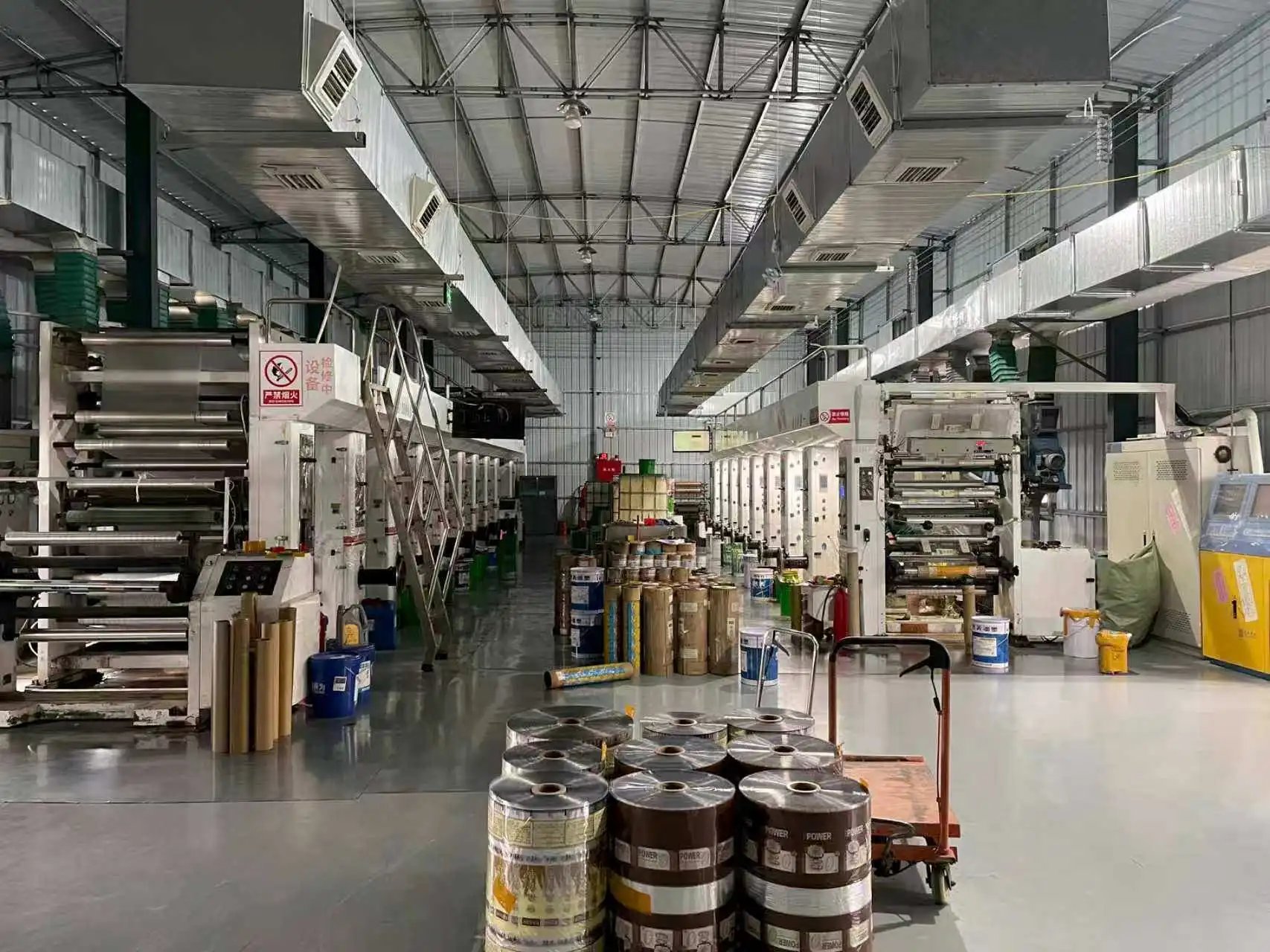
Runlong Pack is the brand of Shantou Runlong Packaging Co., Ltd., a flexible packaging manufacturer in Shantou, China. We supply custom printed premade pouches and rollstock for food producers, brands, importers and private-label businesses.
We use food-grade raw materials without recycled, secondary or scrap materials. Ask for available food-contact documentation applicable to the selected structure and intended use.
Our review connects the product, drawing, printing method and packing route. Reference samples, an artwork mockup and an agreed trial help you decide what to approve for production.
About Runlong Pack →Nutritional Yeast Packaging Bags FAQ
Key format, minimum-order and timing information is shown above. These questions address the practical details buyers often need before requesting a quote.
Do you supply nutritional yeast or only packaging?
Runlong Pack supplies custom flexible packaging. Your business or co-packer supplies and fills the nutritional yeast. Tell us whether it is flakes, powder or a blend, and share the filling and storage requirements.
What bag size should I choose for nutritional yeast flakes?
Use a representative volume test with the actual flakes. Measure loose fill, settled fill and the space required for the zipper and top seal, then confirm the bag dimensions with a filled sample. Net weight alone cannot determine the correct size.
Are zipper stand-up pouches suitable for nutritional yeast?
They can be a useful retail format for repeated pouring and reclosure. Confirm the actual product, fill volume, opening, zipper style and material structure. The filler should apply the initial heat seal above the zipper as appropriate to the approved bag.
Can the bag have a clear window?
A clear window can show the flakes when the selected material and construction permit it. Continuous opaque foil or metallization cannot cover that same transparent area. Review light exposure and whole-pouch barrier needs before approving the window.
Can you supply larger foodservice packs?
We can evaluate a larger pouch or bag against its filled weight, actual dimensions, opening, handling and shipping requirements. Request an approved sample and practical filled-pack handling checks; do not assume every pouch format supports any weight.
What is the MOQ for custom nutritional yeast pouches?
Some suitable ordinary digital pouch projects can be evaluated around 100 pieces, with approximately 1,000–3,000 generally recommended for value. Ordinary gravure pouches generally start around 10,000 pieces. Format, dimensions, material, finishes and quantity per design determine the final minimum; very small and special bags need separate assessment.
Can we use printed rollstock for an automatic filling line?
Suitable printed rollstock can be reviewed for a compatible automatic forming, filling and sealing machine. Provide full web width, print repeat, seal arrangement, eye mark, unwind direction and reel limits. A premade pouch and a reel are different supply routes.
Which material will keep my nutritional yeast fresh?
The structure depends on your actual product, storage environment, desired shelf life and sensitivity to moisture, oxygen, light and aroma loss. Foil-containing, metallized or other suitable laminates may be evaluated. The final filled package and storage program need their own validation.
Can I get a sample and a packaging mockup?
Available reference samples are normally free with buyer-paid freight. Ordinary custom printed pouch samples typically cost USD 50–70 each, depending on size and type; flat-bottom samples and special finishes follow their own quoted rules. A free static mockup is normally prepared within two days after receiving the necessary logo and design direction.
How long does production take?
Typical digital production is around 8–10 working days. Gravure cylinders normally take around 7–9 working days, followed by approximately 15–20 days of production after they are ready. Timing starts after final artwork and specification approval and required payment; shipping is additional.