


Custom Spout Pouches with Handle
A practical grip for larger liquid packs. A complete specification for your product.
Custom printed handle spout pouches for suitable food, beverage and refill projects. Compare clear and aluminum foil laminates, reinforced grips, screw caps and size options around your actual filling and handling needs.
Send liquid type, target fill, filling temperature and quantity per design. We supply empty packaging; pictured brands are design concepts.
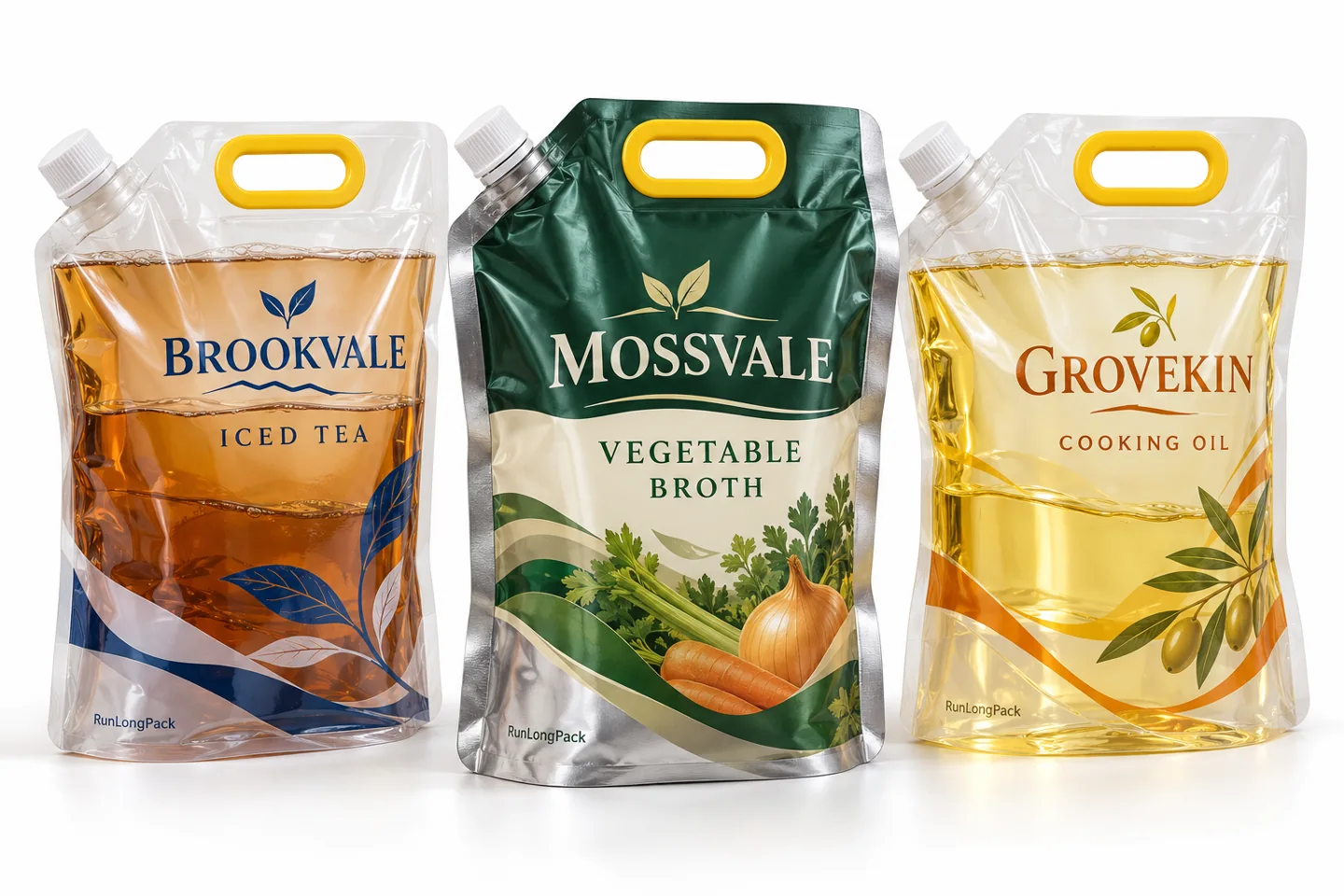
Which Handle Spout Pouch Fits Your Project?
Start with the liquid, filled mass and filling process—not the outside appearance alone. Select a clear pouch when seeing the contents matters, or evaluate an aluminum foil laminate when opacity is a priority. Review the handle, bottom gusset, cap and sealing system as one package.
Unlike a rigid jug, the pouch changes shape as it is filled and emptied. Confirm grip clearance, standing behavior and pouring using representative filled samples. For other sizes and non-handle formats, see our custom spout pouch overview.
From the Carry Grip to the Standing Base
A Comfortable Carry Point
Evaluate a reinforced plastic grip insert or an integrated cut-out handle. Match the opening and position to the intended hand clearance and filled mass; a handle shape alone does not establish a load rating.
An Expanded Bottom Gusset
A suitable gusset gives the filled pouch a broader standing base. Review expansion, fill level and shelf placement together; avoid assuming the empty bag’s flat shape represents its filled footprint.
Rounded External Corners
Rounded cutting can reduce sharp external corner points. Check the finished edge, seal width and handling feel on samples, including around the grip and spout panel.
A Reclosable Screw Cap
Ribbed caps help gripping during opening and closing. Assess the cap and neck as a matched assembly, including the intended pouring flow and agreed application settings.
Tamper-Evident Options
A suitable breakaway ring can show initial opening. Confirm the actual closure specification and final assembly process; tamper evidence is a different feature from child resistance.
Fitment Welds & Pouch Seals
The spout base, film seals and cap all contribute to containment. Evaluate representative packs rather than relying only on an attractive outer print or a thicker laminate.
Transparent or Aluminum Foil Handle Spout Pouches?
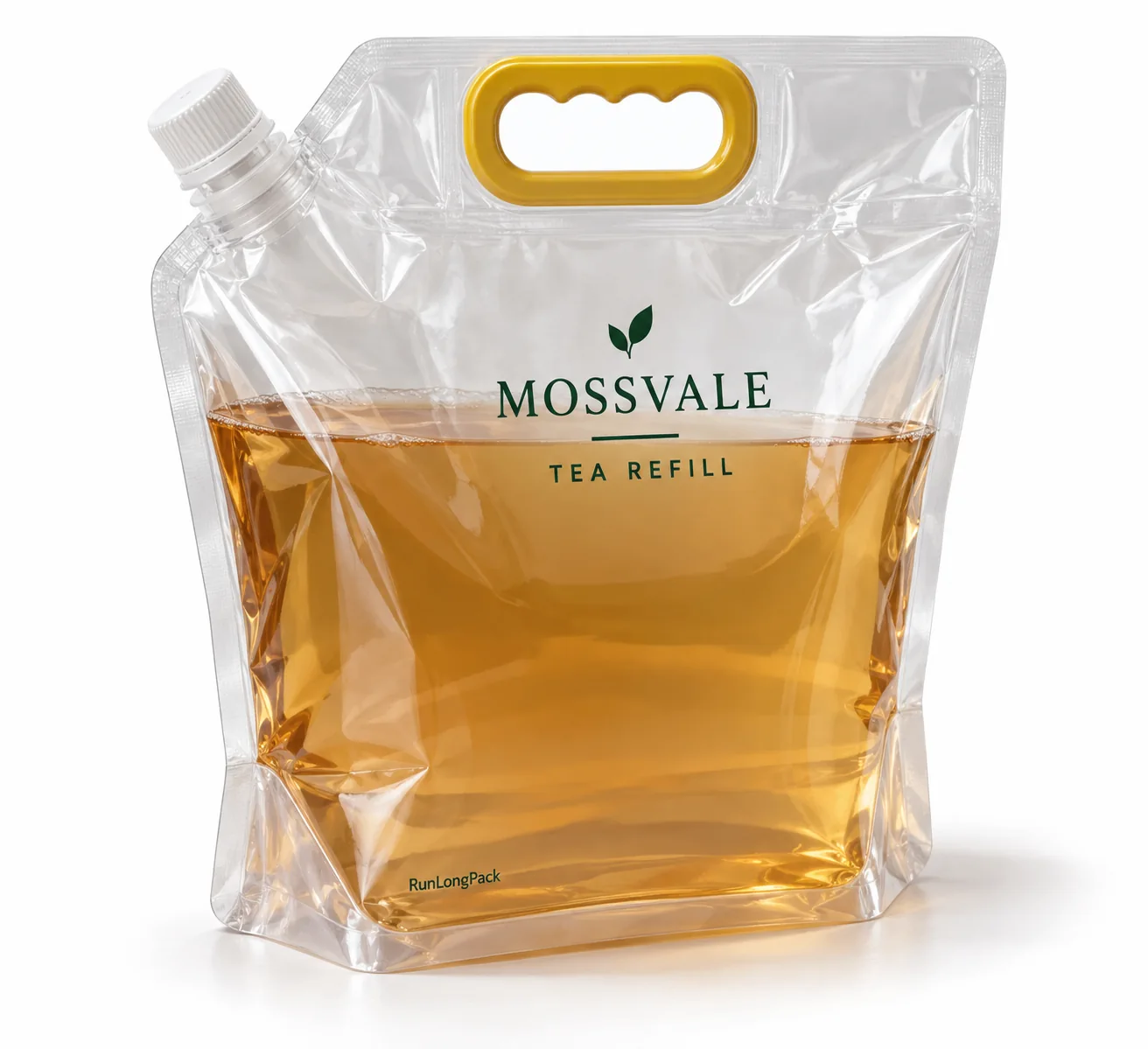
Clear Pouches: See the Contents and Fill Level
Transparent film can show liquid color, clarity and remaining fill. Reserve clear areas in the artwork so the contents remain visible; full ink or white coverage can hide that benefit.
A reference clear structure is PET / PA / PE: an outer print/support film, a nylon layer for mechanical performance and an inner sealant/contact layer. Layer thickness and the full structure are reviewed for the product and process.
Aluminum Foil Pouches: Prioritize Opacity
A reference foil structure is PET / PA / AL / PE, adding a true aluminum foil layer. Review light exclusion and required oxygen/moisture barrier performance with the proposed laminate and final sealed-pack evaluation.
Clear and foil are different constructions. A continuous opaque foil layer cannot remain across a transparent panel. A metallic appearance alone does not identify the laminate, and barrier packaging is not automatically an insulated container.
| Selection point | Clear PET/PA/PE example | Foil PET/PA/AL/PE example |
|---|---|---|
| Product display | Contents and fill level can remain visible where artwork leaves clear film. | Opaque foil construction; printed artwork carries the product presentation. |
| Light exposure | Review the effect of transparent areas on your product. | Evaluate for projects requiring light exclusion. |
| Mechanical performance | Specify thickness, filled mass, grip construction, flexing and handling tests; three or four layers alone do not establish pressure or puncture ratings. | |
| Food or formula contact | Confirm product composition, storage and process conditions. Request documentation applicable to the selected structure and intended use. | |
Food-contact projects use suitable food-grade raw materials without recycled, secondary or scrap materials under the current Runlong Pack material policy. Review available compliance information. The food producer validates shelf life in the final package.
Match the Handle Pouch to the Actual Liquid
Non-Carbonated Beverages
Tea, selected drinks and water projects need a product-specific filling and storage brief. Clear film can support content visibility; this page does not establish suitability for pressurized carbonated drinks.
Broth & Sauces
Check viscosity, oil, acidity and particles along with pouring and thermal processing. A soup illustration is not evidence that an ordinary pouch is suitable for retort sterilization.
Cooking Oils
Review oil contact, light exposure, cap fit and the intended transfer into a dispenser. Confirm headspace and the filled shape before selecting dimensions.
Household Refills
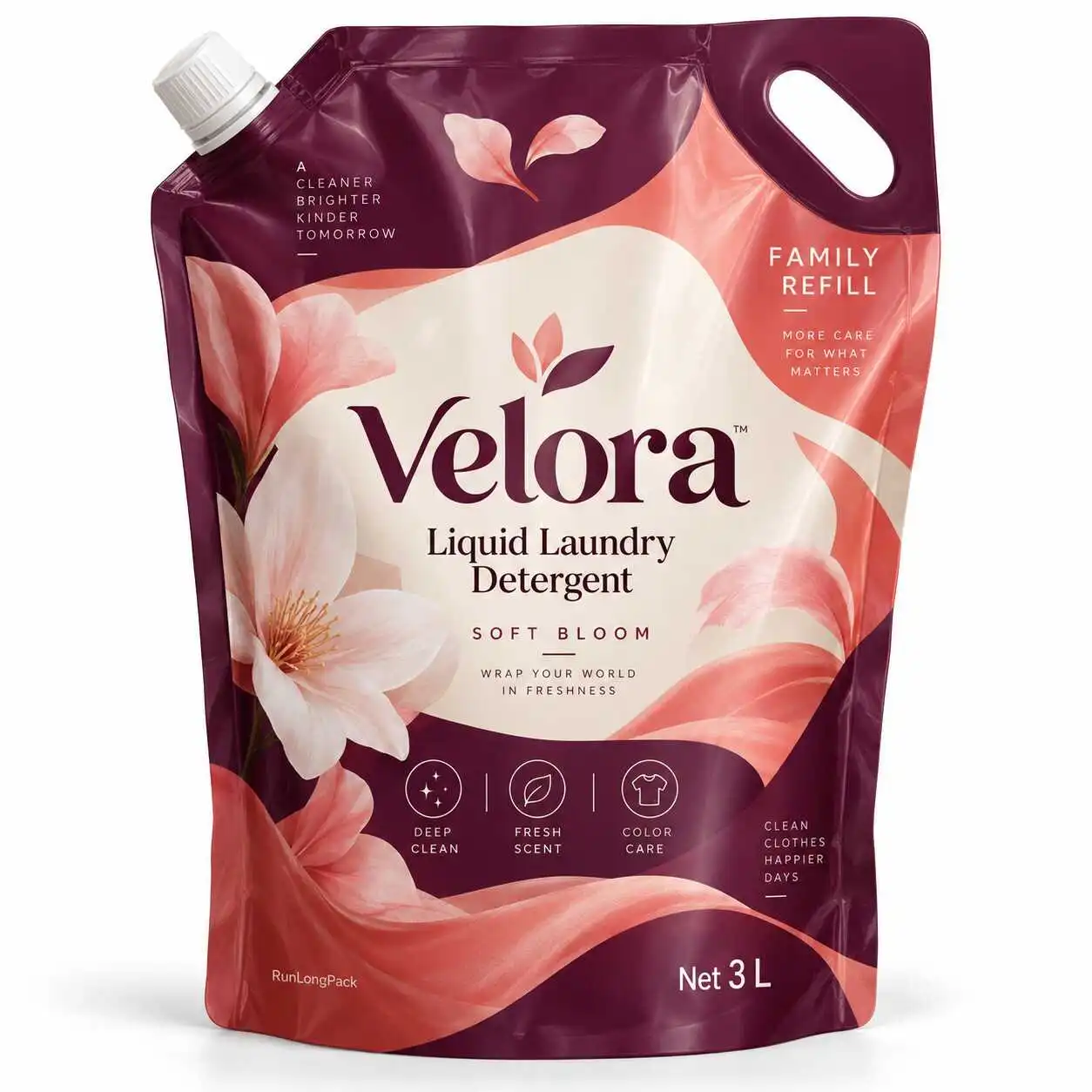
Detergent and other refill formulas need their own chemical-compatibility review. Food and non-food packaging specifications are selected separately.
Choose the Handle and Spout Position Together
A reinforced grip insert can spread hand contact around the opening; an integrated cut-out offers another construction. Check attachment, seal clearance and the load path in the complete pouch.
Assess a corner spout for controlled tilting and a center spout where the filling and dispensing arrangement calls for it. Position the handle so it does not crowd the cap, nozzle or printing area.
Test lifting and pouring at the proposed fill level, then again as the pouch empties. Review whether the user needs a second supporting hand. Sample evaluation should reflect the actual product and intended user handling.
Handle Spout Pouch Size References
The following examples are normalized to width × height + single-fold bottom-gusset depth, in centimeters. The capacities below are based on water-filling references. Confirm usable fill volume and headspace with your actual product; these figures are not certified handle-load ratings.
| Reference capacity (water) | Width × height + single-fold bottom | Nominal spout examples |
|---|---|---|
| 1 L | 22 × 22 + 5 cm | 16 or 22 mm |
| 1.5 L | 25 × 23 + 5 cm | 22 mm; handle construction varies |
| 2.5 L | 30 × 27 + 6 cm | 22 or 33 mm |
| 3 L | 30 × 30 + 6 cm | 22 mm |
| 5 L | 35 × 32 + 8 cm | 22 or 33 mm |
| 10 L | 38 × 42 + 10 cm | 22 or 33 mm |
For example, +6 cm is the single-fold bottom depth, not the fully expanded bottom width. The largest reference is listed by its image arrows as 38 cm wide and 42 cm high. Confirm usable fill volume, headspace, seal allowances and the filled shape with the actual product. Filled mass varies with liquid density. Approve the drawing and test filled samples.
The wider 38 cm reference exceeds the approximately 37 cm finished digital-pouch width limit. Review a suitable gravure or separately confirmed stock route rather than assuming all sizes support digital printing. Use our bag size guide when preparing measurements.
Spout Diameter, Closure and Filling Route
Reference fitment options include nominal 8.6, 16, 22 and 33 mm specifications; the larger handled examples above show 16, 22 or 33 mm variants. Compare viscosity, particles, desired flow and the filling nozzle. Confirm the actual clear opening and fitment dimensions on the drawing.
1. Confirm the Supply Condition
Agree whether the bag is filled through the spout or a supplied open edge. Match the pouch, cap and nozzle to the intended process before ordering.
2. Fill with Suitable Equipment
A matching funnel or nozzle may suit pilot work. Confirm hygiene controls, fill level and headspace; filling through an open edge also needs a suitable final sealing operation.
3. Apply the Final Closure
Keep product away from seal and closure contact areas. Apply the cap using the agreed settings and preserve the specified tamper-evident function during final assembly.
4. Inspect Representative Packs
Check cap engagement, welds, pouch seals and the filled shape. An agreed inversion/leak check is one part of inspection, not a substitute for the complete validation plan.
For more detail, read choosing spout size for sauces and our spout pouch leakage troubleshooting guide.
Specify Hot, Chilled or Frozen Use Before Quotation
Suitable versions can be evaluated for defined hot-filling, water-bath heating, chilled or frozen storage conditions. Provide the actual temperature, time, cooling sequence and storage requirements. Film, adhesive, cap, spout and welds all need to suit the complete process.
Check the Filled Package Before Commercial Release
Define sample quantity, conditions and acceptance criteria with the project team. Do not interpret a single inverted-pouch photo as proof of universal pressure resistance or zero leakage in transport.
Printing, MOQ, Samples and Production Planning
| Route | Planning reference | Confirm for your project |
|---|---|---|
| Digital printed spout pouches | Generally recommended from around 1,000 pieces. | Finished dimensions, handle configuration, laminate, fitment and quantity per design. |
| Gravure printed spout pouches | Generally around 15,000 pieces. | Artwork, cylinders, material, spout/handle specifications and reorder plan. |
| Suitable stock overprinting | Evaluated only where matching stock is available. | Actual bag dimensions, material, grip/spout and available print area; no universal stock minimum. |
Reference Samples
Available reference samples are normally free with buyer-paid freight. Custom samples, special fittings and testing are quoted for the actual specification.
Production Timing
Suitable digital projects typically take around 8–10 working days. Gravure cylinders typically take 7–9 working days, followed by around 15–20 days of production after cylinders are ready.
Approve the Complete Brief
Timing follows final artwork/specification approval and required payment. Special handles, fittings, trials, scheduling, holidays and shipping can affect the actual plan.
Develop Your Handle Spout Pouch with Runlong Pack
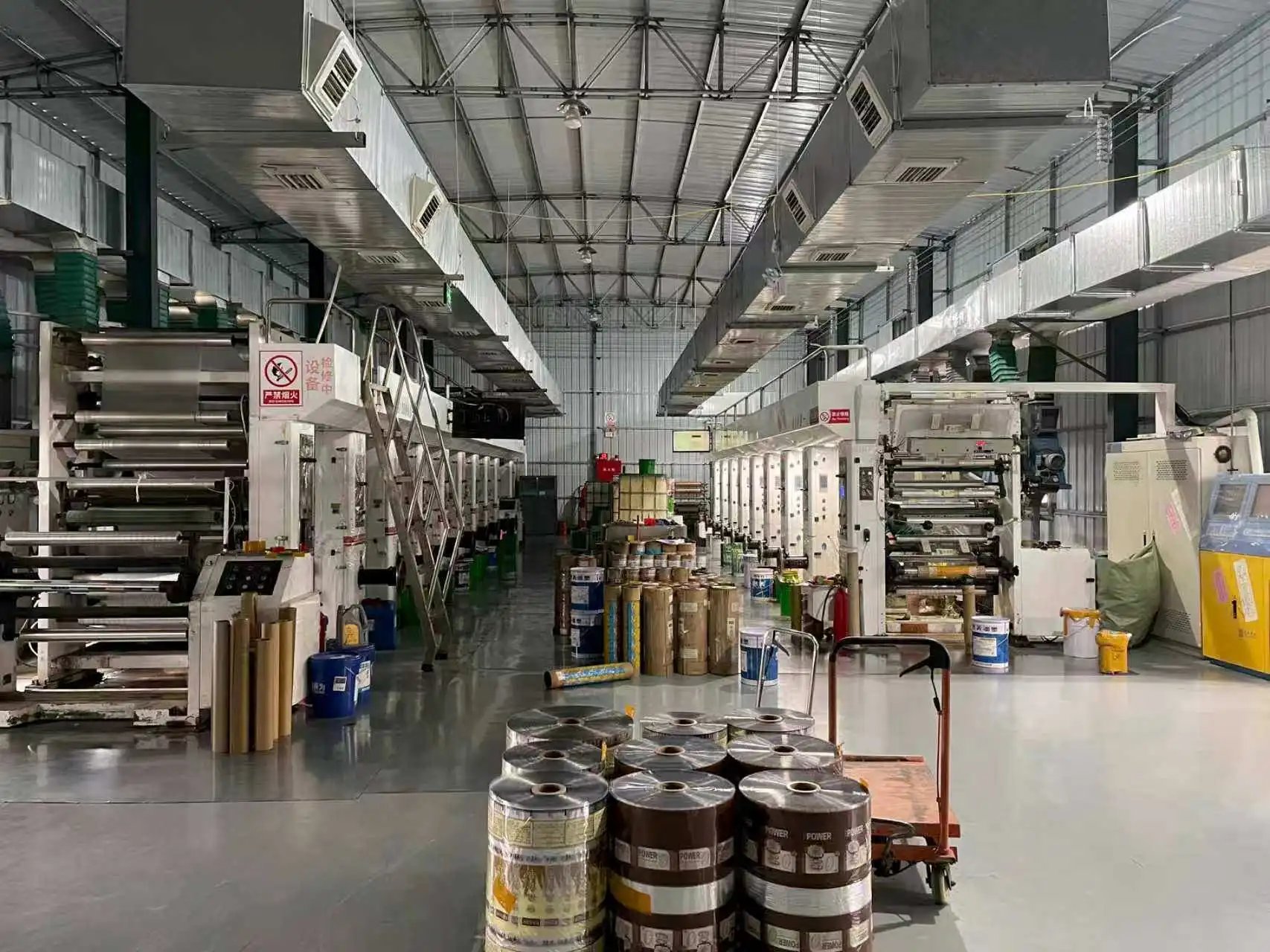
Runlong Pack is the brand of Shantou Runlong Packaging Co., Ltd., a flexible packaging manufacturer in Shantou, China. We supply custom printed packaging for brands, processors, importers and private-label businesses.
Bring the contents, filling route, handle, material, fitment and artwork into one reviewed specification. Request available samples and applicable documentation for your intended use.
Learn about Runlong Pack →Custom Spout Pouches with Handle FAQ
What are custom spout pouches with handle used for?
Suitable projects include non-carbonated beverages, cooking oils, sauces and household refill liquids. The handle supports carrying and controlled pouring, while the spout provides a reclosable dispensing route. Material, cap, filled mass and filling conditions are reviewed for each product; food and household formulas are not interchangeable.
Can I choose clear or aluminum foil handle spout pouches?
Yes. A clear PET/PA/PE laminate can be evaluated when product visibility matters. A PET/PA/AL/PE foil-containing laminate can be evaluated when opacity and barrier requirements take priority. These are construction examples, not automatic approvals for every liquid or temperature. Continuous aluminum foil cannot remain across a transparent viewing area.
How much weight can the handle carry?
There is no universal safe load for every pouch and handle. Confirm actual filled mass, liquid density, handle type and attachment, bag dimensions, laminate and intended handling. The water-based capacity references in the size table are selection examples, not certified lifting capacities. Assess representative filled bags under agreed carrying and transport conditions.
How should I read the recommended pouch dimensions?
The reference table uses width × height + single-fold bottom-gusset depth, in centimeters. For example, 30 × 27 + 6 cm means a 30 cm width, 27 cm height and 6 cm single-fold bottom depth. Confirm the production drawing, seal areas, usable volume and finished filled shape before ordering; do not treat the gusset figure as the flat bag width.
Which spout diameter should I choose?
Choose around viscosity, particles, pouring control and the filling nozzle. Reference options include nominal 8.6, 16, 22 and 33 mm specifications, with larger handled examples commonly shown with 22 or 33 mm. Confirm the drawing and whether a quoted dimension is the clear opening, neck or other fitment dimension; nominal size alone does not establish compatibility.
Can these pouches be used for hot filling, water-bath heating or freezing?
Suitable versions can be evaluated for specified thermal or low-temperature conditions. Provide filling temperature, time, cooling sequence, storage temperature and any heating or sterilization process. The film, adhesive, spout, cap and seals must suit the complete process. Do not microwave aluminum foil pouches. Ordinary spout-pouch minimums do not automatically apply to retort projects.
Can I fill through the spout by hand?
A suitable nozzle or funnel may be evaluated for pilot filling if it matches the spout and the product. Commercial filling also requires the agreed hygiene, headspace, closure and process controls. Confirm whether bags are supplied for filling through the spout or through an open edge. Final cap application must preserve the specified tamper-evident function; opening a finished tamper ring and simply retightening is not equivalent.
What is the MOQ for printed handle spout pouches?
Spout-pouch digital projects are generally recommended from around 1,000 pieces; gravure projects generally start around 15,000 pieces. The handle, dimensions, material, spout and artwork still require project review. Suitable stock overprinting can be assessed where available. The largest 38 cm-wide reference exceeds the approximately 37 cm finished digital-pouch width limit, so do not assume every size supports digital printing.
Are tamper-evident caps and leak checks available?
Suitable screw-cap and tamper-evident ring options can be reviewed with the fitment. Check cap engagement, agreed application settings, spout welds and pouch seals on representative samples. Inversion or leak checks can be part of an agreed inspection plan, alongside pressure, handling and transport evaluation where applicable. No single visual check guarantees all-use leak resistance.
Can I get samples and a design mockup?
Available reference samples are normally free with buyer-paid freight. Custom samples and special handle or spout configurations are quoted for the actual specification. A free static mockup is normally prepared within two days after the needed logo, product details and design idea are received. The mockup shows appearance; drawings, filled samples and production specifications are approved separately.