

Custom Baking Mix Packaging Bags
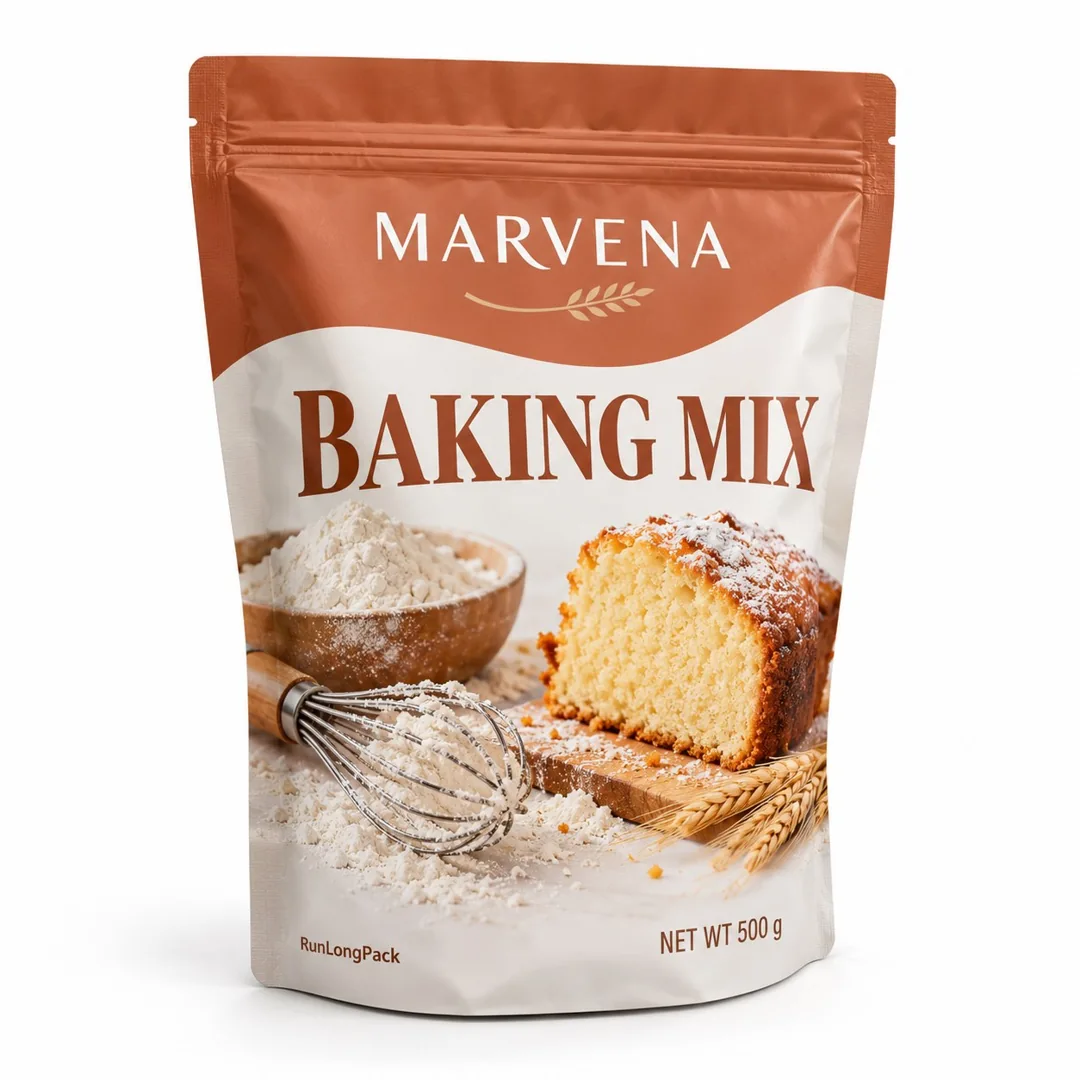
Bring your baking mix brand to the shelf with custom printed packaging built around the recipe and filling process. Runlong Pack supplies premade pouches and printed rollstock for baking mix producers, private-label brands, importers and food manufacturers, with material, dimensions and printing reviewed for each project.
Custom printing · Pouch and rollstock options · Zippers · Powder filling and sealing review
Share your mix type, fill weight, packing process and quantity per design. We supply empty packaging materials.
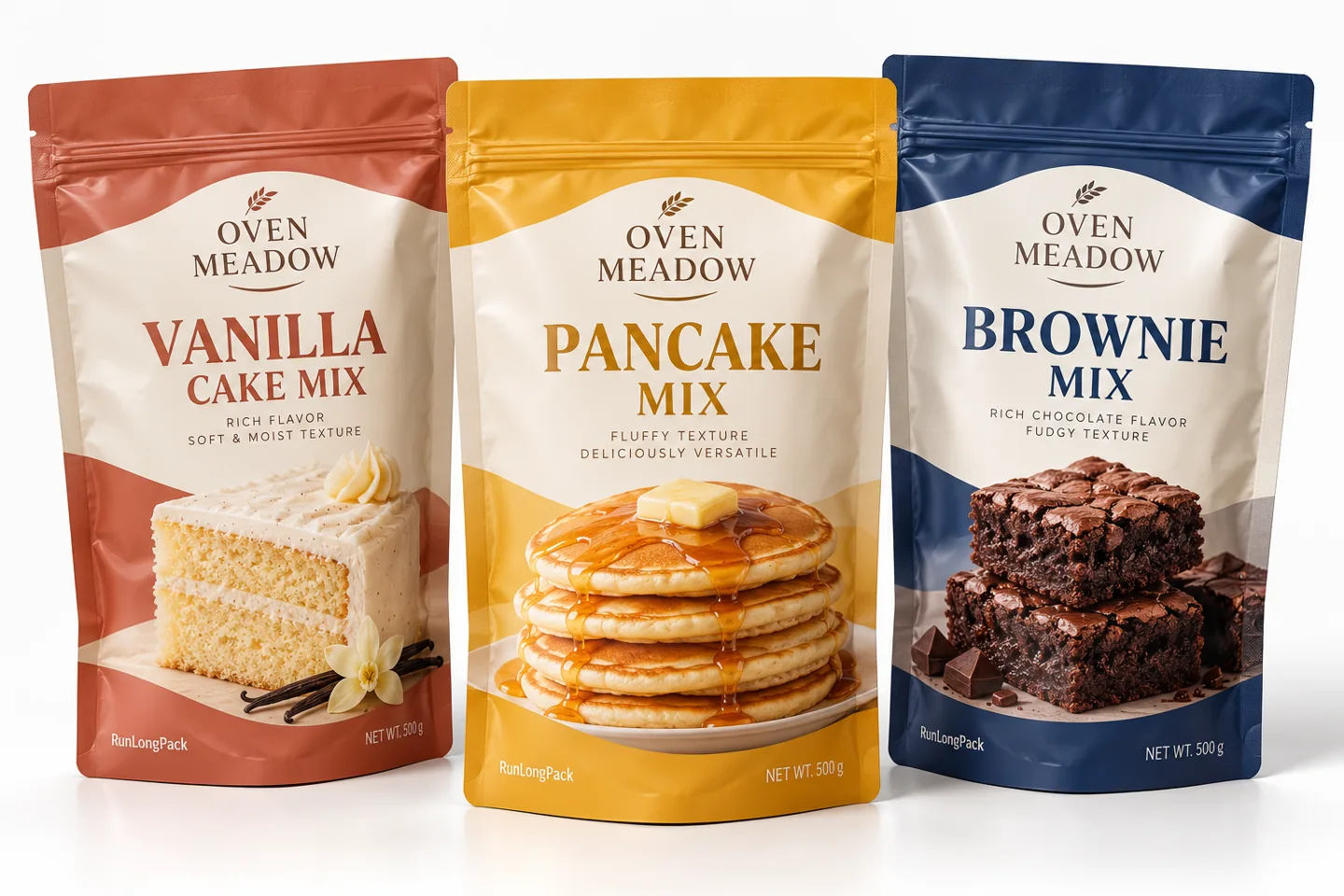
Packaging for Your Baking Mix Product Range
For plain flour, review flour packaging bags, including powder flow and filled-bag sizing.
Cake, Brownie and Muffin Mixes
Present the mix type and finished-bake image clearly while leaving room for preparation steps. Share whether the recipe includes cocoa, milk powder, fats or other sensitive ingredients so the packaging brief reflects the actual mix.
Pancake and Waffle Mixes
Consider how many servings consumers prepare at a time. A single-use pack and a larger multi-use pack may need different openings, closures and instructions. Review pouring or scooping access together with the intended fill weight.
Bread and Specialty Baking Mixes
For bread mixes or specialty flour blends, provide the formulation characteristics, bulk-density reference and packing process. A bag used for another powder is a reference, not a confirmed fit for your blend.
Choose Premade Pouches or Printed Rollstock
Stand-Up Pouches
A bottom gusset provides a standing retail format for suitable mixes. Add a zipper for repeat use where needed, or evaluate a simple heat-sealed opening for a mix intended to be used in one baking session.
Flat-Bottom Pouches
A flat-bottom format offers another base and panel layout for larger or premium retail packs. Compare the actual filled presentation and total packaging cost. Flat-bottom production and samples use separate commercial rules.
Rollstock for Automatic Packing
For compatible form-fill-seal lines, printed film is specified around the equipment. Send the machine model and approved drawing showing web width, repeat length, eye mark, core and unwind direction, together with the filling and sealing conditions.
Compare stand-up pouches, flat-bottom bags and printed rollstock film around your packing route.
Select Materials Around the Mix and Storage Conditions
Moisture and Clumping
Dry mixes can be affected by moisture exposure. Define the mix condition at packing, storage humidity and target shelf life, then assess suitable film structures and seals. A moisture-barrier description is a starting point for specification review.
Oxygen and Light Sensitivity
Mixes containing fats, milk powder, nut ingredients or other sensitive components may require additional oxygen or light protection. Compare relevant barrier data and the proposed finished package rather than selecting film only by thickness or appearance.
Windows and Food-Contact Review
A clear area can show the powder but cannot contain continuous opaque aluminum foil or metallization. We use food-grade raw materials without recycled, secondary or scrap materials; available food-contact documents are reviewed for the intended structure and use.
Plan for Powder Flow and Clean Sealing
Keep Powder Out of the Seal
Fine powder carried into the top-seal area can interfere with sealing. Discuss filling clearance, product flow and powder-control arrangements with the packing-equipment supplier, then trial the proposed bag and sealant on the actual process.
Evaluate Static Where Relevant
If powder clings to the film, filling nozzle or zipper, share the observed issue and equipment conditions. Static behavior and any suitable material or process option need a separate assessment; ordinary baking mix pouches are not automatically anti-static.
Confirm the Seal Conditions
Review sealing temperature, pressure and dwell time with your equipment and proposed material. Inspect representative filled-pack seals after the trial and agree appropriate checks for handling and distribution. A visually attractive pouch does not validate the sealing process.
Develop the Bag and Filling Process Together
Before a full production order, check a representative sample with your actual mix and sealing equipment. Record the fill clearance, condition of the sealing area and result of the final seal. If a zipper is used, check that powder does not prevent reclosure.
For an automatic line, share the machine’s accepted bag or film drawing. Equipment settings and product-flow control remain part of the line evaluation, while we review the proposed packaging specification.
Confirm Bag Size with Your Actual Baking Mix
Use Weight and Bulk Density
Requests such as 250 g, 500 g or 1 kg help define a project but do not determine a universal bag size. Flour blends with sugar, cocoa or other inclusions may occupy different volumes at the same weight.
Allow for the Closure and Filling
Specify external width, height and gusset convention, including whether a gusset value means one folded side or total opened depth. Allow usable space below the zipper, filling headspace and the final heat-seal margin.
Approve a Filled Reference
Fill a sample with the actual mix, check standing behavior, pouring or scoop access, zipper operation and carton fit. Keep the approved dimensions and trial observations with the artwork for repeat production.
| Confirm | Information to send |
|---|---|
| Mix and storage | Mix type, ingredient characteristics, target shelf life and storage/distribution conditions. |
| Fill details | Net weight, bulk-density reference or physical product sample, serving/usage format. |
| Bag specification | Preferred pouch format, external dimensions, gusset convention and closure/window needs. |
| Packing process | Premade bag or rollstock, filling equipment, seal conditions and any powder/static issue. |
| Artwork and order | Logo/files, preparation panel, number of designs and pieces per design or kilograms of film. |
| Delivery | Destination, required arrival date and planned repeat-order timing. |
Use the packaging bag size guide to prepare your dimensions, then confirm them with a filling trial.
Custom Printing That Helps Shoppers Use the Product
Identify the Mix at a Glance
Make the brand, mix type, flavor and net quantity easy to read. Use product imagery that represents the intended bake and reserve consistent areas for different varieties so the range remains recognizable.
Make Preparation Instructions Readable
Plan back-panel space for ingredient additions, preparation steps, baking time and temperature, storage directions and any required allergen or nutrition information. Buyers supply and approve recipe-specific and market-specific wording.
Keep Important Copy Clear of Folds
Place barcodes, coding areas and required text away from seals, folds, windows and zipper tracks. Matte, gloss, soft-touch and selected special finishes can be evaluated against the material, print process and budget.
MOQ, Samples and Production Planning
Digital Printing
Some suitable ordinary pouch projects can be evaluated around 100 pieces; approximately 1,000–3,000 pieces is generally recommended for value. The maximum finished digital pouch width is approximately 37 cm, with material and process compatibility reviewed separately.
Gravure Printing
Ordinary custom pouch projects generally start around 10,000 pieces, subject to size, structure and artwork. Compare pieces per design, cylinder requirements and repeat-order plans when building a multi-flavor range.
Flat-Bottom Bags and Rollstock
Flat-bottom digital projects can be evaluated around 1,000–2,000 pieces, with routes compared around 3,000+ pieces. Eligible rollstock trials may be evaluated around 10 kg at higher unit cost; normal commercial film orders are recommended around 300 kg or more.
Final MOQ depends on bag format, finished size, material structure, artwork, printing method and production requirements. Special material or process requirements need a project-specific review.
Available reference samples are normally free with buyer-paid freight. Ordinary custom printed samples are approximately USD 50–70 each; selected special finishes are generally USD 100–150. A flat-bottom custom printed sample is approximately USD 110 each, with additional special finishes quoted separately. For a qualifying gravure bulk order of more than 20,000 pieces per design, the sample fee can be refunded under the confirmed project arrangement.
Eligible digital production typically takes approximately 8–10 working days. New gravure cylinders normally take approximately 7–9 working days, followed by approximately 15–20 days of production after cylinder completion. Timing starts after final artwork/specification approval and required payment; shipping is additional. Confirm the actual project schedule.
Review the MOQ guide, printing comparison and sample policy.
Baking Mix Packaging Support from Runlong Pack
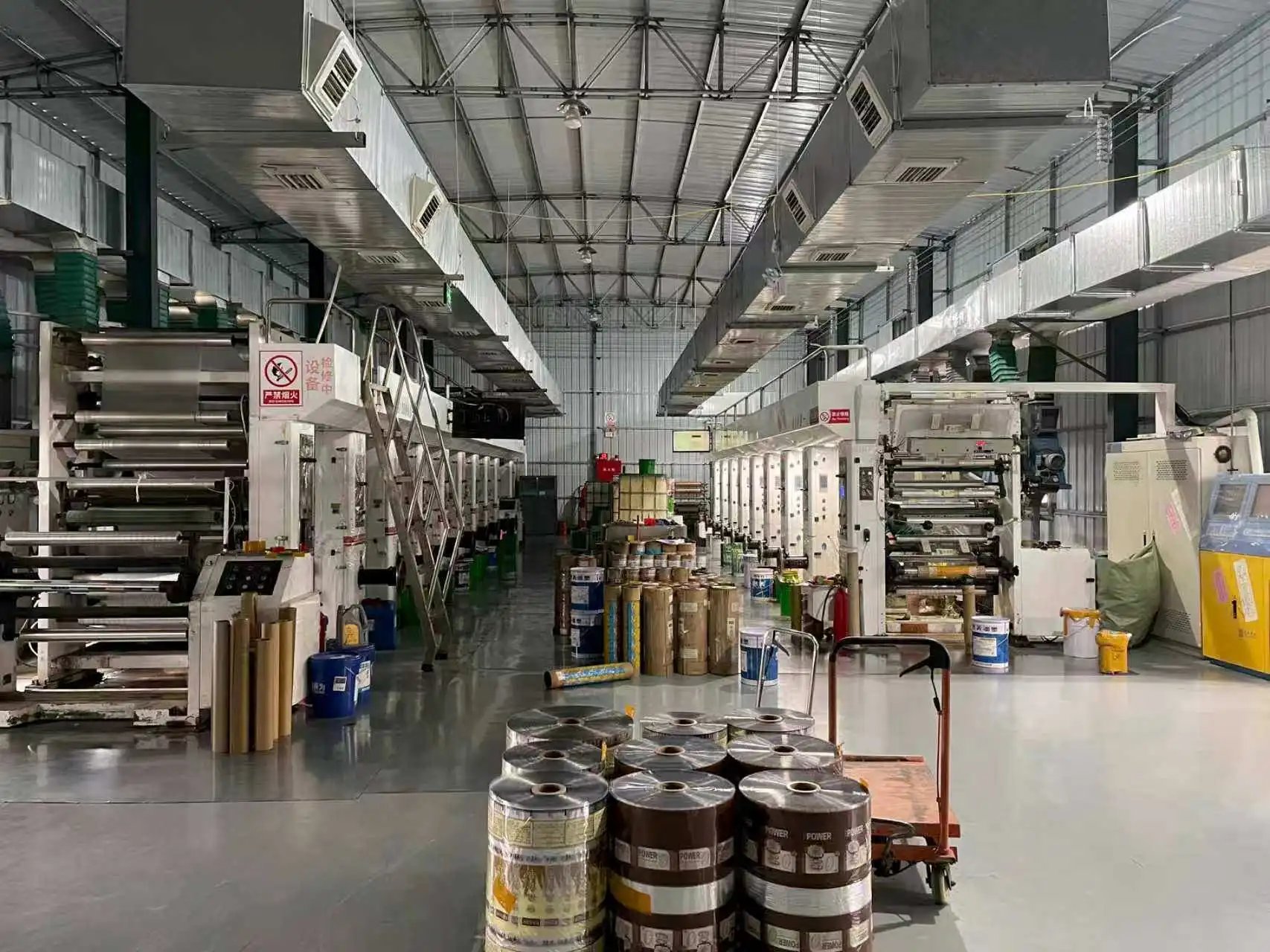
Runlong Pack is the brand of Shantou Runlong Packaging Co., Ltd., a custom flexible packaging manufacturer in Shantou, China. We work with food manufacturers, private-label buyers, importers and brands on printed premade pouches and rollstock, from specification review and artwork preparation to printing, conversion and delivery coordination.
We use food-grade raw materials across flexible packaging production and do not use recycled, secondary or scrap materials. Available food-contact documents are reviewed for the proposed structure and intended use.
Project checks may cover dimensions, printing, lamination and seals, with further checks agreed for the actual package. Keep the approved material, drawing, artwork and filling-trial observations together so repeat orders use a clear reference.
Learn about our manufacturing capabilities and available compliance and testing documentation.
Custom Baking Mix Packaging Bags FAQ
Can you make custom baking mix bags with my logo?
Yes. Suitable projects can be evaluated with custom printed branding, dimensions, pouch formats and finishes. Send the mix type, fill weight, filling process and quantity per design so we can review a practical specification.
Which bag is suitable for a 500 g baking mix?
There is no universal 500 g size. The mix bulk density, bag base, zipper, headspace and heat-seal margin affect fit. Use an actual filling trial before confirming dimensions and print artwork.
Do baking mix pouches need a zipper?
A zipper can be useful when the pack is opened and used several times. A mix intended for one baking session may suit a simpler opening. In either case, confirm the initial heat seal and practical consumer access.
Can you make baking mix packaging with a transparent window?
Suitable windows can be evaluated with the material and artwork. Continuous opaque foil or metallization cannot remain in a transparent area. Review the mix’s moisture, oxygen and light requirements before choosing the window layout.
Is anti-static material standard for powder packaging?
No. If powder clinging or other static-related behavior is observed, review the material and filling conditions for that project. Ordinary food pouches must not be treated as having a verified anti-static function by default.
What is the MOQ for printed baking mix pouches?
Some suitable ordinary digital pouch projects can be evaluated around 100 pieces; approximately 1,000–3,000 pieces is generally recommended for value. Ordinary gravure projects generally start around 10,000 pieces. Flat-bottom bags and rollstock have separate conditions.
Can you supply printed film for my automatic packing line?
Suitable rollstock projects can be evaluated from the machine model and approved film drawing. Confirm web width, print repeat, unwind direction, eye mark, structure and sealing conditions rather than selecting film from the finished bag photo alone.
Can you help before I have finished artwork?
Send your logo and design idea. We can help with basic layout and provide a free static mockup, normally within two days after the necessary information is received. Final print-ready files, wording and physical packaging trials require separate approval.