

Plan the sauce line and pouch as one project
A practical guide to matching processing output, pouch format, filling speed, sealing and thermal treatment—without confusing a machine’s nameplate rating with finished packs per hour.
How do you plan a tomato sauce pouch filling line?
Start with the finished product and required packs per hour, then work backward through filling, sealing, any heat treatment and the upstream process. Confirm what every quoted capacity measures—raw tomatoes, pulp, blended sauce or accepted finished packs. Select a pouch only after the product, fill weight, filling method, temperature, storage and post-fill process are known.
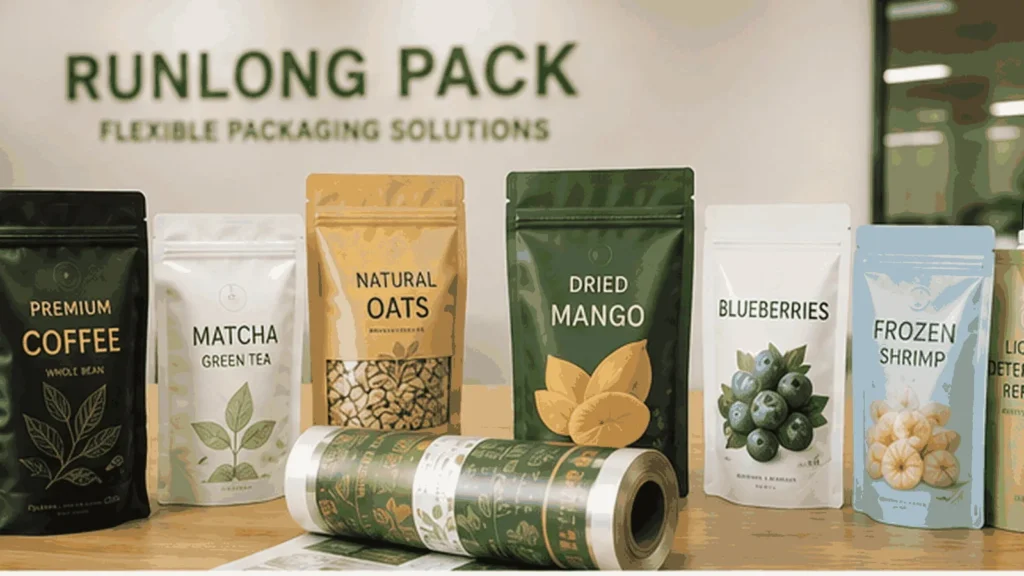
The pouch format and line must be checked together. Runlong Pack supplies flexible packaging; this guide does not offer or rate tomato-processing machinery.
What does a tomato sauce pouch line include?
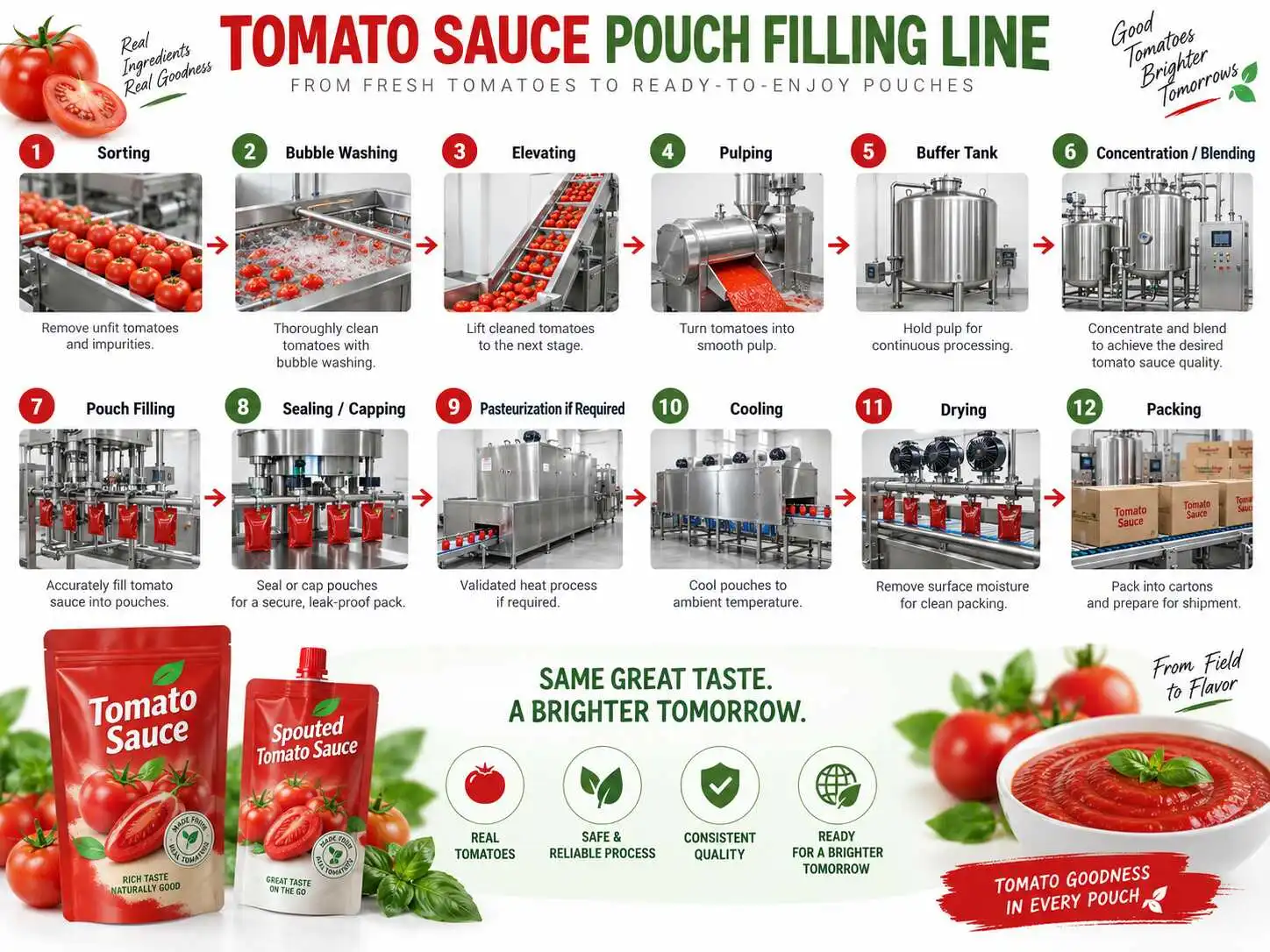
A project may connect raw-tomato preparation and washing to sorting, pulping or refining, buffering, concentration or blending, then pouch filling, sealing, a product-specific heat process if required, cooling, inspection and case packing. The exact sequence depends on the recipe, finished product, package and factory layout; it is not one fixed equipment list.
The packaging decision is usually made too late when it is treated as a standalone bag purchase. Pouch dimensions, opening, fitment, web width and sealing behavior affect the downstream machine setup. If filled pouches will be heated or cooled, the package has to be evaluated across that complete route too.
Separate process equipment from flexible packaging
Processing-equipment suppliers specify washing, pulping, cooking or concentration, pumps, fillers, sealers and thermal equipment. Runlong Pack’s role is the flexible package: pouch or rollstock format, dimensions, print, material performance and the information needed to assess fit with the customer’s filling and downstream process. We do not represent the illustrative machines in the graphics as Runlong products.
How should you read a tomato-sauce line capacity?
A number in kg/h is incomplete unless the supplier identifies the material and the point in the process. “500 kg/h” might refer to incoming tomatoes, extracted pulp, blended sauce, or a nominal equipment rate under stated conditions. Those are different outputs. Sorting loss, skin and seed removal, concentration, recipe additions, start-stop time and rejects all affect what reaches the shipping case.
For every major stage, request the rated range, the test conditions and the capacity basis. For the filler and sealer, ask for accepted packs per minute or hour at the actual package size and product—not only a pump’s flow rate. Confirm whether a stated speed includes feeding, cap placement, sealing, inspection, routine stops and changeovers.
Find the practical bottleneck
The slowest effective stage can constrain the whole line, but comparing nameplate numbers alone is not enough. A pulper’s rate may change with tomato variety, feed preparation and screen choice. A filler’s speed may change with viscosity, fill weight, pouch handling and the need to keep the seal area clean. A downstream thermal process may set a maximum conveyor rate or require a buffer. Ask the integrator to show how the proposed line is balanced at your actual operating conditions.
Ask the upstream supplier
- Is throughput based on raw input, pulp or finished sauce?
- What recipe, solids level and feed assumptions were used?
- Which step limits continuous output?
- What allowance is made for cleaning, stops and product changeovers?
Ask the filling-line supplier
- What pouch size and fill weight were tested?
- Was the product smooth, viscous or particulate?
- Is the output a nominal cycle rate or accepted packs?
- Does the quoted speed include capping, leak checks or downstream handling?
How does pouch size change the required filling speed?
For a first-pass estimate, divide the target finished-product mass flow by the net fill weight per pouch:
Illustration only: if measured finished sauce output were 500 kg/h and each pouch held 500 g, the arithmetic result would be 1,000 pouches per hour before stops, rejects, changeovers and other operating allowances. This is not a machine rating or a Runlong production claim.
Repeat the calculation for each pack size and SKU. A smaller sachet requires more filling and sealing cycles for the same sauce mass. A larger pouch means fewer packs, but may require different pouch handling, opening, dosing and case-packing arrangements. The filler manufacturer should confirm achievable accepted-pack speed using your product and package.
Keep mass flow and package count separate
Processing suppliers may quote kg/h, while packaging equipment suppliers may quote packs/minute. Convert between them only with a clear finished-product basis and fill weight. Then add the buyer’s planned operating schedule and agreed acceptance criteria; do not treat a mathematical conversion as a guarantee that one machine can achieve that rate.
Which flexible pouch format fits tomato sauce?
There is no single best format for every tomato product. Retail ketchup, foodservice sauce, a single-serve condiment and a family-size refill have different serving, dispensing and line requirements. Match consumer use to the filler architecture and package features before fixing the specification.
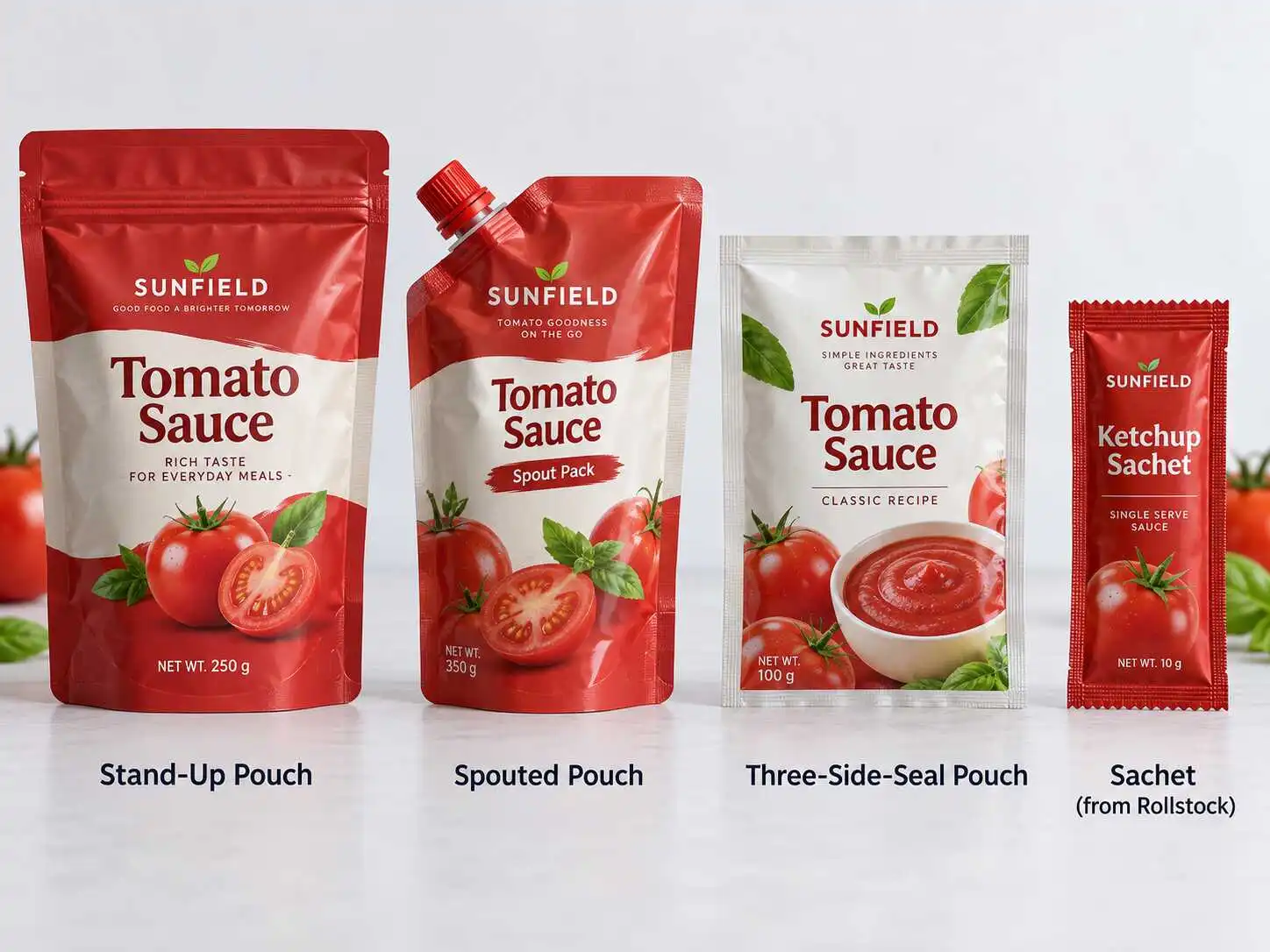
| Format | May suit | Confirm before selecting |
|---|---|---|
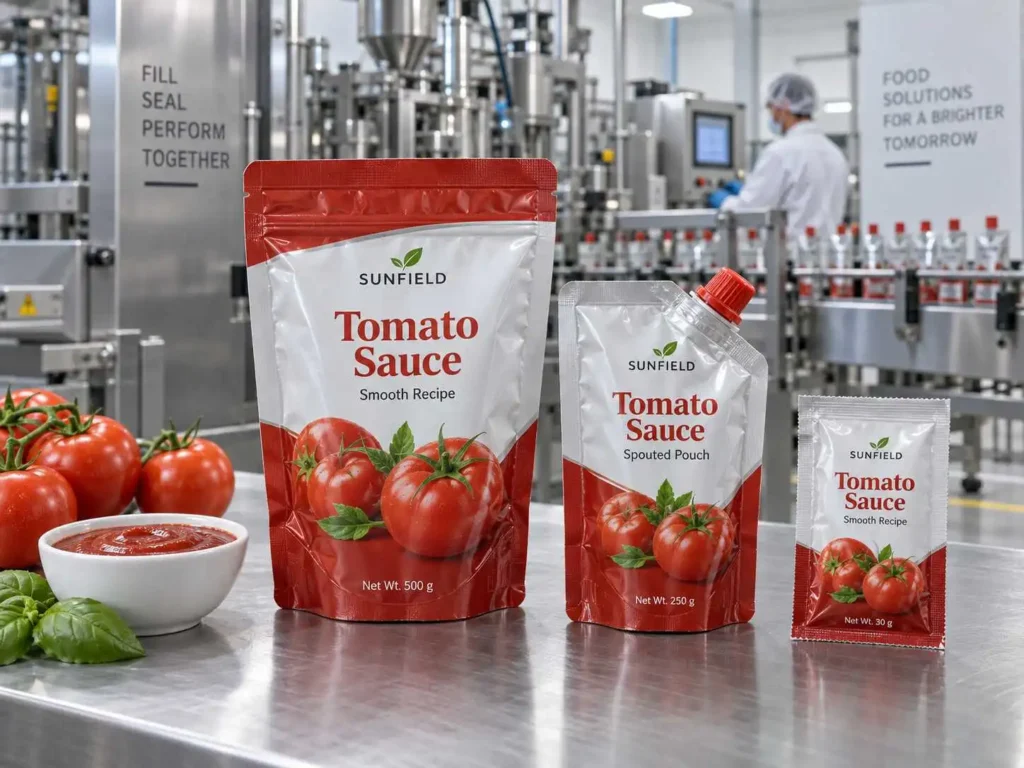
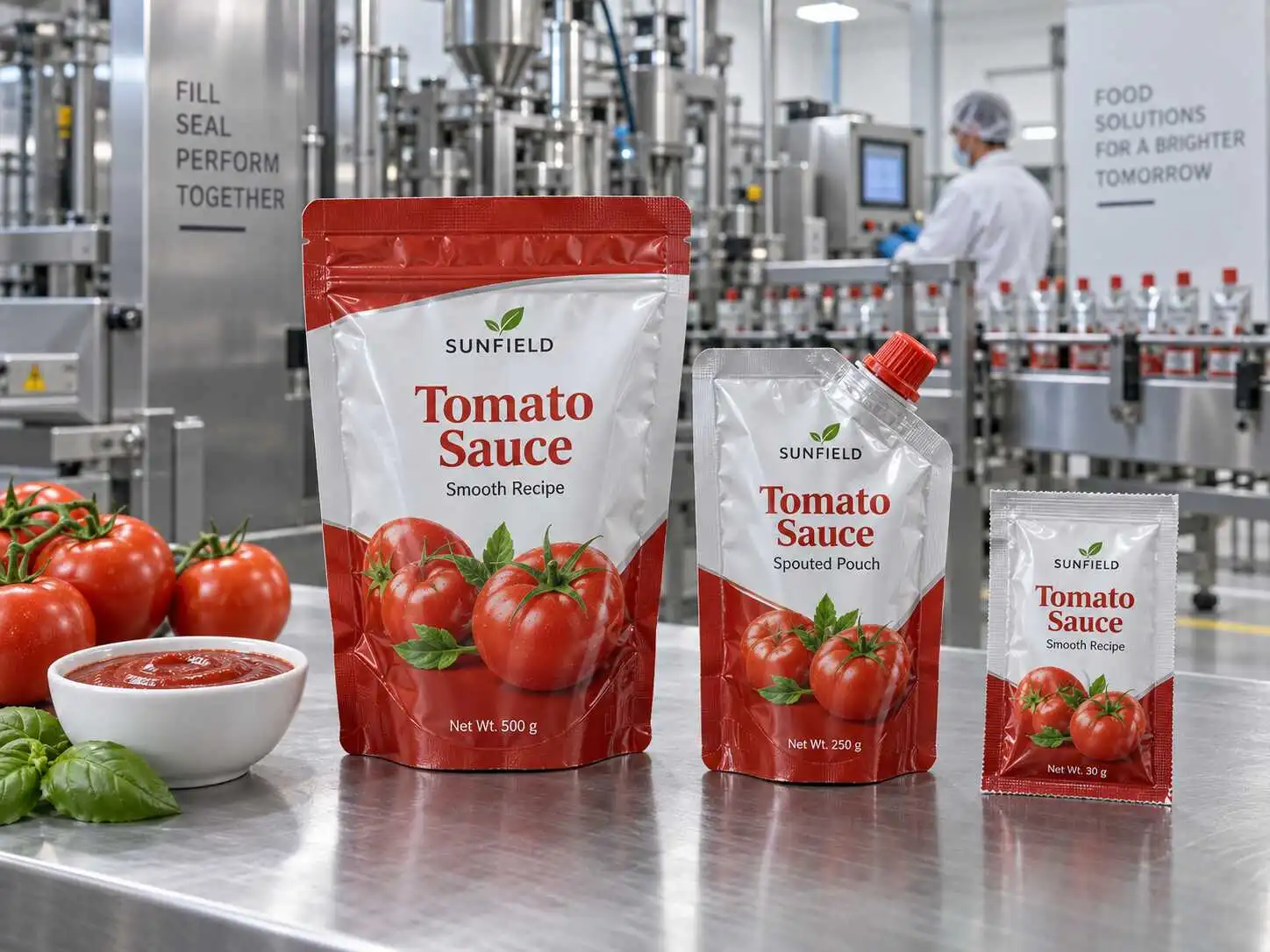
| Premade stand-up pouch | Retail or foodservice packs that need a stable display and a pre-converted pouch | Pouch loading, opening, fill path, top-seal width and whether a reclose feature is actually needed |
| Premade spout pouch | Pourable or squeezable sauce where controlled dispensing or reclosing is useful | Product flow through the fitment, spout and cap specification, filling route, closure handling and process exposure |
| Three-side-seal pouch | Flat single-use or portion packs, subject to fill size and equipment design | Horizontal or other machine arrangement, pouch dimensions, seal layout and the required pack rate |
| Rollstock sachet or formed pouch | Projects where the machine forms the package from a printed flexible web | Web width, repeat length, machine direction, registration, sealing window and VFFS/HFFS compatibility |
Premade pouches and rollstock are not interchangeable on a line without a change in equipment and setup. A premade-pouch machine handles converted bags; a form-fill-seal machine forms a package from web, doses the product and makes seals. Discuss the actual model and drawing with the film or pouch supplier before ordering.
Already have a machine?
Share the model, pouch drawing or film specification so packaging compatibility can be discussed against the real setup.
Why do viscosity and particles matter at filling?
“Tomato sauce” may describe a smooth, pourable sauce; a thick ketchup; a concentrated paste; or a recipe with visible herbs, onion or other particles. These products can behave differently at the filler, nozzle and seal area. The filling-equipment supplier needs the real product or a representative sample to assess dosing and shutoff. The packaging supplier needs the actual fill conditions and format to discuss suitable pouch geometry and seal design.
Product details to record
- Smooth, thick or particulate texture
- Particle type and approximate size, if present
- Fill weight or volume per pack
- Filling temperature and whether filling is hot or ambient
- Storage target and intended shelf life
Line behavior to trial
- Repeatable dose at the target pack rate
- Drip or stringing after the fill cycle
- Product splashing or smearing near the seal
- Pouch stability during filling and closure
- Performance after the real cooling and handling route
A photograph of a machine or a generic pump flow figure cannot prove performance with a particular recipe. Ask for a trial plan using representative product, final pouch format and the planned operating conditions.
What should you confirm on a tomato sauce spout pouch line?
A spout pouch line commonly has to present and hold the pouch, fill through an opening or fitment, handle the cap or closure, apply the specified torque or seal, and verify the finished pack. Actual machine sequences vary. A spouted format can make pouring and reclosing easier for the user, but it adds a fitment and closure interface that must be specified and tested with the sauce and process.
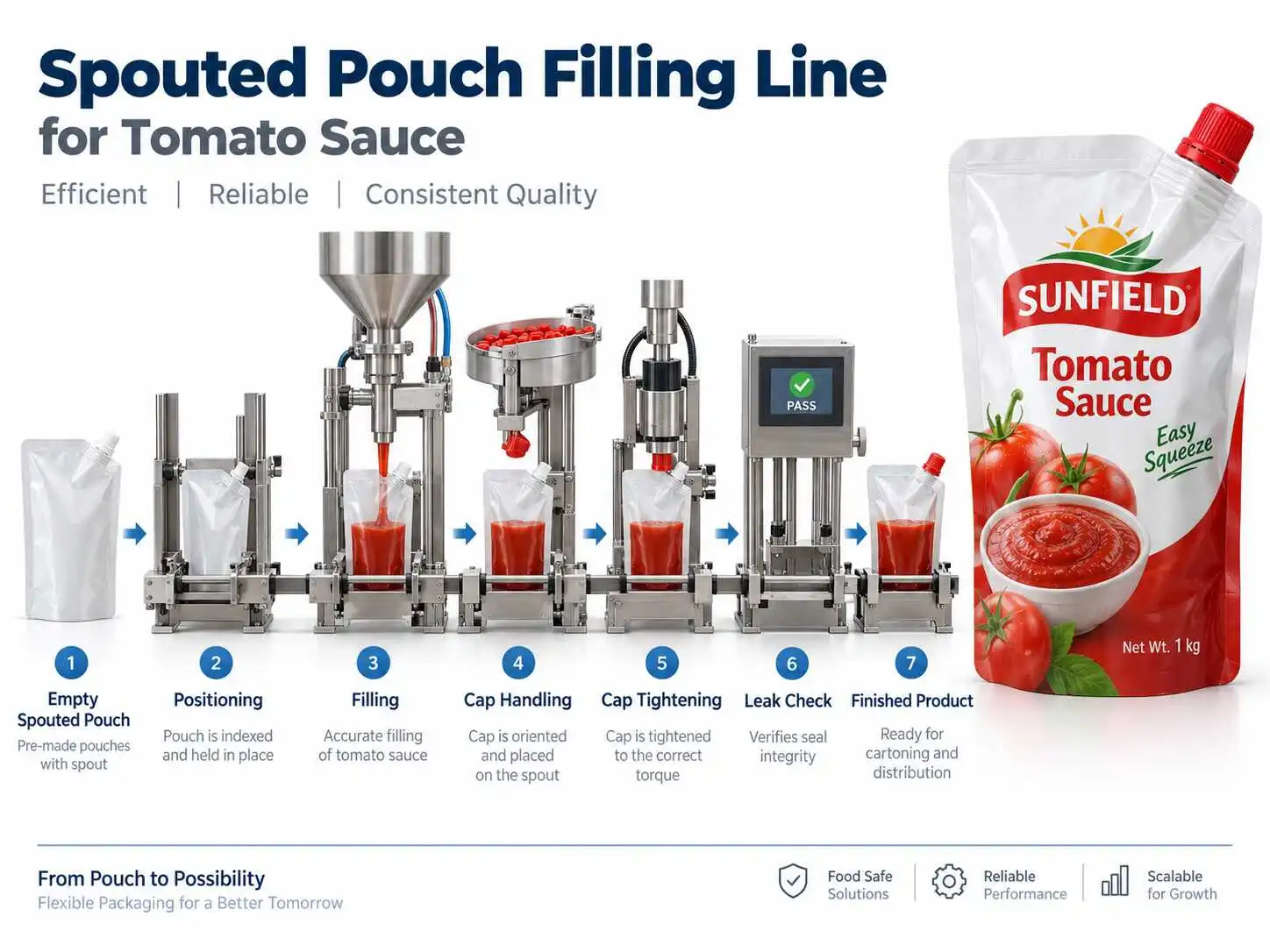
Packaging details to align with the filler
- Overall pouch dimensions, bottom construction and fitment position
- Spout opening, neck, cap and closure specification
- Filling through the spout versus filling through an open pouch before closure
- How the line locates, supports and handles the pouch
- Whether the pouch or closure sees hot-fill, in-pack heating, cooling or other treatment
- How leaks and closure application are inspected and recorded
For a rollstock sachet, the coordination points differ: web width and repeat, print registration, forming shoulders, machine direction, product dosing and the sealing jaws are key. See the VFFS rollstock compatibility guide when the chosen line forms packs from roll film.
How can sauce at the seal create a leak risk?
If sauce, oil, water or food particles sit across the intended seal area, the seal may not form consistently. Wrinkles, poor pouch presentation, incorrect sealing settings, worn tooling or a mismatch between the package and process can also contribute. A clean-looking outside is not enough to demonstrate package integrity.
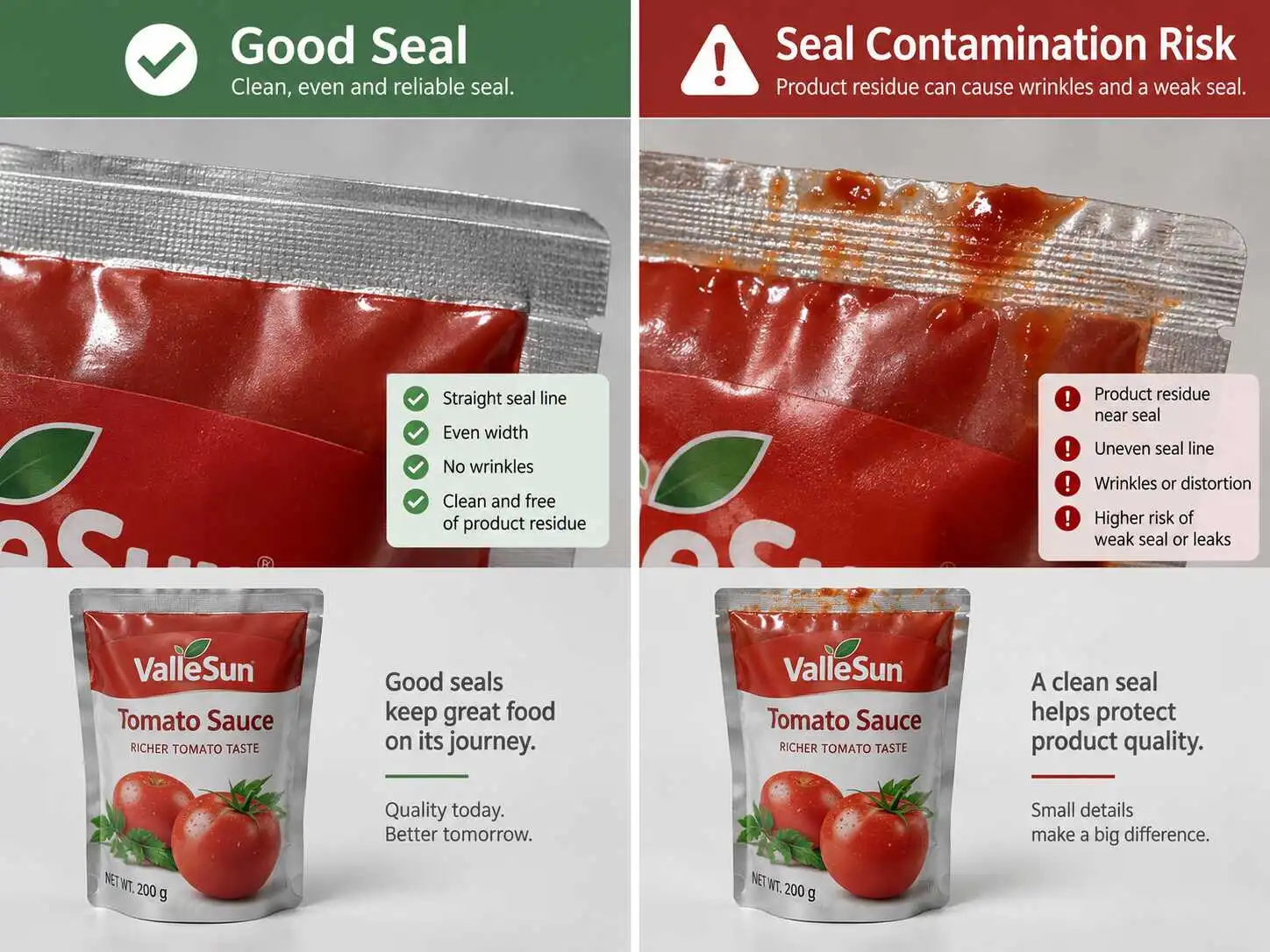
Build seal checks into the line trial
Agree the seal inspection and test method with the food processor and equipment supplier. Evaluate the actual filled product and production settings, including pouch handling and downstream treatment. Record the acceptance criteria, sampling plan, failure handling and who is responsible for release. If a failure occurs, preserve the sample and investigate the process instead of assuming that changing film alone will solve it.
How should pasteurization, hot-fill and retort affect pouch choice?
Hot-fill before closure, heating a sealed pouch, and retort processing are different product and package routes. A supplier’s equipment range is not a validated food process. The required time and temperature depend on the formulation, package size and geometry, process equipment, target product and applicable market rules. A qualified process authority or the responsible food-safety team must establish and validate the product schedule.
For packaging, identify exactly when the product enters the pouch, when the package is sealed, whether the sealed pack is heated, how it is cooled, and the storage conditions afterwards. Then review the laminate, sealant, fitment and closure against that full cycle. Do not treat “heat resistant” as proof of compatibility or shelf life.
Before ordering samples
- Confirm the thermal route and the approved process schedule
- Share product, fill weight, pouch dimensions and closure details
- State whether packs are heated before or after sealing
- Define cooling, storage and distribution conditions
During validation
- Run the representative product in the intended pouch
- Check seals, fitments and dimensions before and after treatment
- Use the food processor’s approved safety and quality protocols
- Document deviations, samples, acceptance criteria and approvals
For a retort-specific packaging discussion, use the retort pouch packaging guide. This tomato-line article does not substitute for product-specific process validation.
How should you brief a supplier on tomato sauce pouch materials?
Think in performance needs before asking for a named film recipe. The outer layer may support print and handling; barrier layers may be selected to manage oxygen, moisture or light; the inner sealant must suit the product contact and sealing conditions. Required performance depends on the recipe, filling and thermal route, distribution, storage and shelf-life target.
There is no one material structure to recommend from the phrase “tomato sauce.” Share the product composition and process, state the required barrier or shelf-life outcome, and ask the packaging supplier to explain the proposed structure and its limits. The finished package still needs to be assessed with the actual line and product. See the flexible packaging material structure guide for a layer-function overview.
What information should you send before requesting a pouch quote?
A clear brief helps the equipment and packaging suppliers answer the right question. Send the same product and pack assumptions to each supplier so their proposals can be compared on a consistent basis.
Product and production target
- Tomato sauce, ketchup, paste or another formulation
- Smooth or particulate product; relevant particle details
- Target finished-product kg/h and target accepted packs/hour
- Fill weight or volume for every planned SKU
- Filling temperature and filling method
- Any post-fill thermal process and the approved schedule
Package and line specification
- Premade pouch or rollstock; desired pouch format
- Target pouch dimensions, opening, spout and cap if applicable
- Filler manufacturer, model, drawings and line layout
- Web width, repeat, machine direction and registration if rollstock
- Storage, shelf-life and destination-market requirements
- Annual or initial quantity, number of SKUs and artwork status
Preparing a tomato sauce project?
Send the product, pack format, fill weight, target output and machine information for a packaging-fit discussion.
Questions to close before approving a line
- Which supplier owns the integration and acceptance test across the line?
- What does each capacity figure measure, and under which product conditions?
- Does the line trial use the final pouch or film, closure, recipe and fill weight?
- Who approves the food-safety schedule and package compatibility?
- What happens if the tested output or seal result misses the agreed criteria?
Tomato Sauce Pouch Line FAQ
What determines the capacity of a tomato sauce pouch filling line?
Does a 500 kg/h tomato processing line make 500 kg/h of finished sauce?
How do I calculate the pouch filling speed I need?
Should I use premade pouches or rollstock for tomato sauce?
Which pouch format works for tomato sauce?
Can a spout pouch be pasteurized after filling?
What causes leaks at a tomato sauce pouch seal?
What information should I send for a tomato sauce pouch quote?
Get a tomato sauce pouch review
Send the product and texture, fill weight, pouch type, target output, filler model, filling temperature, post-fill process, storage target, quantity and artwork status. Runlong Pack can review the flexible-packaging brief; equipment selection and food-process validation remain with your equipment supplier and qualified food-safety team.
Send Your Pouch Requirements