

Multi-SKU Coffee Bag Orders: How to Plan Quantities, Printing and Reorders
A practical buying guide with a checklist you can use in your next packaging discussion.
Discuss Your Packaging ProjectQuick Answer
Plan multi-SKU coffee bag orders at the design level, not just the total quantity. One design with 10,000 bags and ten designs with 1,000 bags each create different printing setups, inventory risks and reorder patterns. Group technically compatible designs for a quotation, distinguish stable products from test launches, and ask for a per-SKU comparison of digital, gravure and suitable stock-bag options.
Quick Facts
| Decision point | What to confirm |
|---|---|
| Compare separately | Total order quantity and quantity per artwork |
| Common coffee route | Flat-bottom bag with one-way valve; stand-up bag can be a budget option |
| Digital grouping | Possible for compatible jobs; combined pricing is not automatic |
| Gravure planning | Design-specific cylinder and setup requirements must be quoted |
Start with an SKU map, not “10,000 coffee bags”
List every artwork, fill weight, bag size, laminate, valve, closure and finish. A different origin label may be a new artwork; a different fill weight may also require another bag geometry. A decaf line, a seasonal release and a core blend can have very different demand stability even if they share the same bag format.
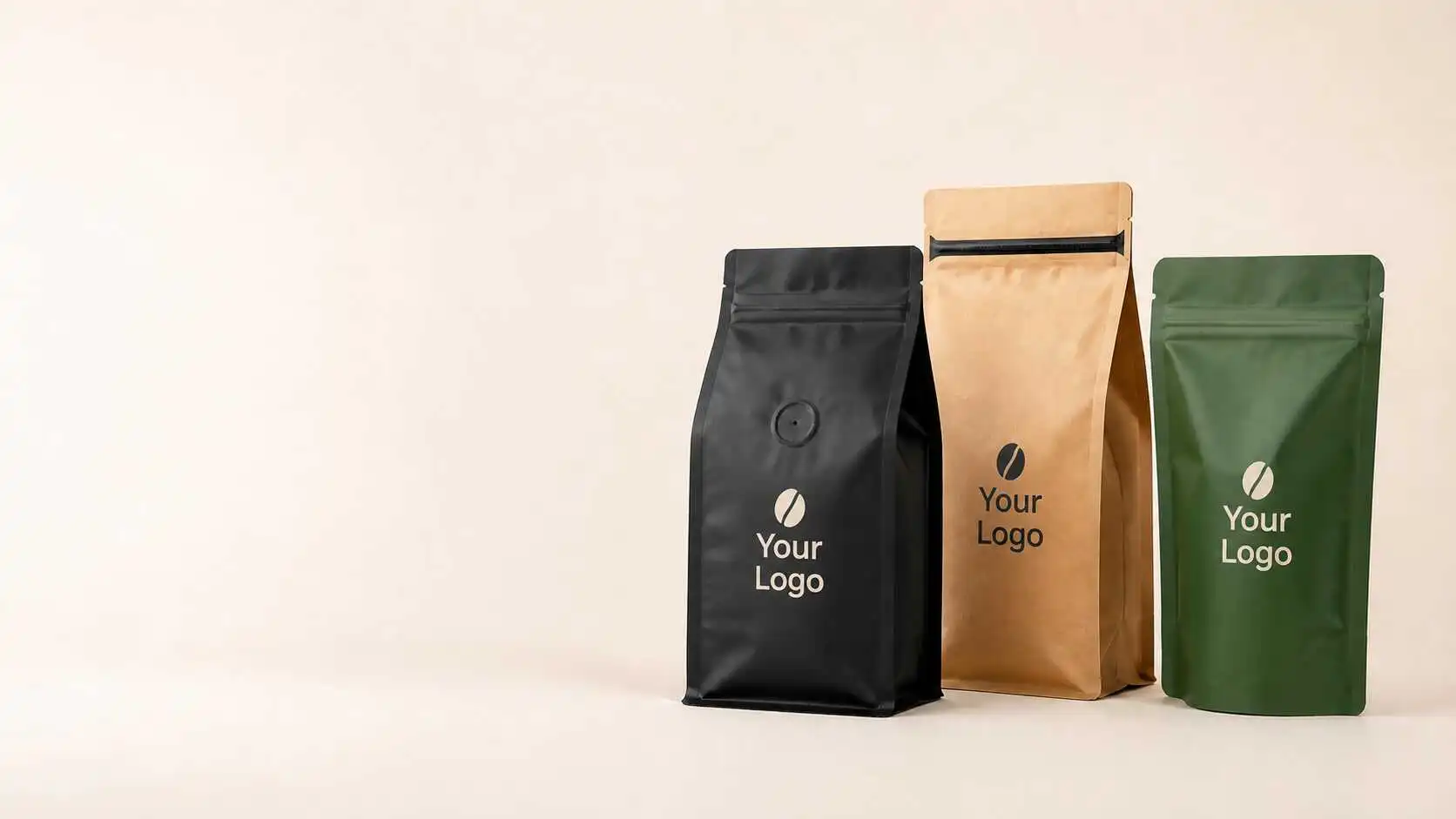
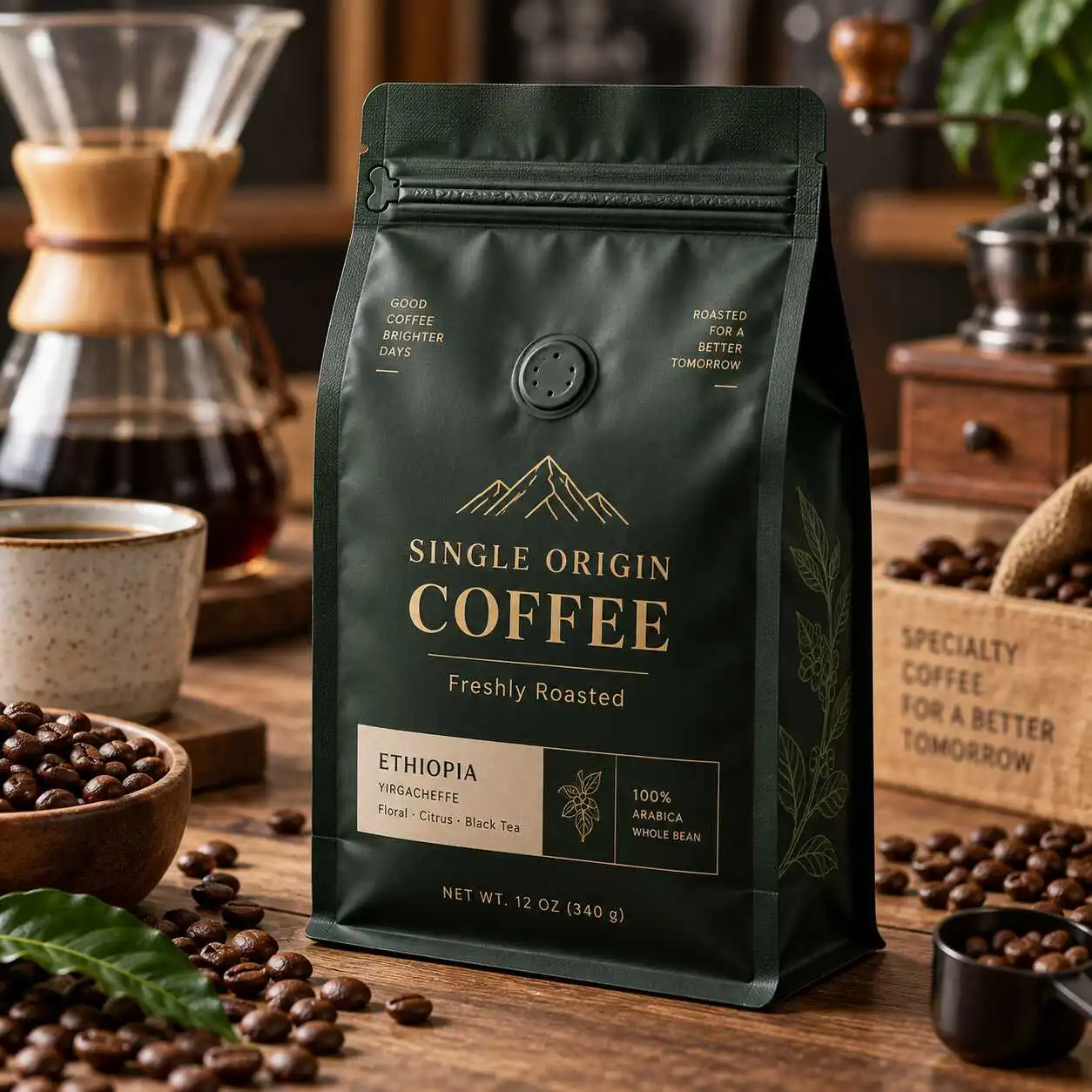
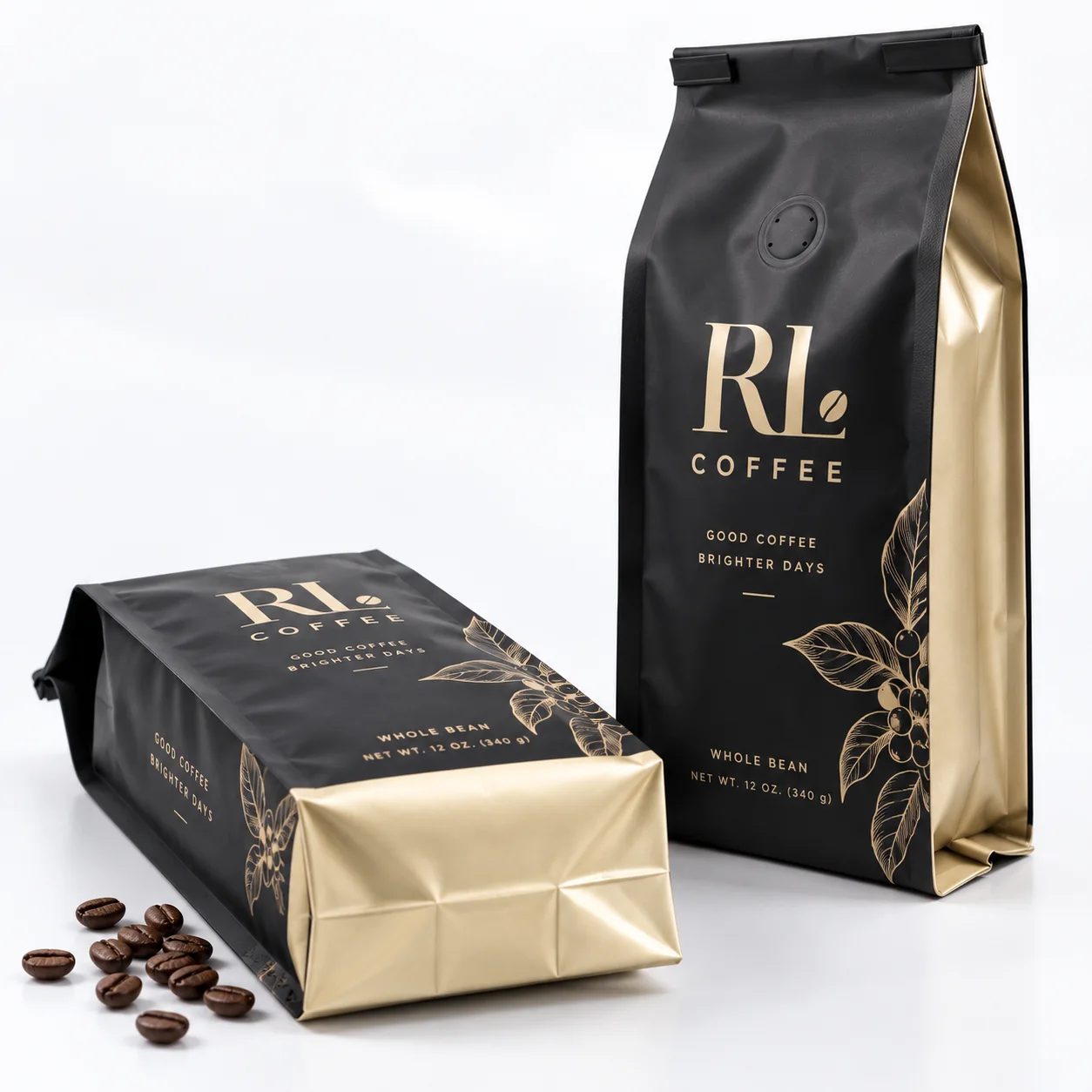
Runlong generally recommends flat-bottom coffee bags with a one-way valve as a starting point. A stand-up pouch with a valve can be considered where budget is important. The choice still depends on the product, packing process, presentation and project requirements. Do not assume an identical stated coffee weight fits every bag shape or roast profile.
Review the valve and zipper selection guide before freezing the shared specification. A one-way valve and a zipper serve different purposes; neither replaces the final package seal.
Hypothetical comparison: the same total, different orders
| Planning point | A: one design × 10,000 bags | B: ten designs × 1,000 bags |
|---|---|---|
| Total quantity | 10,000 | 10,000 |
| Artwork approvals | One artwork, assuming one size and construction. | Ten approved artworks, even if geometry is shared. |
| Demand exposure | Most inventory is tied to one product. | Inventory is split across ten products with potentially different sell-through. |
| Gravure review | Assess one design’s cylinder and production economics. | Assess design-specific cylinder/setup costs; do not price as one design automatically. |
| Digital review | Compare complete job cost against gravure. | Assess compatible multi-design production and the quote basis. |
| Reorder pattern | Potentially repeat the same specification. | Some designs may reorder while others remain in stock. |
These are hypothetical order quantities, not a price quotation or a promise that ten artworks can share setup charges. Ask for the total first-order cost, per-SKU breakdown and repeat-order assumptions. A lower headline unit price is not useful if slow-selling designs leave a large obsolete inventory.
Use product-specific printing guidance
For flat-bottom coffee bags, around 1,000–2,000 pieces can be considered for digital printing. At around 3,000 or more, compare digital and gravure total costs. Around 10,000 pieces, gravure is often more economical for suitable projects; stable long-term orders around 40,000 or more generally favour a gravure assessment. These are project references, not automatic thresholds applying to the combined quantity of unrelated artworks.
Digital printing can suit short runs and changing designs. Compatible sizes, materials and processes may allow combined quantity assessment, but Runlong must confirm the quotation basis. Digital generally works in CMYK and does not promise exact Pantone matching. Gravure commonly requires separate cylinder consideration for different designs; shared artwork elements do not automatically mean shared cylinders or no additional cost.
For simple logos and suitable available stock coffee bags, single-colour overprinting may be assessed, generally around 1,000 pieces as a planning reference. Check stock dimensions and compatibility rather than assuming every coffee bag can use this route. See digital versus gravure printing.
Separate core blends from trial releases
| SKU group | Planning approach | Reorder evidence |
|---|---|---|
| Stable core blend | Compare a longer production run with storage and cash exposure. | Confirmed consumption history and stable artwork. |
| Seasonal or limited release | Limit artwork-specific exposure; compare a suitable short-run route. | Campaign dates and realistic sell-through. |
| New origin or trial product | Use a test quantity compatible with production and validation needs. | Trial sales and likely artwork changes. |
| Slow-moving product | Avoid increasing stock only to reach a lower unit price. | Remaining usable stock and demand forecast. |
A mixed printing strategy may make more sense than forcing all SKUs onto one route. If visual consistency between digital and gravure is important, approve colour expectations using representative samples. Do not assume the same screen file will look identical across processes and materials.
Copy the multi-SKU order worksheet
| SKU / artwork revision | Shared technical spec? | Initial quantity | Monthly use / forecast | Reorder owner |
|---|---|---|---|---|
| Core blend A / _____ | Size, material, valve: _____ | _____ | _____ | _____ |
| Core blend B / _____ | Size, material, valve: _____ | _____ | _____ | _____ |
| Seasonal release / _____ | Size, material, valve: _____ | _____ | _____ | _____ |
| Trial origin / _____ | Size, material, valve: _____ | _____ | _____ | _____ |
Keep a separate approval record for barcode, legal text, origin, flavour, net weight and date-coding space on every design. Similar-looking files are a common reason to approve the wrong version. Mark the artwork revision on the purchase order and confirm which designs are actually included in the quoted quantity.
For gravure, agree the delivered-quantity tolerance for each design and how final billing is handled; contracts commonly allow around ±10%, subject to the agreed order terms. Digital quantities can generally be closer to the ordered amount. Do not treat an overall tolerance as permission to substitute one SKU for another.
Build the reorder date backwards from stock
Use consumption during the total replenishment period plus a separately justified safety stock, then subtract usable stock and confirmed incoming supply to plan the reorder. Include artwork approval, production, freight and receiving time. A cylinder already on file may help the repeat workflow, but its availability and continued suitability must be confirmed.
Runlong’s typical digital production reference is around 8–10 working days. Gravure requires around 7–9 working days for cylinders, followed by around 15–20 days of production after cylinders are completed. The production clock begins after final specification/artwork approval and the required payment; shipping is separate. Confirm current scheduling for the specific order.
Set an artwork-change cutoff before ordering stock. When a label revision is pending, “buy more to save” may increase write-off risk. Use the lead-time planning guide to separate production time from door-to-door replenishment. Runlong uses food-grade raw materials without recycled, secondary or scrap inputs; confirm the final construction and application documents for your coffee project.
Frequently Asked Questions
Can ten designs share the same MOQ?
Not automatically. Compatible digital jobs may be assessed by combined quantity, but the bag format, material, size, process and quotation basis must be confirmed.
Is 10,000 bags across ten designs the same as one 10,000-bag design?
No. Artwork approvals, setups, cylinder requirements and inventory exposure differ. Ask for a design-level cost and quantity breakdown.
Should every SKU use gravure?
Not necessarily. Compare stable repeat designs separately from trial or seasonal designs, considering total cost and stock risk.
Can I reuse the previous artwork for a reorder?
Only after checking its revision, product information, barcode and specification. Confirm that the approved file and any existing cylinders remain suitable.
Start With a Clear Packaging Brief
SKU list + quantity per artwork + bag dimensions + material/barrier needs + valve/closure + artwork revisions + demand forecast + delivery destination
Get a Quote