

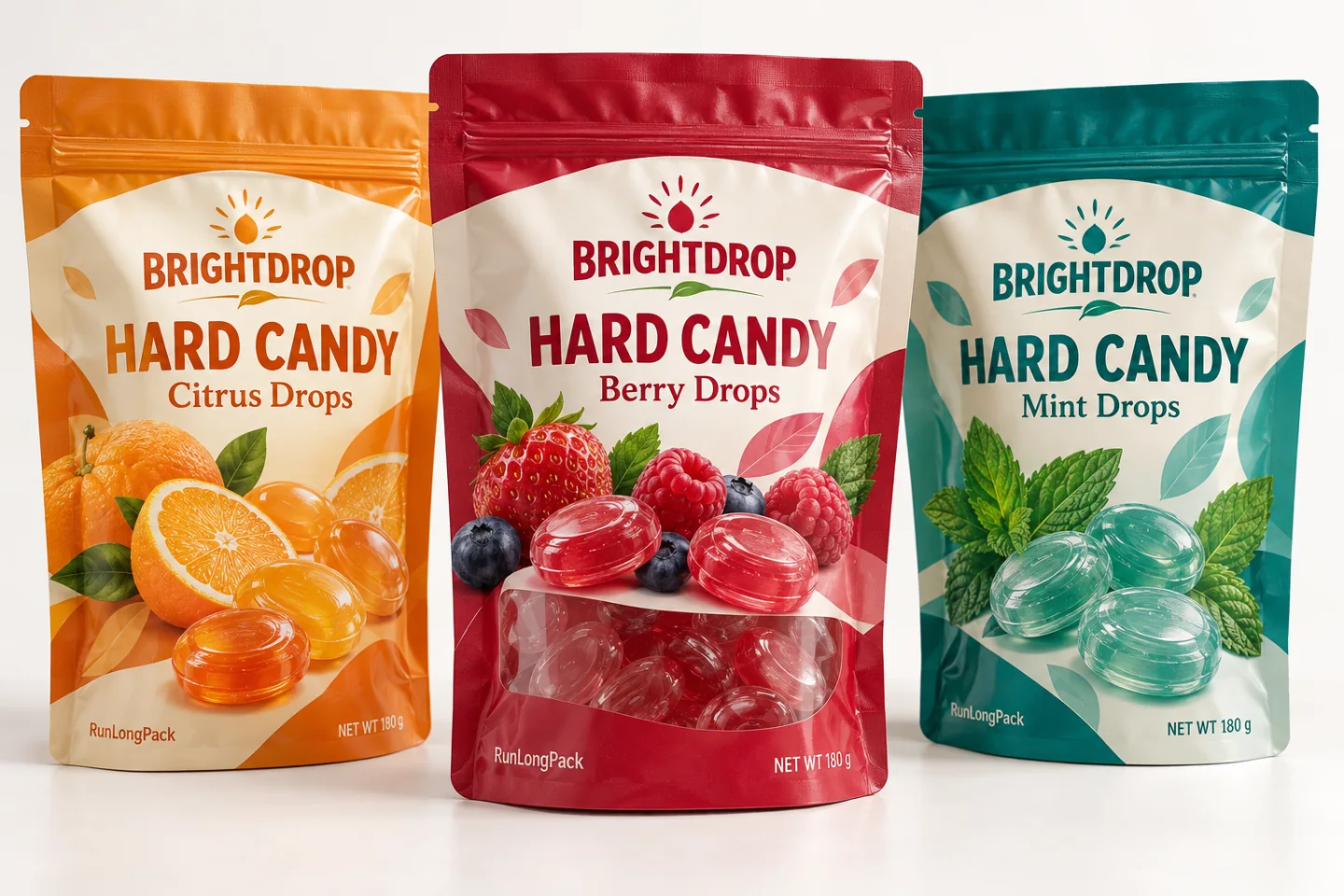
Candy product · packing line · purchase format
Both a zipper bag and a heat-sealed pillow pack can hold candy, but their production routes can be completely different. Start with what your packing operation receives: an individual empty bag or a continuous film web.
Buy premade pouches if your operator or machine opens, fills and seals individual bags. Buy rollstock if a compatible line unwinds film and forms or wraps the pack. Then distinguish a single-candy wrapper from a multipack, confirm the material and sealing process, and request the right sample or line trial.
1. Check what enters the packing line
Ask the operator or co-packer a simple question: do we load a magazine of separate empty pouches, or does the machine unwind film from a reel? An automatic machine may use either route. “Automatic packing” alone does not identify the correct material purchase.
| Route | Material received | What must match |
|---|---|---|
| Manual or semi-automatic premade bag filling | Individual empty pouches | Opening, usable space, filling method and sealer access |
| Premade-pouch machine | Individual bags suitable for its gripping and opening system | Bag drawing, grippers, opening/zipper functions and sealing sequence |
| Form-fill-seal or flow-wrap line | Continuous rollstock | Machine/process, web layout, film behavior, reel limits and seals |
If you outsource filling, get the brief from your co-packer before ordering the printed packaging. A familiar-looking pouch or wrapper is not evidence that it runs on a particular line. For a broader introduction, use our premade pouches versus rollstock guide.
2. Separate a single candy wrapper from an outer bag
Specify whether the pack touches loose candy directly, wraps one piece, or holds several already wrapped sweets. Individually wrapped hard candies need room for their complete wrappers and tails in a larger bag; sizing only the candy body can underestimate the fill volume.
For a single heat-sealed wrapper, the product’s orientation and the wrapping path affect the film layout. A vertical bag-making process and a horizontal flow-wrap process should not share an assumed drawing. Multi-lane equipment needs the actual lane geometry, not an invented repetition across the web.
Twist wrapping and cold sealing are separate technical requests. Standard heat-seal laminated film should not be ordered on the assumption that it will hold a twist or work with a cold-seal line. Confirm supply capability and the actual process first.
3. Match the material brief to the candy condition
For gummies, note sugar or sour coating, surface oil, temperature when filled and the desired texture. For hard candy, consider moisture exposure, tack and local pressure from the product or wrapper ends. Chocolate adds handling-temperature, aroma and grease considerations.
A transparent area can show the product but needs assessment within the complete material structure. An opaque metallized or foil laminate cannot simply be treated as a transparent film with identical protection. There is also no universal shelf life attached to a material abbreviation.
Give the packaging supplier your storage/distribution brief and actual product condition. Separately control recipe, conditioning and temperature where needed; packaging cannot resolve every sticking or appearance issue. See the dedicated food gummy pouch page for that brief.
4. Prepare the right pouch drawing or film specification
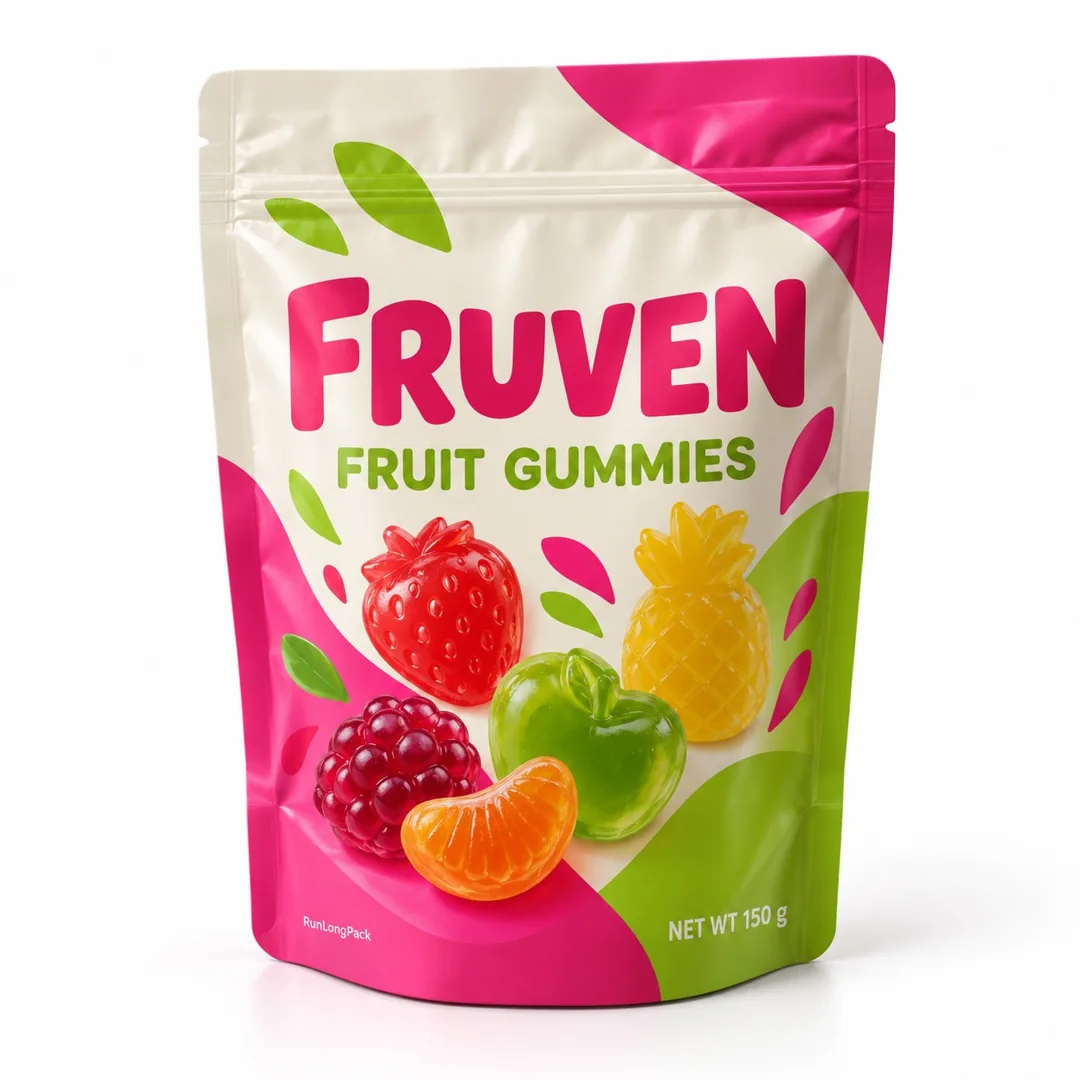
For premade bags, specify finished width, height and gusset convention, the supplied open edge, zipper position and available sealing space. A bag’s outside dimensions are not the same as its usable cavity. Test the intended fill without crowding the closure.
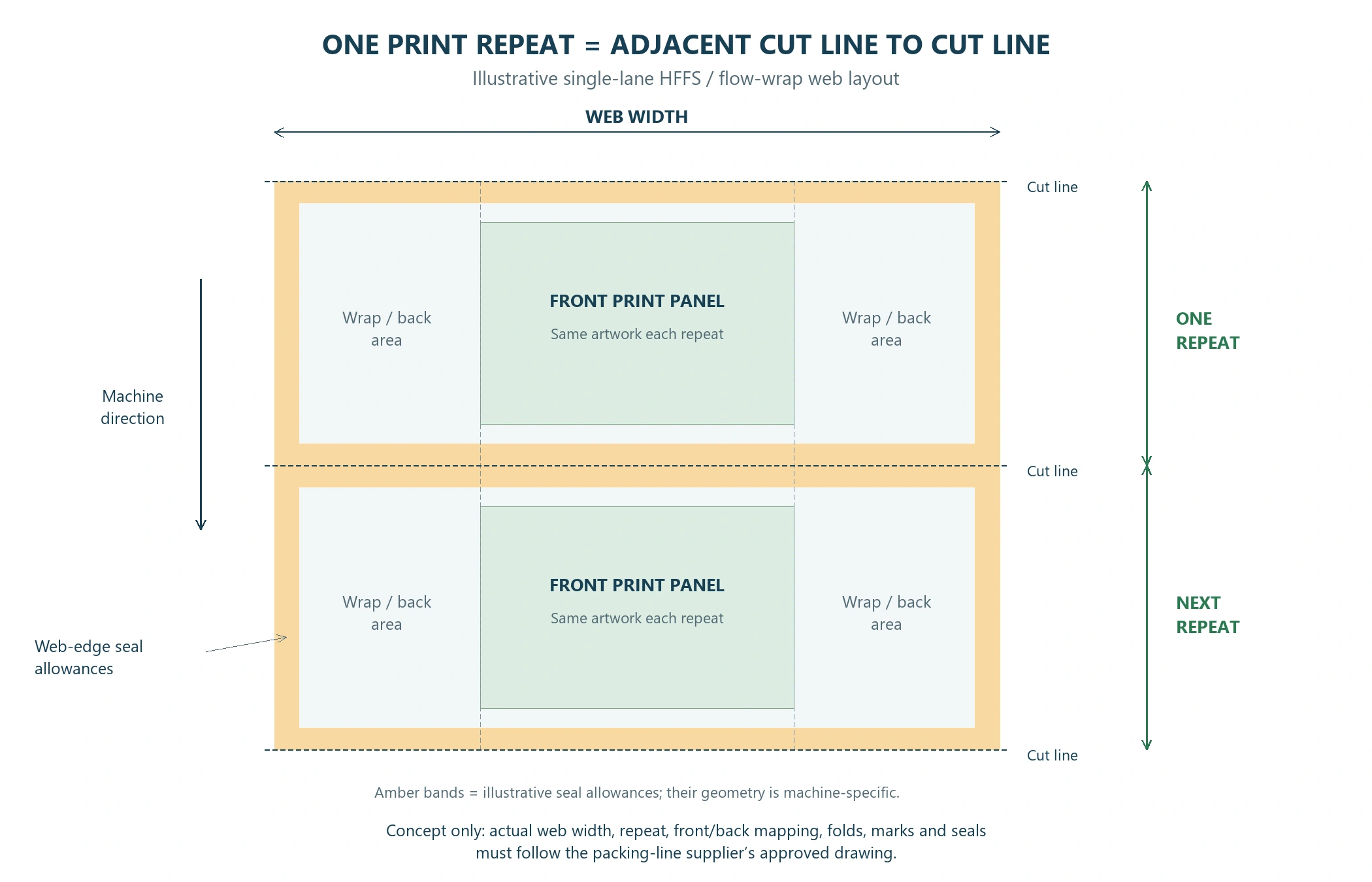
For film, request the equipment supplier’s approved drawing. It should identify web width, print repeat, front/back and fold areas, seal allowances, registration mark, printed side and unwind. Core inner diameter, maximum reel diameter and any reel-weight limit also matter.
Film width is not simply the finished bag front width, and kilograms do not give a fixed number of packs. Repeat length, web width, laminate and converting conditions all affect yield. Use the packs-per-roll guide and VFFS compatibility checklist where relevant.
5. Compare quotations using the same scope
A premade pouch quote is normally built around pieces per artwork and a complete bag specification. A rollstock quote needs kilograms per artwork and a film/reel specification. Do not copy a piece-based minimum into a film inquiry or assume that a small wrapper needs only a tiny film order.
Some compatible standard digital pouch jobs may be evaluated around 100 pieces, with approximately 1,000–3,000 often more economical. Ordinary gravure pouches generally start around 10,000 pieces, depending on format and process. Eligible digital trial films around 10 kg may be considered at a high unit packaging cost; normal commercial film orders are generally recommended around 300 kg or more.
Compare artwork quantities, printing setup, converting, sample or trial charges, freight and the work your packing operation must perform. Neither route is universally cheaper. See the MOQ guide for format-specific conditions.
6. Use a sample or trial that answers the next question
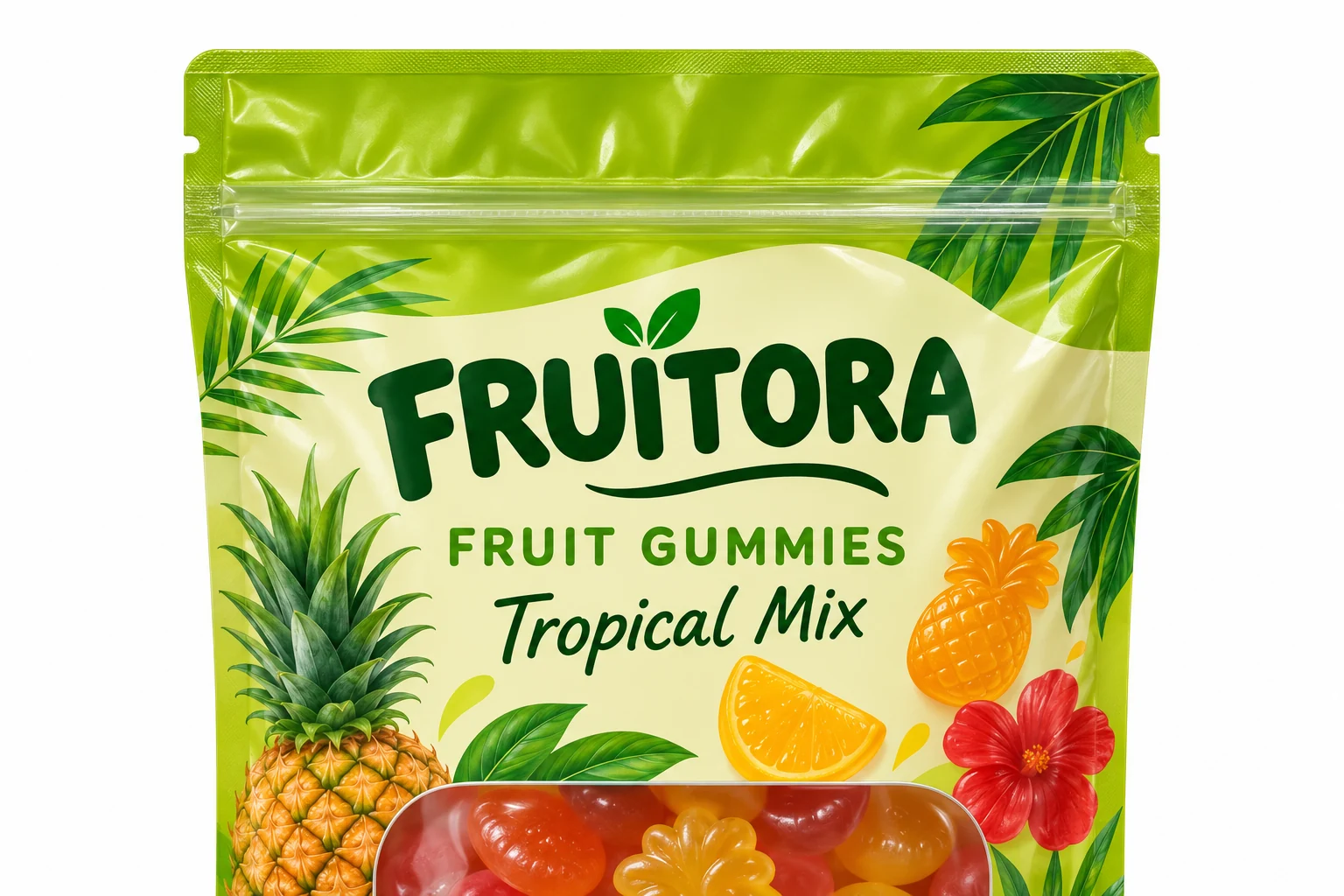
A static design mockup helps with artwork placement. A reference pouch helps with format and material feel. A custom printed pouch can address selected dimensions and print appearance. A line-trial reel addresses equipment behavior under agreed conditions. They are different approval steps.
- For a pouch, assess actual fill volume, opening, zipper use, standing and carton fit.
- For film, agree the representative candy, equipment, reel specification and trial conditions.
- For both, keep product and coatings out of seal zones and agree on the relevant checks and acceptance requirements.
The original retail heat seal and a reclosable zipper serve different purposes. Check that a tear notch opens the header without damaging the intended reclosure. A visually neat seal or a concept picture does not establish leak performance or shelf life.
7. Send a quotation brief your supplier can use
Candy packaging inquiry checklist
- Candy type, coating and product condition at filling
- Loose candy, single-piece wrapper or outer multipack
- Premade pouch or film; machine model or co-packer reference
- Target weight/count, product dimensions and existing bag or drawing
- Material, protection, zipper/window and finish requirements
- For film: approved web drawing, repeat, unwind and reel limits
- Pieces or kilograms for each artwork and number of SKUs
- Sample needs, delivery destination and required timing
Use the hard candy bag, gummy pouch, chocolate packaging or candy rollstock page to continue the supplier discussion. Final manufacturing files and order conditions are confirmed for your actual project.
Candy Packaging Questions
Can an automatic candy packing machine use premade bags?
Some automatic machines open, fill and seal separate premade pouches; others form packs from rollstock. Identify the actual material feed and machine configuration before ordering.
Is a candy zipper pouch the same as a flow-wrap pack?
No. A zipper pouch is normally supplied as a finished-format empty bag for the agreed filling and sealing route. A flow-wrap pack is formed from film on compatible equipment, with a different artwork and sealing layout.
Can one film specification work for single sweets and outer multipacks?
Not automatically. Product size, loading, forming, repeat, seal layout and machinery differ. Confirm a separate approved specification for each intended pack.
Are premade pouches always cheaper for a small candy brand?
No. Compare the bag or film specification, order quantities, printing, converting, filling equipment or co-packer costs, trials and freight. A low material price alone does not establish the lowest total project cost.
Can ordinary heat-seal film be used as twist-wrap film?
Do not assume so. Twist wrapping requires different material behavior and process compatibility. Confirm the requested route and supply feasibility separately.
What should I approve before production?
Approve the material and food-contact brief, pouch or machine drawing, artwork, quantities, sample/trial scope and relevant acceptance requirements. A visual mockup alone is not a complete physical or line-performance approval.
Get a packaging plan for your candy
Send a product or current-bag photo, the supply format, quantity per artwork and destination. For film, include the machine model or drawing so the specification review starts with your actual packing line.