

Premade Pouches vs Rollstock
Choose between finished bags and printed film by looking at filling equipment, order volume, changeovers, specifications and total operating cost.
Should you choose premade pouches or rollstock?
Choose premade pouches when you fill manually or with equipment designed for finished bags, need a familiar zipper or spout format, or want a simpler path for smaller projects. Choose printed rollstock when you already operate compatible form-fill-seal equipment and can control film width, repeat length, sealing and filling conditions.
The cheapest package price is not automatically the lowest operating cost. Compare packaging material, setup, labor, machine speed, waste, SKU changeovers and the risk of buying film that does not run correctly on the equipment.
Premade pouches and rollstock solve different production tasks
Premade pouch
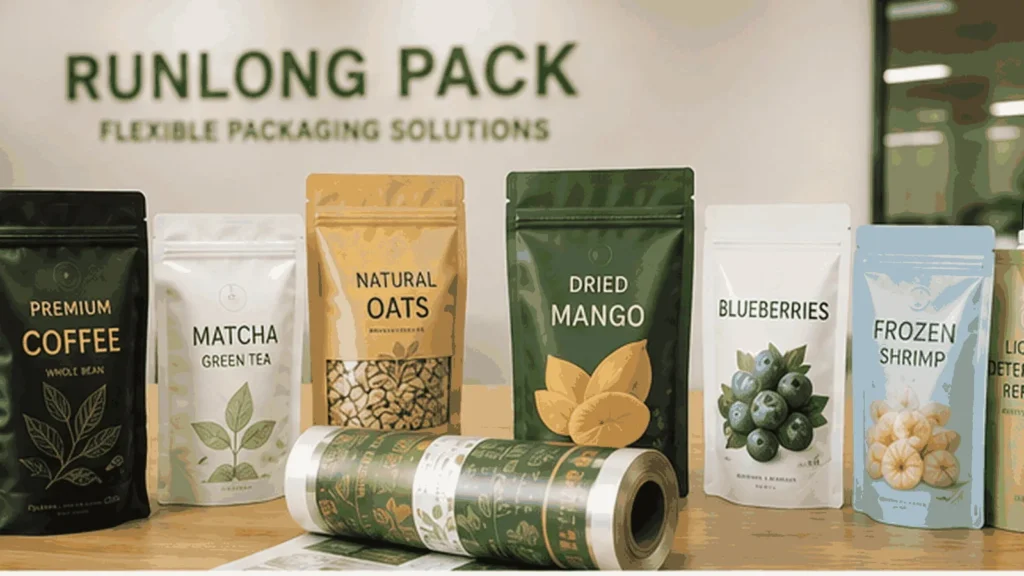
The converter supplies a finished bag. Depending on the structure, it may already include a gusset, zipper, valve, spout, tear notch or hang hole. The filler opens, fills and seals the finished package.
Printed rollstock
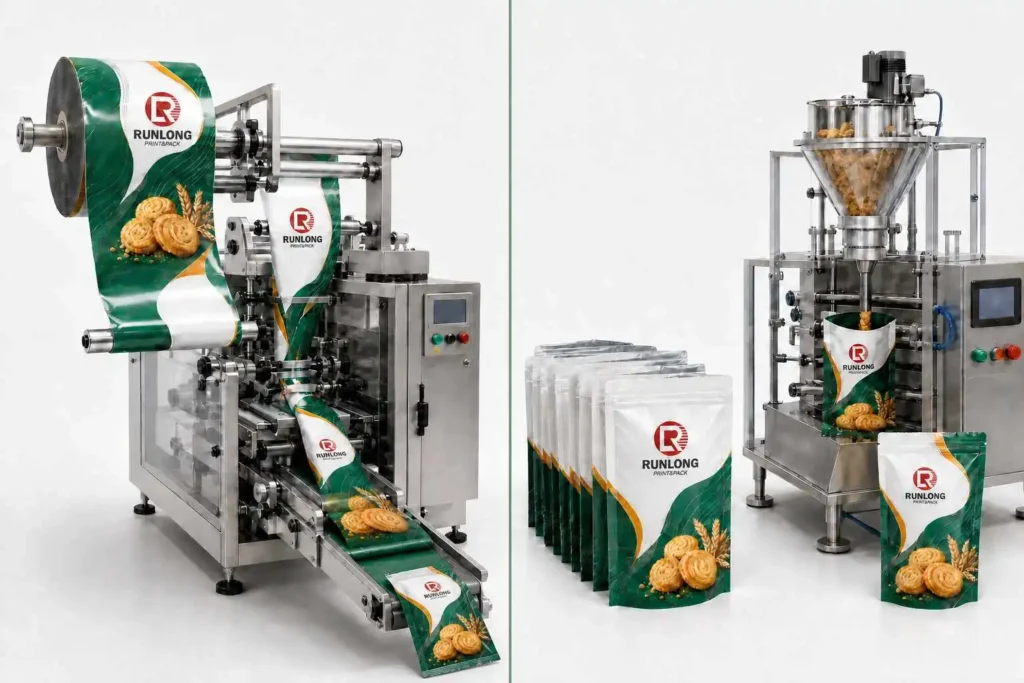
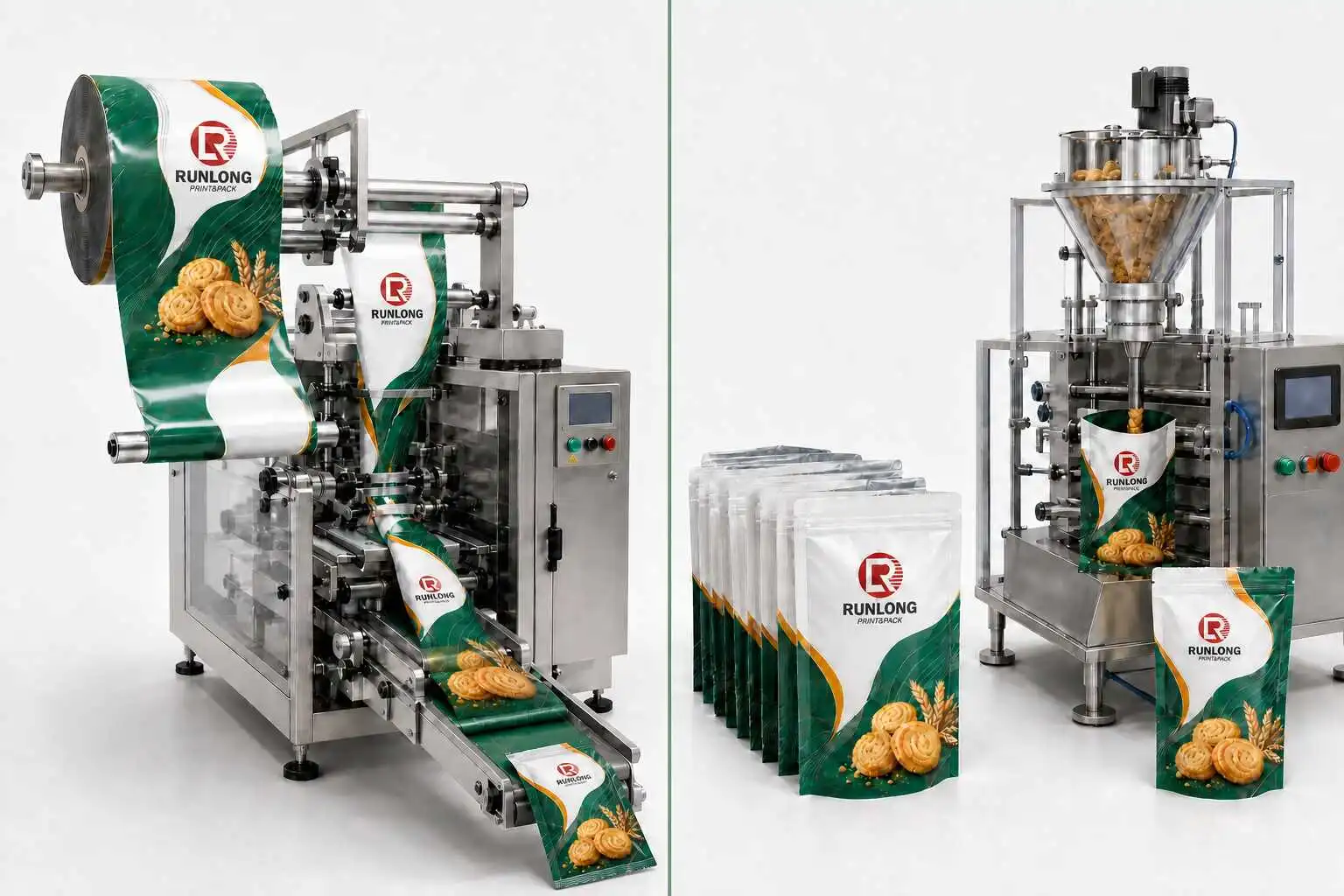
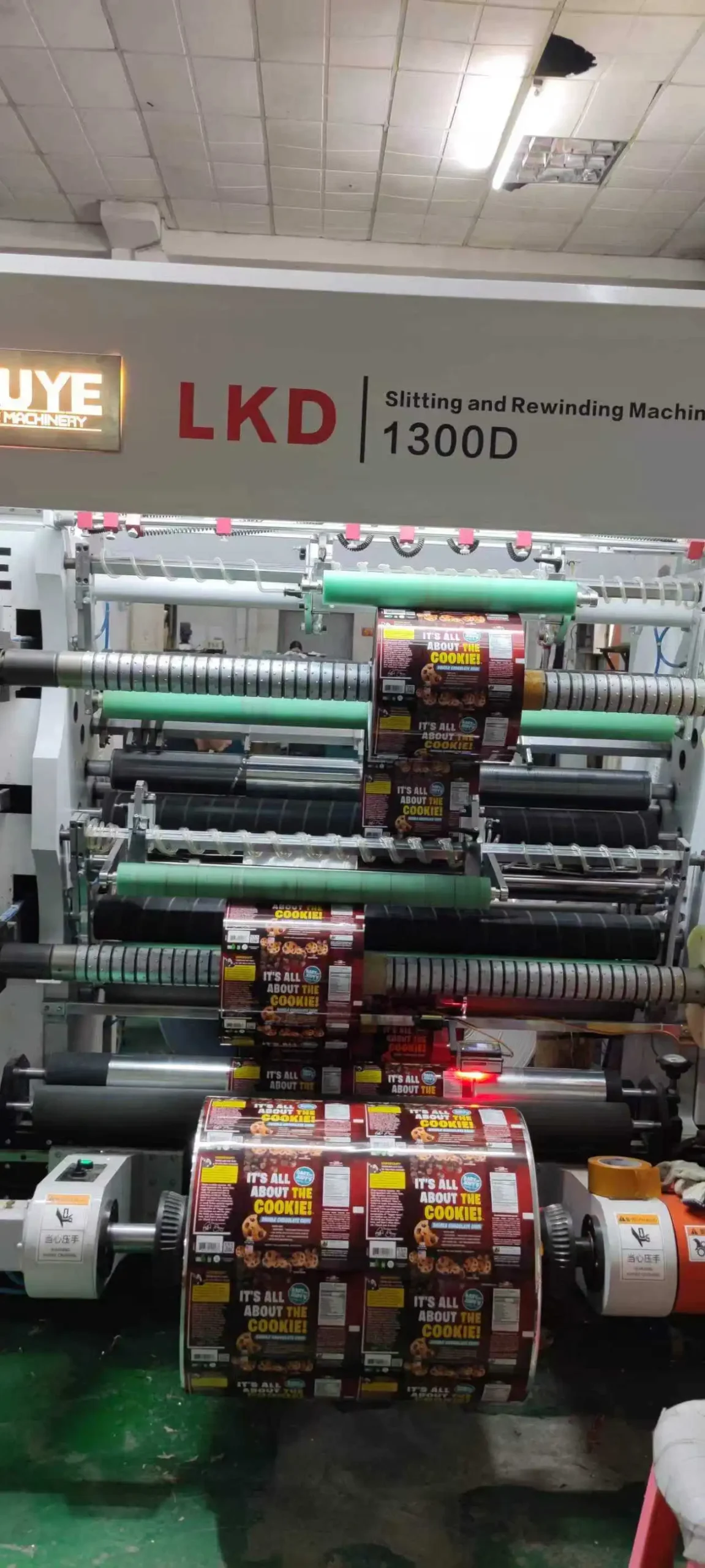
The converter supplies printed flexible film on a roll. Compatible equipment forms the package, fills it and seals it during the packing process. The final format depends on the machine and the confirmed web specification.
Premade pouches vs rollstock at a glance
| Decision factor | Premade pouches | Printed rollstock |
|---|---|---|
| Packaging supplied | Finished pouch ready to open, fill and seal | Printed film that the packaging machine forms |
| Equipment | Manual filling or a machine designed for premade bags | Compatible form-fill-seal equipment |
| Features | Zippers, valves, spouts and other features can be converted into the bag | Features depend on the machine, film and package design |
| Specification focus | Finished dimensions, gusset, features and sealing conditions | Film width, repeat length, material, thickness, winding and machine conditions |
| Order basis | Usually discussed in pieces | Most ordinary projects are typically discussed by film weight, around 300 kg MOQ |
| Best fit | Flexible launches, manual or premade-pouch filling, visible retail features | Automated packing with confirmed machine compatibility and sufficient demand |
When finished pouches are the more practical option
- You fill manually or use a premade-pouch filling machine.
- The package needs a zipper, spout, valve or distinctive gusseted structure already converted into it.
- You need to compare several finished pouch formats before committing.
- Your demand or SKU mix suits digital printing or a stock-pouch evaluation.
- You want to test physical filling and shelf presentation using a finished bag.
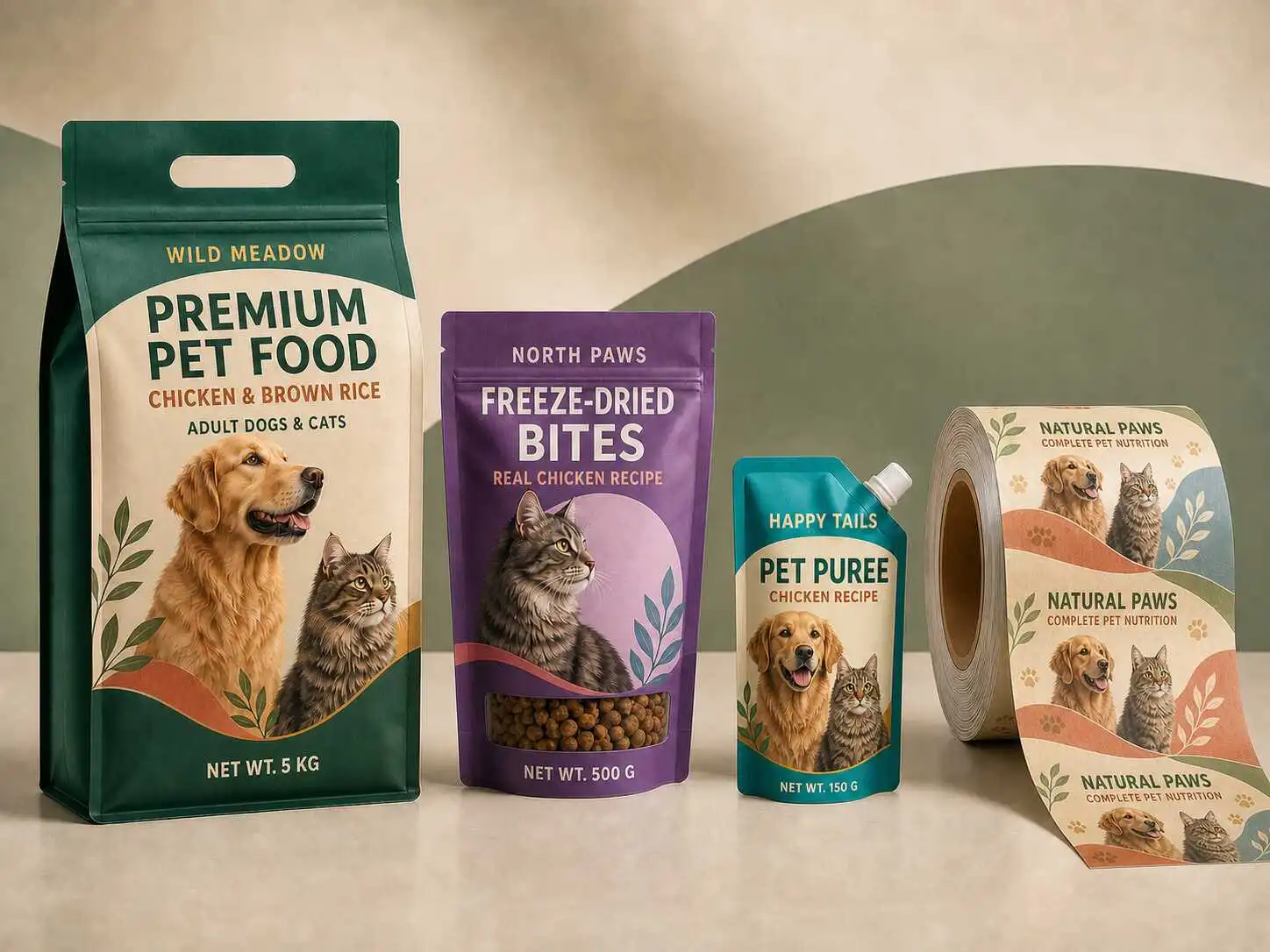
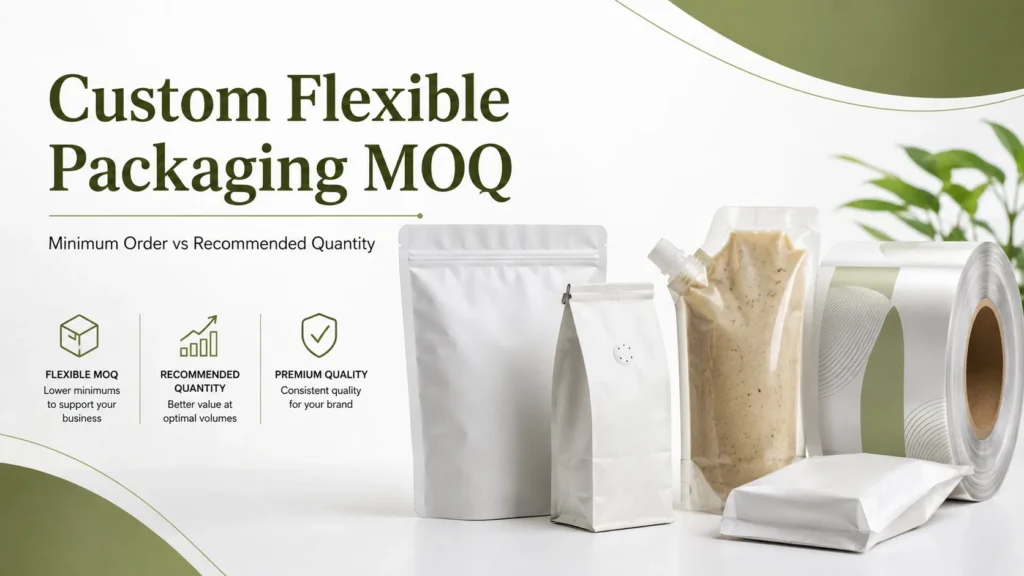
For normal custom pouches, some digital projects may start around 100 pieces, although 1,000 pieces or more is generally recommended for better economics. That general rule cannot be applied mechanically to every pouch: flat-bottom bags, spout pouches, retort pouches and other special products have their own rules.
MOQ depends on more than printing.
Review product-specific exceptions before selecting a trial quantity.
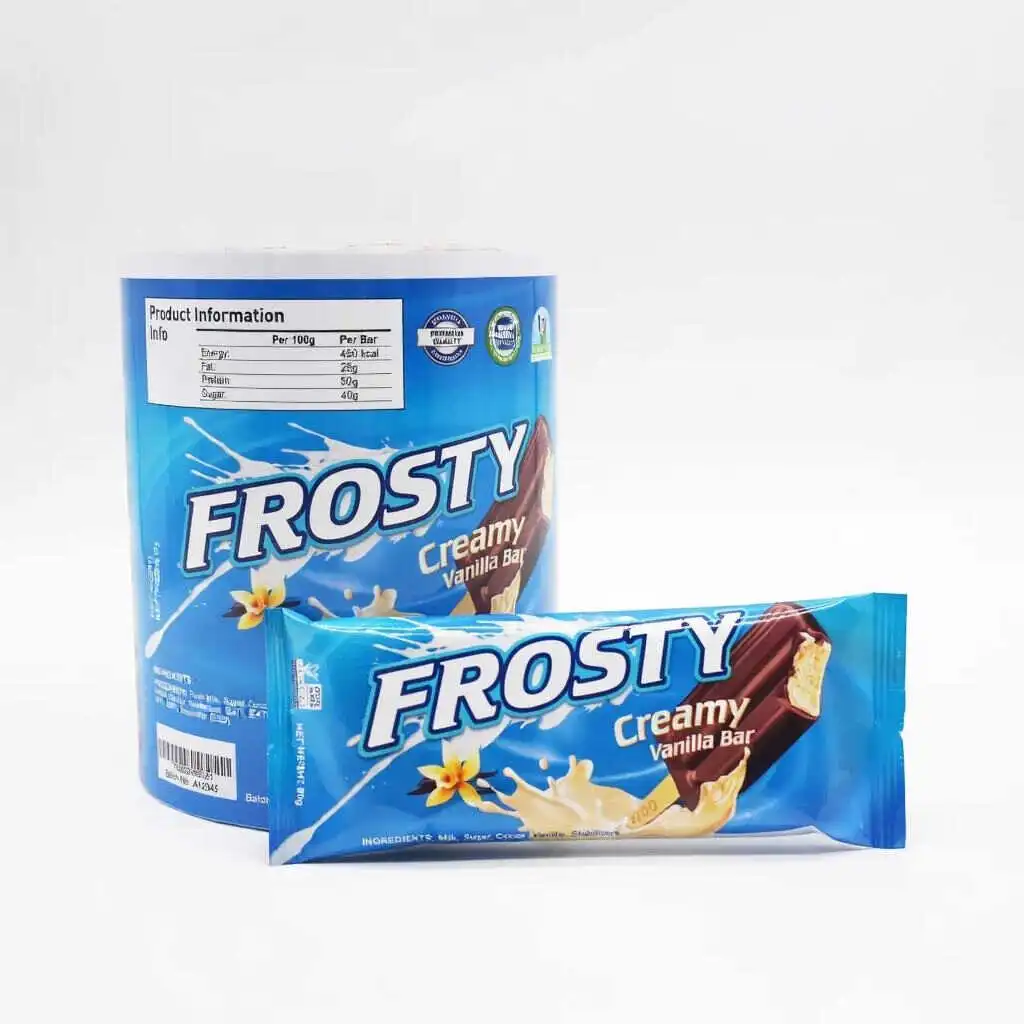
When printed film can improve the packing process
- You already own or plan to use compatible automatic packaging equipment.
- Your line forms, fills and seals the package from film.
- Production volume can support a typical ordinary-rollstock MOQ of around 300 kg.
- Labor, line speed and throughput matter more than buying the smallest piece quantity.
- You can provide machine information and cooperate on testing where needed.
Retort-grade, special high-temperature and special-material rollstock projects require separate confirmation. Do not assume the ordinary 300 kg reference applies to every film.
Information required before a rollstock quotation
A precise rollstock inquiry should connect the packaged product to the machine that will run it. Send as much of the following as possible.
Product and process
- Contents and fill weight
- Powder, liquid or solid
- Filling temperature
- Storage and processing conditions
Film specification
- Web width
- Repeat length
- Material and thickness
- Printing and barrier requirements
Equipment
- Machine make/model or technical data
- Forming and seal configuration
- Filling and sealing conditions
- Any current film sample or specification
Testing may be part of the decision. A machine-test roll and a production roll serve different purposes and can have different economics. Confirm the required test scope before assuming a small roll will cost proportionally less.
Match the structure to the product and the equipment
The material should not be selected from a generic product-name chart. Confirm the contents, target shelf life, need for light protection, product form, filling temperature, storage temperature, retort or freezing conditions, corrosion concerns and sealing method.
Runlong Pack can recommend a structure based on experience, but the final laminate and seal layer must be confirmed for the actual product, packing process and market requirements.
Food-contact material policy
Runlong Pack’s production uses food-grade raw materials and does not use secondary, recycled or scrap material for these structures.
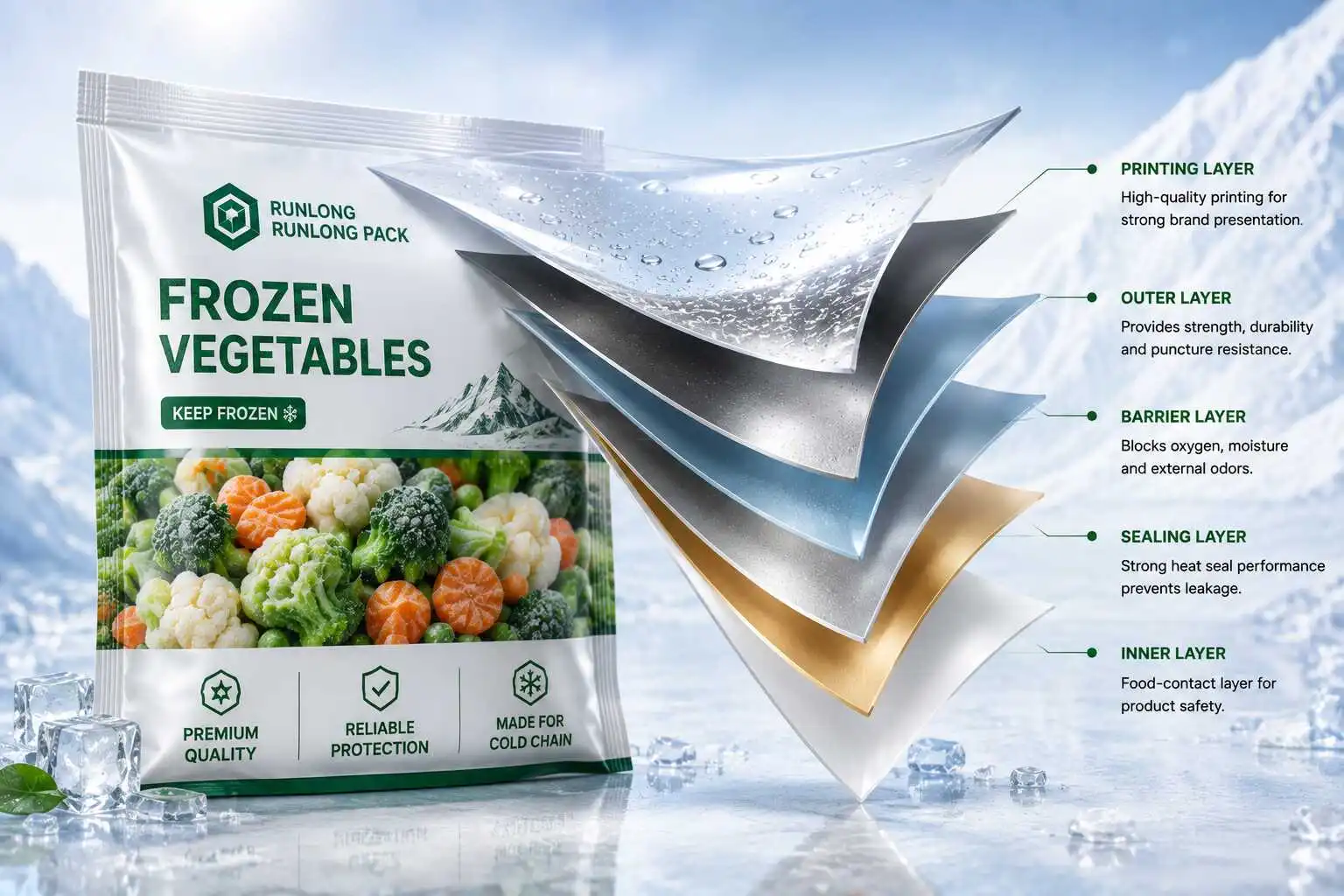
Need to compare PET, PE, PA, VMPET, foil or EVOH?
Use the material guide as a starting point, then confirm the actual application.
Compare total cost, not only the film or pouch price
Packaging cost
Material use, print process, size, features, quantity and SKU count affect the quotation.
Operating cost
Labor, packing speed, downtime, setup, changeovers and waste can outweigh a small unit-price difference.
Project risk
An untested film-machine combination can create sealing, tracking or forming problems. Allow for specification review and testing.
Premade pouch and rollstock questions
Is rollstock always cheaper than premade pouches?
What is Runlong Pack’s rollstock MOQ?
Can I order 100 premade pouches?
What machine details are needed for rollstock?
Can rollstock include high-barrier material?
Which format is better for many SKUs?
Compare your equipment, package and volume before ordering
Send the packaged product, fill weight, target format, size, quantity, SKU count, barrier needs, artwork status and filling-machine details. Runlong Pack can evaluate whether a premade pouch or printed rollstock route is more practical.