


Custom Candy Packaging Rollstock Film
Develop your printed candy film around the product and the packing line. Runlong Pack supplies custom rollstock for compatible heat-sealed candy packs, with the structure, artwork and reel specification reviewed for your equipment—not selected by appearance alone.
Printed film rolls · Single-piece or multipack review · Machine-specific specifications · Digital and gravure evaluation
Send the machine model or approved film drawing, candy type, web width, repeat length, unwind diagram and kilograms per design. We supply packaging materials, not candy or wrapping machinery.
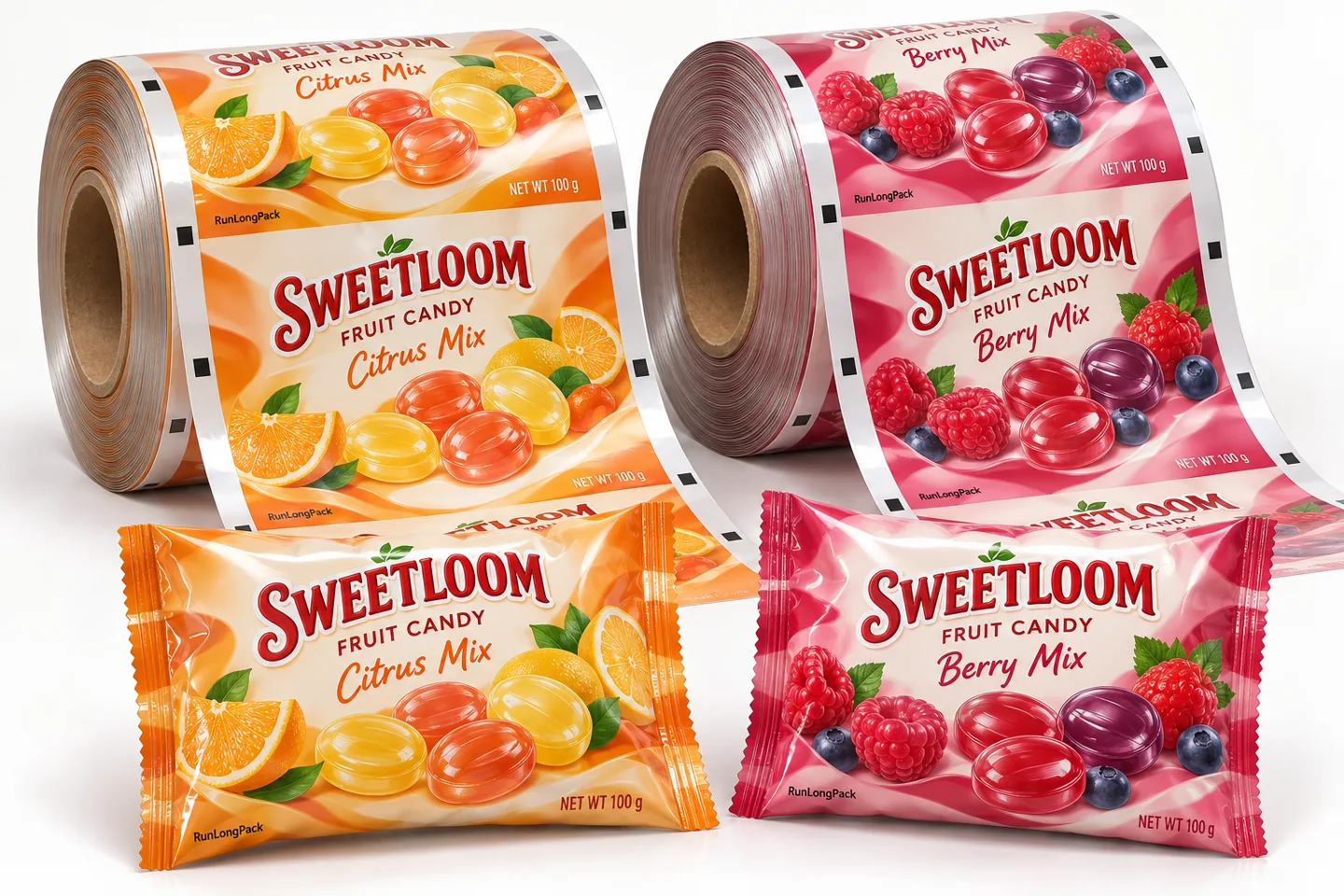
Start with the Candy and the Pack You Need
Single-Piece Heat-Sealed Packs
An individual hard candy or suitable sweet may be wrapped on compatible equipment. Confirm the product’s full dimensions, shape, loading orientation and required finished wrapper; a small repeat drawing is not interchangeable with a multipack layout.
Multi-Piece Candy Packs
For bags containing several loose or individually wrapped sweets, share fill weight, volume and wrapper dimensions. A VFFS or other compatible form-fill-seal line forms the bag from a film web; its configuration determines the finished format.
Hard Candy and Gummy Recipes
Hard candies may need attention to moisture pickup and edge stress. Gummies bring different texture, coating and sticking considerations. Review the actual recipe and product condition rather than using one “candy film” structure for every sweet.
Heat-Seal Film Is Not Automatically Twist-Wrap Film
Heat-Sealed Pillow and Flow-Wrap Packs
Compatible equipment forms a pack and seals the film at the agreed surfaces and end zones. Confirm fin/lap-seal arrangement where relevant and reserve the correct artwork margins. Machine type and structure need coordinated review.
Twist-Wrapped Sweets
Twist wrapping relies on a different wrapping action and material behavior, including how the twisted ends hold. Standard laminated heat-seal rollstock must not be assumed suitable. Any twist-wrap request requires separate technical and supply-feasibility confirmation.
Premade Pouches Are a Separate Route
If your line opens individual empty bags, it needs premade pouches rather than ordinary rollstock. A printed roll does not by itself make zipper stand-up bags; specialized formats depend on equipment and require separate evaluation.
Explore stand-up pouch options or printed barrier pouch formats. A bag name alone does not establish its material specification.
Match Materials to Candy Protection and Line Behavior
Moisture and Product Condition
Share storage humidity, distribution conditions and the intended shelf-life target. Hard-candy tack or gummy texture changes can involve recipe, conditioning and environment as well as film. Validate the finished food and pack together.
Sealing, Friction and Stiffness
The sealant, structure and mechanical behavior need to suit the forming and sealing process. Evaluate tracking, product passage, jaw conditions and clean seals on the actual line. No universal film temperature or speed is promised.
Clear or Opaque Areas
Transparent areas can show the sweets or wrappers, subject to the required protection. Continuous opaque foil or metallization cannot also form a clear window. Approve the material and white-ink/clear artwork zones together.
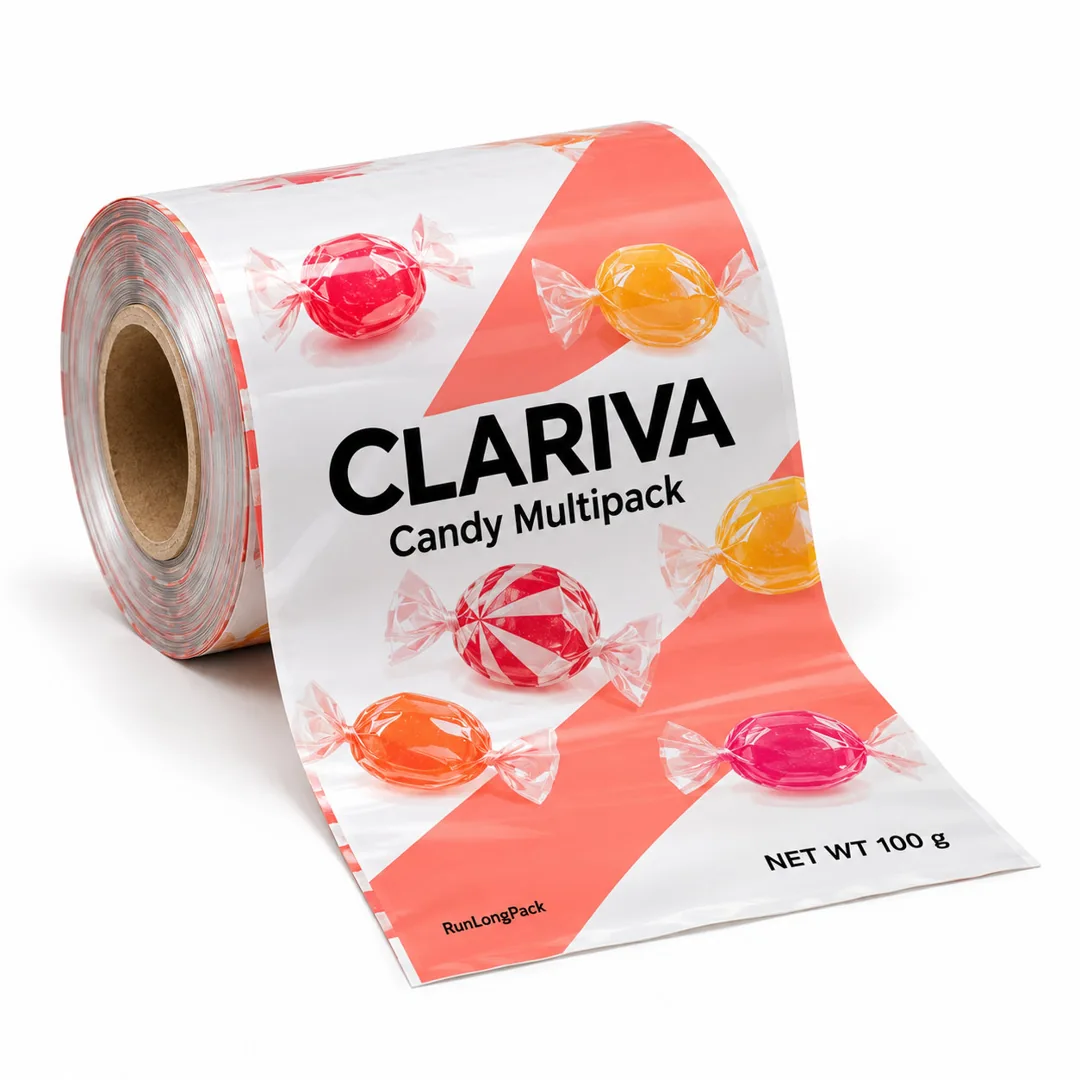
A candy multipack is different from its individual wrappers
This printed film concept is for discussing an outer candy multipack. Candy illustrations showing twist-wrapped sweets on the artwork do not mean this film is itself approved for twist wrapping. The finished pack format, web geometry and material behavior must match the actual machine and product.
Keep Candy and Coatings Out of the Seals
Hard Pieces and Wrapper Tails
Include projecting individual wrappers and any broken or sharp pieces in the trial. Check product clearance, film stress and whether material is caught in the end seals; neither film thickness nor a concept image proves puncture performance.
Gummy Coating and Surface Transfer
Sugar, sour powder, oil or sticky product can affect feeding and seal cleanliness. Assess production-equivalent candy and the real filling arrangement, not only an empty-film sealing test.
Finished-Pack Acceptance
Agree the relevant checks for seal condition, dimensions, print/cut registration and product presentation. Storage and transport evaluation are project-specific; film supply alone does not establish finished-food shelf life.
Agree the Film Drawing and Reel Limits Before Printing
Web Width and Print Repeat
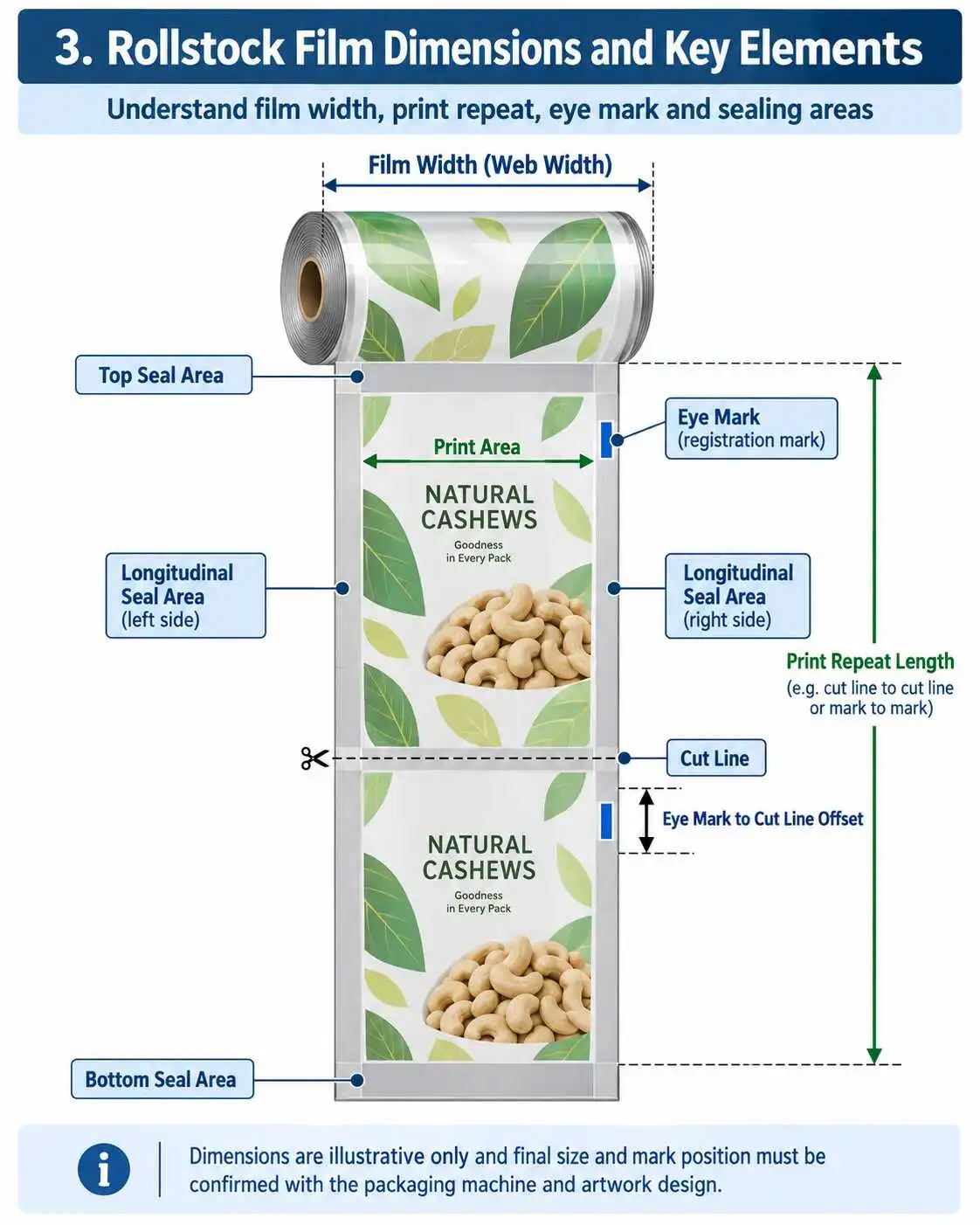
Web width is not simply the finished pouch front width. Confirm the forming arrangement, repeat length, cut position, seals and trim allowances from the equipment supplier’s approved drawing.
Eye Marks and Unwind Diagram
Agree the sensor mark size, color, location and clear detection zone. Provide a drawing showing artwork orientation, printed face and product-contact/sealing side as the reel unwinds; direction numbering conventions can differ.
Core, Diameter and Handling
Specify core inside diameter, maximum roll outside diameter and permitted reel weight. Confirm handling limits and any splice/identification requirements. “A standard roll” is not a sufficient specification for a machine order.
| Confirm | Information to send |
|---|---|
| Candy and format | Hard candy or gummies; coating; single piece or multipack; loose or individually wrapped contents. |
| Equipment | Machine make/model and approved film/finished-pack drawing; heat-seal or another process. |
| Web geometry | Web width, repeat length, trim/cut zones and seal arrangement. |
| Registration and unwind | Eye-mark requirements and a drawing of print orientation, unwind and sealant/contact side. |
| Reel and material | Core inside diameter, maximum outside diameter, reel weight, existing structure and protection target. |
| Artwork and order | Kilograms per design, number of flavors, logo/files, destination and delivery requirement. |
Use our bag size guide as a starting point, then approve the dimensions through a real filling trial.
Prepare Artwork for a Repeating Candy Film Web
Design to the Approved Repeat
Use the machine drawing as the basis for the layout. Keep product names, barcodes and required information away from cut, seal and fold zones, and reserve the agreed registration and date-coding areas.
Flavor Range and Quantities
Send the number of artworks and kilograms per design. Compare printing setup, reel quantities and changeovers across the range. A total volume spread over many designs does not automatically produce the economics of one design.
Visual Mockup vs Production Files
A branded concept helps discuss presentation but is not a machine-approved file or trial result. The customer approves final text, regulatory information, barcode, orientation and print-ready artwork before production.
Trial the Actual Line Before Scaling Up
Prepare a Representative Trial
Confirm the film and machine brief first, then discuss trial-reel availability, quantity, cost and timing. Use production-equivalent candy, the intended equipment and relevant operating conditions.
Review Output and Waste
Record startup material, tracking, registration, seal cleanliness and acceptable finished packs. Reel price alone does not describe cost per saleable pack; setup, changeovers and product losses also matter.
Retain the Approved Specification
Keep the material, dimensions, reel drawing, artwork version and trial observations together. A machine or product change needs review before repeating the film order; do not assume previous settings apply unchanged.
Review our VFFS film compatibility guide and packs-per-roll guide.
For a line that forms the pack from a web, review custom printed rollstock film with the machine supplier’s approved drawing.
Printing, Order Quantities and Production Planning
Compatible Digital Trial Rolls
Some suitable digital trial projects may be evaluated from around 10 kg. Unit packaging cost is high at this scale, and structure and machine compatibility must be reviewed. This is not a universal minimum for every film.
Commercial Film Orders
Normal commercial orders are generally recommended around 300 kg or more. Confirm kilograms per artwork, material and printing route. Pouch piece MOQs must not be applied directly to a film order.
Trial Reel Assessment
Machine trial roll availability, quantity, cost and timing are assessed separately. An ordinary printed pouch sample price does not automatically cover a trial reel. Agree the specification and trial purpose before arranging material.
Eligible digital production typically takes approximately 8–10 working days. New gravure cylinders normally take approximately 7–9 working days, followed by approximately 15–20 days of production after cylinders are completed. Timing starts after final artwork/specification approval and required payment; shipping is additional. Confirm the project schedule and any trial stage separately.
Review the MOQ guide and digital versus gravure printing comparison.
Manufacturing Support from Runlong Pack
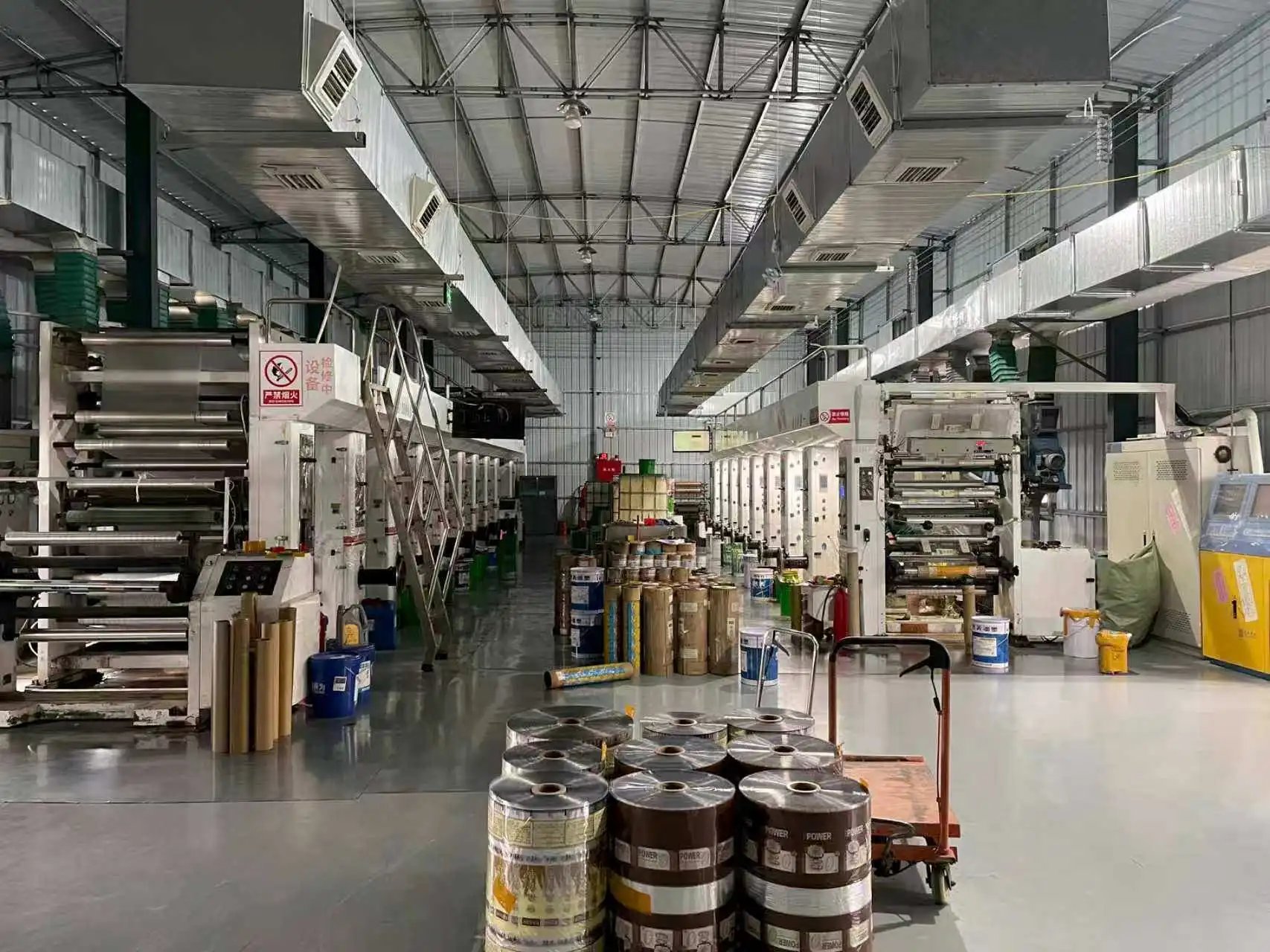
Runlong Pack is the brand of Shantou Runlong Packaging Co., Ltd., a custom flexible packaging manufacturer in Shantou, China. We support food brands, manufacturers, importers and other B2B buyers with printed premade pouches and rollstock, from specification review and artwork preparation to printing, conversion and delivery coordination.
Our food-grade raw-material policy applies across flexible packaging production. We review available food-contact documentation against the proposed material and intended use. Project quality checks may include dimensions, printing, lamination and seals, with further checks selected for the agreed package.
Keep the approved artwork, dimensions, material and filling-trial record together for repeat orders. Discuss required arrival dates early, allowing for production and transport rather than assuming an immediate reorder.
Learn about our manufacturing capabilities and food-contact documentation and testing.
We use food-grade raw materials for all flexible packaging production and do not use recycled, secondary or scrap materials.
Custom Candy Packaging Rollstock Film FAQ
Is candy rollstock film the same as empty candy bags?
No. Rollstock is a continuous film web that compatible equipment forms into packs. Premade bags arrive as individual empty pouches for opening, filling and sealing. Tell us how material enters your line before selecting the supply format.
Can one film be used for both twist wrapping and heat sealing?
Do not assume so. Twist wrapping and heat sealing have different process and material requirements. This page focuses on compatible heat-sealed film projects; twist-wrap feasibility and supply must be confirmed separately.
Can you print film for individual sweets and multipacks?
Suitable heat-sealed projects can be evaluated for either, but machine function, candy dimensions, finished format, repeat and sealing layout differ. Provide the approved equipment drawing and actual product details.
What MOQ applies to printed candy film?
Some compatible digital trial projects may be evaluated from around 10 kg, with high unit packaging cost. Normal commercial orders are generally recommended around 300 kg or more. These are conditional references, not universal minimums for every structure or artwork.
What should I send for a film quotation?
Send machine details, candy/pack type, web width, repeat, eye mark, unwind drawing, core/diameter/weight limits, material needs, artwork and kilograms per design. Include destination and desired delivery timing.
Can I get a trial reel before a commercial order?
A suitable trial reel can be discussed after specification and compatibility review. Quantity, cost, availability and timing are confirmed separately. Ordinary custom pouch sample prices do not automatically cover a trial roll.
Will the film run at my machine’s advertised speed?
Not automatically. Actual performance depends on the equipment configuration, film, product and operating conditions. Validate with an agreed trial; this page does not guarantee line output or a universal sealing-temperature range.
Can a printed film guarantee candy shelf life?
No. Shelf life depends on the recipe, product condition, process, seals, material performance and storage/distribution conditions. Validate the finished food in the intended package rather than relying on a film description alone.