

A first packaging order involves more than placing a logo on a bag. Start with your product, the way it will be filled and the decisions a sample needs to support.
1. Start with the product and selling conditions
Describe the product, portion size, target country, shelf-life target and expected storage and transport. A fine powder, crunchy snack and liquid refill have different filling and package requirements. Ask your supplier to review relevant barrier, sealing and handling needs; visual design alone cannot establish protection or food-contact suitability.
List all variants and their expected volumes. If a co-packer fills the pouches, obtain their opening, closure and machine requirements before approving a bag.
2. Compare pouch formats and test the size
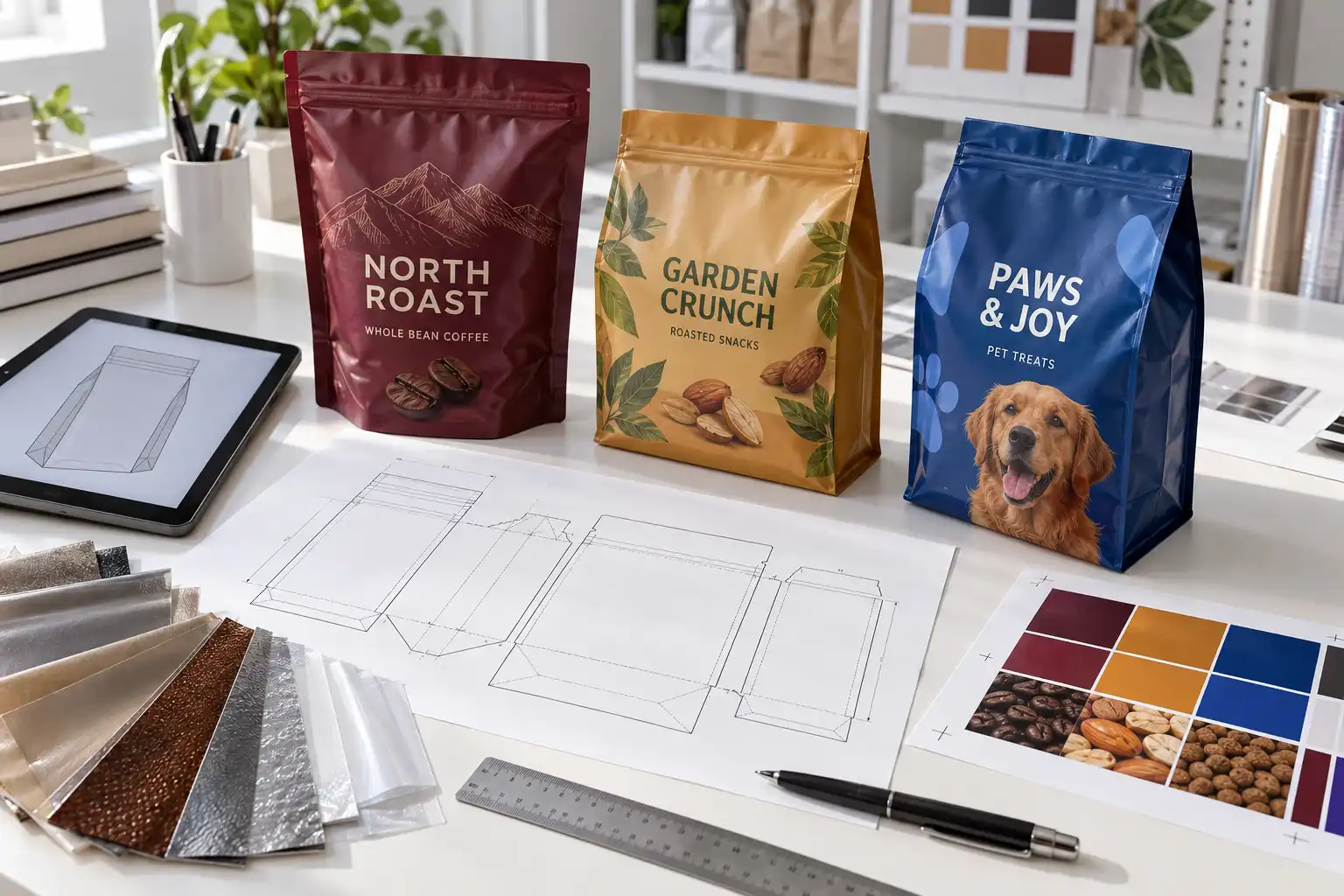
A resealable stand-up pouch can be appropriate for repeat-use products; a flat sachet can suit portions; a flat-bottom pouch provides a different shelf format. A corner-spout pouch requires review of liquid, spout and filling conditions. The same format is not automatically suitable for every product.
We can suggest starting dimensions, but confirm usable width, gusset, headspace, zipper clearance and the real filled volume with a practical filling test. Your approved dimensions remain the order specification. See the packaging size guide.
3. Prepare design and artwork
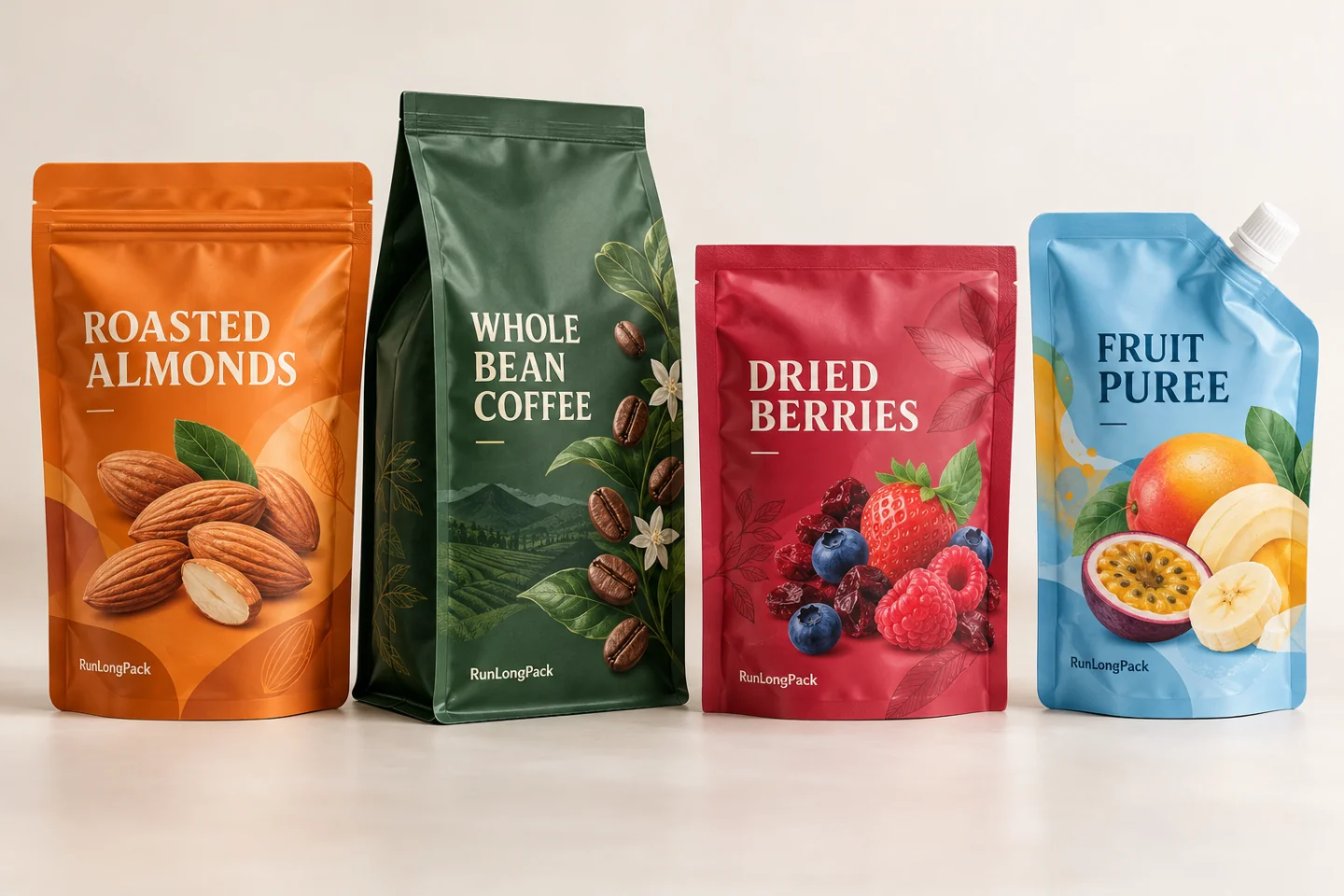
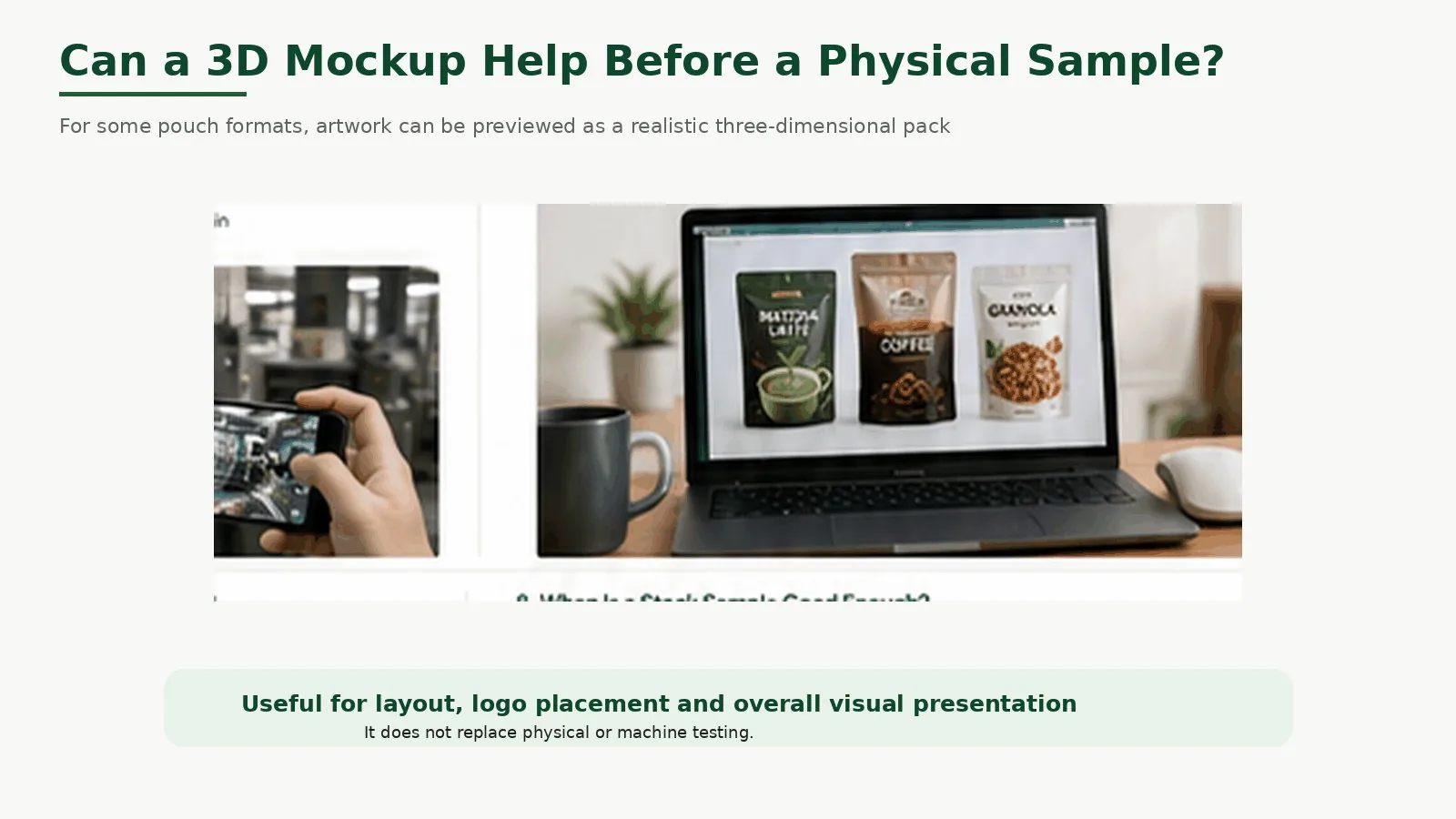
Send an editable design if available. If you have only a logo, JPG, PNG or an AI-generated concept, share it for assessment and discuss basic layout assistance. A static mockup can help review presentation but is not a finished production file or proof of performance.
Review dieline, trim, safe areas, mandatory market information, spelling, barcode and the final quantity per design. The brand must approve the final content and dimensions. Use the artwork checklist before release.
Share your product, specifications and quantity per design for a project-specific review.
4. Plan samples, MOQ and budget
A stock reference sample shows an existing format or material; an eligible custom printed sample helps review a specific artwork and pouch. They do not answer the same questions. Specify whether you need to review print appearance, opening, dimensions, filling or a particular test before ordering.
Ordinary printed samples are typically USD 50–70 each, while an eight-side-seal custom printed sample is generally USD 110. Special UV or foil effects are separately priced for that format. Shipping and final project quote apply. Product-specific exceptions apply, including Moi Moi proof pouches. See the sample cost guide.
5. Confirm production and delivery
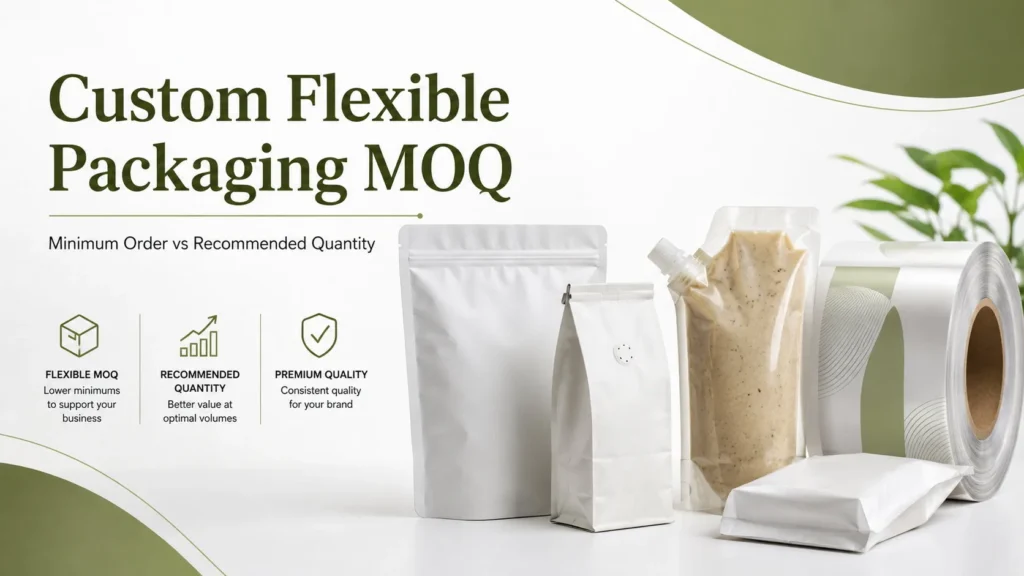
Ask for a quote that clearly separates quantity per design, pouch specification, printing, sample or cylinder costs where applicable, destination and freight terms. Some standard digital pouches can be assessed from around 100 pieces; 1,000–3,000 can offer better value. Product and dimension exceptions apply.
For eligible digital production, typical production time is about 8–10 working days after final specification/artwork approval and receipt of required payment; delivery is additional. For gravure, cylinders and production are separate stages. Agree on the approval standard and schedule before launch.
Frequently asked questions
What information do I need for my first quote?
Provide your product, desired pouch format and dimensions, fill weight or volume, material or barrier needs, print design, quantity per SKU, filling method and destination.
Can I order packaging before my design is finished?
You can discuss your logo and design ideas first. Final print-ready artwork and project specifications need to be approved before production.
Should I order a sample before a bulk run?
A suitable sample can help check selected aspects such as appearance, dimensions or handling. Confirm exactly which properties the sample is meant to test.
Is 100 pieces the minimum for every pouch?
No. Around 100 pieces may be evaluated for eligible standard digital pouches; material, format, size and product-specific exceptions apply.
Can a picture show whether my pouch will fit?
A mockup helps with layout but cannot prove fill volume or sealing. Check physical dimensions and test a suitable pouch with the actual product.
Let’s review your packaging project
Tell us about your product, pouch format, target quantity and artwork. We can help you review the next practical step.