

A printed film proof and a finished pouch sample answer different questions. Choose the proof around the decision you need to make before approving your packaging.
Four review options at a glance
| Type | Useful for | Does not automatically confirm |
|---|---|---|
| Screen mockup or artwork proof | Copy, placement and general layout | Actual color, opacity, material or fit |
| Printed film proof | Visual print and finish direction on the specified film | Finished pouch shape, zipper, fit or machinery |
| Finished pouch sample | Selected format, appearance and dimensions | Shelf life, barrier or final machine performance |
| Machine-test roll | Film handling and sealing trials on a specified line | Every property of later production without an agreed scope |
When is a printed film proof useful?
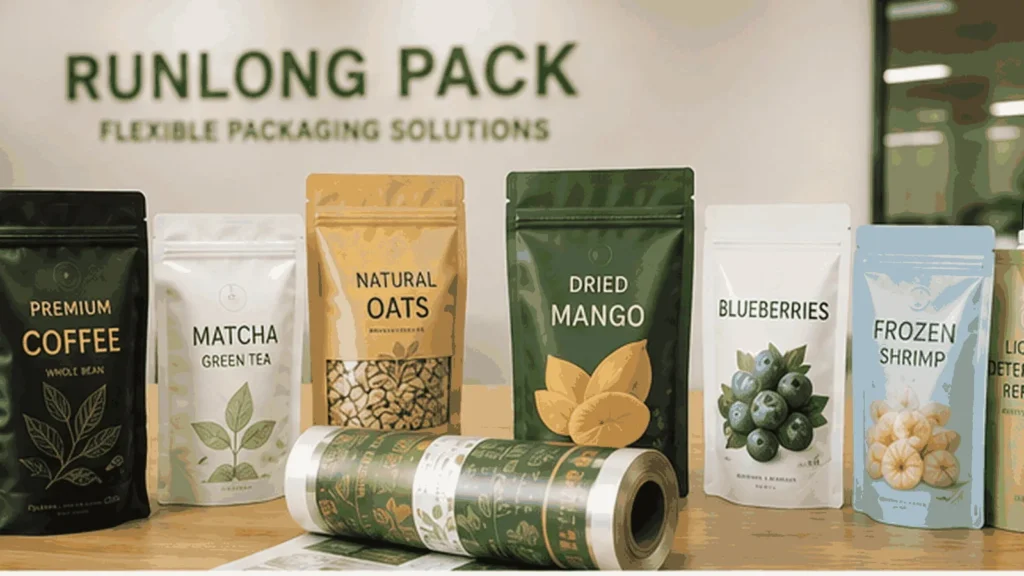
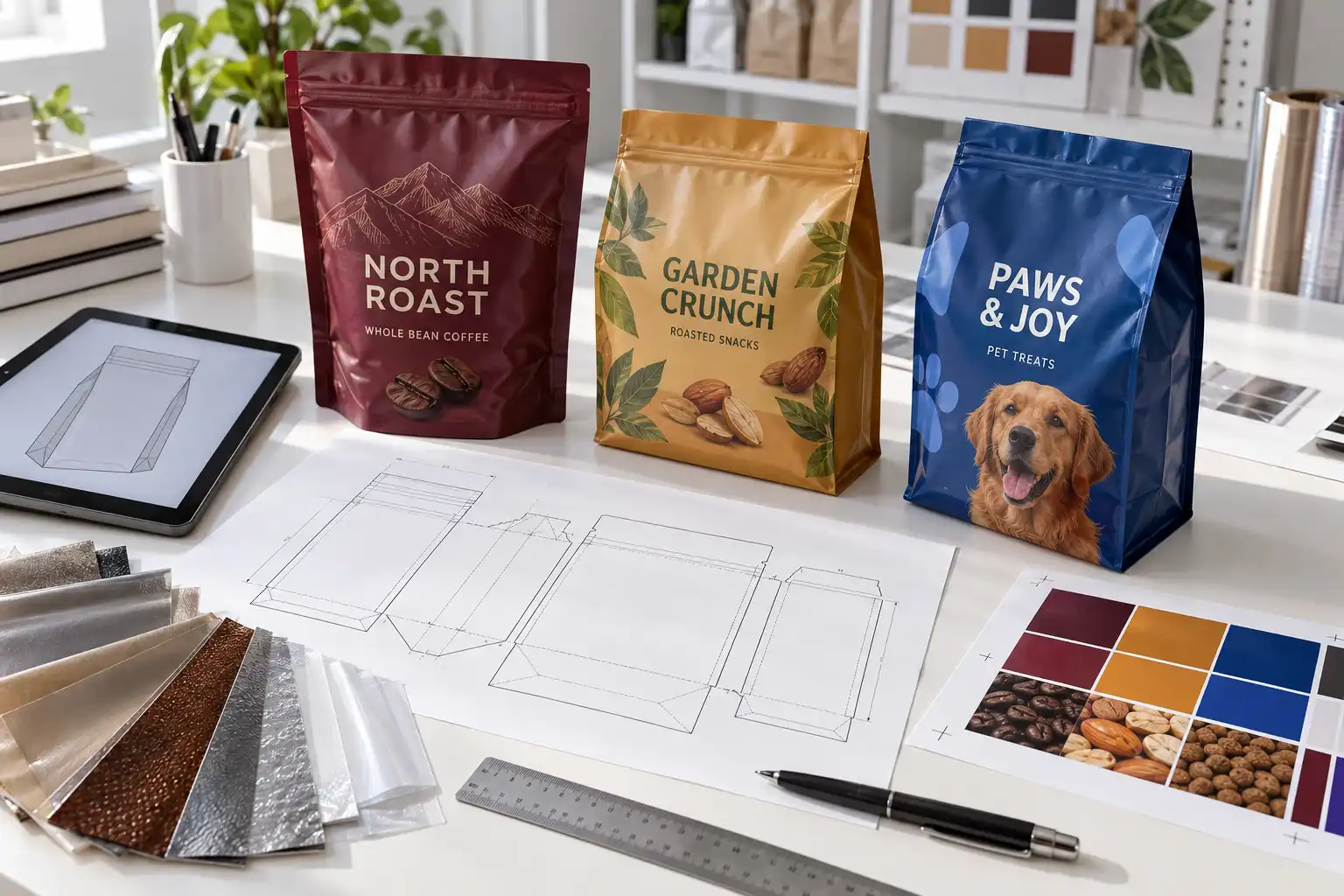
A physical printed film piece can help discuss artwork scale, color direction, white ink, transparency or a selected surface effect. Confirm whether the proof uses the proposed material, print route, lamination and finish; the answer determines how representative it is.
A film piece is not a filled or converted pouch. It cannot establish gusset capacity, zipper alignment, finished dimensions, actual filling or sealing performance on its own.
When should you request a finished pouch?
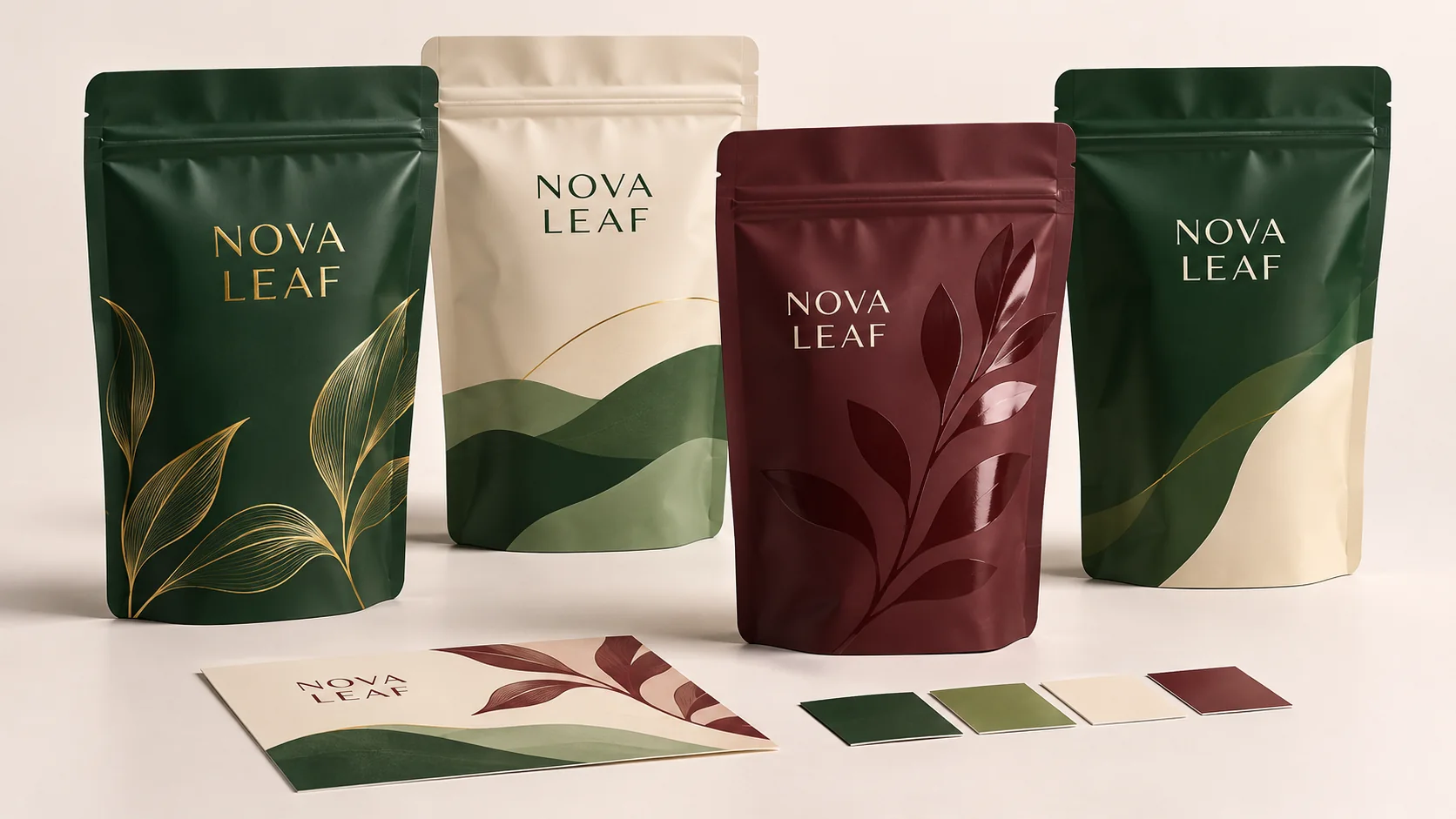
If size, opening, closure, shelf presentation or practical filling matters, ask whether a suitable physical pouch sample is available for your format. A reference pouch and a custom printed pouch have different purposes. Confirm which materials, structure, dimensions and tests the supplier will include.
Not all formats support a custom printed proof. Moi Moi cooking pouch projects, for example, do not use the normal custom printed proof route; existing reference samples may be available for review.
Share your product, specifications and quantity per design for a project-specific review.
What about a machine-test roll?
A roll used on your actual machine is separate from a small visual film proof. Give the supplier the web width, repeat, core and roll diameters, unwind, registration marks, equipment type and material requirements. Agree on trial quantity and whether your machine operator or co-packer can run the test.
Compatible digital trial films around 10 kg can sometimes be evaluated, with comparatively high unit costs. That amount is not a standard minimum for all materials or machinery.
Agree on cost, scope and final approval
Before ordering, ask what is included, whether it reflects the production material and print method, the number of pieces, delivery charges, and whether any test is included. Typical custom printed pouch samples for standard eligible formats are USD 50–70; an eight-side-seal sample is generally USD 110, with added UV or foil quoted separately. Shipping and project exceptions apply.
If production uses a different print route, color and finish may vary. Agree on the final reference and acceptance criteria before production. See the sample cost guide and the artwork checklist.
Frequently asked questions
Can a printed film proof confirm my pouch size?
No. A film proof helps with selected appearance questions. Ask for a suitable physical pouch and test the actual filled product when size and fit matter.
Does a finished pouch sample prove shelf life?
No. A sample does not by itself establish shelf life or barrier performance; these depend on the product, material, storage and appropriate assessment.
Is a printed film proof the same as a machine-test roll?
No. The quantity, format and purpose are different. A machine trial requires film that matches the machine specification and agreed trial conditions.
Will a digital proof exactly match a gravure production run?
Not automatically. Different print methods and materials can affect appearance; agree on a production reference and acceptable result in advance.
Are film proofs always free?
No universal free-sample rule applies. Ask what proof is available for your project and confirm any artwork, sample and delivery charges.
Let’s review your packaging project
Tell us about your product, pouch format, target quantity and artwork. We can help you review the next practical step.