

How should you evaluate a custom packaging manufacturer in China?
Compare suppliers on the same packaging specification. Confirm whether the manufacturer can support the product, pouch format, dimensions, materials, printing method, practical quantity, approval process and quality requirements. A low unit price is not useful when the supplier is evaluating a different structure, delivery term or production route.
Choosing a custom packaging manufacturer in China should involve more than comparing unit prices. A supplier may offer an attractive quotation but still be a poor fit if its production method, material capability, minimum order quantity, sampling process or quality-control workflow does not match your project.
For brand owners, importers, wholesalers and food packaging buyers, the better question is not simply “Which supplier is cheapest?” It is:
Which manufacturer can consistently produce the packaging specification I need, at a practical quantity, with a clear approval process and predictable repeat-order quality?
This guide explains the main points buyers should evaluate before selecting a packaging supplier in China and shows how to compare manufacturers on the same production requirements.
Key Takeaway
A reliable packaging manufacturer should be able to explain why it recommends a material, printing method, MOQ, sample route or production structure. Clear technical reasoning is often more useful than a low headline price.
Start With Your Packaging Application
A packaging supplier cannot recommend the right solution from bag dimensions alone.
Before comparing manufacturers, define the application as clearly as possible:
- what product will be packed;
- expected net weight or fill volume;
- bag or rollstock format;
- required dimensions;
- barrier requirements;
- filling method;
- storage conditions;
- required shelf life;
- number of SKUs;
- quantity per SKU;
- zipper, valve, spout, window or other features;
- target market and food-contact requirements where applicable.
A supplier that asks these questions before quoting is usually in a better position to recommend a realistic production specification.
If you do not yet know the exact film structure, that is normal. A competent flexible packaging manufacturer should be able to discuss material options based on your product and performance requirements.
Check Whether the Manufacturer Has the Right Production Capability
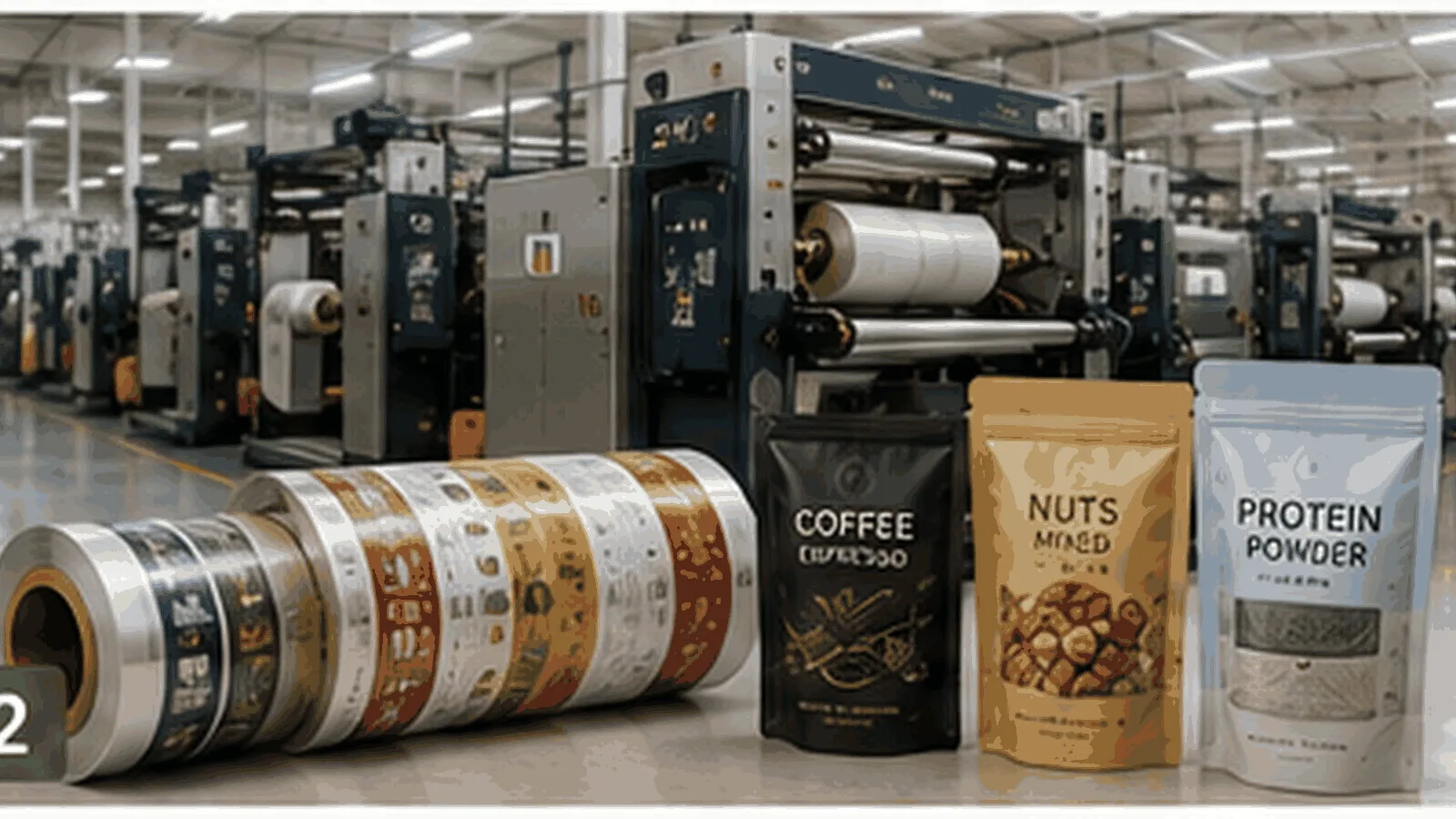
Not every flexible packaging supplier is equally strong in every product type.
A manufacturer may be experienced in premade stand-up pouches but less suitable for printed rollstock. Another supplier may be competitive in large gravure orders but inefficient for a multi-SKU startup project that requires smaller quantities.
When evaluating capability, ask whether the supplier regularly handles the packaging format you need, such as:
- stand-up pouches;
- flat-bottom bags;
- side-gusset bags;
- spout pouches;
- three-side-seal sachets;
- back-seal bags;
- printed rollstock film;
- coffee packaging with degassing valves;
- high-barrier food packaging;
- application-specific cooking pouches.
The important point is not whether the supplier can theoretically make the product once. The better question is whether the required structure fits its normal production process.
Ask about the complete production route
A reliable supplier should be able to explain which production stages are involved, for example:
- artwork preparation;
- printing;
- lamination or multilayer film production;
- curing where required;
- slitting;
- pouch converting;
- accessory installation;
- inspection;
- packing.
This helps buyers understand where quality differences and production lead times can occur.
Evaluate Factory Fit, Not Just the Supplier Label
Buyers often focus on whether a company describes itself as a factory, manufacturer or trading company. That distinction can matter, but it should not be the only test.
For a custom packaging project, what matters more is whether the supplier has control over the important production steps and can coordinate the full project reliably.
Useful questions include:
- Which production steps are completed in-house?
- Which steps, if any, are handled by long-term partner factories?
- Who is responsible for final quality approval?
- Who controls artwork versions and production specifications?
- Who handles a quality issue if one occurs?
A manufacturer should be transparent about what it produces directly and what is supported by specialized partners rather than giving vague answers.
Check Material and Barrier Knowledge
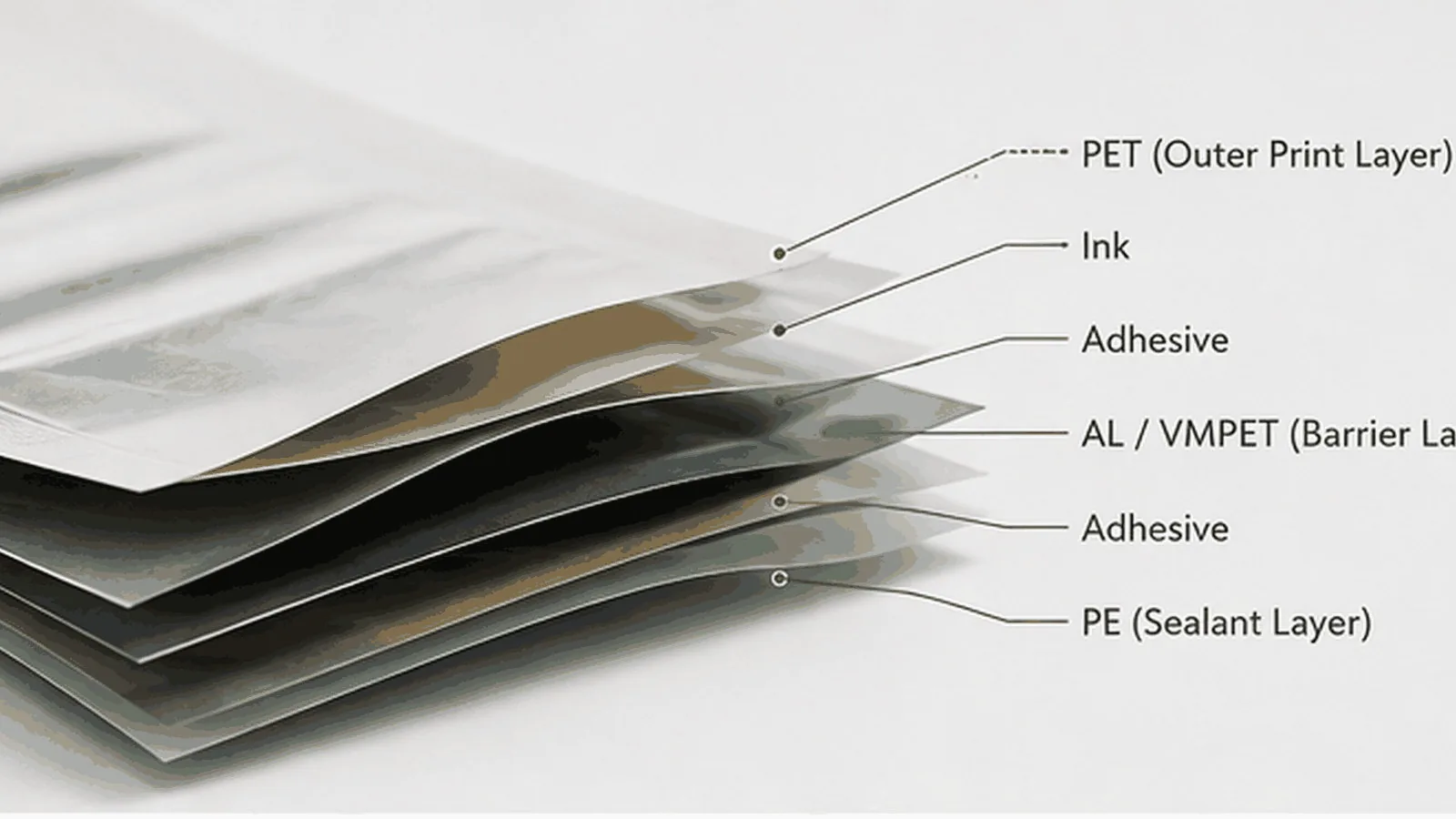
A low quotation can become expensive if the material is unsuitable for the packed product.
Flexible packaging structures can use materials such as PET, PE, PA, CPP, VMPET, aluminum foil and EVOH-based barrier layers. Each material serves different functions, and the correct laminate depends on the actual application.
A knowledgeable supplier should discuss factors such as:
- oxygen barrier;
- moisture barrier;
- light protection;
- puncture resistance;
- sealability;
- heat resistance;
- transparency;
- product compatibility.
If you want a deeper explanation of common structures, see our guide to flexible packaging material structures.
Compliance should be considered separately from appearance
A package that looks correct is not automatically suitable for every food-contact market or application.
Ask what documentation can be supported for the actual material structure being quoted and confirm the requirements for your target market.
Runlong Pack explains this process further on its packaging compliance page.
Evaluate Printing Method and MOQ Recommendations
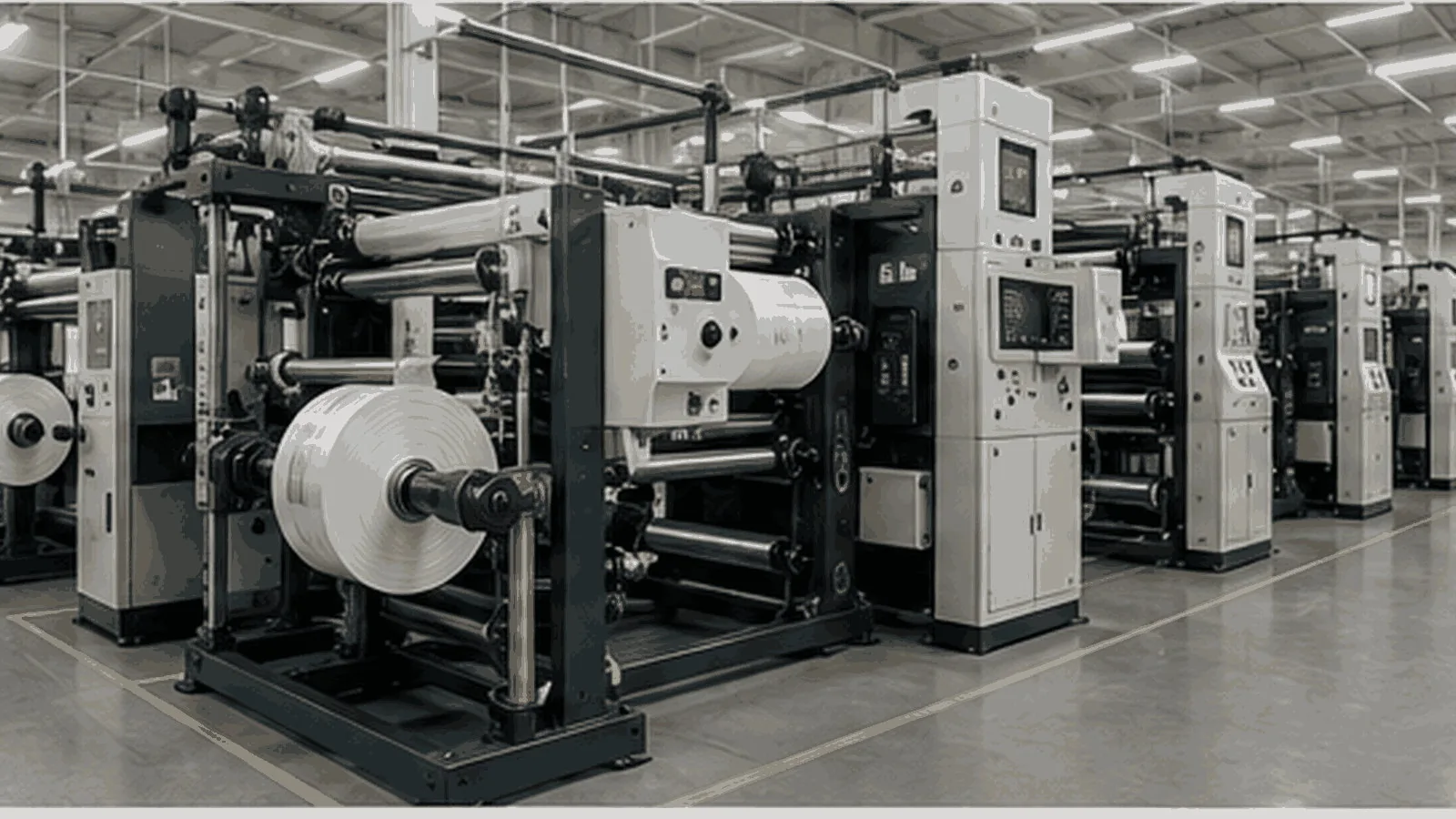
A supplier’s MOQ should make sense for the printing method, material usage, bag size and SKU structure.
Be cautious when a manufacturer gives one universal MOQ for every project.
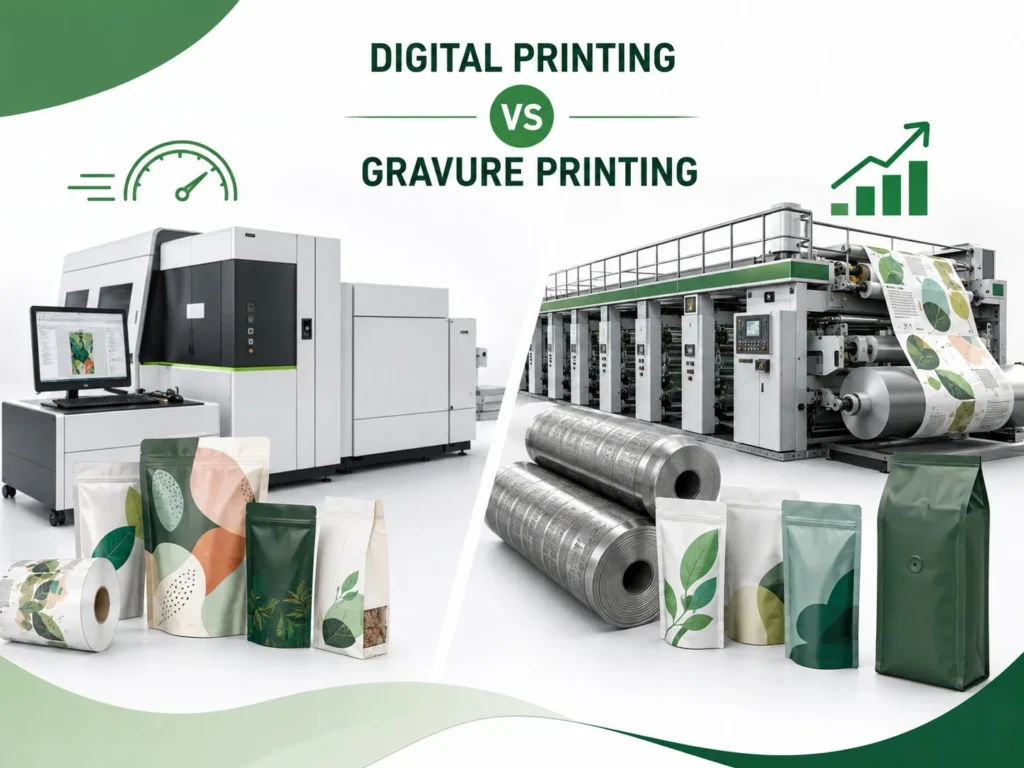
Digital printing
For suitable Runlong Pack projects, digital printing can start from around 100 pieces and is generally more practical around 1,000–3,000 pieces for better cost efficiency.
Digital printing does not require gravure cylinders and can be useful for smaller quantities, new launches, multiple SKUs and artwork changes.
Gravure printing
For suitable products such as coffee bags, gravure production can start around 10,000 pieces, while approximately 40,000 pieces or more often offers stronger production economics.
Gravure requires printing cylinders. Runlong Pack’s typical historical cylinder reference is approximately USD 30–80 per color.
For some projects around 5,000–8,000 pieces, compare digital and gravure rather than assuming digital remains more economical. This is not a universal crossover point: bag type, size, material, SKU count, artwork and repeat-order plans all affect the assessment.
For a more detailed comparison, see digital printing vs gravure printing for flexible packaging.
MOQ should be explained, not simply stated
A good supplier should also explain whether MOQ is being driven by:
- printing setup;
- minimum film usage;
- raw-material purchasing;
- bag dimensions;
- special materials;
- number of SKUs;
- production efficiency.
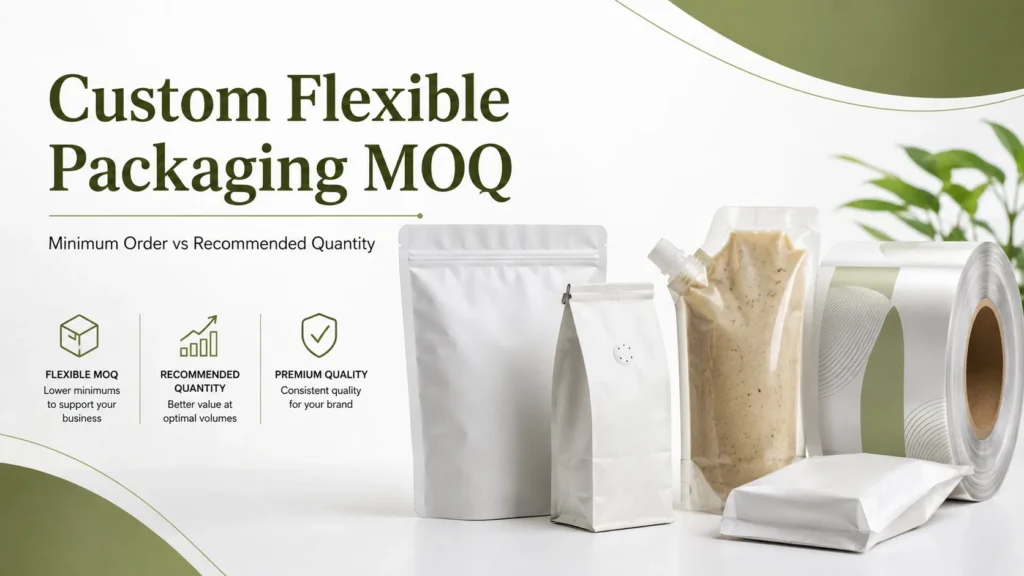
Our separate custom flexible packaging MOQ guide explains why minimum quantities can change significantly from one project to another.
Compare Quotations on the Same Specification
Packaging quotations should never be compared only by unit price.
Before deciding that one supplier is cheaper, confirm that both quotations use the same:
- finished dimensions;
- material structure;
- film thickness;
- printing method;
- number of colors;
- quantity;
- quantity per SKU;
- zipper, valve, spout or other accessories;
- surface finish;
- cylinder or setup charges;
- packing method;
- delivery terms;
- freight inclusion or exclusion.
For example, a lower quote may use a different barrier layer, lower thickness, different quantity structure or exclude setup charges.
That does not automatically mean the lower quotation is wrong. It means the buyer needs to understand what is actually being compared.
For a detailed breakdown of the major cost drivers, see custom flexible packaging cost.
Review the Sampling and Approval Process
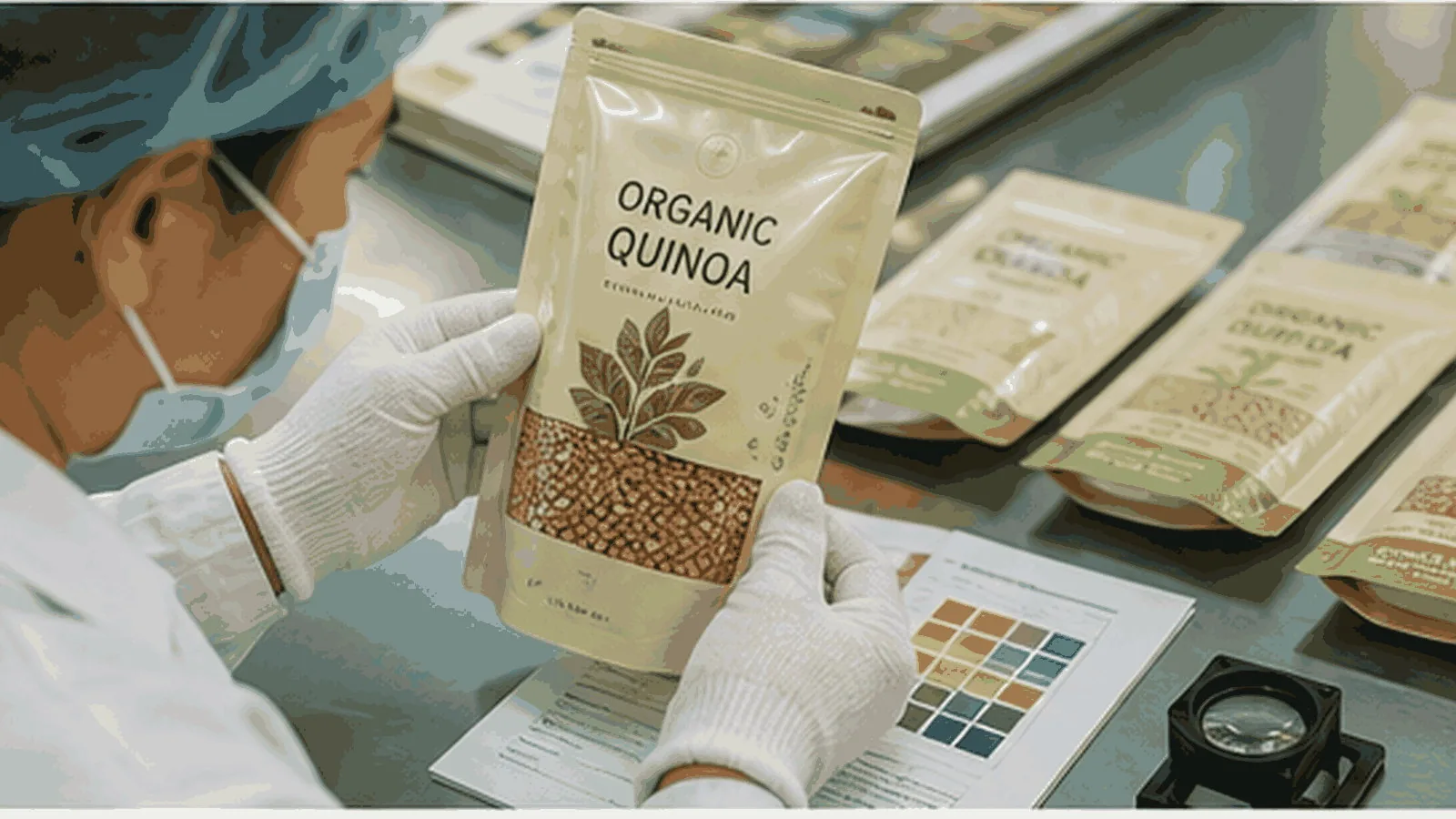
A reliable manufacturer should not automatically recommend the most expensive sample option.
The correct approval method depends on what the buyer needs to verify.
| Buyer Needs to Confirm | Possible Approval Method |
|---|---|
| General pouch construction or material feel | Available stock sample |
| Artwork appearance | 3D mockup for suitable pouch formats |
| Print layout or general print effect | Printed film reference where suitable |
| Gravure production color | Production video plus approved physical color reference |
| Complete custom pouch | Finished custom sample |
| Packing-machine compatibility | Machine-test roll or suitable machine test |
When suitable stock samples are available, Runlong Pack can provide them free of charge while the buyer pays shipping.
For customers who have already placed a bulk order, one custom sample may be provided free for an eligible project. For an eligible gravure bulk order of more than 20,000 pieces per design, the sample fee may be fully refunded according to the confirmed project terms. Confirm the arrangement before sample production.
For more detail, see our guide to custom packaging sample cost before mass production.
Understand Quality Control Before Mass Production
Quality control should begin before finished bags are packed into cartons.
Ask the supplier how it controls the project at different stages.
Depending on the packaging type, checks may include:
- artwork version confirmation;
- print appearance and registration;
- material identification;
- lamination appearance;
- pouch dimensions;
- seal appearance;
- zipper or valve installation;
- leak or airtightness testing where relevant;
- finished-bag appearance;
- packing quantity.
The exact test method should match the packaging application rather than relying on a generic checklist.
Ask how deviations are handled
One useful supplier-evaluation question is:
What happens if production does not match the approved specification?
A reliable manufacturer should be able to explain how the issue is identified, documented and resolved before shipment.
Evaluate Communication and Technical Response Quality
Packaging projects involve more communication than many buyers expect.
Artwork, dimensions, material structure, print colors, accessories, tolerances, samples and shipping details may all need confirmation before production.
Good communication does not mean simply replying quickly. It means giving answers that reduce ambiguity.
Look for a supplier that:
- asks for missing specifications;
- does not guess when information is incomplete;
- clearly separates recommendations from confirmed production specifications;
- explains alternatives and their trade-offs;
- records artwork or specification changes;
- raises risks before production rather than after production.
A supplier that agrees to every request without discussing technical limits can create more risk than one that asks careful questions.
Reduce Risk on the First Order
New buyers do not need to remove every possible risk before placing an order, but the approval path should match the size and complexity of the project.
Useful first-order risk controls can include:
- checking available stock samples;
- confirming final artwork before production;
- agreeing the material structure in writing;
- confirming dimensions and accessories;
- agreeing the color reference method;
- using a suitable custom sample when necessary;
- testing rollstock on the buyer’s machine when machine compatibility is critical;
- confirming payment and delivery terms before production.
Runlong Pack’s standard process is deposit before production and balance before shipment. For new customers who prefer additional transaction protection, Alibaba Trade Assurance may also be available depending on the project.
The best first order is not necessarily the smallest possible order. It is the smallest practical order that still allows the supplier to use an appropriate production process.
Questions to Ask a Custom Packaging Manufacturer in China
Before choosing a supplier, ask questions that require specific answers rather than general promises.
- What production method do you recommend for my quantity and why?
- What material structure do you recommend for my product and why?
- What is the MOQ per design or SKU?
- Are cylinder, setup or tooling charges included in the quotation?
- Which accessories are included?
- What sample or approval method do you recommend before mass production?
- How will print color be approved?
- What quality checks are relevant to this package?
- Which production steps are controlled directly by your team?
- What information do you need before giving a final quotation?
- What is included and excluded from the quoted delivery term?
- How are repeat orders handled if the artwork does not change?
The quality of the answers can reveal more than a generic factory presentation.
Packaging Supplier Evaluation Scorecard
| Evaluation Area | What a Strong Supplier Should Demonstrate |
|---|---|
| Application understanding | Asks about product, filling, storage, barrier and market requirements |
| Production capability | Explains a realistic production route for the required pouch or rollstock |
| Material knowledge | Explains why a structure is suitable rather than quoting material names only |
| MOQ logic | Explains how printing, material usage, size and SKU count affect minimum quantity |
| Quotation clarity | Clearly lists specification, quantity, setup charges and delivery terms |
| Sampling | Recommends the least complicated approval method that addresses the actual risk |
| Quality control | Uses checks appropriate to the actual packaging application |
| Communication | Identifies missing information and records specification changes clearly |
| Repeat-order support | Can explain how artwork, cylinders and approved specifications are controlled for reorders |
Common Red Flags When Comparing Packaging Suppliers
No single warning sign proves that a supplier is unreliable, but several together should make a buyer investigate further.
- One material is recommended for almost every product.
- The MOQ is identical regardless of size, printing method or SKU count.
- The supplier gives a final price before understanding the specification.
- Important quotation exclusions are unclear.
- The supplier cannot explain why a printing method was selected.
- Sample recommendations do not match what the buyer actually needs to test.
- Artwork and specification changes are handled informally without clear confirmation.
- Claims about compliance are made without clarifying the actual structure or target market.
- The supplier avoids discussing how quality issues are handled.
Professional sourcing is less about finding a supplier that promises everything and more about finding one that gives clear, technically consistent answers.
FAQ
How do I find a reliable custom packaging manufacturer in China?
Start by defining your application and comparing suppliers on production capability, material knowledge, printing method, MOQ logic, sampling, quality control, quotation clarity and communication. Avoid choosing only by the lowest unit price.
Should I only buy directly from a packaging factory?
Direct production capability can be valuable, but the more important question is whether the supplier controls the critical production steps and takes responsibility for the complete project. Some manufacturers also use specialized long-term partners for supporting processes.
What information should I send before asking for a packaging quote?
Provide the packed product, bag type, dimensions, quantity, number of SKUs, required features, artwork if available and shipping destination. If the material structure is unknown, explain the required barrier or performance instead.
How can I compare packaging quotations fairly?
Confirm that the suppliers are quoting the same dimensions, material structure, thickness, printing method, quantity per SKU, accessories, setup charges and delivery terms before comparing unit prices.
How can I check a packaging manufacturer’s quality before mass production?
Ask about stock samples, custom samples, printed film approval, color-reference methods, machine testing where necessary and the quality checks used for the actual pouch or rollstock specification.
Is the lowest MOQ always better?
No. A very low MOQ can be useful for testing a new product, but the production method may have a much higher unit cost. Compare the quantity you actually need with the total project cost and the expected repeat-order plan.
Can I start a quotation without knowing the exact packaging material?
Yes. A buyer can begin with the product, bag format, size, quantity, required performance and market. The supplier can then discuss appropriate material options before the final specification is confirmed.
Before You Choose a Packaging Supplier, Let Us Review the Project Structure
If you already have a pouch sample, artwork, current specification or another supplier’s quotation, you can send the project details to Runlong Pack for review.
We can help evaluate whether the proposed packaging structure makes sense for your product, quantity and number of SKUs, and discuss practical alternatives for printing method, material, MOQ, sampling and rollstock or premade pouch production.
You do not need to send confidential competitor information. The specification, quantity and packaging requirements are enough to begin a useful comparison.