

Artwork approval, material selection, printing method, SKU count, converting and shipping all shape the real schedule.
Quick Answer
Custom flexible packaging lead time is the production period after the commercial specification and production artwork are approved and the required payment has been received—not the total time from first inquiry to delivery.
Plan approval, sampling when needed, production and international shipping as separate stages.
Quick Facts
Not sure which printing method fits your order?
Send your pouch size, quantity and SKU count for a practical digital or gravure recommendation.
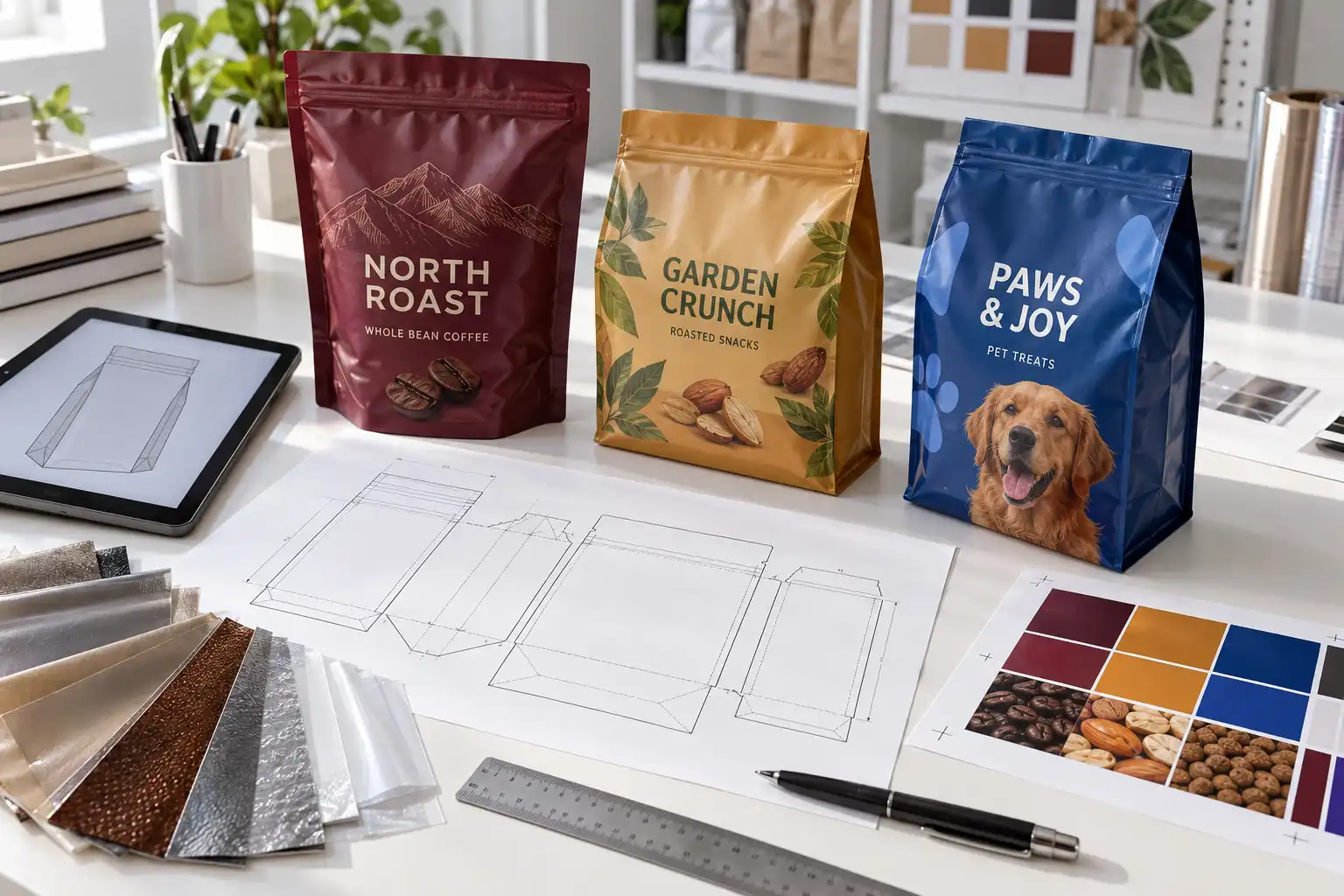
What does packaging lead time include?
Production lead time normally starts after the commercial specification and production artwork are approved, and after the required payment has been received. It should not automatically be treated as the complete period from first quotation to finished delivery.
A project may still need format and size confirmation, material selection, artwork review, proof approval, printing, lamination, curing, pouch making or slitting, inspection, packing and international transport.
Digital vs gravure printing lead time
The printing method is one of the clearest schedule drivers. Compare the methods using the same final size, structure, quantity and SKU split—not production days alone.
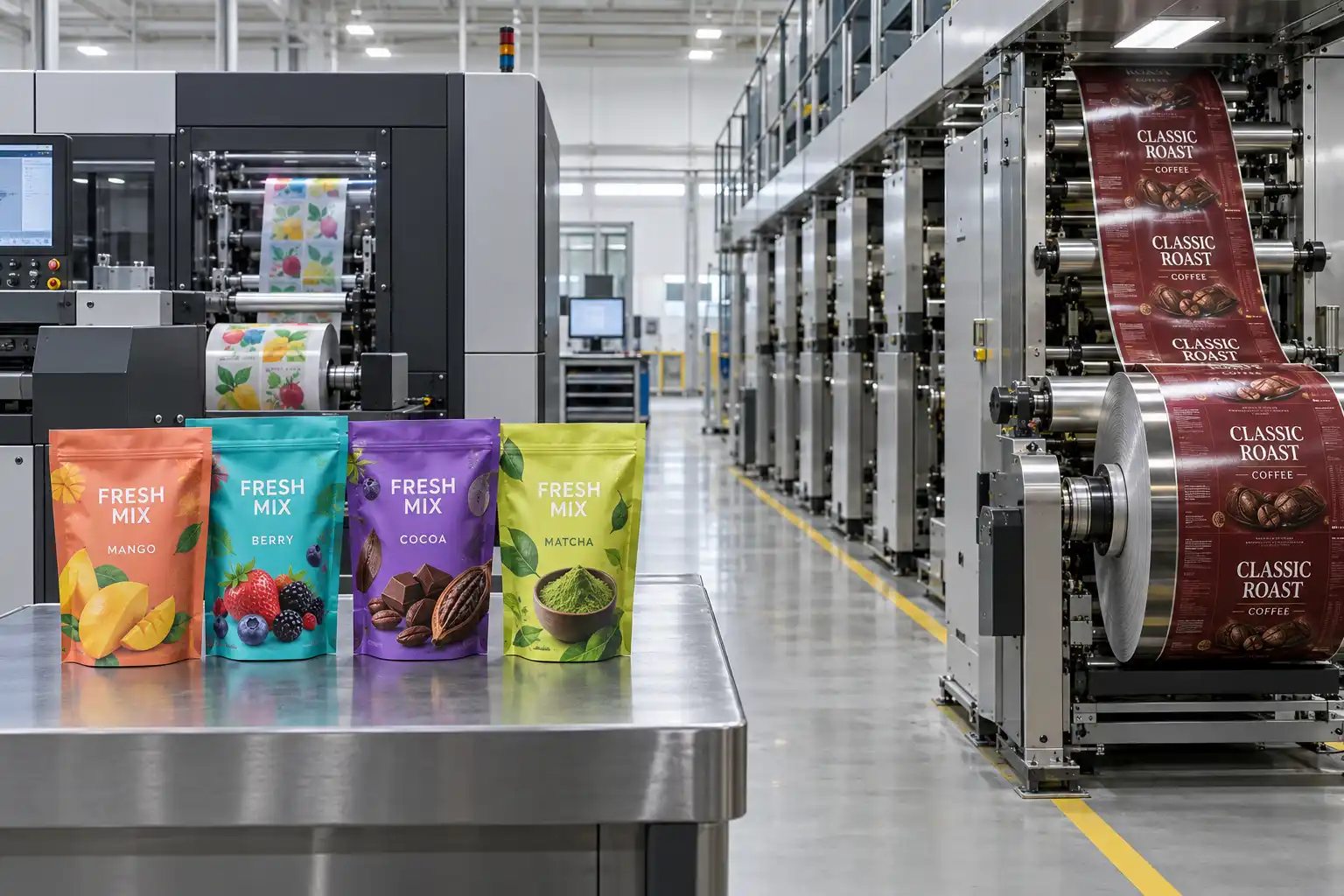
Choose digital for smaller or changing runs
Digital printing typically has no plate or cylinder fee. Production usually takes approximately 8–10 working days after artwork, specifications and production details are confirmed. MOQ can start from approximately 100 pieces, although approximately 1,000–3,000 pieces is often a more practical range.
15–20 days for production
Choose gravure for larger, stable production
Gravure cylinder preparation typically takes approximately 7–9 working days. After the cylinders are completed, production typically takes approximately 15–20 working days. Gravure generally starts from approximately 10,000 pieces, with stronger economics often available around 40,000 pieces and above.
| Planning factor | Digital printing | Gravure printing |
|---|---|---|
| Typical production lead time | Approximately 8–10 working days after artwork, specifications and production details are confirmed | Cylinder preparation: approximately 7–9 working days. After the cylinders are completed, production: approximately 15–20 working days |
| General MOQ guidance | From approximately 100 pieces; 1,000–3,000 often more practical | Generally from approximately 10,000 pieces |
| Setup | No plate or cylinder fee | Cylinders required; approximately USD 30–80 per color when applicable |
| Often suited to | Smaller orders, launches and multiple lower-volume SKUs | Larger, stable repeat production; economics often stronger at approximately 40,000+ pieces |
These are approximate Runlong Pack planning references, not guaranteed delivery dates. Read the detailed digital vs gravure printing guide before choosing only on speed.
Check the printing method and MOQ for your quantity
Share the size, order quantity and quantity per design so the production route can be evaluated using the actual project.
What must be confirmed before production?
Format and dimensions
Stand-up pouches, flat bottom bags, side gusset bags, three-side-seal pouches and rollstock use different converting steps. Confirm width, height, gusset, seal areas and feature positions.
Material and product needs
Match the laminate, thickness and barrier to the product, target shelf life, filling method and distribution conditions.
Artwork and dieline
Production artwork must match the confirmed dieline. Editable vector files, outlined fonts and adequate linked-image resolution make review more reliable.
Quantity by SKU
Total quantity and quantity per design both matter. One design at 10,000 pieces is not the same production plan as five designs sharing 10,000 pieces.
Proof or sample method
Stock samples, custom samples, 3D mockups, color approvals and machine-test rolls answer different questions and can add separate pre-production time. Available methods depend on the packaging format, printing method and project requirements.
One approval contact
Consolidate buyer feedback before returning corrections. Revisions after approval can require a new price, specification check and schedule.
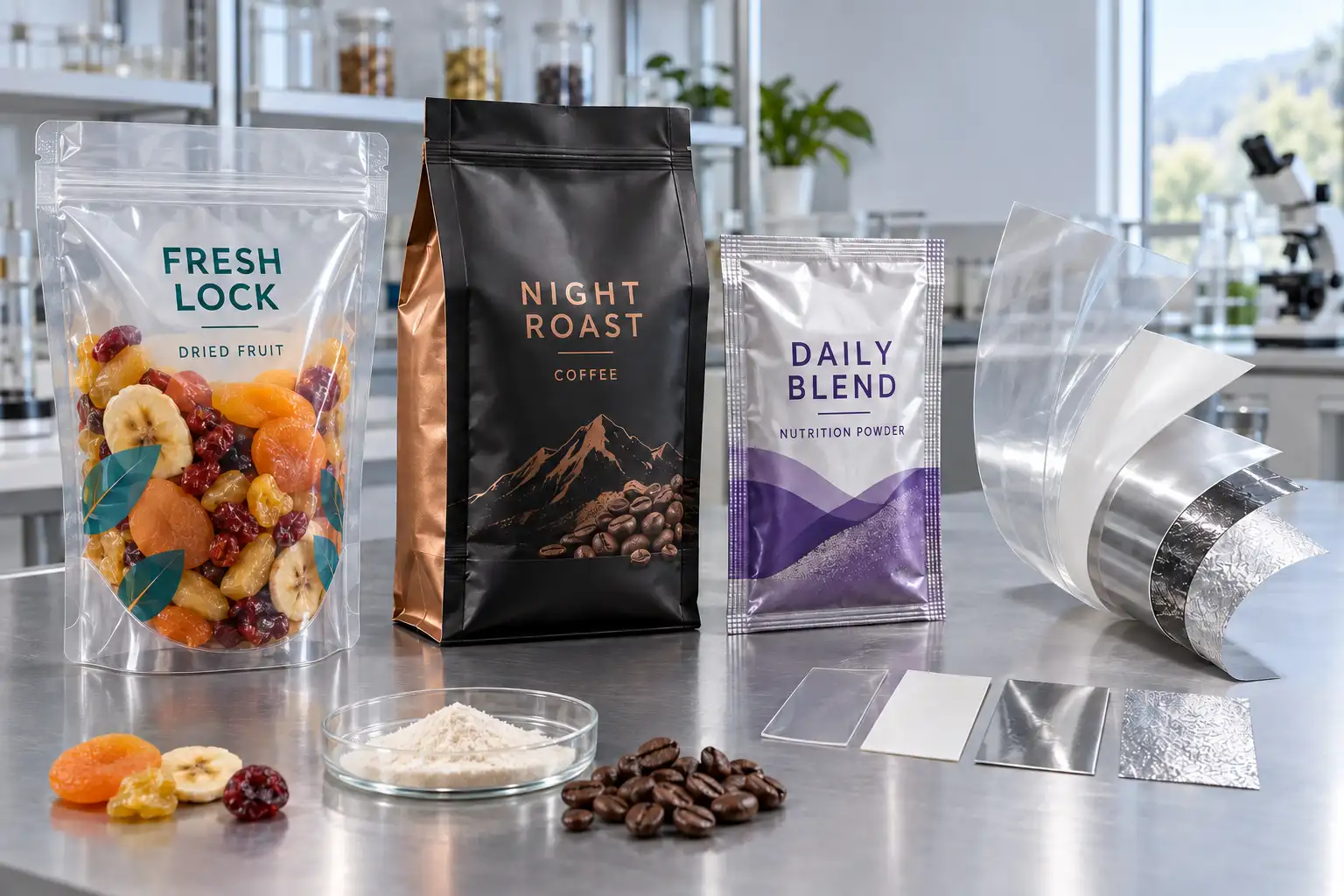
Barrier choices can change the schedule
A general laminate, metallized barrier, aluminum foil laminate or transparent high-barrier structure may involve different film availability and preparation. Special finishes, valves, handles or windows also need compatibility checks.
- Moisture and oxygen barrier: confirm the product-protection target.
- Light barrier: evaluate metallized or foil structures when needed.
- Puncture resistance: match the structure to the product and handling.
- Heat sealing: confirm the filling process and sealing conditions.
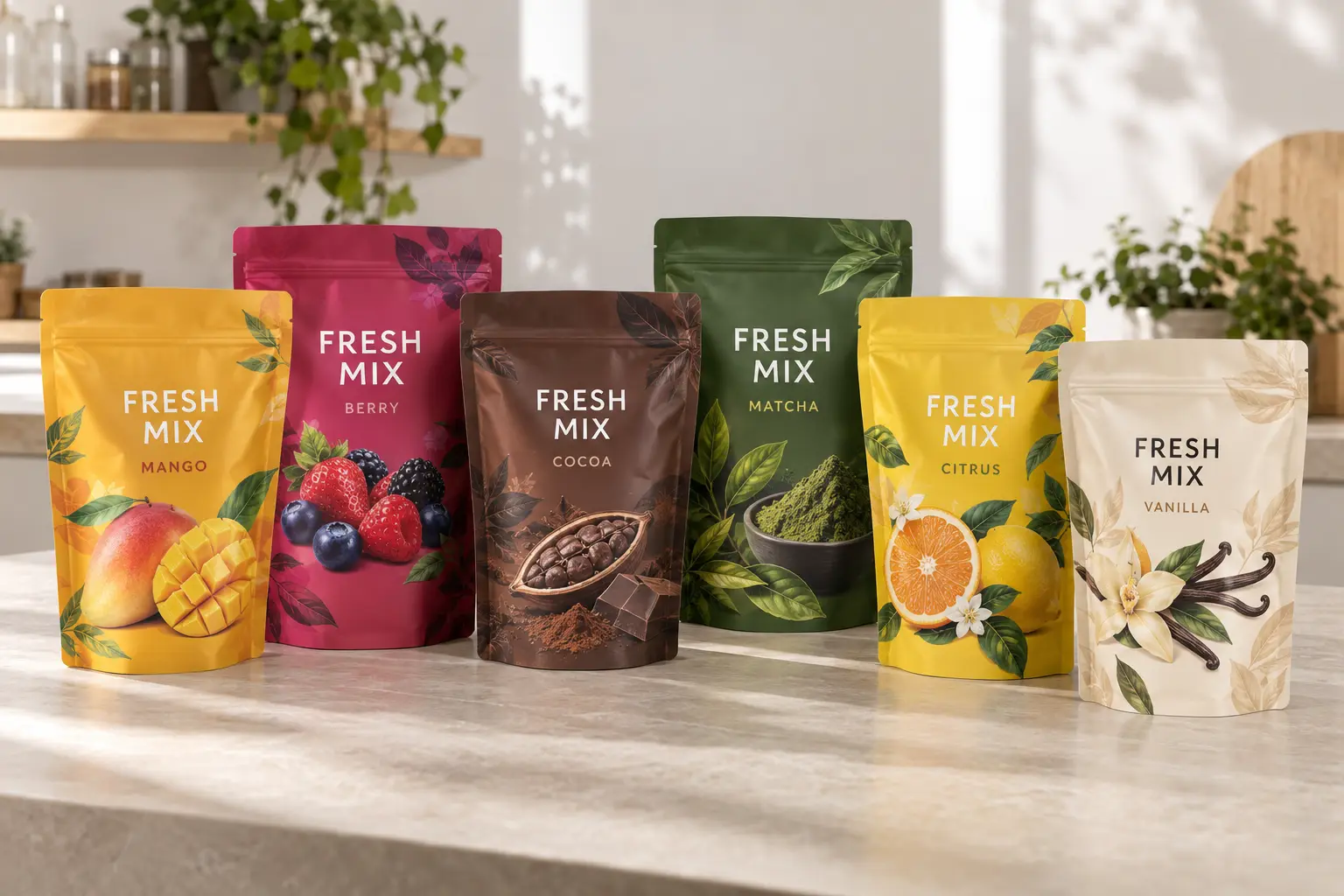
Count every design before choosing a method
Each design must be checked, approved and assigned a quantity. A late SKU split can change printing economics, material use and scheduling even when the total order quantity stays the same.
- Send one final SKU list with quantities per design.
- Use the confirmed dieline for every artwork file.
- Identify shared and variable elements across the range.
- Confirm barcode, date-code and regulatory text zones.
For quantity planning, use the custom flexible packaging MOQ guide .
Confirm the material, barrier and SKU requirements
Send the product, target shelf life, filling method, pouch size and SKU list before the production schedule is confirmed.
What can extend the project timeline?
Sampling and approvals
A custom sample, color approval or machine-test roll creates a separate stage. Select the proof needed for the actual project risk. Availability depends on the product, printing method and production process.
Special components
Uncommon structures, finishes, valves, handles and windows may affect material availability or converting arrangements.
Artwork revisions
Changes to text, dimensions, barcode placement, colors or SKU details can move an approved job back into review.
Production conditions
Machine availability, current load, material preparation and job complexity affect the final confirmed completion date.
Shipping method
Production completion is not delivery. Destination, cartons, volume, transport method and customs arrangements need separate planning.
Specification changes
A material, size, feature, artwork, quantity or SKU change after approval may affect both cost and schedule.
Separate decisions, production and delivery
This sequence is a planning framework rather than a guaranteed calendar. It makes responsibility and approval points visible before production starts.
Send a complete scheduling brief
The more complete the specification is, the easier it is to distinguish an early estimate from a production schedule that can be confirmed.
- Product and packaging application
- Target fill weight or volume
- Pouch format or rollstock use
- Dimensions, gusset and seal areas
- Material or barrier requirement
- Zipper, valve, window, handle or finish
- Total quantity and quantity per SKU
- Artwork, dieline and proof status
- Destination and required delivery date
Flexible packaging lead time questions
What is Runlong Pack’s typical custom flexible packaging lead time?
Digital printing production typically takes approximately 8–10 working days after artwork, specifications and production details are confirmed. For gravure printing, cylinder preparation typically takes approximately 7–9 working days. After the cylinders are completed, production typically takes approximately 15–20 working days. The final schedule depends on the approved specification, quantity, materials, features, artwork and current production conditions.
Does lead time start when I request a quotation?
No. Production lead time normally begins after the commercial specification and production artwork are approved, the required payment has been received, and the job is ready to enter the schedule. Quotation, sampling and artwork revisions should be planned separately.
Is digital printing always faster than gravure printing?
Digital printing has a shorter typical production range and does not require cylinders, but the correct choice still depends on quantity, SKU count, artwork and repeat-order plans. A faster method is not automatically the lowest-cost method for every order.
Can multiple SKUs increase production time?
They can affect preparation and scheduling because each design must be checked and the quantity per SKU must be confirmed. Submit a final SKU list and approved artwork set before production.
Does the quoted production time include international shipping?
Not automatically. Production and shipping should be treated as separate stages unless the quotation clearly states otherwise. Transit time depends on the destination, order volume and selected shipping method.
How early should I order packaging for a product launch?
Work backward from the required delivery date and include time for specifications, artwork, any required samples, production and shipping. Add contingency for approvals or changes instead of using only the typical production-day range.
Get a schedule based on your actual packaging project
Send the information below so Runlong Pack can evaluate the production method, approval steps and timing for the real specification.
- Product
- Fill weight
- Format and size
- Material needs
- Quantity per SKU
- Artwork status
- Destination
- Required date