

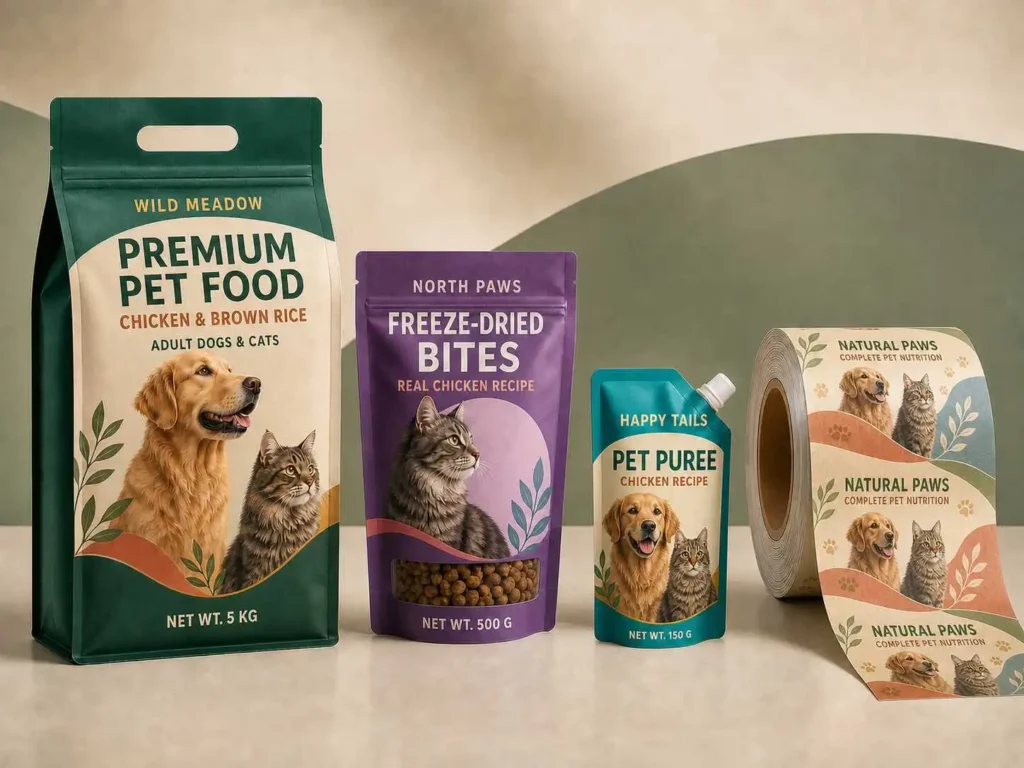
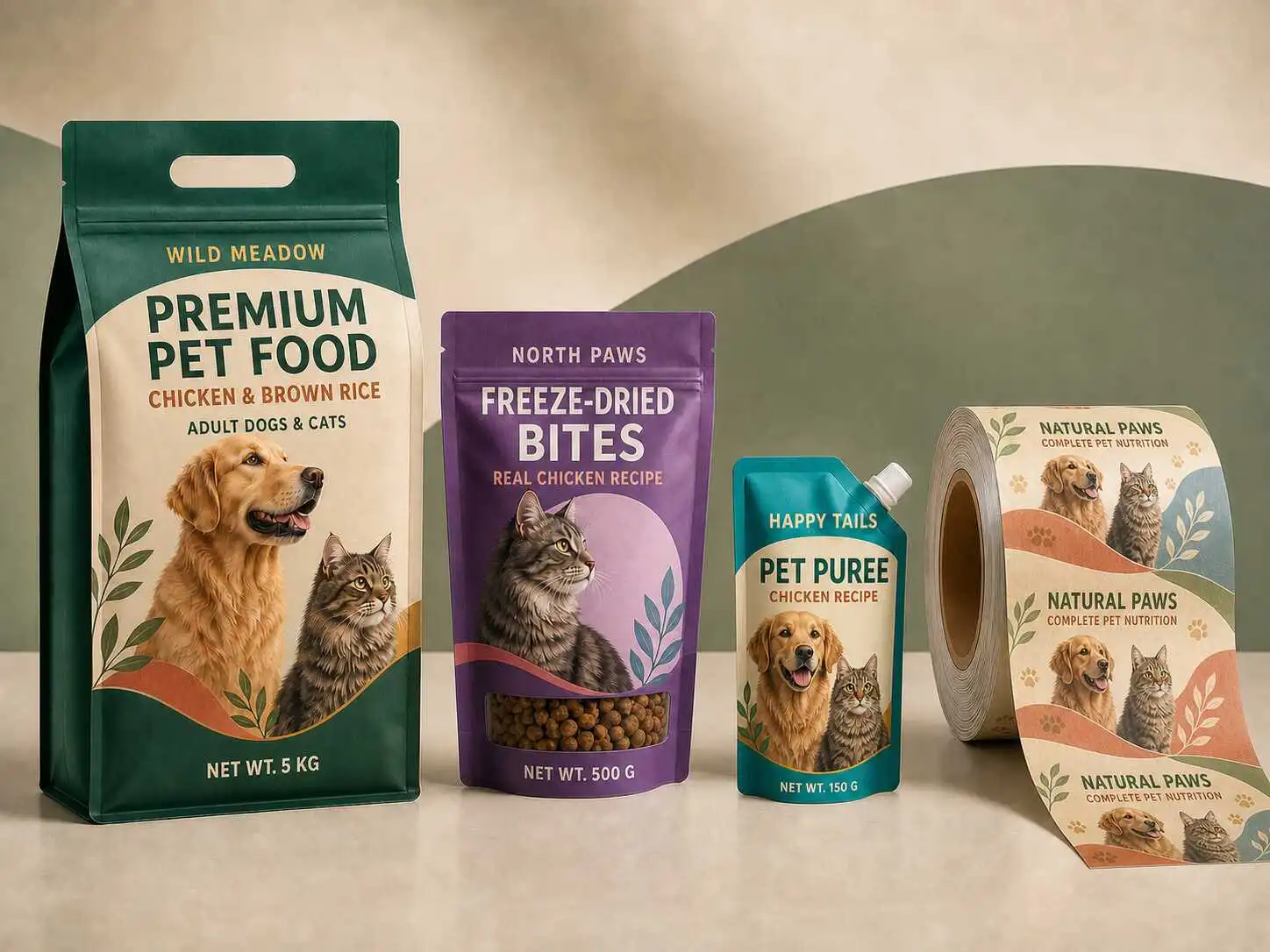
Choose the bag around the product—not the pet category alone
Dry kibble, freeze-dried food, treats, powders and wet products need different formats, barrier functions, sizes, features and filling routes.
Which pet food packaging bag should you choose?
Choose the package according to the actual product form, fill weight and volume, fat and moisture sensitivity, target shelf life, filling equipment, storage, transport and how the consumer will use the pack. A flat-bottom or stand-up pouch may suit dry and freeze-dried products; a smaller pouch or stick pack may suit treats and supplements; wet food can require a spout, sealed pouch or retort-specific solution.
Do not apply one universal MOQ. Ordinary custom pouches, large-format bags, rollstock, spout pouches and retort applications follow different production rules.
Pet food applications create different packaging jobs
Dry kibble
Often needs a strong pouch, suitable barrier, reliable seals and convenient reclosure for repeated use.
Freeze-dried food
Needs careful moisture and oxygen protection together with puncture and handling performance.
Treats and supplements
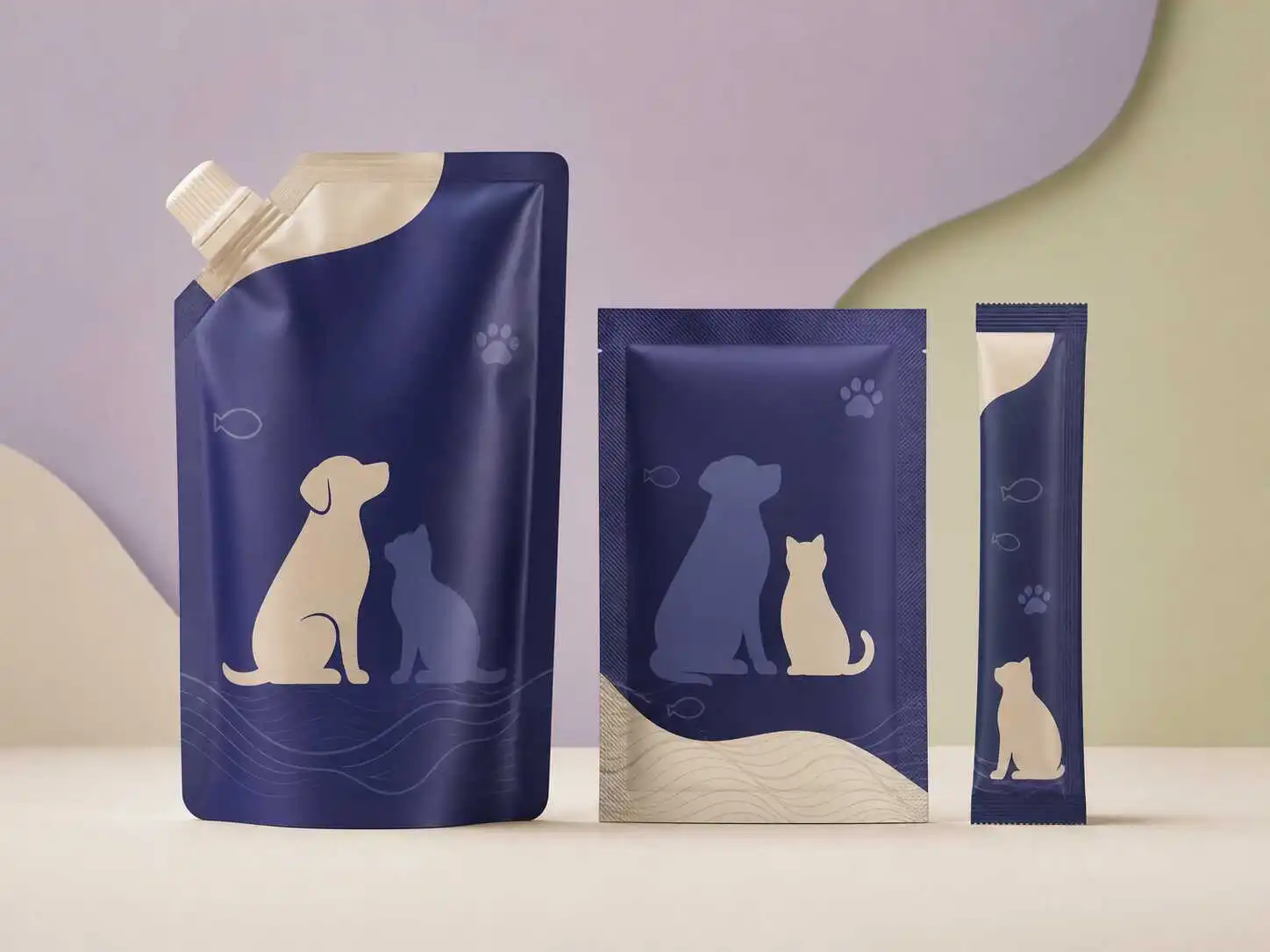
May use stand-up pouches, sachets or stick packs depending on serving size and filling.
Wet food and puree
May require spout, sealed or retort packaging selected for the actual product and process.
Large bags
Need dimensions, product weight, carrying, stacking and printing limitations reviewed separately.
Automatic packing
Printed rollstock must match the packaging equipment, film width, repeat and sealing conditions.
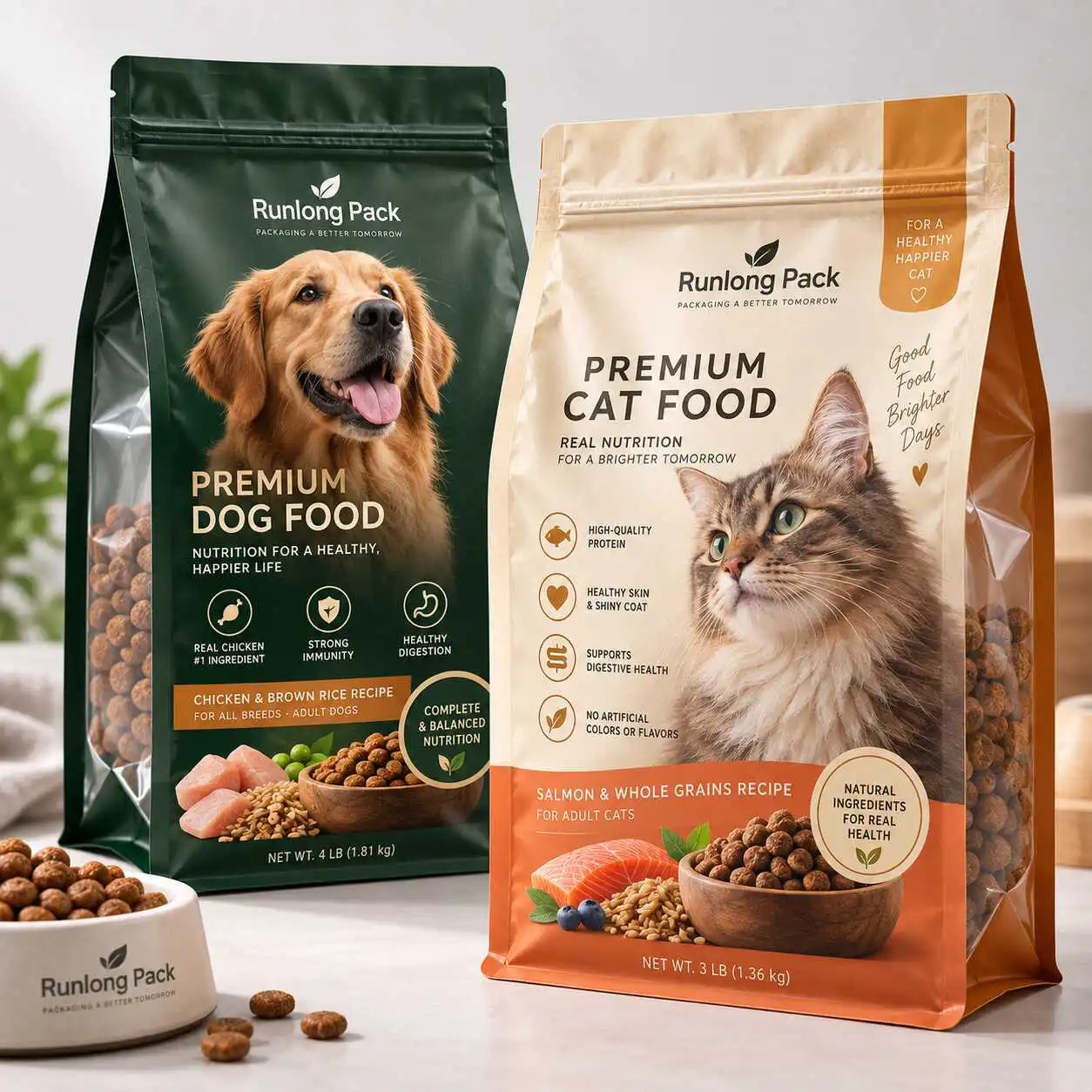
Premade pouch, spout pouch or rollstock?
| Format | When to evaluate it | Key confirmation |
|---|---|---|
| Flat-bottom bag | Premium dry or freeze-dried retail presentation | Size, film use, zipper and realistic quantity |
| Stand-up pouch | Dry food, treats and supplements across varied sizes | Gusset, barrier, features and filling |
| Spout pouch | Wet puree or pourable product | Product, spout, filling temperature and process |
| Rollstock | Compatible automatic packing equipment | Width, repeat, winding, seal and machine data |
Balance barrier, strength and daily handling
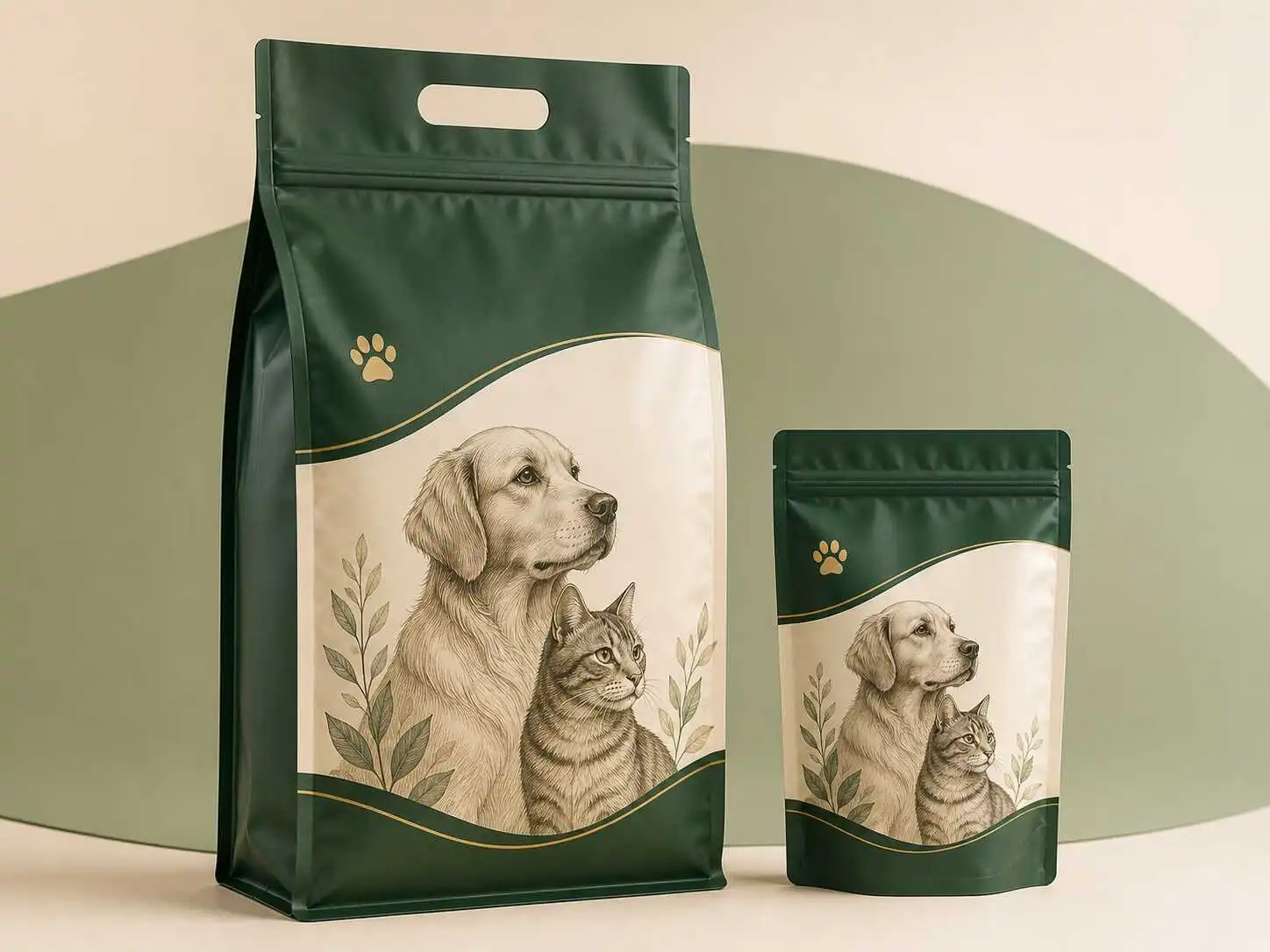
Dry dog and cat food packaging may need moisture, oxygen and aroma protection, resistance to puncture from irregular pieces, and enough seal and laminate strength for the filled weight. A zipper can improve reclosure after opening but does not replace the original heat seal.
For larger packs, evaluate carrying, stacking, carton or pallet conditions and how the consumer pours or scoops the product.
Protect low-moisture products after filling and opening
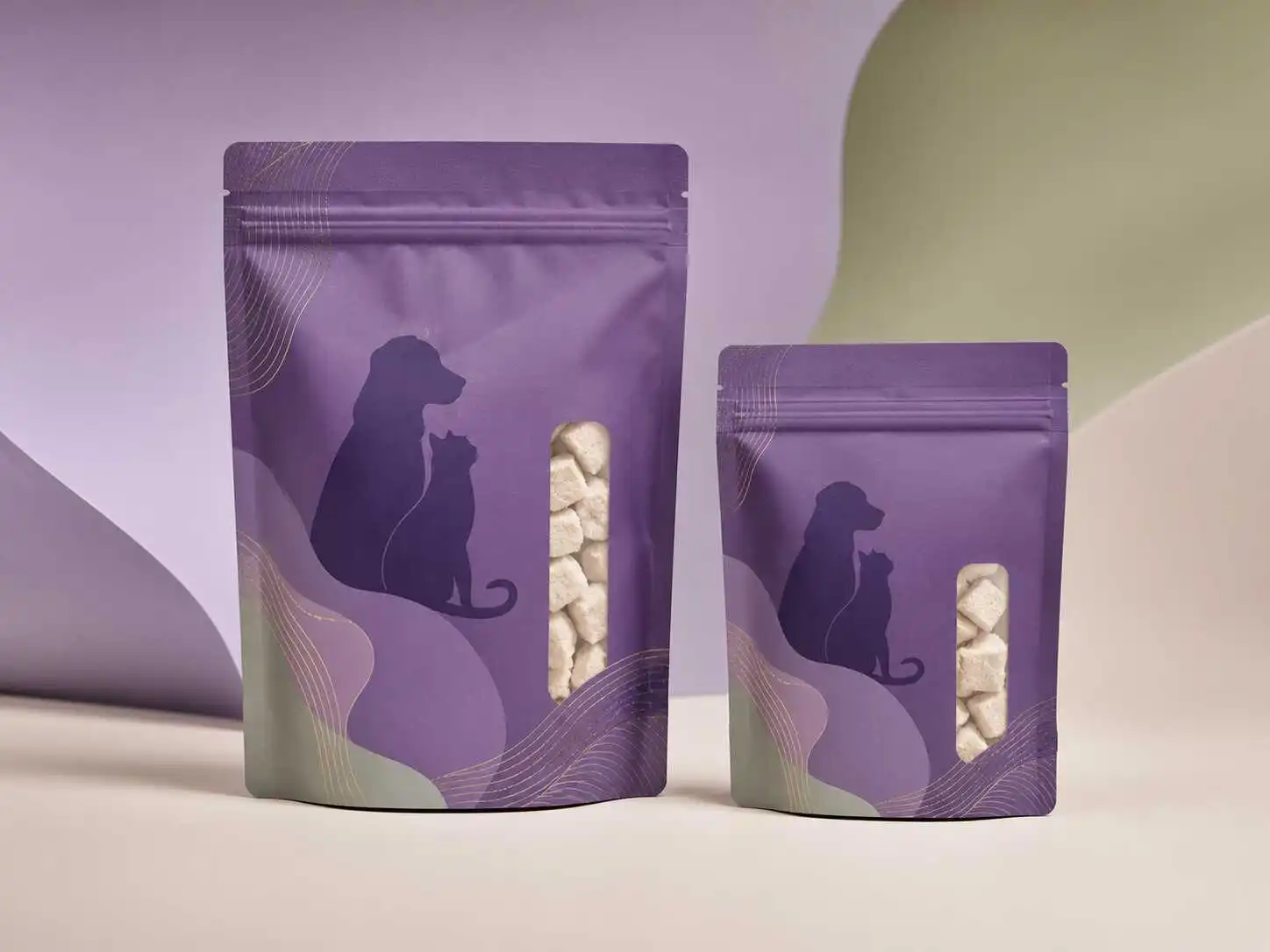
Freeze-dried food and treats can be sensitive to moisture and oxygen. The selected structure, seal, zipper, package size and storage conditions all influence protection.
Do not choose the bag only by net weight. Product piece size, bulk density and headspace can change the required dimensions and usable volume.
Need help with dimensions?
Compare the real product volume and pouch format before approving the dieline.
Separate ordinary wet filling from retort processing
Puree, gravy and wet meals may use spout pouches, sealed pouches, sachets or other formats, but the product and process must be defined first. Filling temperature, viscosity, sterilization, storage and shelf-life targets affect the pouch and material.
If the product will be retort processed, use the specific retort project rules. A standard retort pouch typically starts around 50,000 pieces and cannot inherit an ordinary flexible-pouch material or MOQ.
Translate the product risk into packaging functions
Moisture barrier
Helps protect dry and freeze-dried products from humidity gain.
Oxygen and aroma barrier
May be important for fats, flavors and longer shelf-life targets.
Puncture resistance
Supports products with sharp or irregular pieces and demanding handling.
Heat sealing
Must suit the filling process, film structure and production equipment.
Light barrier
Can be evaluated when the contents or shelf presentation require it.
Final validation
Confirm the structure for the real product, shelf life, filling, storage and market.
Apply the rule for the selected format and size
Some ordinary digital custom-pouch projects may start around 100 pieces, with 1,000 or more generally recommended for better value. Normal gravure custom pouches generally start around 10,000 pieces. Most ordinary printed rollstock projects start around 300 kg.
These general ranges do not override special rules. Spout, retort and other special projects follow their own requirements. If the finished pouch width is above approximately 37 cm, digital printing is unavailable and gravure must be assessed.
Pet food packaging questions
What is the best bag for dry pet food?
What barrier does freeze-dried pet food need?
Can wet pet food use an ordinary stand-up pouch?
What is the MOQ for pet food packaging?
Can a large pet food bag use digital printing?
Should pet food bag size be selected by weight?
What information is needed for a quotation?
Send the product, size, barrier and filling plan
Include product form, fill weight, volume, format, features, shelf life, filling method, quantity, SKUs, artwork and destination.