

Define the food and sterilization process before the pouch
Retort packaging must be planned around the actual product, thermal process, pouch form, seal system, size and target shelf life—not a generic laminate name.
What must be confirmed for a retort pouch?
Provide the exact food, whether it is liquid, solid or mixed, the retort or sterilization temperature and time, filling method, pouch format, finished size and target shelf life. These conditions control material selection, sealing and the testing plan.
Runlong Pack’s typical MOQ for a standard custom retort pouch is approximately 50,000 pieces. Do not apply the ordinary digital-pouch MOQ or a generic PET/PE structure to a retort project.
What is a retort pouch?
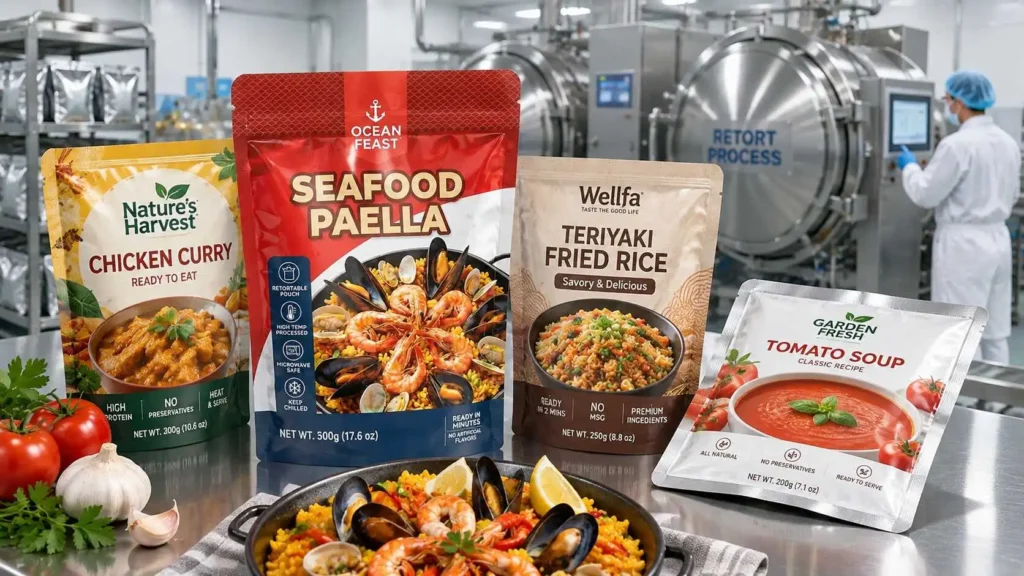
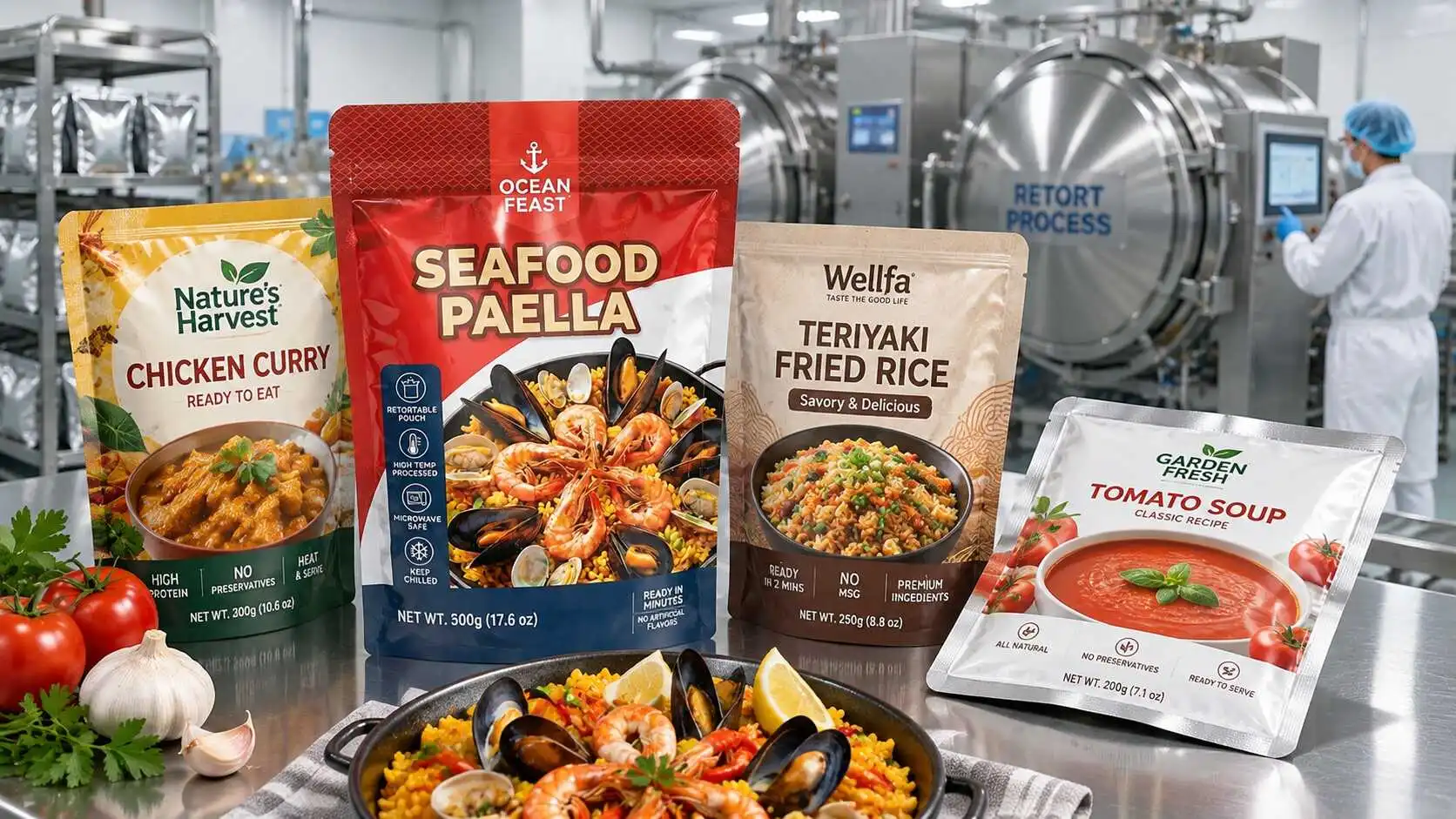
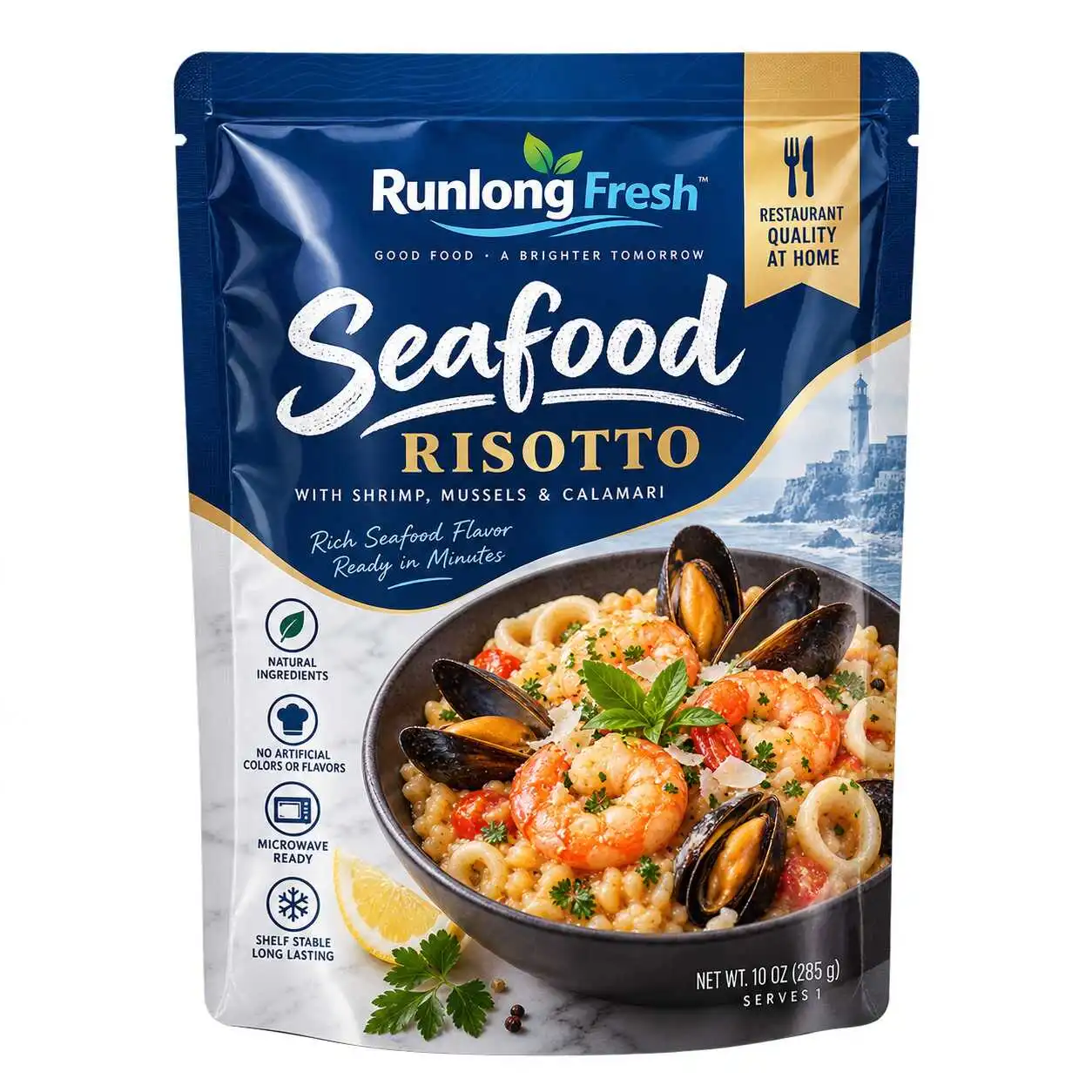
A retort pouch is a flexible package designed for a defined thermal sterilization process after filling and sealing. It may be used for ready meals, seafood, meat, sauces, soups and other processed foods when the selected package and process have been validated together.
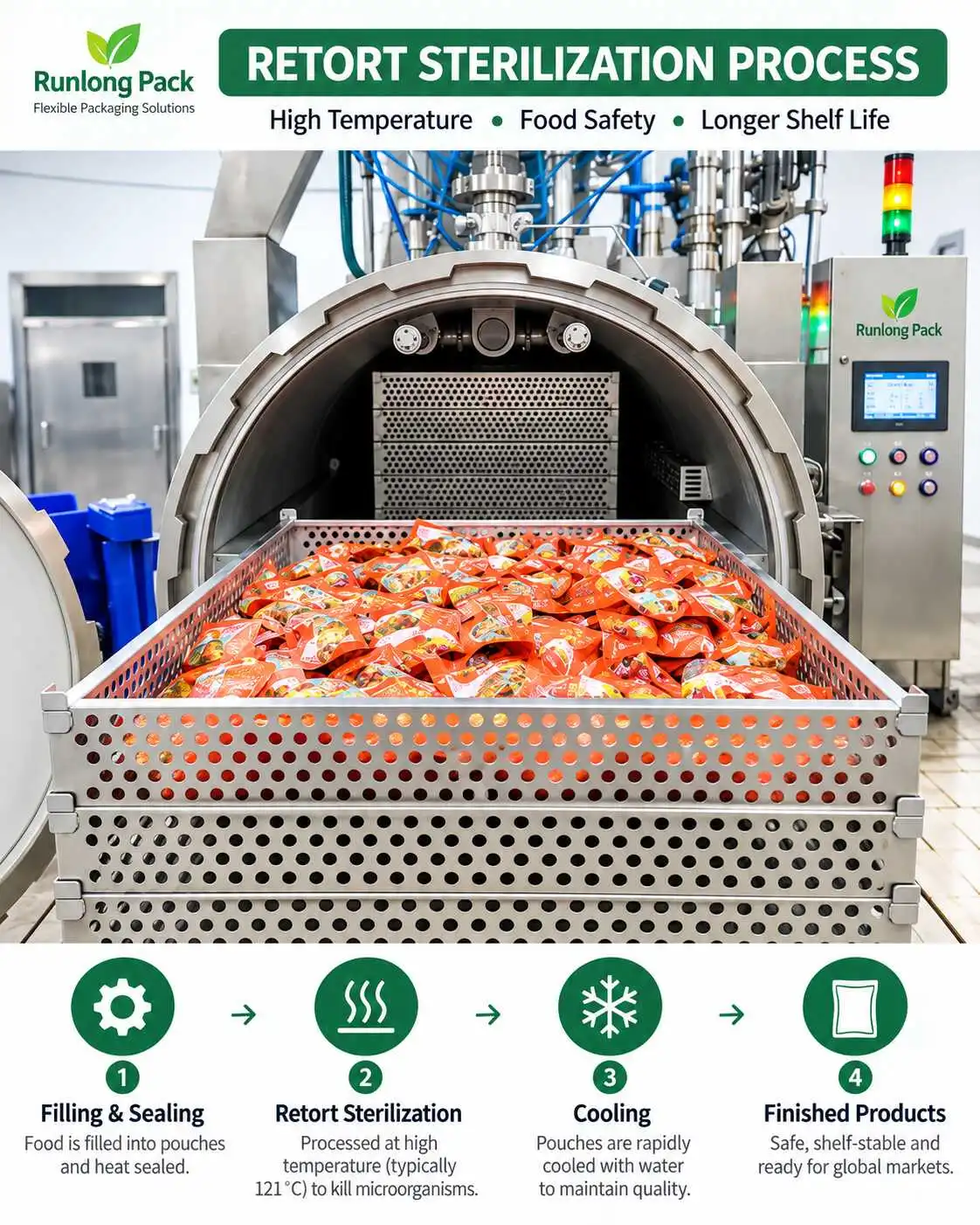
Start with the filled food and thermal schedule
The packaging supplier needs enough information to review how the pouch will be filled, sealed, heated, cooled, stored and transported. A change in the food, fill volume or thermal cycle can change the packaging requirement.
- Food type, ingredients category and product form
- Fill weight, product temperature and headspace
- Retort temperature, time, pressure and cooling conditions
- Sterilization equipment and basket or tray arrangement
- Target shelf life and storage environment
- Destination-market and documentation requirements
Choose a structure that survives the real process
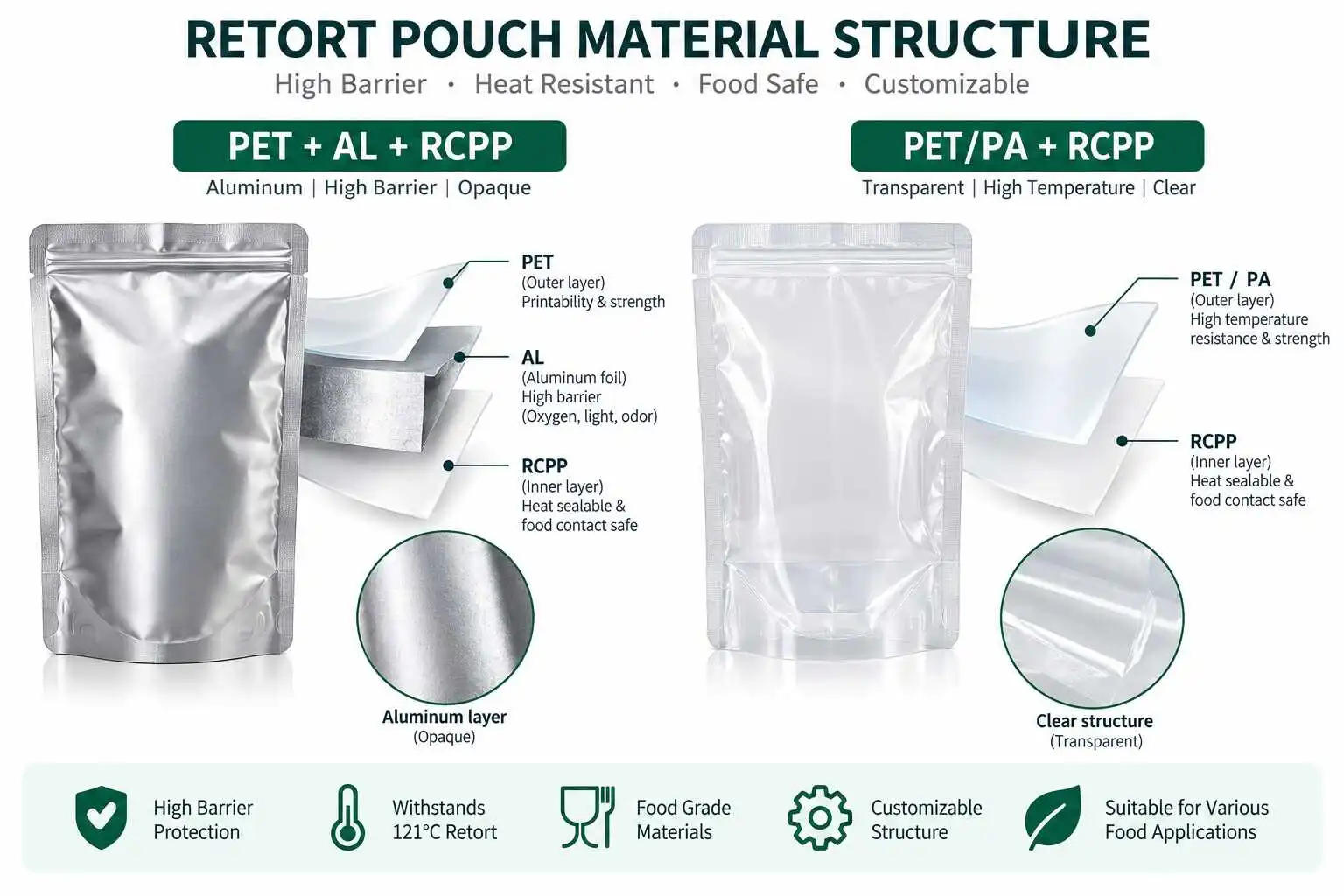
A retort structure must retain barrier, lamination integrity, seal performance and physical strength through the specified thermal cycle. Light, oxygen, moisture, puncture and flex resistance may also matter after processing.
Structures such as opaque foil-based or transparent high-barrier laminates can be evaluated, but the final combination must be confirmed for the actual contents, processing conditions, equipment and shelf-life target.
Protect the seal area and control the fill
Pouch format
Three-side-seal and stand-up formats have different gussets, seal areas, filling behavior and processing support needs.
Seal contamination
Product on the seal area can reduce reliability. Filling and seal cleaning controls must suit the contents.
Headspace and loading
Fill level, trapped air, pouch orientation and retort loading can influence processing and pouch stress.
Plan tests for the actual pouch and process
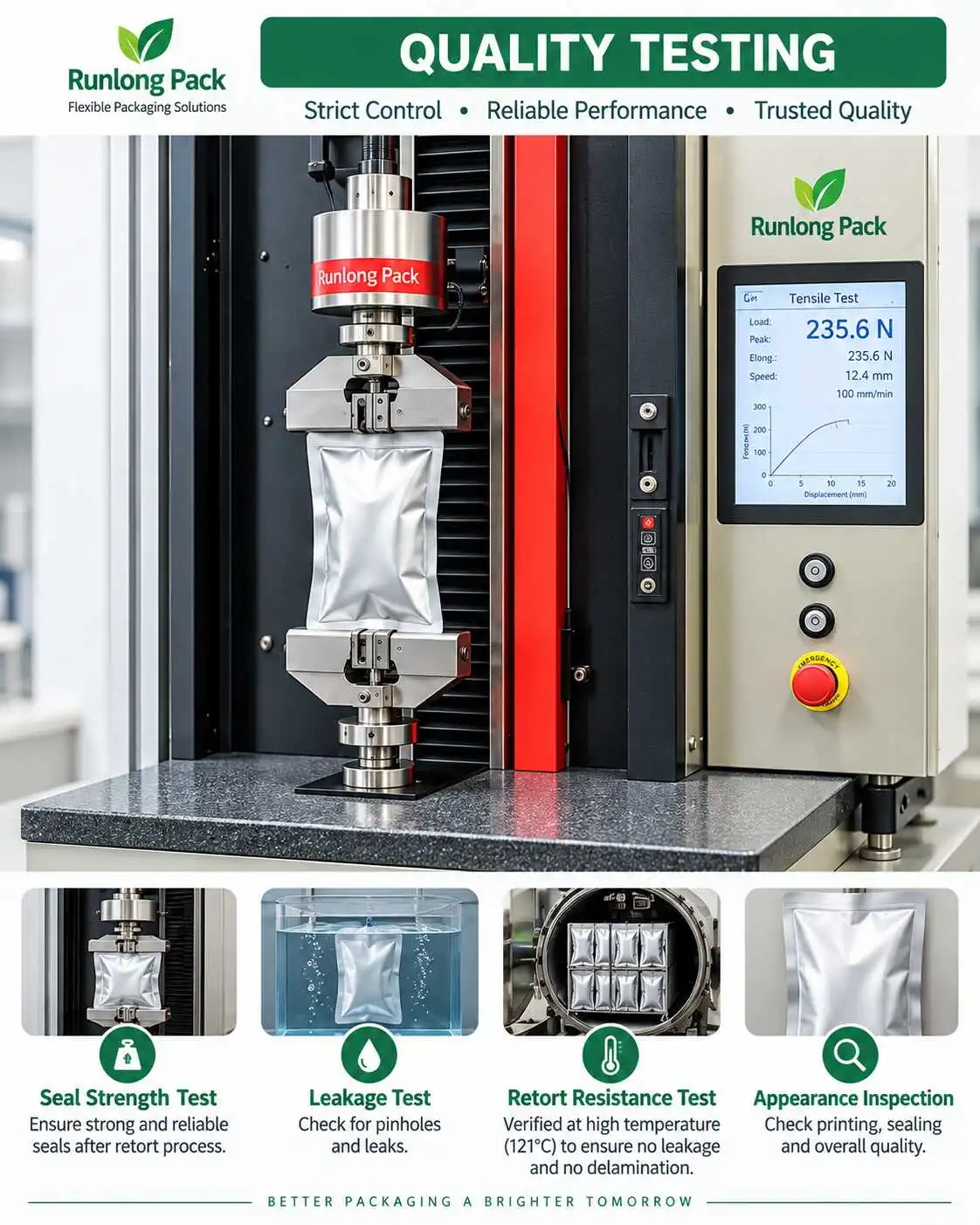
Applicable checks may include dimensions, printing, lamination, seal quality, leakage, pressure or handling performance. A retort project also needs evaluation after the defined thermal process.
Testing a flat empty pouch is not the same as validating the filled product through sterilization and shelf life. Agree on responsibilities, test method and approval criteria before mass production.
Use approval gates before mass production
1. Define
Food, product form, size, fill weight, thermal process and shelf-life target.
2. Review
Pouch format, material performance, seals, artwork and filling conditions.
3. Validate
Sample or trial route, filled-pack processing and agreed performance checks.
4. Approve
Final specification, artwork, test criteria and required payment.
5. Produce
Printing, lamination, curing, pouch conversion, inspection and packing.
6. Recheck
Production results and filled-product process validation before commercial use.
Standard retort and Moi Moi rules are not interchangeable
A standard custom retort pouch typically has an MOQ of approximately 50,000 pieces. Final quantity depends on the approved structure, dimensions, printing and process.
Moi Moi cooking pouches follow a separate confirmed rule: approximately 25,000 pieces, no digital printing and no custom sample. This exception should not be used as the default for a standard ready-meal retort pouch.
Need a material discussion?
Start with the actual food and thermal process rather than a laminate code.
Retort pouch packaging questions
What is Runlong Pack’s typical MOQ for a standard retort pouch?
Can I use a normal PET/PE structure for retort packaging?
What process information should I provide?
Who validates the final retort process?
Are transparent and foil retort pouches the same?
Is a Moi Moi cooking pouch the same as a standard retort pouch?
What testing should be discussed?
Send the food, thermal process and pouch specification
Include contents, product form, fill weight, retort temperature and time, sterilization method, size, quantity, artwork, shelf-life target and destination.