

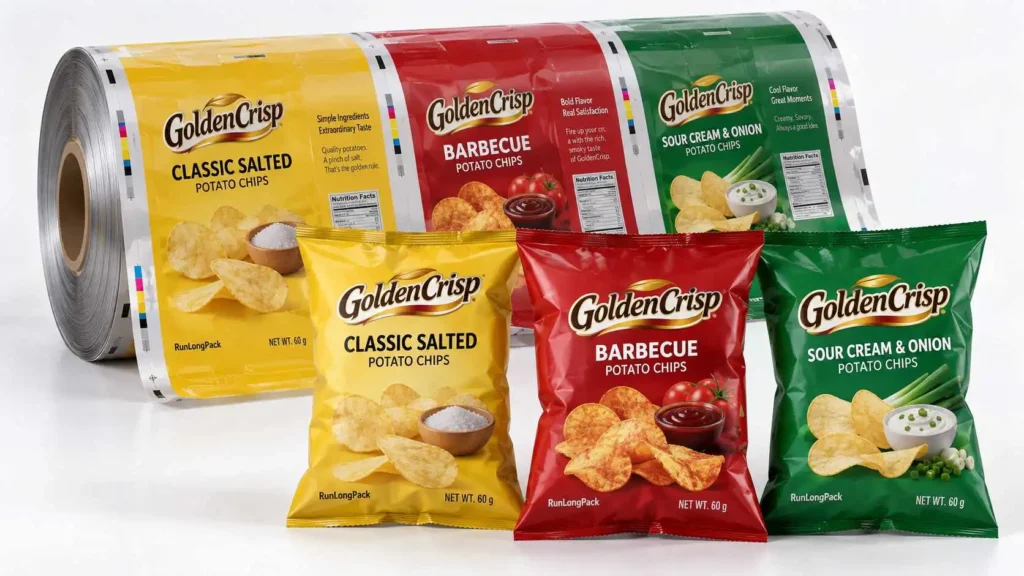
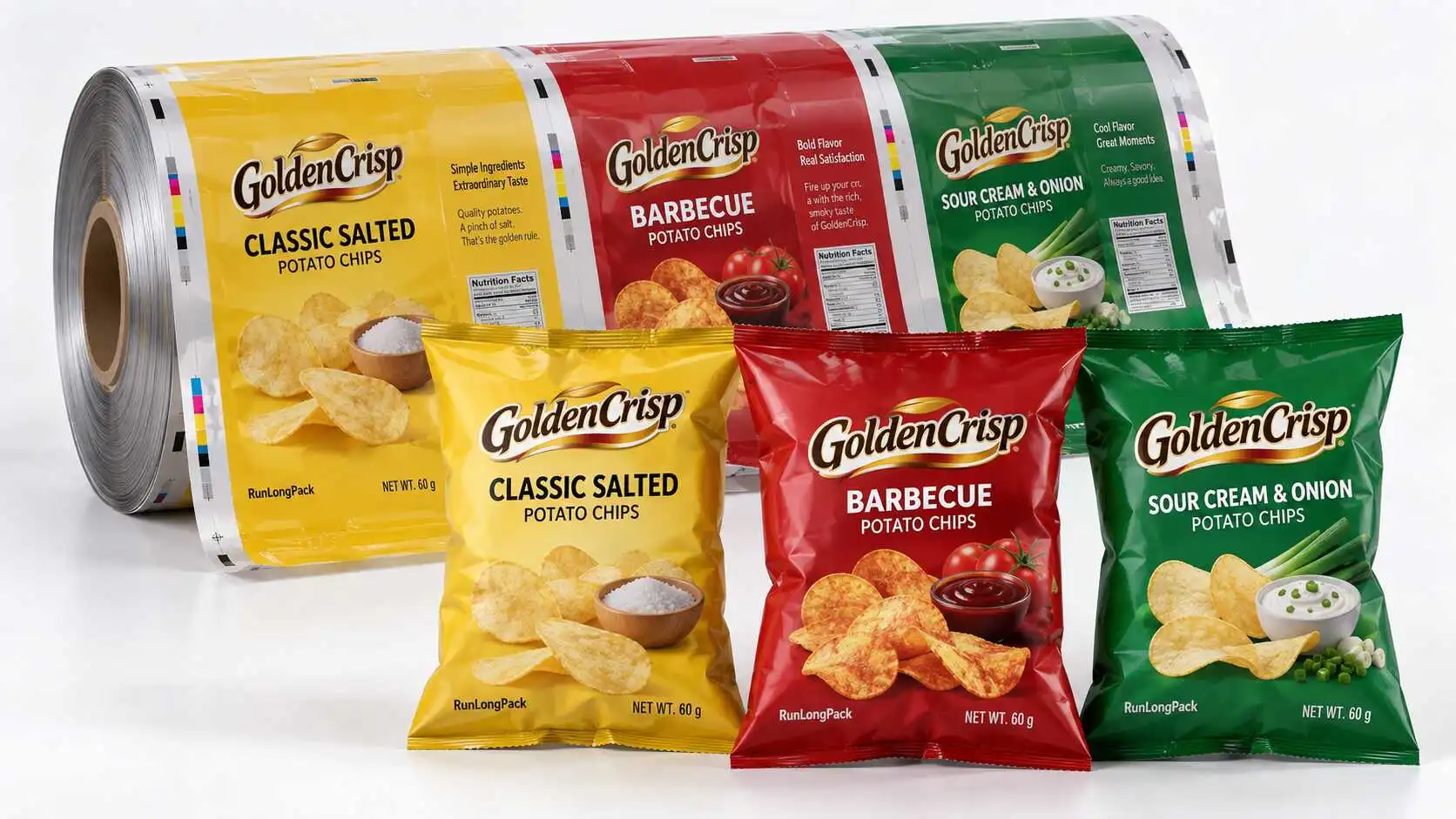
Choose Your Chip Packing Route
Compare manual bags, VFFS rollstock and automatic premade pouches before committing to equipment.
Which potato chip packaging machine should you choose?
Start with the bag you need to sell and the output you can actually sustain. Premade bags with manual or semi-automatic filling and a small sealer can suit a modest initial equipment budget. A VFFS system using printed rollstock can suit repeat pillow-bag production with integrated weighing and filling. An automatic premade-pouch system can suit stand-up retail packs when its bag handling and filling system are proven with your chips.
Do not choose from nominal speed alone. Confirm the whole-line quotation, available installation space, chip breakage, seal quality and sustained acceptable packs per minute using your actual product and packaging. Premade pouches can be packed automatically; they do not automatically mean manual production.
Manual packing vs. VFFS vs. automatic premade pouches
The following ranges are supplier-discussion planning references for the configurations considered here, not universal machine specifications, formal equipment quotations or Runlong-validated output. Different models and configurations can fall outside them. On smaller screens, scroll the table sideways to compare all five columns.
| Packing route | Packaging to buy | Reference speed | Reference equipment budget | Choose when / confirm first |
|---|---|---|---|---|
| Manual / semi-automatic | Premade heat-sealable bags | About 10–20 packs/min; operator-dependent. Confirm whether this means sealing cycles or the complete fill-and-seal workflow. | USD 200–500 for the discussed small-equipment route. Do not assume weighing, nitrogen equipment or gas supply is included. | You can staff the process and want limited initial equipment investment. Confirm actual labour, seal control and acceptable output. |
| Rollstock + VFFS | Printed film; the bagger forms, fills and seals each pack | About 30–50 packs/min for the discussed automatic route; verify sustained acceptable output with your chips. | USD 5,000–13,000; weighers, conveying, nitrogen and other inclusions must be itemised. | A compatible pillow-bag format fits your product and repeat production. Confirm film specifications, product handling and full-line layout. |
| Automatic premade-pouch | Finished stand-up pouches compatible with the bag-handling system | About 20–40 packs/min for the discussed route; not a promise for every premade-pouch machine. | USD 8,000–20,000; confirm the filling system, bag handling, nitrogen and complete supply scope. | Your retail format calls for a stand-up pouch. Test gripping, opening, filling, zipper handling if applicable, and final sealing. |
A useful speed question: “At our fill weight and bag size, how many acceptable packs are produced per minute over an agreed trial period, with weighing, filling, optional nitrogen flushing and sealing running together?” Ask for the rejected-pack count and downtime record as well.
A startup may choose an automatic line, and an established brand may still use manual packing for a short run. Company size alone does not determine the route. For the broader packaging-format decision, see premade pouches vs. rollstock.
How the three potato chip packing routes work
Route 1Premade bags, manual filling and a small sealing machine
The operator weighs or portions the chips, fills an open premade pouch, keeps the seal area clear and closes it with a compatible heat sealer. A suitable semi-automatic filling step may reduce part of the manual work, but the full process still needs an operator and a controlled workflow.
This route can be practical while testing demand or changing flavours frequently. Check that a filled pouch can stand or be supported at the sealer without spilling, and that bag presentation, weighing and sealing are repeatable. A zipper is a consumer reclosure feature; the initial heat seal still needs to be validated.
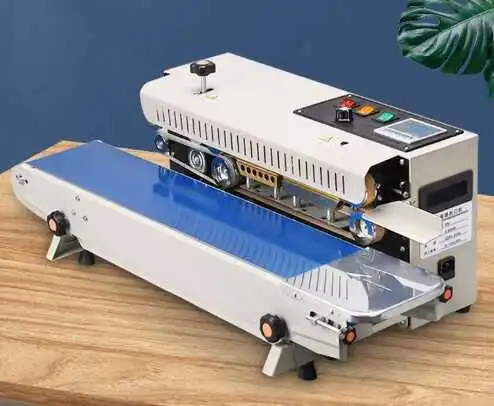
If nitrogen flushing is needed, ask for an appropriate integrated or manufacturer-approved arrangement, its gas source and its operating procedure. A small sealer’s price does not establish that a complete nitrogen-flushing station is included. Do not modify gas lines without the equipment supplier’s approval.
Route 2Printed rollstock with a VFFS potato chip packing system
A vertical form-fill-seal machine makes each bag from rollstock. A compatible weighing and feeding system portions the chips, and the configured line fills and seals the pack; nitrogen flushing can be integrated where specified. This route commonly suits repeat pillow-bag production.
Evaluate the bagger and its upstream product handling together. The chips’ bulk volume, fragility and seasoning behaviour affect dosing and filling; buying a machine described only as “for granules” is not enough. A powder auger filler or liquid pump is not evidence of a suitable chip-weighing system.
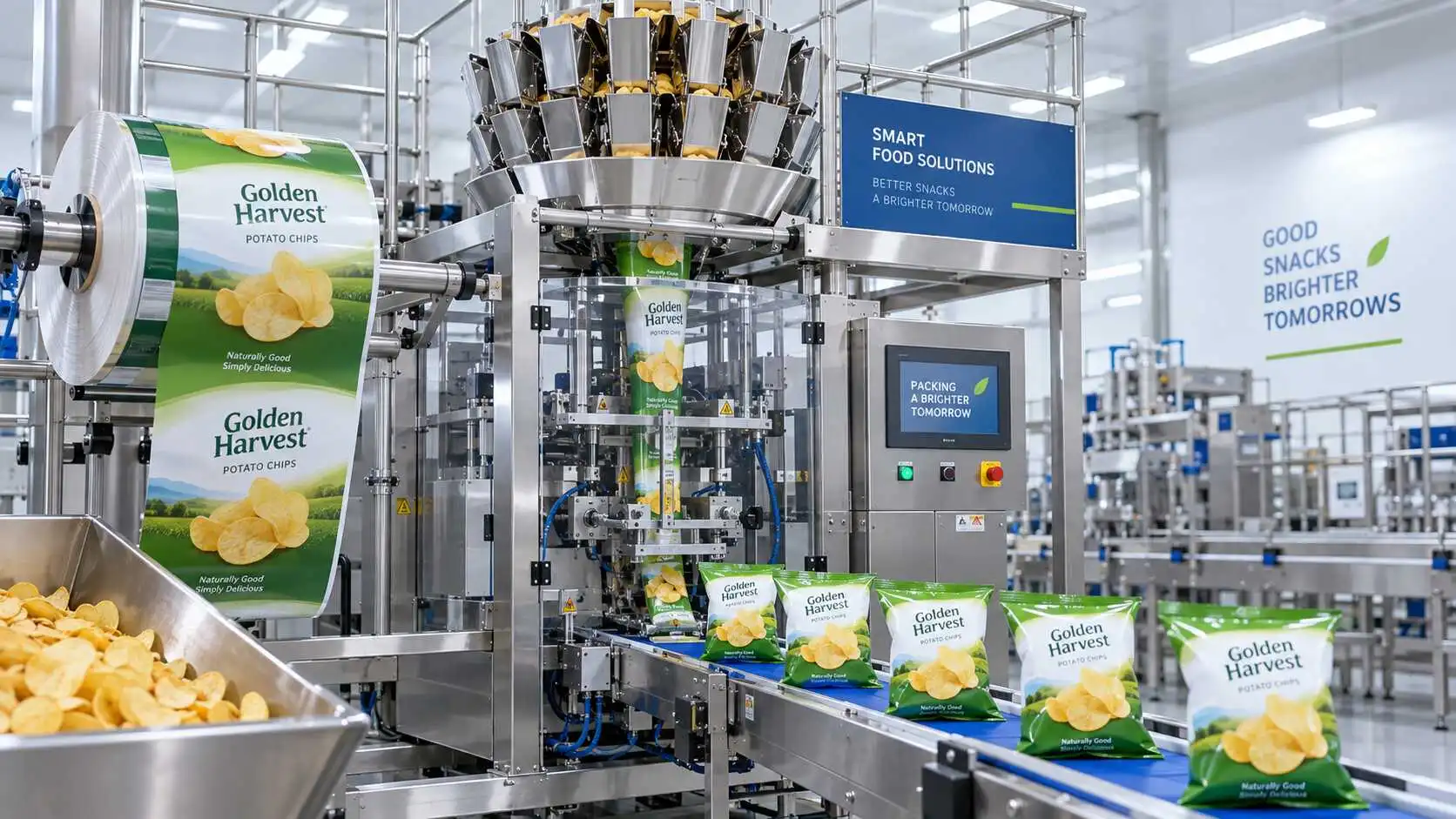
Use our VFFS rollstock compatibility guide for film width, print repeat, registration marks, unwind direction and roll limits. The potato chip automatic packaging-line guide covers conveying, weighing, nitrogen and sealing interfaces in more detail.
Route 3Automatic filling of premade stand-up pouches
A compatible premade-pouch machine takes a finished bag, opens it, receives the weighed product and seals the top. The handling sequence depends on the machine. Confirm whether the proposed system is reciprocating or rotary and which pouch formats it can actually run.
A stand-up pouch can support a different shelf presentation and optional reclosure, but it is not automatically the lowest-cost or gentlest route. In the premium stand-up-pouch configurations discussed here, packaging cost per pack is relatively higher than the conventional rollstock option; the final comparison must use equivalent specifications and measured losses.
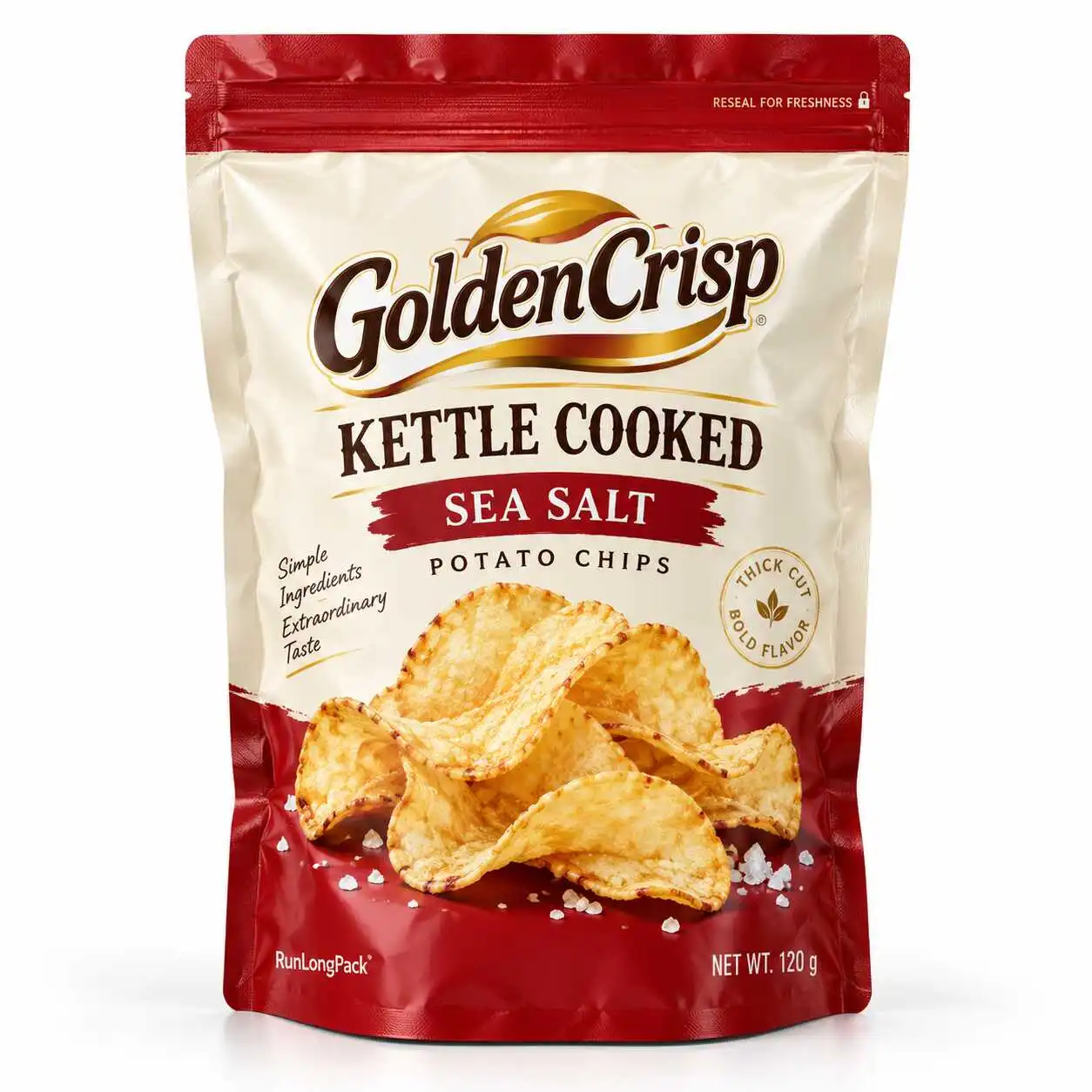
Test the real pouch: gripper area, opening reliability, gusset behaviour, filling opening, chip clearance and any zipper-opening operation. A catalogue that lists “stand-up pouch” does not by itself confirm automatic zipper handling or a proven potato-chip filling configuration.
Have a machine quotation but no confirmed package?
Share the proposed machine, pack format, fill weight, bag drawing and planned quantity. Runlong can review the packaging side before you commit to production.
Check the equipment budget and factory space together
What is included in the price?
Ask the supplier to mark each item as included, excluded or optional:
- Bagging / sealing machine and change parts
- Weigher or other suitable dosing system
- Elevator, conveyors and working platform
- Nitrogen-flushing equipment and nitrogen source
- Compressed-air supply and required treatment
- Date / lot coder and agreed inspection equipment
- Shipping, taxes, installation, training and spares
Do not assume these are all included or all extra. Compare quotations for the same working configuration.
What fits in the building?
The larger configurations discussed for this guide use an initial site-height reminder of more than 3 m for the premade-pouch line and more than 4 m for the VFFS line.
These are planning prompts, not universal requirements, main-machine heights or a guarantee that a building at that height is sufficient.
Obtain a complete layout showing the elevator, weighing platform, utilities and access clearances. Check usable clear height, beams, service space, floor loading, doors and the delivery route before placing the order.
Keep three different figures separate: the catalogue’s main-machine dimensions, the assembled production-line envelope and the installation / maintenance clearance. A compact bagger can still require substantial space above it for feeding and weighing.
A potato chip packaging machine enquiry checklist
Copy this table into your equipment enquiry. Replace the blanks with confirmed information and ask the supplier to return a matching configuration and trial plan.
| Information to supply | Your project details | Supplier confirmation to request |
|---|---|---|
| Actual product | Chip type / dimensions / seasoning / temperature: ______ | Suitable feeding and weighing configuration; real-product sample needed |
| Fill weight and pack volume | Weight(s): ______; measured bulk volume / headspace: ______ | Bag and dosing fit for each planned size, not weight alone |
| Retail pack | Pillow bag / stand-up pouch; dimensions / zipper: ______ | Supported seal style, bag opening and change parts |
| Demand and staffing | Required acceptable packs per shift: ______; operators: ______ | Sustained output basis, staffing and changeover assumptions |
| Nitrogen and utilities | Flushing requirement: ______; gas / air / power available: ______ | Gas configuration and source, compressed air and electrical requirements stated separately |
| Available site | Clear height / footprint / access / floor details: ______ | Complete line layout and installation / service clearances |
| SKUs and changeovers | Flavours / sizes / runs per change: ______ | Changeover steps, consumables and trial conditions |
| Budget and delivery | Budget / destination / target start date: ______ | Itemised scope, exclusions, lead time and delivery terms |
| Acceptance plan | Trial quantity / agreed quality criteria / sign-off owners: ______ | Test method, records, acceptance conditions and remedies in the purchase agreement |
Approve the machine using real chips and the intended packaging
An empty-bag or substitute-product demonstration does not replace a full acceptance trial with the intended chips and packaging. Agree a run length, representative product condition, pack sizes and quality criteria before the trial. Have the equipment supplier and your production and quality teams record both the results and the configuration.
| Check | Record during the trial | Agreed result / approval |
|---|---|---|
| Trial identity | Product lot, chip condition, fill weight, package specification, film / pouch lot and machine settings | Trial ID / date / configuration: ______ |
| Handling and breakage | Comparable incoming and packed-product samples; transfer points; agreed assessment method | Criterion: ______; result: ______ |
| Weight control | Pack-weight records, rejects and giveaway using the agreed sampling method | Criterion: ______; result: ______ |
| Bag forming / opening | Film tracking or pouch pick-up, opening and zipper handling where applicable | Missed / malformed packs: ______ |
| Seal integrity | Crumb contamination, seal appearance and agreed integrity tests on actual filled packs | Method / criterion / result: ______ |
| Nitrogen performance, if specified | Gas setup and residual-oxygen measurements under an agreed sampling and timing protocol | Buyer QA-approved target / result: ______ |
| Sustained acceptable output | Elapsed time, total packs, acceptable packs, rejects and downtime reasons | Acceptable packs/min: ______ |
| Changeover and operation | Size / flavour change, cleaning, restart, operator work and access needs | Observed time / open issues: ______ |
| Final sign-off | Equipment supplier, buyer production / QA and packaging specification owner | Approved / conditional / not approved: ______ |
Set targets from the project, not from a generic article. There is no single seal temperature, residual-oxygen level, breakage limit or guaranteed shelf life for every potato-chip package. Nitrogen flushing does not replace suitable barrier, sound seals and shelf-life validation. The gas installation and operating procedure also need the supplier’s and factory’s safety approval. Have qualified personnel confirm ventilation, gas-source handling and appropriate safety controls; nitrogen can displace oxygen.
Compare cost per acceptable pack, not just machine price
For the same period and pack specification, compare packaging material used, labour, product loss, operating consumables, downtime and an appropriate allocation of equipment cost. Divide the total by the number of acceptable finished packs.
Cost per acceptable pack = comparable total packing cost ÷ acceptable finished packs.
A lower film cost or higher nominal machine speed may be outweighed by rejects, chip damage, short production runs or frequent changeovers.
Use the broader premade vs. rollstock cost framework and our same-specification quotation checklist rather than comparing unlike bags or incomplete equipment quotations.
Confirm the packaging specification before the equipment order
For printed rollstock
Confirm film width, print repeat, seal style, eye mark, unwind direction, core, roll diameter and weight limits with the actual VFFS supplier. Evaluate the material and sealing layer against product protection needs and the machine’s validated operating conditions.
For finished pouches
Confirm finished dimensions, gusset, open-top configuration, gripper / seal areas, zipper if used and the actual filling opening. Test a filled pouch rather than relying on an advertised gram capacity.
Runlong Pack supplies custom printed pouches and rollstock and can review the packaging specification with your project team. We use food-grade raw materials for all flexible-packaging production and do not use recycled, secondary or scrap materials. Final material structure and market-specific compliance still require project confirmation.
See custom potato chip packaging options and the bag size guide. Existing reference samples can help compare formats; a printed proof sample is not a substitute for machine trials with the intended production material and an agreed test quantity. Review our packaging sample policy when planning the next step.
Potato chip packaging machine FAQ
Can I start packing potato chips with a small sealing machine?
Yes, a suitable premade pouch can be filled manually or semi-automatically and then heat sealed. For the small-equipment route discussed here, about 10–20 packs per minute and USD 200–500 are conditional planning references, not guaranteed complete-line output or a formal quote. Confirm operator workload, whether the speed refers to sealing or the full workflow, and whether weighing or nitrogen equipment is included.
What is the difference between VFFS and a premade-pouch packing machine?
VFFS forms bags from compatible rollstock, then fills and seals them. A premade-pouch machine handles finished bags, opens them, fills them and seals the top. Choose around the intended retail pack, product handling, actual output and tested packaging compatibility, rather than company size alone.
Can a small sealer provide nitrogen flushing for potato chip bags?
Only if the proposed setup has a suitable integrated or manufacturer-approved nitrogen-flushing arrangement. Confirm the device, gas source, operating method and safety controls separately. A small sealer price or photograph does not prove nitrogen capability. Nitrogen flushing alone does not guarantee shelf life.
How much should I budget for an automatic potato chip packing machine?
For the automatic configurations discussed in this guide, USD 5,000–13,000 for a rollstock VFFS route and USD 8,000–20,000 for a premade-pouch route are preliminary supplier-discussion references. They are not universal prices or quotations for the catalogue models. Obtain an itemised quote covering the proposed bagger, dosing, conveying, platform, gas systems, coding, inspection, shipping, taxes and installation as applicable.
How much factory height does a potato chip packaging line need?
The larger lines discussed here use an initial planning reminder of more than 3 m for the premade-pouch route and more than 4 m for VFFS. These are not universal requirements or main-machine dimensions. Confirm a complete layout with usable clear height, weighing and feeding equipment, service clearances, structural limits and access before ordering.
Will a premade-pouch machine break fewer chips than VFFS?
Not automatically. Chip damage depends on the product and the complete handling, weighing and filling configuration, including transfer points and drop conditions. Compare actual incoming and packed-product samples using an agreed trial method; do not infer breakage performance from the machine type alone.
Is the same fill weight enough to specify a potato chip bag?
No. Confirm actual bulk volume, chip size and fragility, required headspace, seal area and the machine or pouch opening. Test the intended chips in the proposed pack; a stated gram capacity is not a machine-fit approval.
Does Runlong Pack manufacture potato chip packaging machines?
Runlong Pack is a custom flexible-packaging manufacturer supplying printed pouches and rollstock. We can review the packaging specification and coordinate packaging information with your project team. Machine manufacture, capability, equipment quotation, installation and operating acceptance must be confirmed with the equipment supplier.
Choose the machine and packaging as one project
Send your chip type, fill weight, preferred bag format, dimensions, planned quantity and proposed machine details. Runlong can help evaluate the pouch or rollstock specification; equipment capability, quotation and installation must be confirmed with the machine supplier.